

Driven by Curiosity and Societal Needs: Professor Liam Grover on Pioneering Non-Pharmaceutical Nasal Protection Innovation

Birmingham Biotech
In Vitro Diagnostic Solution Provider
2024In March, China Youth Daily published an article titled “A Scientific Understanding of ‘Long COVID’.” In the article, experts from the National Center for Respiratory Medicine stated:“Although the pathogenicity of SARS-CoV-2 has gradually decreased during its mutation process, infection prevention remains necessary, as repeated infections increase the risk of developing ‘Long COVID’… Research on SARS-CoV-2 and ‘Long COVID’ by scientists both in China and abroad is ongoing.”
In addition to the ongoing threat of long COVID, influenza A, B, C, and D viruses also cause multiple seasonal epidemics and unpredictable pandemics each year.According to the full-year 2023 data released by the Chinese National Influenza Center, a maximum of 858 influenza outbreaks were reported nationwide within a single week.
More importantly, multiple studies have shown thatCo-infection with influenza and COVID-19 may exacerbate disease severity, posing a significant threat to high-risk populations such as pregnant women, infants and young children, the elderly, and individuals with chronic diseases.
How Should We Respond in the New Normal of Coexisting Influenza and Long COVID?
Our noses filter thousands of liters of air daily, serving as one of the primary entry points for pathogenic agents into the body and as a major site for the infection and replication of respiratory pathogens. Therefore, consistent physical protection of the nasal cavity is crucial for preventing influenza viruses, coronaviruses, rhinoviruses, and even airborne pollen and droplets carrying Streptococcus pneumoniae.
To this end, Birmingham Biotech, LTD. (hereinafter referred to as "Birmingham Biotech") has developed BHM NoriZite®Nasal Protective Spray: Establishes a barrier against pathogens through safe, long-lasting, non-pharmacological physical protection.
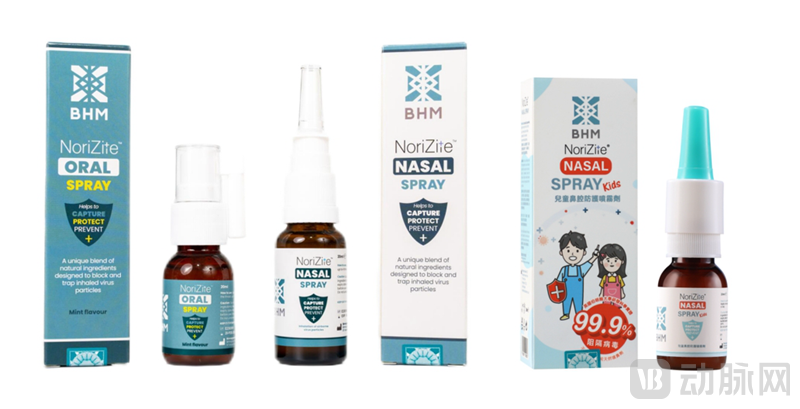
BHM NoriZite®Oral Protective Spray, BHM NoriZite®Nasal Protective Spray (Adults & Children)
Birmingham Biotech has also won numerous awards for this product, including the 2022 UK Medical Technology Innovation Award, the GHP 2022 Health and Pharma Awards, recognition as one of the Top 10 UK Biotech Companies in 2023, and inclusion in Silicon Valley Magazine’s 2024 List of 50 Leading Companies. The product has obtained regulatory approvals and certifications in more than ten countries and regions across five continents, including the UK, the EU, South Africa, and Latin America, earning the trust of hundreds of thousands of consumers.
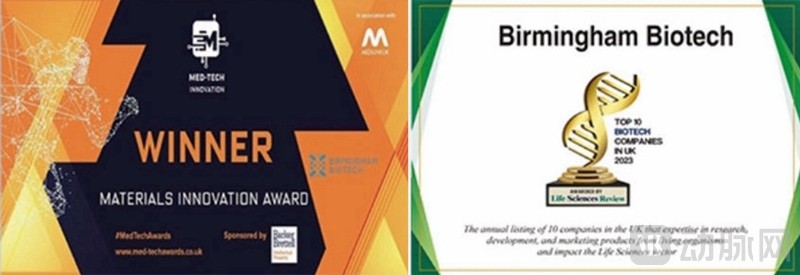
2022 UK Medical Technology Innovation Award, 2023 Top 10 UK Biotechnology Companies
In a previous article, VCBeat mentioned Birmingham Biotech and BHM NoriZite.®Nasal Protective Spray Was Launched in 2020 Amid the Ravages of the Novel Coronavirus. The article describes how Birmingham Biotech withstood the pressure of pandemic-related lockdowns and achieved the remarkable feat of scaling up from scientific innovation to mass production within one year.Yet behind this story, in addition to Birmingham Biotech’s exceptional capabilities in translation and commercialization, there is another figure worthy of our pause and tribute.
This is Professor Liam Grover, Fellow of the Academy of Medical Sciences and Professor of Biomaterials Science at the University of Birmingham.
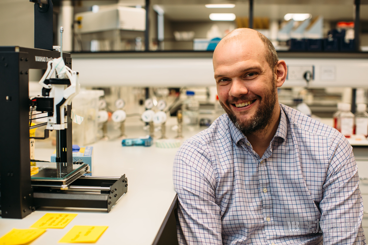
Prof. Liam Grover
Professor of Biomaterials Science, University of Birmingham
Fellow of the Academy of Medical Sciences, UK
Director of the Healthcare Technologies Institute
Professor Grover has been dedicated to innovative applications in the field of materials science since 1998. After earning his Ph.D. in Biomaterials Science from the University of Birmingham in 2005, he conducted postdoctoral research on bone health at McGill University, supported by a fellowship from the Canadian Institutes of Health Research. In 2006, Professor Grover returned to his alma mater, the University of Birmingham, to join the faculty, becoming the youngest full professor in the university’s history at the age of 32.
When discussing his original motivation for entering the field, Professor Grover stated in an interview with VCBeat, “I was deeply impressed and captivated by biomaterials science when I first saw the ‘ear-on-a-mouse’ biological model. This strong interest has persisted to this day. I typically wake up at 5:30 a.m. every morning and devote 12 hours or more to research, experiments, data analysis, and manuscript preparation.”
“Of course, this dedication and commitment stem partly from my passion for and relentless pursuit of scientific research, innovation, and translation, and partly from the nature of my field. Medical biomaterials is a sector characterized by high R&D intensity, high entry barriers, and significant risks, all under stringent multi-party regulatory oversight. Therefore, as scientists are a crucial source and driving force of innovation, they must devote greater effort and time,” said Professor Grover.
Driven by this sincere scientific spirit, Professor Grover has published more than 200 papers in international journals such as Advanced Materials, Advanced Functional Materials, and Biomaterials since completing his PhD. His work has been cited over 9,000 times, and he has helped secure more than £30 million in research funding.
Professor Grover continued, “How theoretical or experimental findings are practically applied and translated into productive forces is a crucial pathway for scientists to convert academic value into social value and impact, and it is also a key issue in enhancing the quality of medical services and the efficacy of national innovation systems.”
“Therefore, in addition to a solid theoretical foundation, the most critical factor in translating biomedical research achievements into practical applications is the accumulation of experience. This experience is reflected in two aspects: first, clinical trials and regulatory registration of products; second, commercial application and value realization.”
In 2018, Professor Grover founded the Institute for Healthcare Technology at the University of Birmingham, an institution dedicated to scientific research and the translation of research outcomes. As the Institute’s Director, Professor Grover holds more than ten patents related to innovations in biomaterials and maintains long-term collaborative partnerships with multiple hospitals.
To date, Professor Grover has successfully facilitated the translation of multiple innovative biomaterials from concept to clinical application and ultimately to commercialization, thereby benefiting a broad patient population. Examples include BHM NoriZite by Birmingham Biotech.®Nasal protective sprays, novel bone cements co-developed with Smith & Nephew, new anti-scarring gel-type eye drops, and the use of bio-3D-printed skin for treating deep wounds, among others.
Among them, BHM NoriZite, developed by Professor Grover in collaboration with Birmingham Biotech®Nasal Protective Sprays Have Garnered Widespread Attention Due to Their Prominent Innovative Advantages and Contemporary Relevance.
On NoriZite®Regarding its origin story, Professor Grover stated, “After the full-scale outbreak of the pandemic, the entire United Kingdom went into lockdown. My biomaterials laboratory was entrusted with a critical mission by the government and the University of Birmingham: to rapidly develop an innovative product capable of effectively combating the epidemic. This led to the creation of BHM NoriZite.”®“The Original Intent Behind the Development of Nasal Cavity Protective Spray.”
However, even with official support, the reality Professor Grover faced at the time was far from optimistic. R&D materials were in short supply due to the nationwide lockdown, and laboratory space as well as research personnel were subject to strict reduction controls. Despite these formidable obstacles, Professor Grover’s team, leveraging his extensive research background and proven experience in translating scientific achievements into practical applications, willingly shouldered this critical responsibility.
During the “lockdown” period, Professor Grover and his colleagues continuously experimented with combinations of available laboratory materials, aiming to identify a formulation that would not only block the virus but also maximize the duration of barrier protection.After dozens of meticulously designed experiments, the combination and ratio of two natural gel polymers—carrageenan and gellan—were finally determined.
Although the efficacy of the combined ingredients has been preliminarily validated in laboratory settings, it remains a long way from clinical application and scaled-up manufacturing. Therefore, to expedite the market launch of this natural “liquid mask” and assist people in the UK and around the world in combating the pandemic, Professor Grover made considerable efforts to contact the Biosafety Level 3 (BSL-3) virology laboratory at the University of Birmingham.
Upon receipt of the mailed samples, the P3 virus laboratory delivered encouraging experimental results within ten days, described in their own words as “Very promising,” and the related research findings were ultimately published in Advanced Materials, a top-tier journal in the field of materials science.
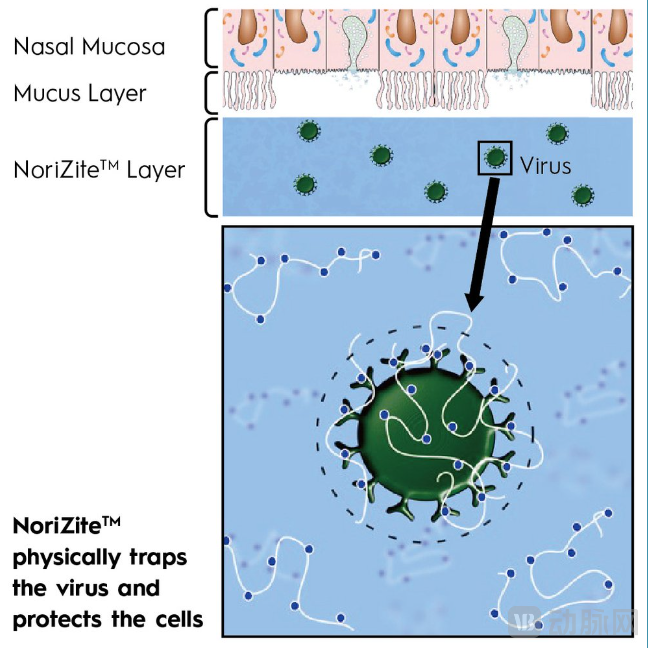
Physical Capture of Viruses and Cellular Protection
BHM NoriZite®Nasal protective sprays possess no pharmacological properties; they utilize natural polymers to encapsulate and solidify pathogens for expulsion from the nasal cavity, and NoriZite®The "feather-like" spray covers an area six times larger than that of ordinary nasal sprays, with a single application providing protection for over 6 hours. It is suitable for long-term, daily, and multiple-use by children, the elderly, pregnant women, nursing mothers, individuals with compromised immune systems, and even cancer patients.
More importantly, although BHM NoriZite®Nasal protective sprays emerged during the pandemic, helping users effectively curb COVID-19 through physical barriers, but NoriZite®The value of the components extends far beyond this; they also effectively block allergens such as pollen and dust mites, as well as particulate pollutants like PM2.5 in the air.
In March 2024, Birmingham Biotech joined forces with ten experts from the departments of otolaryngology, respiratory medicine, and pediatrics at tertiary hospitals to address BHM NoriZite®Promoting the Innovative Value and Clinical Advantages of Nasal Protective Sprays.
In addition, Birmingham Biotech has also developed an oral spray with the same active ingredients, which forms a protective film by atomizing gel to coat the oral cavity, thereby blocking pathogens from entering the body through the mouth.
“Curiosity and societal needs are always the key driving forces behind scientific research. BHM NoriZite®“Preliminary clinical studies have demonstrated that the oral spray has a significant effect in alleviating oral trauma in patients with epidermolysis bullosa (EB). This study was also supported by the Swiss DEBRA Foundation, and the latest findings have been published in Advanced NanoBiomed Research,” said Professor Grover. “This indicates that NoriZite®"will bring new possibilities for improving the quality of life of EB patients worldwide."
BHM NoriZite®The scientific innovation and early-stage translation of nasal protective sprays represent a “quiet” front waged within closed laboratories, yet they constitute a critical link in humanity’s race against viruses and diseases—and ultimately, in securing victory.
Looking back on this experience, Professor Grover said, “In my view, NoriZite®“The reason we were able to go from concept to successful commercialization in such a short time, in addition to the support of Birmingham Biotech as an outstanding partner, is that for scientists, I believe the following lessons are worth learning: keep reading, maintain an open mind, and be ‘impatient.’”
“First, maintaining a habit of reading helps scientists continuously absorb new knowledge, perspectives, and methodologies. Second, an open mind enables scientists to be more inclusive of diverse viewpoints and insights, thereby maintaining objectivity and impartiality in their research. Finally, ‘impatience’ refers to the need for scientists to shift across disciplinary boundaries, break down entrenched academic silos, and examine and resolve problems from a broader perspective and with a richer knowledge base.”
This is also why Professor Grover, who had previously studied bone cement materials, was able to achieve another breakthrough in the field of “soft” materials and successfully develop NoriZite.®an important prerequisite. Since its launch, NoriZite®Having received approval and recognition from regulatory authorities in multiple countries, Birmingham Biotech has also established a subsidiary in China—Hangzhou Bominghan Biotechnology Co., Ltd. Professor Grover stated that China will be one of the most important core markets for Birmingham Biotech in the future.
This is mainly reflected in two dimensions. On the one hand, in terms of market size and demand, China has a large population base, with relatively high and rising incidence rates of infectious diseases such as influenza and prevalent conditions such as allergic rhinitis. Furthermore, as Chinese consumers become increasingly health-conscious, the demand for nasal protection products continues to grow.
On the other hand, as China’s position in the global economy continues to rise, the Chinese market is increasingly becoming a key link connecting the global healthcare industry. In particular, Xu Shizhe, Founder and CEO of Birmingham Biotech, along with several core team members who are of Chinese descent, have strengthened their strategic commitment to deepening their presence in China after witnessing the rapid development of China’s healthcare sector and its manufacturing base, as well as a series of favorable policies introduced by the Chinese government for entrepreneurs.
In early 2024, Xu Shizhe accepted an invitation from CCTV’s large-scale converged media interactive dialogue program “Glory” to share the entrepreneurial story of Birmingham Biotech under the theme “Building a Health Barrier,” thereby enhancing consumer brand recognition. Subsequently, Mr. Xu was invited by the production team of CCTV’s “Craftsmanship of a Great Nation” to showcase Birmingham Biotech’s dedication and craftsmanship in translating scientific research achievements into practical applications.

“Glory” Program On-Site: Xu Shizhe, CEO of Birmingham Biotech
It is reported that BHM NoriZite®The nasal protective spray has been classified as a medical device by the National Medical Products Administration (NMPA). It is currently undergoing clinical trials in collaboration with hospitals such as Peking University First Hospital. The product is expected to officially obtain its medical device registration certificate in 2025, enabling its sale through offline public channels, including hospitals.
Prior to this, consumers can make purchases through official e-commerce platforms such as Taobao, JD.com, Douyin, and Xiaohongshu. Meanwhile, Birmingham Biotech also plans to establish a manufacturing facility in China, aiming to build a localized, full-lifecycle chain encompassing research and development, manufacturing, and sales.
Xu Shizhe stated, “Birmingham Biotech aims to commercialize and popularize cutting-edge medical technology innovations from universities, integrating scientific research achievements into daily life. Currently, our CTO Julie Wang and I hold weekly online meetings with Professor Grover. In addition to advancing the commercialization of existing collaborative projects, we are also committed to exploring new R&D directions driven by clinical needs. Furthermore, in the next phase, Professor Grover will participate in the operations of the new company as a partner.”
Professor Grover also stated that he would attend the Scientific Achievements Translation Forum at the “Future Medical Ecosystem Expo” held in Beijing in May 2024, and deliver a speech titled “Biomaterials: Linking Innovation to Translation.”
“I have visited China more than twenty times and witnessed its developmental achievements across multiple fields. As an inventor, I hope NoriZite®It can help more Chinese users resist invasion by pathogenic factors such as viruses. Meanwhile, I also hope that in the future NoriZite®“By integrating various pharmacologically active components, we can more broadly and deeply address patients’ health needs, bringing benefits to a greater number of individuals,” Professor Grover concluded in the interview.