

Shukun Technology Launches 'Digital Human 3.0', Expanding the Boundaries of Intelligent Healthcare

SHUKUN
Provider of Intelligent Products and Innovative Solutions
“New-quality productive forces” were initially associated by many industry experts with the booming AI technology. However, in practice, current AI technologies are still incapable of driving “innovative allocation of production factors and deep industrial transformation and upgrading.”
At their core, most existing AI systems are standalone algorithms that exist in a fragmented manner across various scenarios. While they can enhance quality and efficiency in specific contexts, they have not yet formed a comprehensive intelligent ecosystem and lack the capacity to empower entire industries.
This phenomenon is particularly evident in the medical field. Many medical AI systems can identify one or more types of findings, such as pneumonia, pulmonary nodules, and fractures, on chest radiographs, but they cannot comprehensively diagnose all potential diseases like human physicians do.
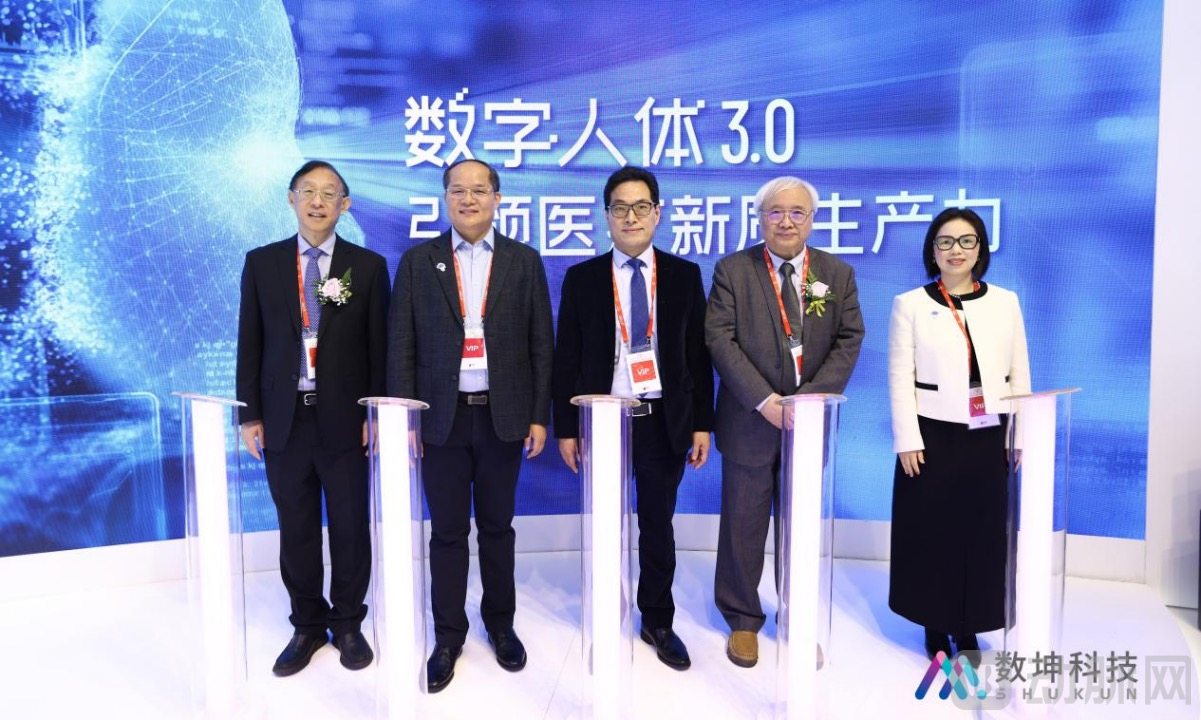
Recently, SHUKUN’s “Digital Human 3.0,” unveiled at the CMEF, has the potential to transform the current predicament facing medical AI. By leveraging the concept of “integration,” this platform offers a new pathway for realizing new-quality productive forces.
From Diagnosis to Treatment: “Digital Human” Achieves AI Empowerment Across All Scenarios
Prior to the launch of “Digital Human 3.0,” SHUKUN Technology progressed through the AI 1.0 era, characterized by single-modality, single-task, and single-workflow applications, followed by the AI 2.0 era, which featured multi-modality, complex tasks, and coverage across multiple workflows. In the current 3.0 era, the Digital Human framework introduces the concept of “integration,” aiming to achieve the convergence of scenarios and technologies, algorithms and devices, as well as medical technologies and general-purpose technologies.
It is important to note that the integration described here is not a simple aggregation of existing elements; rather, by adopting the perspective of physicians and focusing on specific clinical problems, it provides solutions achieved through the organic integration of technology.
CT is a prime example of the “integration of scenarios and technologies.”In this niche segment, SHUKUN integrates into clinicians’ workflows, adopting a disease-centric approach to streamline the entire Scan-to-Report process and build comprehensive solutions for screening, diagnosis, treatment, and research focused on vital organs.
To date, SHUKUN has developed AI-powered CT solutions for whole-body vasculature, whole-body skeletal structures, and certain types of tumors. These solutions enable image reconstruction in just one second and deliver comprehensive assessment reports from scan to completion within three minutes, thereby fully empowering physicians in their diagnostic workflows.
The same R&D approach has also been applied to MR. Currently, SHUKUN has developed products such as Cardiac MR and Breast MR AI. Cardiac MR AI can work in synergy with Cardiac CT AI to cover a broader range of cardiac disease scenarios, further enhancing the diagnostic capabilities of AI physicians for related conditions. Meanwhile, Breast MR AI can integrate with Mammography AI and Breast Ultrasound AI to enable multimodal breast diagnosis, advancing the diagnosis and treatment of breast diseases into more in-depth domains.
In the later stages of treatment, SHUKUN has explored the integration of scenarios and technologies centered on “surgical planning.”
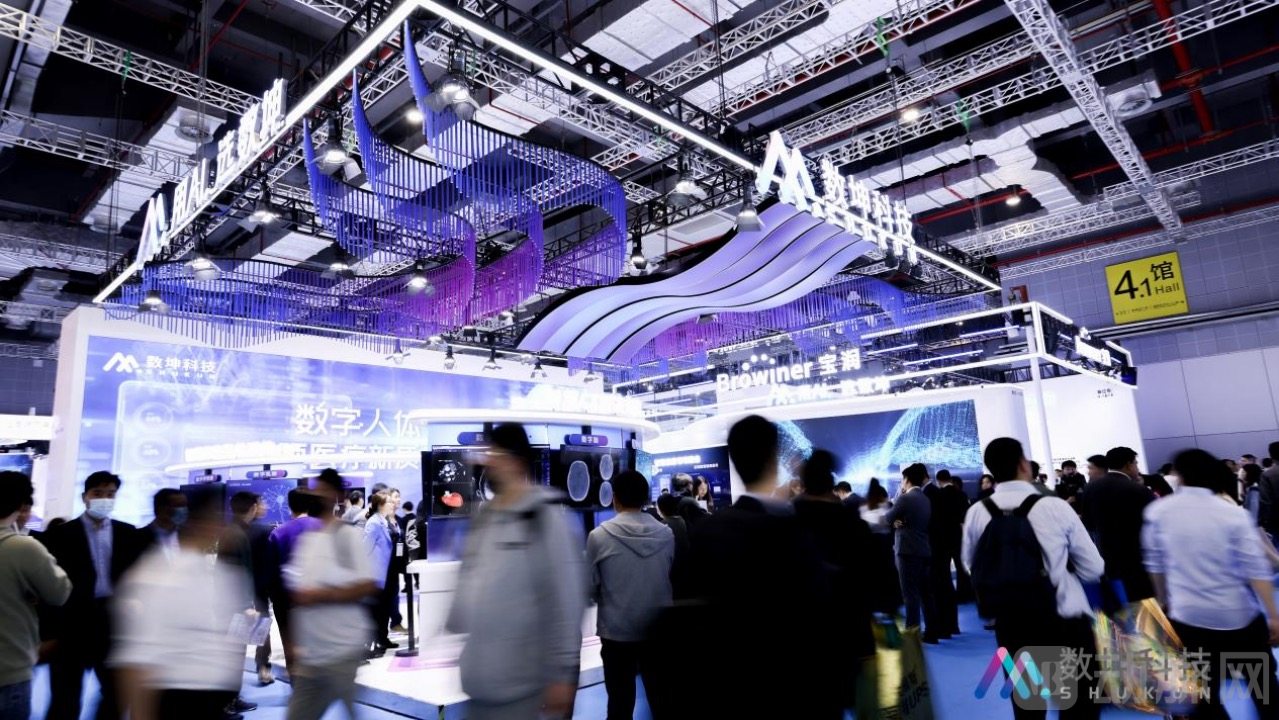
At this year’s CMEF, SHUKUN introduced its Intelligent Lung Surgery System and Percutaneous Surgical Navigation and Positioning System, showcasing the application of its AI technologies in three major scenarios: “Intelligent Lung Surgery,” “Intelligent Liver Surgery,” and “Intelligent Urological Surgery.”
Among these, the intelligent lung surgery system is built on SHUKUN’s proprietary Smart Anatomy Engine. It can accurately and automatically reconstruct a 3D digital model of the lungs within three minutes, enabling a complete workflow that includes pulmonary nodule detection, vascular segmentation and classification, and pulmonary segment watershed segmentation. The system effectively handles anatomical variations and provides subsegmental segmentation, supporting precise surgical planning at the segmental and subsegmental levels for pulmonary vasculature.
The percutaneous surgical navigation and positioning system supports multiple thoracic and abdominal sites. It enables fully automated, AI-assisted preoperative planning, rapidly generating personalized panoramic anatomical maps, automatically recommending single- or multi-needle puncture paths, and precisely simulating ablation models. During the procedure, it provides real-time monitoring of patient respiration and positioning, issues real-time alerts for puncture risks, and offers real-time visualization of the puncture process. The system is compatible with various diagnostic and therapeutic approaches, including tissue biopsy, cold/hot ablation, and seed implantation.
The launch of AI-powered surgical planning signifies that SHUKUN has comprehensively expanded from image reconstruction and assisted screening/diagnosis into the realms of assisted treatment decision-making and surgical procedures, thereby delivering more comprehensive and systematic value to physicians. For clinicians, the introduction of this new technology effectively lowers the barrier to performing surgeries, enabling even novice surgeons to operate with confidence, and thus driving surgical procedures toward greater intelligence, precision, and safety.
Integration of Algorithms and DevicesIt is another representative achievement of the Digital Human 3.0. At this year's CMEF, SHUKUN launched its Smart Ultrasound Solution, redefining the next-generation ultrasound workflow through an innovative integration of software and hardware, making ultrasound examinations smarter, more real-time, and more precise.
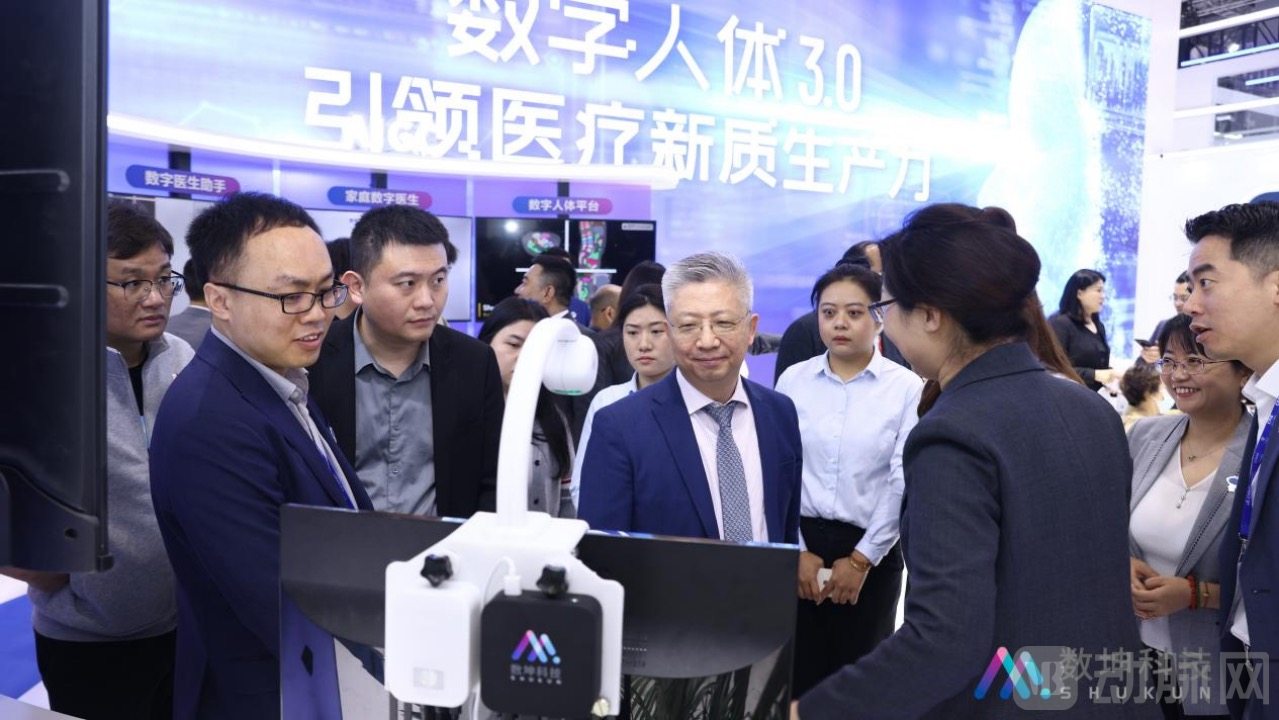
From SHUKUN’s perspective, the synergistic integration of software and hardware is key to AI’s continuous breakthroughs in technological boundaries, and it also represents a reconstruction of user experience. In the future, every piece of hardware will transition from the industrial era into the AI era, with AI empowering every step and every second of interaction between doctors and equipment, thereby unlocking a second growth curve for quality improvement and efficiency enhancement.
AI technology has previously been integrated with ultrasound systems; however, these were not AI-native hardware solutions. This limitation forced physicians to monitor two separate screens during diagnosis, failing to seamlessly integrate into their clinical workflows. In contrast, SHUKUN’s globally pioneering AI-native hardware solutions, such as the “Turing Brain” and “Turing Eagle Eye,” deeply integrate intelligent algorithms. These innovations not only consolidate multi-organ information and provide real-time visualization of lesion characteristics during diagnosis and treatment but also optimize the physician experience by eliminating the need for a “second screen.”
For SHUKUN, the integration of algorithms and devices also holds profound significance. Having taken the first step toward native intelligent manufacturing, the company is well-positioned to replicate this success across a broader range of medical scenarios.
AIGC Intervention: ShuKunGPT Breaks the Boundaries of the Smart Healthcare Industry
While leveraging deep learning to comprehensively cover diagnostic and treatment scenarios, SHUKUN also showcased its AIGC capabilities at CMEF—its multimodal medical large language model, ShuKunGPT.
According to SHUKUN, ShuKunGPT is itsIntegration of Medical Technology and General-Purpose Technologygroundbreaking innovations in . It not only comprehends text, images, and video information but also crosses modalities to provide complex recommendations based on integrated multidimensional data.
Currently, the image and video modality capabilities of ShuKunGPT are primarily applied in scientific research and teaching. The former can break through the limitations of imaging types, supporting segmentation and recognition of lesions across all human organs to assist physicians in making precise diagnoses; the latter can achieve movie-level rendering of human organ structures, aiding physicians in understanding organ function.
In contrast, ShukunGPT has advanced more rapidly in its multimodal capabilities. Currently, SHUKUN has developed two comprehensive solutions for users: the Family Digital Doctor and the Digital Doctor Assistant.
During the interview, SHUKUN briefly introduced several simulated application scenarios empowered by the multimodal capabilities of ShukunGPT. When users experience physical discomfort in a home setting, ShukunGPT can swiftly act as a digital family doctor to provide preliminary health assessments and establish electronic medical records. Meanwhile, the algorithm can guide users to nearby medical institutions and assist with appointment scheduling, triage, and medical consultation guidance. When users visit community hospitals for examinations, ShukunGPT supports screening for lesions across all organs throughout the body, significantly enhancing the efficiency and accuracy of image interpretation, while automatically generating and printing imaging diagnostic reports.
For patients with complex cases seeking care at tertiary hospitals, ShuKunGPT enables physicians to gain preliminary insights into patient conditions and provides personalized diagnostic and therapeutic assistance from a multidisciplinary perspective, thereby optimizing the consultation process and enhancing patient experience. After patients return home, ShuKunGPT offers round-the-clock support, delivering expert-level prognostic assessments and health management guidance to ensure proper management and planning of the recovery process, while extending post-discharge care services.
In the rankings released by CMB, the largest Chinese medical evaluation benchmark, SHUKUN GPT outperformed its competitors across the vast majority of metrics. On the commercialization front, SHUKUN has achieved early implementation through research collaborations and partnerships with health administration authorities.
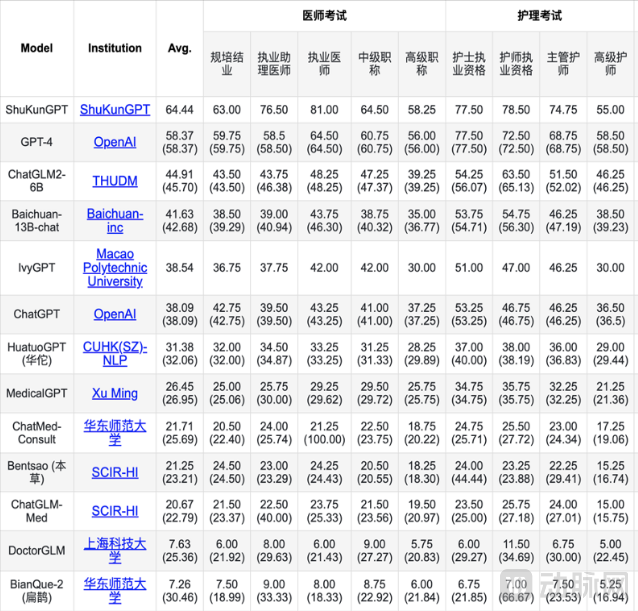
CMB Chinese Large Model Evaluation Leaderboard (Partial)
As a component of the Digital Human 3.0 initiative, ShuKunGPT has endowed the platform with capabilities for proactive learning, discovery, and evolution. With continuous technological refinement, the “multi-specialty, multi-capable” all-around “Digital Doctor” developed by SHUKUN may bring about disruptive supply-side innovation to medical services, thereby forming new quality productive forces in the truest sense.
Led by 12 Registration Certificates, SHUKUN Steps onto a Grander Stage
As of April 2024, SHUKUN has obtained 12 Class III medical device registrations from the NMPA and six FDA approvals plus MDR CE certifications, ranking first in the medical AI industry for the number of registration certificates and fully demonstrating the company’s position and strength in the field of artificial intelligence in healthcare.
However, the achievements made by SHUKUN are merely a starting point in its development journey. Given the fierce competition in the medical AI market, even industry leaders must maintain continuous innovation.
To this end, SHUKUN has carefully formulated multiple strategic objectives. In the short term, SHUKUN plans to gradually expand from a B2B model to a B2C model. This means that, in addition to continuing to provide excellent AI solutions to medical institutions, it will also directly offer products and services to patients and consumers.
In its long-term planning, SHUKUN has set its sights on even grander ambitions. According to insiders, the company plans to gradually expand from serving the Chinese market to the global market, ultimately becoming an indispensable player in the global intelligent medical and health industry.
Given SHUKUN’s deep strategic layout and meticulous cultivation in intelligent manufacturing, industry-specific large language models, and comprehensive coverage of healthcare scenarios, its future prospects are highly promising. As the company continues to accumulate technological expertise and practical experience, we may witness its rapid rise in the global market, showcasing the exceptional prowess of Chinese technology on the world stage.