

MEMS Micro-Pump Ignites the Fourth Insulin Therapy Revolution: Tsinghua Alumni Develop Disposable MEMS Insulin Micropump Module with 0.01U Precision Dosing
“MEMS micropumps are sparking the fourth revolution in insulin therapy,” shared Ma Shuo, founder of YW MEMS.
In 1921, insulin was first discovered and used to treat type 1 diabetes. The treatment method at that time was subcutaneous insulin injection.
In 1980, with advancements in technology, the insulin pen was developed as an evolution of traditional syringes, offering a more compact size and greater ease of use. However, patients still required multiple daily injections, which caused rapid fluctuations in insulin concentrations and failed to mimic the physiological pattern of insulin secretion. As a result, the rate of glycemic control among patients remained below 40%, leaving them at a high risk for diabetic complications.
In the late 1990s, motor-driven insulin pumps were introduced. By employing a servo motor to drive a lead screw connected to the reservoir, these devices deliver insulin subcutaneously, enabling Continuous Subcutaneous Insulin Infusion (CSII) that combines basal and bolus rates to mitigate blood glucose fluctuations associated with the dawn phenomenon. However, servo motors are expensive, resulting in high initial costs; patients must pay tens of thousands of yuan for a single purchase. Furthermore, patients require certain operational skills and familiarity with the device to independently reassemble components such as the reservoir and battery on a weekly basis.
In 2006, Insulet Corporation in the United States launched a disposable insulin pump utilizing shape-memory alloy technology. This device leverages the reciprocating deformation of shape-memory alloys under heating and cooling conditions to drive gear trains and lead screws, thereby replacing expensive servo motors. It is capable of delivering continuous rapid-acting insulin at a fixed rate for up to 72 hours.
Although Insulet has designed its insulin pump to be miniaturized, patch-style, and disposable for single-use, its core drive module is not sold separately. Due to limitations imposed by the underlying technical principles, there is limited room for improvement in bolus dose precision and reduction of average daily cost.
However, the medical device market has an urgent need for single-use core drive solutions to support product research and development as well as innovation. Can MEMS technology break this deadlock by providing more innovative drive modules, thereby enabling the launch of a new generation of single-use insulin pump products?
Guided by this vision, YW MEMS has dedicated years to research and development, successfully creating a MEMS insulin micro-pump module. The disposable insulin pump developed based on this module offers advantages such as low initial investment, low daily operational cost, minimal bolus dose, and a high degree of modularity. With a bolus dose as low as 0.01 U, it helps fill the gap in China’s market for disposable insulin pumps, expands collaboration opportunities for upstream and downstream medical device companies in product development, and is poised to spark the fourth revolution in insulin therapy.

The Revolution in Insulin Therapy, Chart by VCBeat
YW MEMS, founded in 2015 by professionals from Tsinghua University and the Chinese Academy of Sciences, specializes in the R&D, manufacturing, and sales of micro-pump infusion modules for medicinal liquids, medical liquid flow sensors, and silicon nitride membrane chips, while also providing MEMS process development and wafer fabrication services.
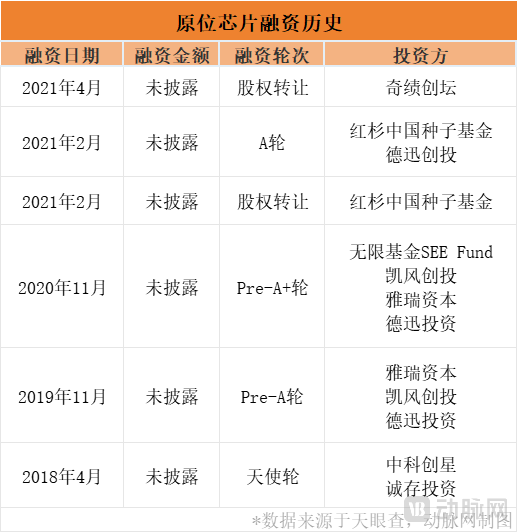
After nine years of dedicated development, the company has mastered more than 60 leading MEMS technologies, established full-stack R&D and manufacturing capabilities, and secured tens of millions in investment from top-tier Chinese VC firms, including Sequoia China Seed Fund, SEE Fund, and MiraclePlus.
Ma Shuo, the company’s founder, holds a master’s degree from the Department of Microelectronics and Nanoelectronics at Tsinghua University, where he studied under Professor Ren Tianling. During his academic years, he focused on research into micro-electro-mechanical systems (MEMS) chips, a technology with broad application prospects in consumer electronics, industrial, automotive, medical, and other fields. However, more than 90% of these critical chips have long relied on imports, with monopoly conditions being particularly severe in the medical sector.
Faced with such immense challenges, Ma Shuo saw instead a rare opportunity and the responsibility and mission of microelectronics professionals. After graduation, he resolutely founded YW MEMS, aiming to break the monopoly of foreign manufacturers and provide independently developed “Chinese chips” for China’s medical device industry.

Ma Shuo, Founder of YW MEMS
Currently, YW MEMS (Suzhou) Co.,Ltd. is strategically focusing on its MEMS micropump technology platform and its MEMS medical liquid flow sensing technology platform. Among these, the MEMS insulin micropump module, as a core component of the MEMS micropump technology platform, has drawn particular attention. As a key element of insulin pumps, it provides downstream manufacturers with high-precision, low-cost solutions, holding promise for facilitating breakthroughs and widespread adoption of disposable insulin pumps both in China and globally.
MEMS MicropumpA MEMS micropump, or Micro Electro-Mechanical Systems micropump, is a miniature pump fabricated using microfabrication techniques, capable of transporting and controlling fluids at the microscale. It features compact size, lightweight design, low power consumption, low cost, and high operational precision. It is suitable for various applications requiring precise drug delivery and microfluidic control.
The technical advantages of MEMS micropumps lie in their high precision and controllability, enabling nanoliter-scale liquid dispensing, delivering ultra-smooth and ultra-quiet droplet transport, and featuring rapid response and precise control capabilities. Furthermore, MEMS micropumps can be integrated into complex systems, such as automated drug delivery devices and microfluidic experimental platforms, thereby enhancing the overall performance and efficiency of these systems.
YW MEMS has spent five years independently developing and manufacturing a MEMS insulin micropump module, combining a “silicon-based micropump chip + piezoelectric ceramic actuator,” to enable high-precision insulin delivery.
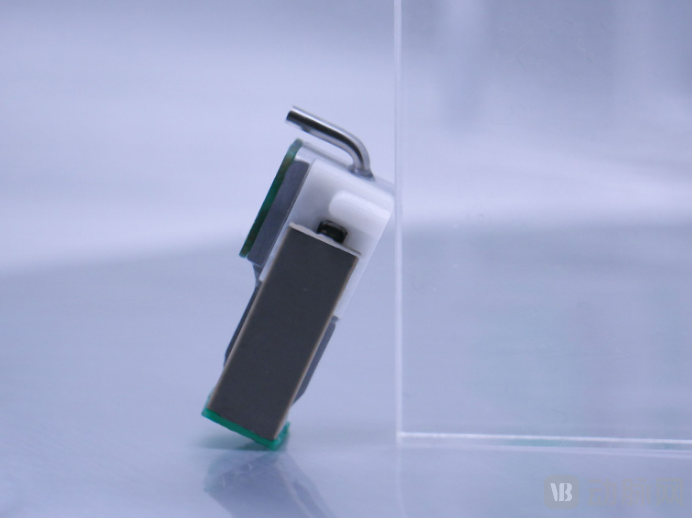
MEMS Insulin Micropump Module
The core of the micropump module primarily consists of two components: the micropump chip and the piezoelectric ceramic. Upon receiving control signals, the piezoelectric ceramic undergoes reciprocating deformation based on the inverse piezoelectric effect, which acts upon the pump chamber of the micropump chip. The micropump chip integrates one-way valves and a variable-volume pump chamber using semiconductor fabrication processes. Driven by the piezoelectric ceramic, the micropump chip aspirates and dispenses a fixed volume of liquid with each cycle.
This solution elegantly circumvents the high costs and bulky form factors associated with integrating complex components of servo motor drivers onto microelectromechanical systems (MEMS) chips, while also overcoming the precision limitations of shape memory alloy actuators. It features fault detection and alarm capabilities. The pumping accuracy reaches ±5%, with a minimum dispensing dose as low as 0.01 U. By significantly reducing pump size and manufacturing costs, it achieves high-precision drug delivery control, with a maximum output pressure of 16 psi.
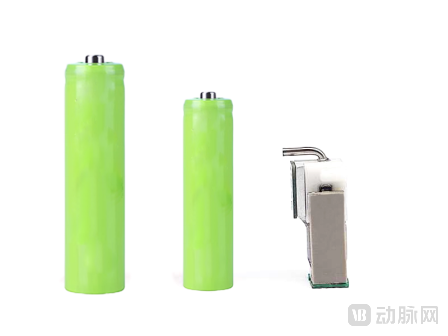
MEMS Insulin Micropump Module Is Smaller Than AA and AAA Batteries
Furthermore, YW MEMS has independently developed specialized packaging processes and filed multiple patents. Moreover, the entire module is sourced from domestic supply chains, ensuring stable and reliable supply for downstream manufacturers.
“Our MEMS insulin micropump module is safe, reliable, and highly modular. Downstream manufacturers receive a high-performance integrated module—a mature assembly comprising a micropump chip, pressure sensor chip, and other components—that enables both fluid delivery and pressure monitoring. This not only helps downstream clients achieve a more concise and clear internal product architecture but also facilitates greater assurance of medical device reliability,” added Ma Shuo.
It is reported that YW MEMS’s MEMS-based insulin micropump module has gained favor among multiple insulin manufacturers. These companies aim to replace the currently used miniature motors with MEMS micropump modules, thereby launching low-cost, high-precision disposable patch insulin pumps to meet the urgent market demand for efficient, convenient, and cost-effective insulin therapy solutions.
Furthermore, this module can be extended for use in single-use drug injection micropumps deployed by biomedical companies for animal drug trials and sustained-release medications, enabling precise injection and delivery of agents such as anesthetics and analgesics.
The application of disposable insulin pumps has been extensively validated overseas. According to disclosures by U.S.-based Insulet, approximately 425,000 people worldwide were using its Omnipod insulin pump system by 2023, generating annual revenue of $1.7 billion. In the same year, however, no domestically produced disposable insulin pumps had received regulatory approval in China.
Core components are the key factor contributing to this gap. Ma Shuo further revealed three major challenges: First, patent barriers surrounding the process design and chip design of disposable insulin pumps constitute a significant obstacle on the R&D path; second, process know-how presents another hurdle, as the launch of new devices requires matching new processes, including packaging techniques and patent protection for supporting structures; finally, the design and R&D of internal supporting modules cannot be overlooked, as this involves numerous technical aspects such as circuit design. After years of dedicated efforts, YW MEMS has achieved full-stack independent R&D from chips to modules and secured 27 patented technologies.
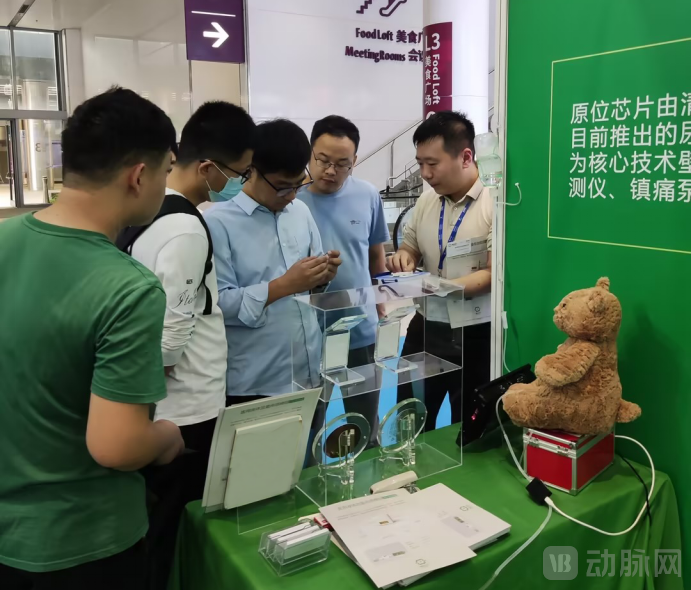
Currently, the company’s self-developed MEMS drug delivery micro-pump modules and medical liquid flow sensors have established deep collaborations with multiple manufacturers of insulin pumps, clinical monitoring devices, and other medical equipment, filling a gap in the domestic market for such products. Moving forward, the company will actively plan the construction of its own chip fabrication, packaging, and testing production lines to prepare for subsequent capacity scaling.