

Haier Biomedical Unveils Life Science Strategy: Driving Digital-Intelligent Transformation with Integrated Hardware-Software-Service Solutions

Haier Biomedical
R&D and Manufacturer of Biomedical Cryogenic Storage Equipment
As spring returns to the earth, bringing warm breezes and longer days, all things flourish. On April 10, Shanghai ushered in the summer vibe ahead of schedule, thanks to a spectacular conference.
On that day, Haier Biomedical held the “Life Science Conference: Empowering Discoveries in Life Sciences and Clinical Applications” and unveiled its life science strategy. The company will progressively enhance its integrated hardware-software-service solutions to achieve an organic integration of digital-intelligence innovation with R&D and production processes, thereby creating comprehensive scenario-based digital-intelligence solutions and driving sustained development in the two major fields of life sciences and medical innovation.
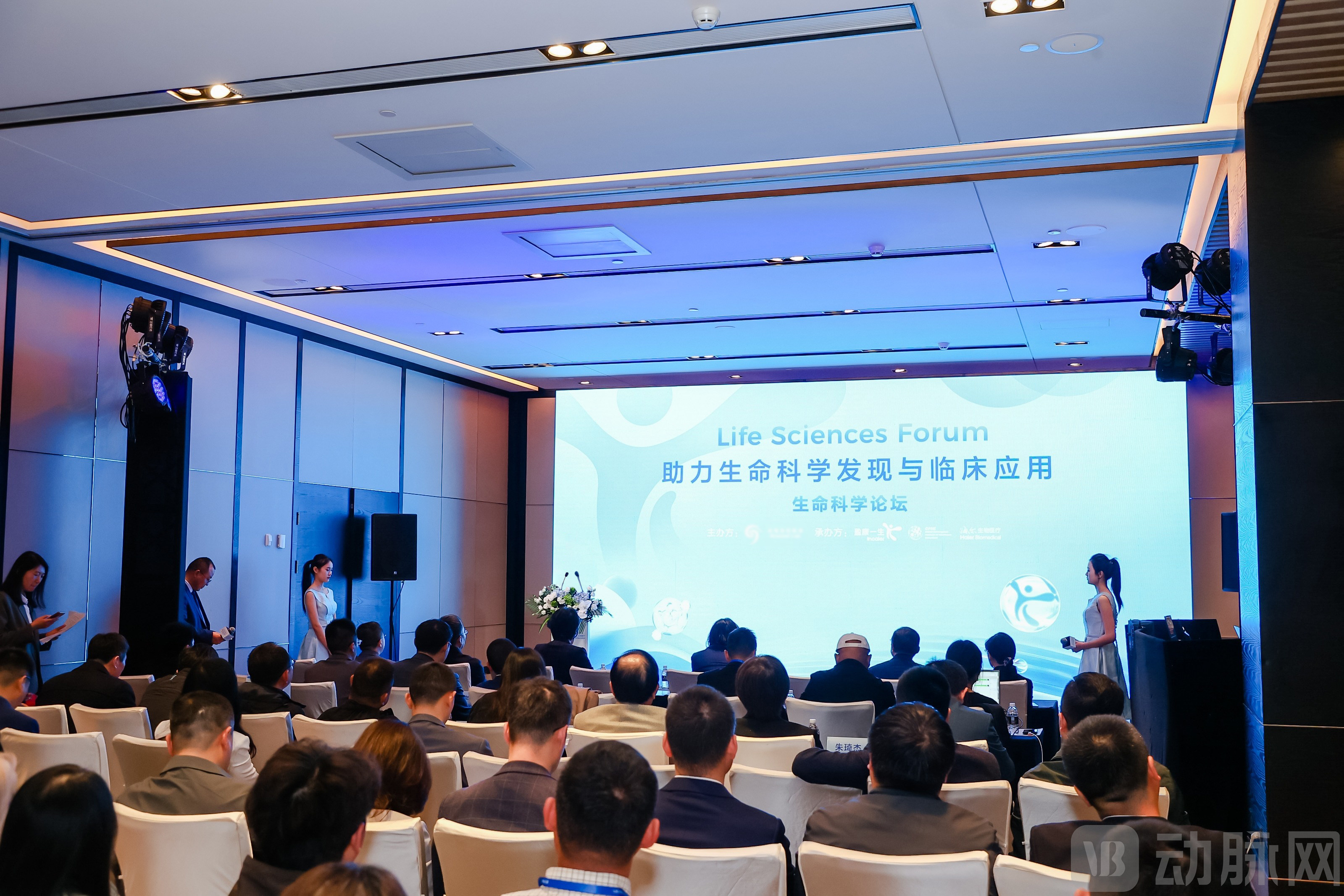
Evolutionary Strategic Planning, Clear Development Pathways, and Powerful Synergy from a Robust “Ecosystem”... The 2024 Government Work Report’s call to accelerate the development of new-quality productive forces has unveiled a new code for evolutionary breakthroughs in the life sciences services industry. A comprehensive interpretation of the profound significance behind Haier Biomedical’s life sciences strategy is both important and meaningful.
At the Crossroads: The Life Sciences Services Sector Has Reached Its Inflection Point
Driven by the Chinese government’s heightened focus on life sciences in recent years, the rapid growth of the testing industry spurred by the pandemic, and the booming development of China’s biopharmaceutical sector fueled by innovation, the upstream life sciences industry—particularly the niche segment of life science services—is embracing new opportunities for growth.
Nowadays, the booming investment in the biopharmaceutical sector of the secondary market has driven increased attention to the upstream life sciences industry and heightened IPO activity. According to statistics from the VCBeat Orange Database, total financing in the biopharmaceutical industry reached RMB 137.16 billion in 2022, a year-on-year increase of 0.39%. Structurally, the pharmaceuticals, biotechnology, and life sciences sector secured RMB 75.011 billion in financing, while the healthcare equipment and services sector raised RMB 62.149 billion.
Meanwhile,mRNAEmerging sectors such as vaccines, cell and gene therapy are also driving new growth in life science services, with R&D expenditures of global biopharmaceutical companies and academic research institutions rising rapidly. According to data released by the National Bureau of Statistics, China’s pharmaceutical industry saw a year-on-year increase of 28.7% in 2020 among industrial enterprises above designated size.
Under such trends,Life science services are evolving toward digital intelligence: calling for greater efficiencySafe and Digital-Intelligentsolutions and more advanced instruments and equipment.However, due to the multidisciplinary nature of life science services and their high technical barriers, companies from developed countries such as the United States and Europe have achieved mature technological development and hold monopolistic or dominant positions in the Chinese market. According to a 2022 report by Soochow Securities, the Chinese market accounts for approximately 10% of their total annual revenue.
It is argued that China’s high-end life science instruments require leadership from benchmark enterprises, with Haier Biomedical serving as a typical representative. Since its inception, Haier Biomedical has adhered to the vision of “Making Life Better,” providing users with sample research and management solutions that range from single devices to comprehensive, scenario-based digital and intelligent systems. Currently, Haier Biomedical has made significant progress in both the life sciences and medical innovation sectors. It has developed integrated digital and intelligent solutions for various scenarios, including smart laboratories, smart compliant pharmaceutical manufacturing, smart blood usage, smart vaccination, and smart hospitals. This achievement marks an optimized pathway from technological industrialization to global industrial expansion, and from scenario-based solutions to ecosystem-driven scenarios.
Currently, in response to the era’s demands for the development of life sciences, Haier Biomedical is providing its unique answer. Leveraging its profound accumulation in core technologies, digital-intelligent innovation, and ecosystem co-creation, Haier Biomedical is continuously advancing to deliver more efficient and safe advanced methods and tools for life science research and clinical applications. This is also an intrinsic component of its life sciences strategy.
Integrated Hardware, Software, and Service Model Leads the Way, Unlocking New Growth Potential
The newly released life sciences strategy is centrally positioned to deliver integrated hardware, software, and service solutions by tackling challenges in high-end instrumentation and driving digital-intelligence innovation, thereby serving life sciences research and clinical applications while promoting the high-quality development of the life sciences industry. Specifically, digital intelligence, as an innovative direction urgently needed in life sciences and clinical services, has become one of the growth engines for Qingdao Haier Biomedical Co., Ltd. Moreover, its all-scenario, one-stop integrated hardware, software, and service solutions enable sustainable, lifelong user support.
In fact, Haier Biomedical has achieved significant success in its strategic layout for life sciences. In the field of life sciences, Haier Biomedical continues to enrich and extend its EPS integrated solutions for smart laboratories, gradually expanding into industrial production solutions. In the realm of medical innovation, Haier Biomedical has been deeply engaged in scenarios such as hospitals, public health, and blood/plasma stations, with innovative solutions emerging one after another.
According to the company’s 2023 annual report released recently, it achieved an operating revenue of RMB 2.281 billion in 2023. Amid a macro environment characterized by instability, uncertainty, and unpredictability as the new normal, the company maintained strategic focus, persisted in business model upgrades, and strengthened global synergy. In 2023, the company’s revenue from new non-storage industries increased by more than 30% year-on-year, and the proportion of service revenue rose to 17%.
From the perspective of business segmentation, in 2023, Haier Biomedical's life sciences business and medical innovation business achieved revenues of RMB 1.031 billion and RMB 1.241 billion, respectively. The company's two main business segments both realized high-speed growth and established strong competitive advantages in their respective fields.
In the life sciences sector, Haier Biomedical primarily provides users with comprehensive smart laboratory solutions. Its business has currently expanded into eight major user scenarios, including microbiology laboratories and cell laboratories. On one hand, targeting academic research users, Haier Biomedical is seizing opportunities in biobank and laboratory construction, committed to advancing automation, intelligence, and IoT-enabled upgrades. It is reported that its full-scenario automated sample management solutions have been extended to scenarios such as pathogenic microbiome biobanks and antibody biobanks, and have been implemented at key national-level institutions like the Tianjin Institute of Industrial Biotechnology. Meanwhile, its multi-scenario laboratory solutions, covering sample preparation, animal facility management, and laboratory management, have been deployed in laboratories at key national universities and research institutes, including Tsinghua University, Peking University, and the Institute of Botany of the Chinese Academy of Sciences.
On the other hand, targeting biopharmaceutical clients, Haier Biomedical has launched an intelligent automated cell preparation solution for Cell and Gene Therapy (CGT), which has been successfully adopted by users such as Nanhua Bio and Saiao Bio. Notably, in 2023, Haier Biomedical formally entered the biopharmaceutical sector, introducing comprehensive scenario-based solutions for the industry. Supported by a validation service platform, these solutions cover three major areas—pilot-scale production, quality control (QC), and industrial manufacturing—encompassing nine specific scenario-based solutions. Among them, the introduced controlled freeze-thaw system has achieved a significant effect, increasing the output value per batch of biological products by more than 10%.
In the field of medical innovation, Haier Biomedical has already implemented multiple solutions in numerous hospitals, including customized automated medication dispensing, intelligent intravenous admixture services, and operating room consumables management, extending from pharmacies to intravenous admixture centers and operating rooms. Among these, its comprehensive digital-intelligent solution for smart hospital medication management covers integrated intelligent intravenous admixture centers, smart outpatient pharmacies, smart inpatient pharmacies, and 24-hour unmanned pharmacies. This solution has been deployed in over 300 hospitals, continuously expanding its user base among secondary and tertiary hospitals while maintaining rapid growth. Meanwhile, smart vaccination sites are being rapidly replicated across the Guizhou provincial network; an innovative AI-automated vaccine workstation has been introduced, and a smart elderly care and health management platform has been implemented in regions such as Inner Mongolia. In the blood and plasma station sector, the urban blood network has been successively launched in Qinghai Province and cities like Ordos, with the market share of newly built plasma stations steadily increasing and the blood consumables product line continuously improving.
Leveraging digital intelligence as a strategic driver, Haier Biomedical’s integrated “hardware + software + services” model has demonstrated robust growth. From 2019 to the present, the company’s annual revenue has increased from RMB 1.013 billion to RMB 2.281 billion, with its two core business segments—life sciences and medical innovation—exhibiting exceptionally strong growth momentum.
Grounded in User Needs, Driven by Digital Intelligence for Innovation, and Building a Broad Network of “Friends”
Innovation is the primary driving force behind development. Haier Biomedical’s life sciences strategy relies on its continuous cultivation of user scenario needs and its commitment to leveraging technological innovation as an engine for endogenous growth.
In terms of innovation models, Haier Biomedical has established the UADV open R&D system to support improved R&D efficiency and rapid industrialization of technological achievements. Currently, Haier Biomedical has built an open R&D system layout centered on six major technology platforms—including refrigeration, intelligence, and biotechnology—with complementary R&D centers in six locations such as Qingdao, Shenzhen, and Shanghai. This structure strongly supports the company’s rapid expansion from low-temperature storage into the life sciences EPS (Equipment, Products, and Services) sector. According to the annual report, in 2023, Haier Biomedical increased the on-time launch rate of new products by 12% and improved per-capita R&D efficiency by 32%.
Driven by endogenous innovation, Haier Biomedical collaborates closely with expert users to continuously expand the frontiers of innovation based on user needs. Globally, Haier Biomedical connects with governments, foundations, NGOs, enterprises, and academic institutions—including Tsinghua University, Ruijin Hospital, and PATH (Program for Appropriate Technology in Health)—to jointly participate in the research, development, and iterative improvement of personalized solutions, leveraging mechanism advantages through user co-creation, win-win cooperation, and shared benefits. For example, Haier Biomedical and Regend Therapeutics have established an Intelligent Cell Automation Industry Innovation Center through collaborative co-creation, utilizing automated cell culture to propel the upgrade of cell therapy toward Industry 4.0.
Furthermore, Haier Biomedical has built a “concentric circle” empowerment system based on high-quality M&A activities, adopting the strategy of targeting “promising industries, strong companies, and like-minded partners” to accelerate strategic layout expansion and achieve business synergy and complementarity. In recent years, high-quality assets such as Haier Biomedical Technology (Chengdu), Haier Blood Technology, Jinweixin, Kangsheng Biology, and Haier Biomedical Technology (Suzhou) have successively joined the company.
Under its “organic growth + external expansion” strategy, Haier Biomedical remains user-centric, continuously broadening its ecosystem of partners and has established a closed-loop ecosystem characterized by co-creation, win-win collaboration, and shared benefits among users. According to Haier Biomedical’s 2023 annual report, the company invested RMB 321 million in research and development during the reporting period, representing a 10% year-on-year increase and accounting for 14% of its operating revenue. To date, Haier Biomedical holds 1,321 patents and 296 software copyrights; it has led or participated in the drafting of 40 national, industry, and group standards and technical specifications; it has received 35 provincial-level or higher scientific and technological awards, including the “China Industrial Award” and the “First Prize for Scientific and Technological Progress of Shandong Province”; and 32 of its technological achievements have been appraised as reaching an internationally leading level.
The launch of the Life Sciences Strategy has charted a clear course for the future of Haier Biomedical. By leveraging new technologies, services, and experiences to fulfill its innovation-driven vision of “Making Life Better,” Haier Biomedical is demonstrating its commitment to driving growth through novelty and enhancing quality through intelligence. Its contributions to the robust development of the healthcare industry have yielded remarkable results. With the blueprint now in place, Haier Biomedical is poised to unleash tremendous momentum under this new Life Sciences Strategy.