

The Most Successful MedTech Segment Enters an Iteration Cycle: Who Will Emerge as the Ultimate Innovator?

MicroTech Medical
Developer of Medical Device Products for Diabetes Management
With Roche’s entry into the market and Dexcom’s new product approval, the overseas continuous glucose monitoring (CGM) market is facing intensified competition. In terms of market potential, CGM penetration remains low; even in the United States, penetration rates among patients with type 1 and type 2 diabetes are only 25.8% and 9%, respectively, indicating substantial room for future growth. From a sales perspective, Abbott and Dexcom each generated over $9 billion in CGM revenue in 2023. Together with Medtronic, these companies have joined the ranks of blockbuster medical devices with annual revenues exceeding $10 billion, establishing CGM as one of the most successful segments in the history of medical devices.
Faced with this high-growth sector, numerous domestic companies have actively entered the market. Since 2021, domestically produced CGM products, represented by those from MicroTech Medical, have successively received approval, marking the commencement of the commercialization phase for Chinese-made CGMs.
Two years have passed in a flash. Domestic CGM devices have gained a firm foothold and achieved certain successes by virtue of their product strength, but these products are now entering an iteration cycle, necessitating improvements based on market and user feedback. After solving the initial challenge of going from zero to one, only those who can first meet patients’ actual needs during the iteration process will stand a chance of winning market favor.
In 2023, amid the surge in popularity of GLP-1 receptor agonists, industry giants Abbott and Dexcom successively released studies indicating that GLP-1 drugs had driven up sales of continuous glucose monitors (CGMs). Both companies’ research also highlighted the significant role CGMs play in facilitating lifestyle modifications. To effect lasting lifestyle changes, however, these technologies must first seamlessly integrate into daily life. The evolution of CGM technology is thus not only functional but also deeply rooted in enhancing everyday living.
If the initial emergence of domestically produced continuous glucose monitoring (CGM) systems marked the first stage of industry development, the second stage of product evolution will focus on refinement and seamless integration into patients’ daily lives. In the near future, next-generation CGM products must not only achieve functional upgrades and breakthroughs but also become more closely aligned with patients’ everyday experiences. Only in this way can the industry sustain its healthy development trajectory.
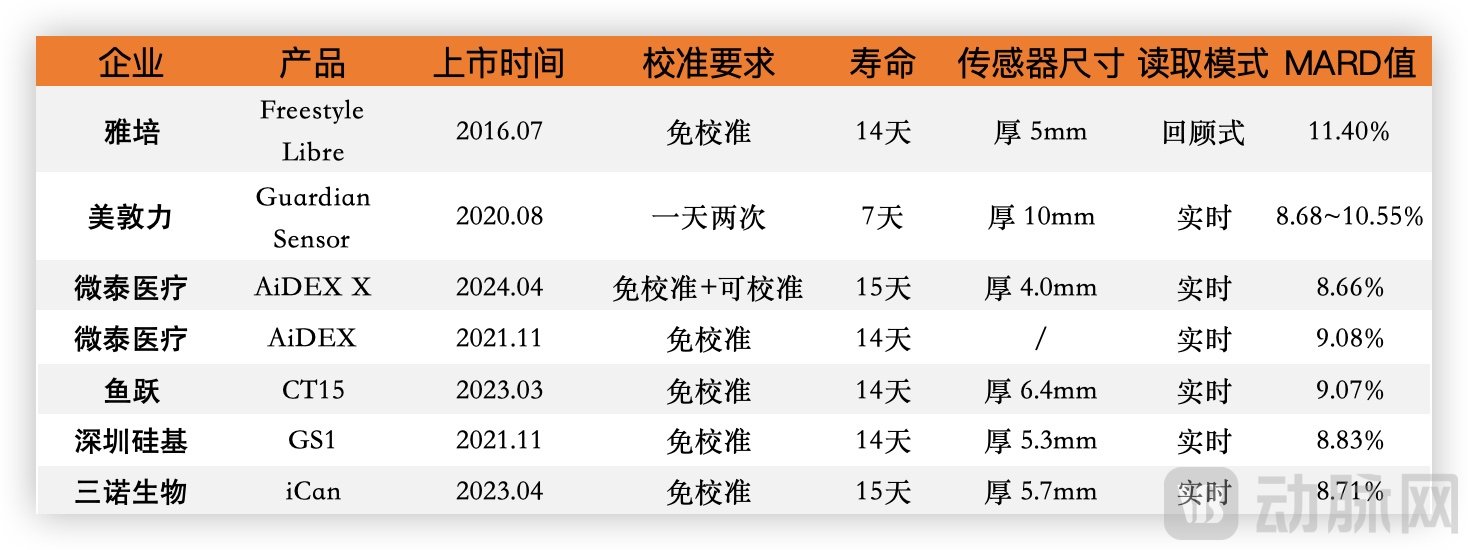
Parameters of Mainstream CGM Products in the Domestic Market; Data Sourced from Corporate Official Websites and Tmall Flagship Stores
For patients, powerful functionality and ease of use are not mutually exclusive options but essential requirements.
Current CGM products on the market have shortcomings in terms of convenience and comfort. For example, most domestically produced CGMs currently adopt an independent design for sensors and applicators, requiring users to assemble them themselves during use. This not only raises the barrier to use, especially being less user-friendly for the elderly population, but also increases packaging volume, making it less portable. Particularly as the age demographic of diabetes patients shifts younger, this group tends to travel frequently for business and leisure, making such demands unavoidable.
The pursuit of comfort is a shared desire among all user groups. Given that continuous glucose monitors (CGMs) are worn on the body for extended periods, it is crucial to eliminate the sensation of a foreign object, particularly in specific scenarios such as exercise or sleep. For users, whether a CGM can truly achieve a thin, lightweight, and unobtrusive design is highly likely to influence their final choice.
Certainly, patients also seek volume reduction without compromising function.
Taking the Mean Absolute Relative Difference (MARD) as an example, patients naturally tend to choose products with lower MARD values. Domestic continuous glucose monitoring (CGM) manufacturers have also invested significant effort in this area to improve measurement accuracy, evolving their products from early models requiring calibration to current calibration-free versions. However, from the patient’s perspective, individual physiological differences are an objective reality, and it is only human nature to seek reassurance through multiple sources of verification. Therefore, a “calibration-free yet calibratable” model, which combines the advantages of both approaches, may be the effective solution to address patient needs.
On the other hand, although CGM is touted as a “blood glucose camera,” the measurement interval of mainstream products remains at 3–5 minutes. Many patients hope to observe more subtle trends in blood glucose fluctuations to better manage their daily lives, such as making informed food choices, regulating exercise, and adjusting medication dosages. Consequently, higher standards are being placed on these products.
Overall, the primary demand for CGM in the future market centers on “simplicity,” emphasizing a hassle-free, intuitive user experience. Despite its apparent complexity, this requirement has already been met by some companies.
On April 12, MicroTech Medical unveiled its next-generation CGM product, AiDEX X. The slogan “Light and Agile, Powered by Simplified AI” reflects the R&D philosophy behind this new generation of products.
This is China’s first all-in-one, integrated, calibration-free CGM. The higher level of integration not only makes it more convenient and user-friendly but also features compact packaging that is travel-friendly. With a measurement frequency as high as once per minute, the AiDEX X provides more comprehensive glucose data for patients, ensuring that hidden episodes of hyperglycemia or hypoglycemia are no longer undetected.
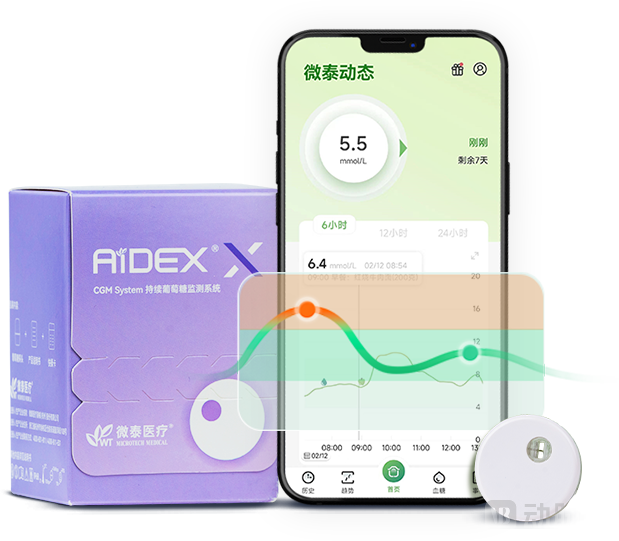
The new-generation CGM product AiDEX X. Image source: company website
To address individual variability, AiDEX X incorporates a calibratable feature alongside its factory-calibrated mode, achieving a Mean Absolute Relative Difference (MARD) of only 8.66% in the uncalibrated state, which can be further reduced to 7.64% with calibration. For patients with diabetes, the pursuit of blood glucose accuracy is deeply ingrained. Rather than attempting to educate patients to simply trust the device, it is more effective to remove restrictions and empower them with greater autonomy, while ensuring the inherent accuracy of the product.
Notably, the AiDEX X further reduces its form factor while extending its wear time to 15 days. With a thickness of only 4.0 mm and a weight of 2.16 g, it is sufficiently slim and lightweight to meet users’ demand for a discreet, barely perceptible wearing experience. Additionally, the AiDEX X offers hospital-grade versions with various usage durations to accommodate different lengths of hospital stays.
Meanwhile, in terms of CGM companion software, MicroTech Medical is also preparing to integrate the most popular artificial intelligence applications. For instance, MicroTech has initiated the development of AI large language models based on user behavioral data and other information, building an intelligent physician consultation platform and a social network for individuals with diabetes, thereby helping patients manage their blood glucose levels in a more scientific and rational manner.
Beyond CGM devices themselves, MicroTech Medical has built a comprehensive digital management ecosystem for diabetes patients that spans both in-hospital and out-of-hospital settings.
The concept of digital glucose management has been proposed for many years, but in practice, it requires companies to integrate monitoring devices, therapeutic devices, and software platforms to achieve interoperability. International giants such as Medtronic and Dexcom are moving in this direction, while few domestic enterprises have established a comprehensive layout. MicroTech Medical stands out with its multi-faceted presence across blood glucose monitoring (BGM), continuous glucose monitoring (CGM), smart insulin pumps, point-of-care testing (POCT) analyzers, and management systems. Furthermore, MicroTech’s system has broken down data barriers, enabling seamless data flow between in-hospital and out-of-hospital settings, thereby achieving all-scenario digital glucose management.
If the previous competition in the CGM sector focused on hardware, centered on technological optimization and refinement of product details, future competition will gradually shift toward ecosystem building driven by data and AI. Only enterprises capable of deploying products across detection, treatment, and platforms, while accelerating collaboration with medical institutions to develop reliable, comprehensive holistic solutions, will gain a competitive edge in the years ahead.
As the first domestically updated and iterated CGM product, AiDEX X has made corresponding improvements to issues raised by market feedback. Such a rapid response is inseparable from its long-term forward-looking layout in the field of diabetes.
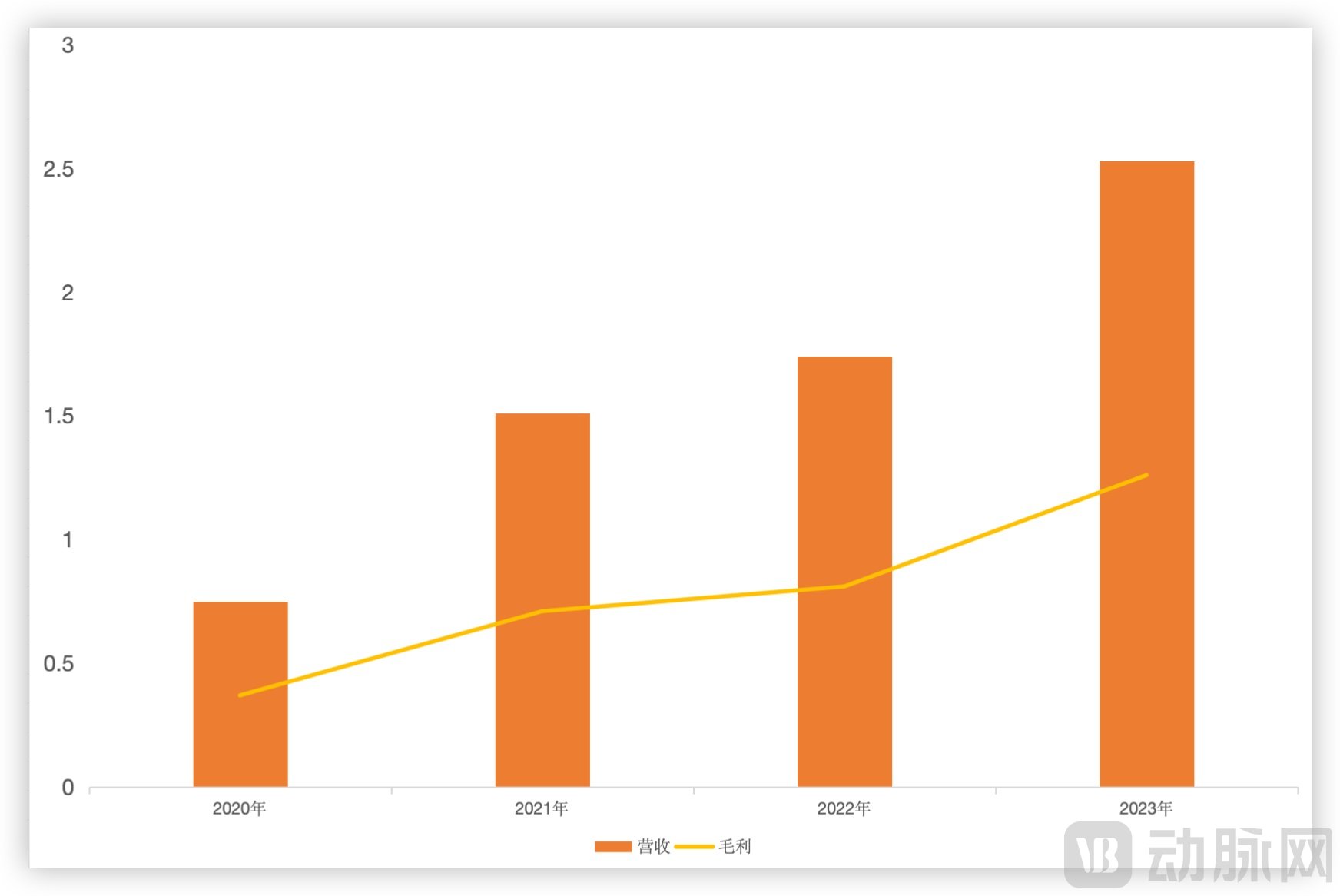
MicroTech Medical's Revenue and Gross Profit Over the Past Three Years (Unit: RMB 100 Million), Data Sourced from Corporate Financial Reports
As can be seen, since 2021, with the approval and market launch of the CGM product AiDEX in China and the European Union, as well as the entry of the Equil patch insulin pump and AiDEX as a product portfolio into the global market for sales, MicroTech Medical’s revenue has entered a phase of rapid growth.
Coinciding with the launch of the first-generation AiDEX, MicroTech Medical was already developing its next-generation CGM product, AiDEX X, demonstrating a robust forward-looking product strategy. By 2022, driven by the steady growth of both AiDEX and Equil, the company’s revenue continued to rise steadily. Meanwhile, its closed-loop artificial pancreas system, PanCares, had completed registration and was poised to commence clinical trials.
In 2023, MicroTech Medical generated over RMB 75 million in revenue from its AiDEX CGM product, representing a year-on-year increase of 123.7%; the Equil patch insulin pump was used in more than 1,000 specialized medical institutions. Overseas revenue increased by 85.6% year on year, with the core AiDEX and Equil series products already launched in more than 20 countries and regions worldwide and gradually included in local commercial insurance and national health insurance schemes.
Meanwhile, MicroTech Medical has continued to conduct multiple clinical trials, aiming to expand the indications for the Equil product to children and adolescents (aged 3–18 years) and for AiDEX to pediatric and adolescent patients with diabetes (aged 2–18 years). With the approval of these new indications, the target population will be further broadened. AiDEX has also undergone post-marketing clinical trials in the Middle East to evaluate the effectiveness and satisfaction of using CGM and BGM, with relevant results presented at the American Association of Clinical Endocrinology (AACE) Annual Meeting. Furthermore, post-marketing clinical trials for the Equil product have been conducted in Europe to assess its efficacy and safety, laying a solid foundation for its subsequent large-scale promotion.
It is evident from these strategic arrangements that MicroTech Medical’s ability to take the lead in iterating its CGM products is by no means accidental, but rather built upon its deep-rooted expertise in the industry. Furthermore, it is worth noting that MicroTech Medical listed on the Hong Kong Stock Exchange in October 2021. Despite having numerous prominent institutional shareholders—including Tencent, Taikang, and Lilly Asia—the company maintains a relatively low-profile image, focusing on engineering and product development, which has resulted in limited public awareness.
In the CGM sector, three international giants—Abbott, Dexcom, and Medtronic—are engaged in intense competition. Medtronic has long entered the artificial pancreas field, while Abbott and Dexcom have partnered with insulin pump manufacturers such as Insulet to penetrate this market. In China, only a select few companies, represented by MicroTech Medical, possess the capability to pursue this technological pathway.
Building on Equil, the first patch-type insulin pump system approved in China, and leveraging its deep expertise in the CGM field, MicroTech Medical has proactively developed PanCares, a closed-loop artificial pancreas system. This system provides smarter monitoring and therapeutic functions for patients. Notably, it is the first domestically produced artificial pancreas product to enter the Special Examination Procedure for Innovative Medical Devices in China and is expected to become the first domestically produced artificial pancreas approved in the country. In 2023, Medtronic announced its acquisition of the Korean patch-pump manufacturer EOFlow for $738 million, highlighting the significant potential of this single-product sector. For details, see“Diabetes Market Heats Up Again: Abbott, Dexcom, and Medtronic Begin to Compete Fiercely in This Direction”。
In other words, as a leading domestic CGM enterprise, MicroTech Medical has not only leveraged its first-mover advantage to enter the market in the past but will also continue to delve deeper into this sector by virtue of its sustained product innovation and R&D capabilities. Currently, MicroTech’s Jiantang Doctor Glucose Management System can already connect with products such as CGMs, patch-type smart insulin pumps, wireless glucose meters, and blood glucose/blood ketone/uric acid testers. In the future, with the launch of the artificial pancreas system, PanCares, MicroTech’s product portfolio will become even more comprehensive and robust.
MicroTech Medical has invested heavily not only in R&D but also in manufacturing. Currently, MicroTech Medical operates a production facility in Hangzhou with a total area of approximately 15,000 square meters, compliant with Good Manufacturing Practice (GMP) regulations in China, the European Union, and the United States. The company has established automated production lines with an annual capacity in the millions to serve customers in China and worldwide. To meet future business demands, a new production base was constructed in Yuhang District, Hangzhou, in 2023. Furthermore, MicroTech Medical maintains full control over the entire supply chain for its core product, Continuous Glucose Monitoring (CGM) systems, enabling it to secure a cost advantage even in the event of future price wars.
MicroTech Medical’s forward-looking strategic layout has sustained its high growth performance in recent years and established a healthy asset-liability structure. As of the end of 2023, the company’s debt-to-asset ratio stood at merely 4.5%, while its cash reserves approached RMB 1.9 billion—lower than its market capitalization on the Hong Kong Stock Exchange. Coupled with relatively lower price-to-book (P/B) and price-to-sales (P/S) ratios compared to industry peers, this suggests that MicroTech Medical’s intrinsic value may not yet be fully recognized, possibly due to the sluggish performance of the Hong Kong stock market.
Only a handful of companies, such as Medtronic, have achieved such a comprehensive footprint in the field of diabetes management. Thanks to their robust product portfolios, these companies are not merely device developers and manufacturers but ecosystem builders. They collaborate closely with healthcare institutions to deliver higher-value diabetes management services to patients.
Currently, MicroTech Medical is collaborating with Wuhan Union Hospital to explore an integrated blood glucose management model across multiple campuses and departments. In partnership with Yi County Hospital of Traditional Chinese and Western Medicine, it has established a "Digital Insulin Pump Center," extending its reach to multiple departments throughout the hospital and 27 subordinate township health centers, thereby implementing a centralized, integrated blood glucose management model. Additionally, MicroTech Medical is working with Taikang Insurance to explore home-based solutions for blood pressure and blood glucose control. MicroTech Medical is steadily enhancing its ecosystem.
For 2024, MicroTech Medical firmly stated in its earnings conference call that it would continue to maintain a high-growth trajectory. Overall, with the launch of the flagship product AiDEX X and the subsequent approval of the artificial pancreas system PanCares, MicroTech will build a more comprehensive and robust ecosystem around its expanded product portfolio, ensuring the continued realization of its value.