

Sichuan University's Wei Yuquan Team Unveils Novel mRNA Delivery Patent Featuring TLSV Nanoparticles for Colorectal Cancer Therapy
Recently,Academician Wei Yuquan’s team at Sichuan University has disclosed a patent on mRNA delivery, introducing a novel delivery vehicle—TLSV nanoparticles.These nanoparticles are meticulously prepared by encapsulating tumor cell lysates with DOTAP cationic phospholipids and the amphiphilic diblock copolymer mPEG‑PCL, offering significant advantages such as low cytotoxicity and high transfection efficiency.
The patent indicates that the complex formed by TLSV nanoparticles and mRNA successfully inhibited the growth of colorectal cancer tumor tissues in in vivo experiments and demonstrated effective prevention of lung metastasis from colorectal cancer, providing a new strategy for the treatment of colorectal cancer.
19 Drugs Launched, with Expanding Indications
Small nucleic acid drugs are a novel class of therapeutics composed of nucleotides. They primarily target mRNA in the cytoplasm, where they recognize and inhibit specific target mRNAs through base-pair complementarity, thereby regulating protein expression to achieve therapeutic effects.
After decades of fundamental research,A total of 19 oligonucleotide drugs have been marketed globally, these drugs are primarily used to treat genetic and rare diseases such as Duchenne muscular dystrophy, spinal muscular atrophy, and hereditary transthyretin-mediated amyloidosis. This is because rare disease therapies benefit from advantages such as Breakthrough Therapy designation, lower patient enrollment requirements for clinical trials, and priority review, which help companies validate clinical efficacy more rapidly and bring products to market.
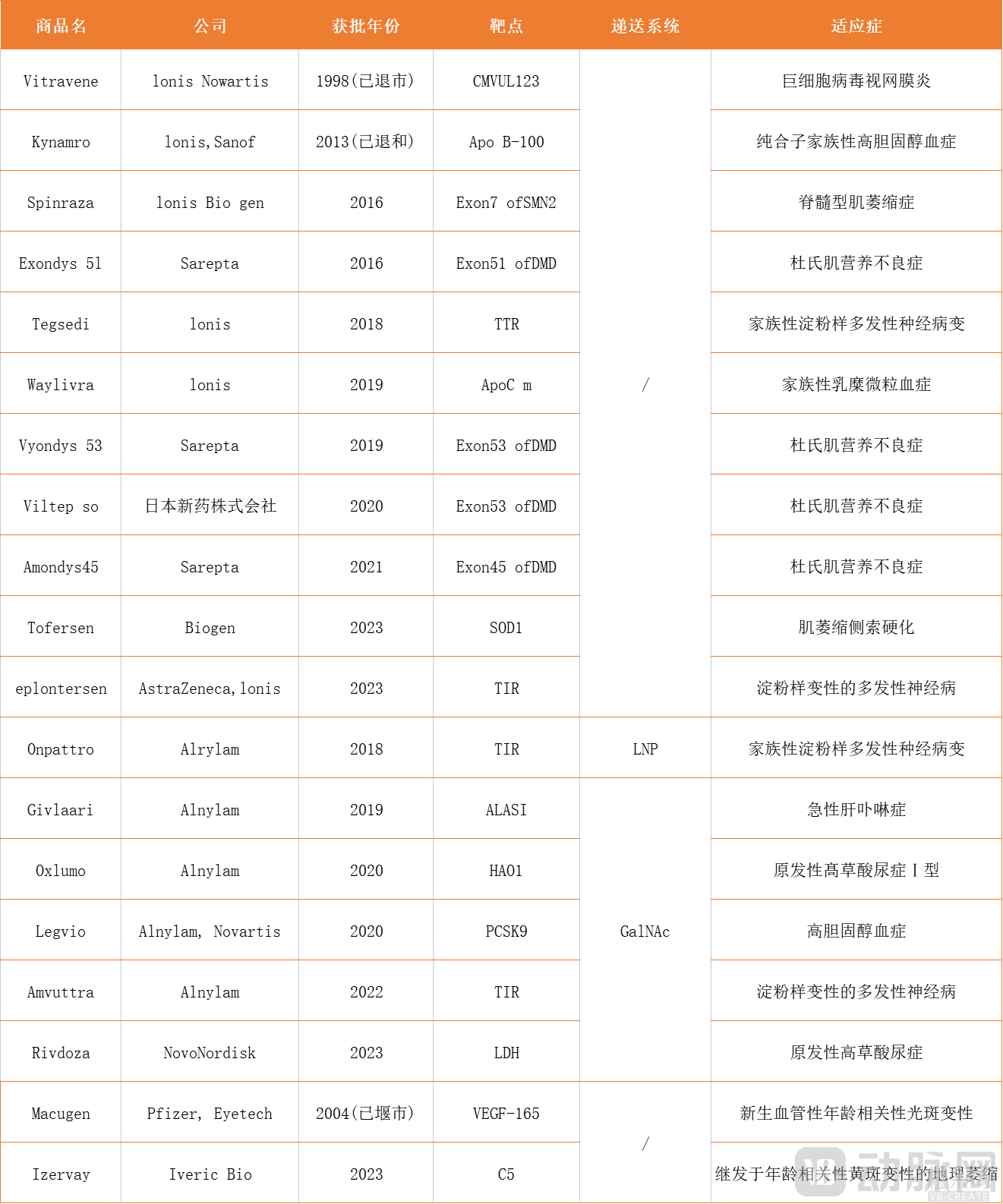 Figure: Details of 19 Marketed Oligonucleotide Drugs. Source: Guangzhou Rare Disease Gene Therapy Alliance
As enthusiasm for small nucleic acid drug development surges and the range of covered targets expands, their indications are becoming increasingly diverse.. In 2020, Novartis’s long-acting lipid-lowering drug Inclisiran was launched as the world’s first small nucleic acid drug approved in the non-rare disease field, achieving sales of $112 million in 2022.
The success of inclisiran has inspired more companies to enter the small nucleic acid therapeutic space, expanding the drug landscape for rare diseases and cardiovascular metabolic disorders. For instance, Innovent Biologics and Shengyin Biopharma announced the siRNA candidate drug SGB-3908 for the treatment of hypertension; Ribo Life Science and Qilu Pharmaceutical are jointly developing “RBD7022,” a GalNAc-conjugated siRNA drug for the treatment of hyperlipidemia.
In addition to cardiovascular diseases, Alnylam, the leading company in siRNA therapeutics, has also expanded its indications to include hemophilia and retinal macular degeneration; Ionis, a representative company in ASO therapeutics, has also conducted research on the treatment of diabetes, hepatitis B virus infection, and prostate cancer.
According to Frost & Sullivan statistics, there are currently nearly 108 small nucleic acid drugs in clinical trials globally. Among these, oncology has become the indication with the largest proportion of small nucleic acid drug clinical pipelines, accounting for 24%. Other indications include genetic diseases (22%), sensory organ diseases (13%), and cardiovascular system diseases (12%).
Led by International Markets, Chased by Domestic Counterparts
The expansion of indications for oligonucleotide therapeutics has stimulated market growth. According to Frost & Sullivan, the global market size for oligonucleotide therapeutics grew from $1 million in 2016 to nearly $3.8 billion in 2022, representing a compound annual growth rate (CAGR) of 295%, indicative of explosive development.
For the small nucleic acid drug market with great prospects,Many international pharmaceutical giants entered the market early on. Taking GlaxoSmithKline (GSK) as an example, since 2019, GSK has collaborated with Ionis Pharmaceuticals to develop antisense oligonucleotide (ASO) drugs for the treatment of hepatitis B; in 2021, it acquired ARO-HSD, an RNA interference (RNAi) therapy for the treatment of non-alcoholic steatohepatitis (NASH); and in 2022, it announced another collaboration with Wave Life Sciences to advance ASO development.
According to statistics, between 2021 and 2022, GlaxoSmithKline collaborated with three leading companies in the small nucleic acid field—Wave Life Sciences, Arrowhead Pharmaceuticals, and Ionis Pharmaceuticals—with a cumulative total transaction value exceeding $4.2 billion.
Meanwhile,Domestic pharmaceutical companies are also gradually beginning to lay out their strategies.. Junshi Biosciences initiated a clinical trial for an ANGPTL3 siRNA drug in 2023, becoming a pioneering innovative pharmaceutical company in the exploration of small nucleic acid drugs. Hengrui Medicine also launched the clinical trial of its siRNA drug HRS-5635 in the same year.
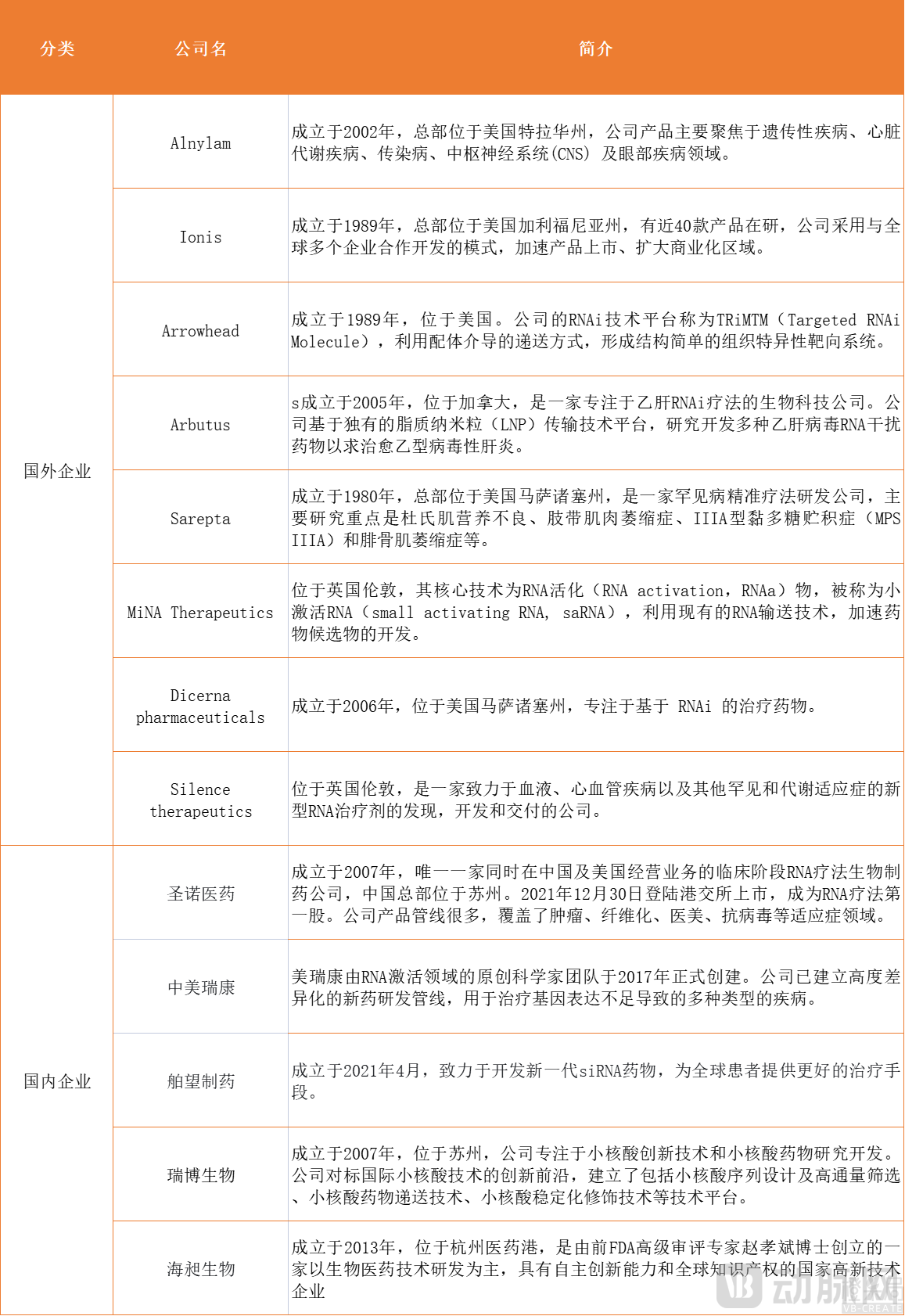
Figure: Selected Small Nucleic Acid Drug R&D Companies in China and Abroad
However, compared with foreign countries, the development and strategic layout of small nucleic acid drugs in China are still in the early stages.Currently, only 16 products in China are in the clinical stage. In terms of product types and targets, most domestic companies are developing drugs similar to those already marketed abroad, remaining at the “me-too” stage.
However, with breakthroughs in core technologies, many domestic small nucleic acid innovative enterprises are accelerating their catch-up. It is understood that established in 2007Ribo Life SciencesLeveraging its independently developed RIBO-GalSTARTM, a GalNAc-based small nucleic acid drug delivery technology platform, the company has entered a phase of rapid development for small nucleic acid drug candidates and currently boasts eight clinical-stage assets.StonemedIt also leverages its proprietary polypeptide nanoparticle (PNP) delivery platform and GalNAc platform for the research and development of small nucleic acid drugs. The company is actively advancing clinical studies on three key candidates: STP705 for the treatment of cutaneous squamous cell carcinoma, STP707 for solid tumors, and STP122G for targeting endogenous coagulation factors. The most advanced product in its pipeline has entered Phase II clinical trials.
Not only that,“The development of nucleic acid therapeutics has reached a turning point” has also become a consensus in the academic community. In 2023, at the Xiangshan Science Conference academic symposium themed “Nucleic Acid Biostructural Chemistry, Biomedicine, and Health,” experts recommended mobilizing domestic scientific research resources to establish a multidisciplinary cross-research platform, thereby advancing fundamental innovative research on nucleic acid therapeutics. This initiative may also become a key driver for industry development and the emergence of original innovations.