

Hearing Aid Sector on the Verge of Breakthrough as ZhiTing Secures National Key R&D Program Endorsement
Recently, the launch meeting of the National Key R&D Program’s key special project on “Proactive Health and Technological Responses to Population Aging” under the 14th Five-Year Plan was successfully held in Beijing. The project was jointly applied for by Eartech (Zhitin Hearing Aids) and Academician Han Demin’s team.“Core Technologies for Auditory Reconstruction and Remote Hearing Aid Fitting”Officially launched at the conference. It is reported that the “National Key R&D Program” is China’s highest-level research and development initiative, formed by integrating former programs such as the 973 Program and the 863 Program. It focuses on addressing major scientific and technological issues critical to industrial core competitiveness and national independent innovation capacity, aiming to break through bottlenecks in national economic and social development.

Figure 1. Group Photo at the Project Approval Meeting for the National Key R&D Program during the 14th Five-Year Plan Period
It is worth mentioning that,“Core Technologies for Auditory Reconstruction and Remote Hearing Aid Fitting” is the only hearing-related project approved under this “National Key R&D Program,” marking the first time a project in the hearing aid sector has received recognition at the highest national level for R&D initiatives.。
This is highly significant for the hearing aid sector, which rarely enjoys such public exposure. For a considerable period in the past, hearing aids were habitually overlooked by both the market and investors.
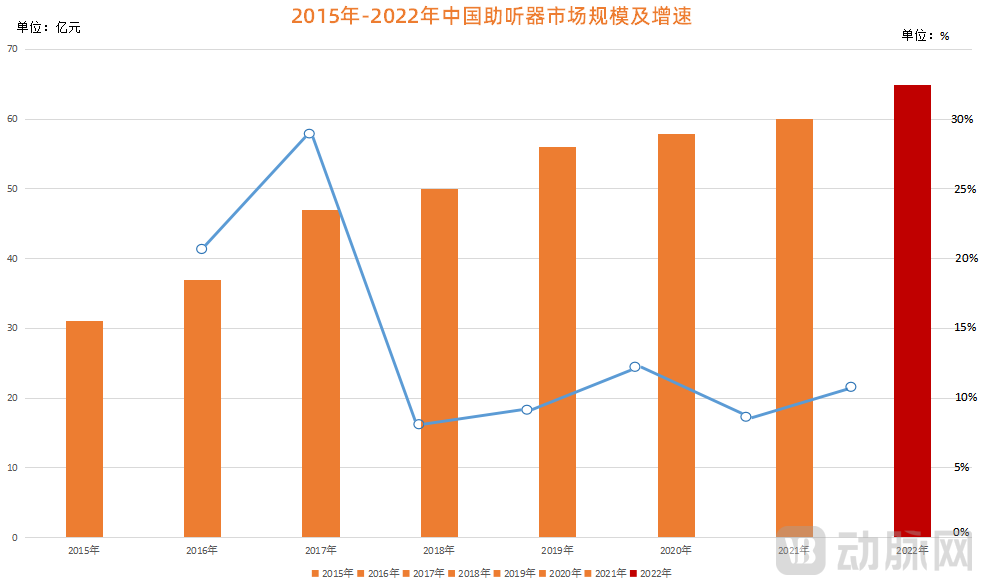
Figure 2. Market Size of Hearing Aids in China, 2015–2022 (Data Source: Zhiyan Consulting)
This is not without basis. As consumer healthcare products, hearing aids differ significantly from their two major counterparts in ophthalmology and dentistry. For instance, in terms of market size, according to statistics from Zhiyan Consulting,In 2022, the market size of hearing aids in China was approximately RMB 6.494 billion., although still rising rapidly, remains far from the current multi-hundred-billion-yuan market size of ophthalmology and dentistry. Additionally, at the capital level, according to incomplete statistics from the VCBeat Orange Database,Over the past three years, China’s hearing aid sector has completed a total of 18 financing rounds., which also shows a significant gap compared to the hundreds of financing rounds in the dental and ophthalmology sectors.
On the other hand, positive signals are also emerging in the hearing aid industry. For instance, the approval of a major national special project for hearing aids, and Article 16 of Document No. 1 issued by the General Office of the State Council in January this year, titled “Opinions on Developing the Silver Economy to Enhance the Well-being of the Elderly,” which explicitly calls for vigorous development of the rehabilitation assistive devices industry and promotes the upgrading of traditional function-compensating rehabilitation assistive devices such as hearing aids. Furthermore, regarding key metrics such as market size and investment and financing data, although the current scale remains relatively small, a clear upward trend is evident. Lastly, industry giants are increasing their investments; it is reported that in the past one to two years, includingTencent, iFlytek, Xiaomi, Apple, Sony...have all set their sights on hearing aids, with mature products already commercially available.
Yet behind the clamor, a question has grown increasingly loud:Is the Hearing Aid Business Truly a Good One?
The Tipping Point Has Arrived
Although investment and financing data in the hearing aid sector remain unimpressive, a clear trend has emerged:An increasing number of investors are inquiring about hearing aids.. According to Dr. Chen Fei, founder of Eartech Hearing Aids, within less than a month after the product was approved for the Major National Science and Technology Project, nearly 20 investment institutions proactively reached out to Eartech, all expressing interest in further collaboration.
In fact, this is not a whim of investors; to a large extent, it is because they have recognized that the hearing aid industry is approaching an inflection point for rapid growth.
Of course, this must be demonstrated from multiple dimensions. First, at the level of market demand, it is well known that the core target group for hearing aids is the elderly population. China has currently entered a stage of deep aging society. According to data from the National Bureau of Statistics, by the end of 2023, the number of people aged 60 and above in China reached 297 million, accounting for 21.1% of the total population. By 2050, the population aged 60 and above in China is projected to grow to nearly 500 million.
This means that the hearing aid sector is backed by a gradually expanding market, but this alone is insufficient; willingness to pay is also crucial. In this regard, Dr. Chen Fei, founder of Eartech Hearing Aids, stated, “As population aging deepens, China has developed its own ‘silver economy’. Over the next 10 to 20 years, the cohort currently aged 40 to 60, who have benefited from the dividends of China’s reform and opening-up policy, will successively join the ranks of the silver-haired population. This group is not only highly familiar with the internet but also places significant emphasis on personal health, while possessing strong purchasing power. Furthermore, as living standards and medical capabilities continue to improve, human life expectancy is extending significantly, thereby gradually expanding the consumption cycle of the elderly.”
However, no matter how large the market or how strong the willingness to pay, ultimate success hinges on core “product strength.” In fact, in recent years, with continuous technological iterations and upgrades as well as the gradual refinement of the service chain, hearing aids have gained increasing market recognition.
It is reported that hearing aids have now entered the “3.0 era,” namely the age of intelligence, with Eartech hearing aids serving as a key driver of this transformation. For instance, in terms of fitting, Eartech has leveraged the commercialization of scientific research achievements from Tsinghua University to facilitate the transition of domestically produced hearing aids from the traditional analog 1.0 era or the digital feature-phone-like 2.0 era to the intelligent adaptive 3.0 era. Specifically,Eartech leverages AI-powered self-assessment technology to precisely measure the degree of hearing loss and customize compensation curves.。
Entering this year, Eartech has once again upgraded its products by launching the 32-channel rechargeable RIC 2.0 Pro hearing aid. The device features enhanced acoustic structure, sound quality, and battery life. In terms of user interaction, the hearing test and fitting process can be conveniently completed via a WeChat mini-program. Additionally, this new product has just received the prestigious Red Dot Award, a top global honor for product design.
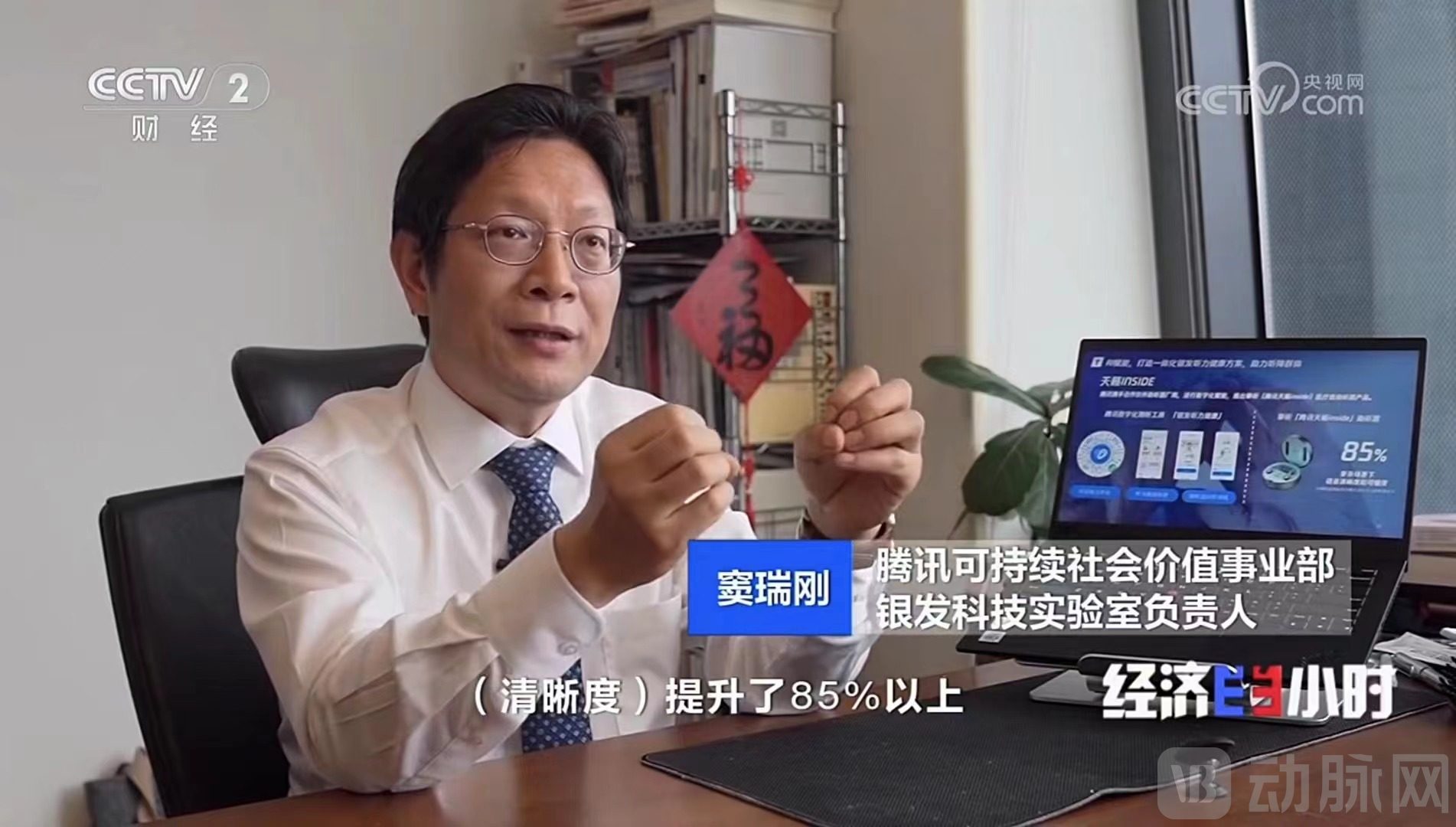
Figure 3. Industry experts discuss the “ZhiTing RIC2.0 Pro” (Image source: Screenshot from “Economic Half-Hour”)
In terms of critical sound amplification and noise reduction, Eartech has collaborated closely with Tencent’s Tianlai Laboratory to optimize chips and algorithms, shifting from methods based on analytical expressions or mathematical formulas to those driven by data and neural networks, thereby enhancing speech clarity and intelligibility in complex scenarios.Increase of up to 85%。
In response to this, Researcher Wang Shuo, Director of the Office of the National Technical Guidance Group for Hearing Loss Prevention and Treatment at Beijing Tongren Hospital, Capital Medical University, and Principal Investigator of a Major Special Project, stated, “Hearing aids are still a relatively novel product, particularly for the elderly population, who require substantial consultation and guidance during the initial phase. The emergence of intelligent fitting solutions can largely address the widespread challenge of device usability among older adults. Furthermore, significant improvements in hearing aid performance will enable elderly users to genuinely experience the considerable convenience these devices bring to their daily lives.”
Certainly, beyond the industry itself, changing times are also opening up greater possibilities for the development of hearing aids. For instance, domestic substitution is gaining traction; it is reported that hearing aids represent one of the subsectors within China’s medical device industry most heavily monopolized by overseas companies.The six major brands represented by Sonova, Demant, GN ReSound, WS Audiology, Starkey, and WIDEX currently account for 90% of the market share in China.。
It is precisely for this reason that the national government has begun to prioritize the domestication of the hearing aid industry and has issued a substantial number of relevant policies and regulations. In response, Professor Gu Yu, Dean of the School of Biomedical Engineering at Capital Medical University and Principal Investigator of the Major Special Project, stated, “Hearing aids should adhere to the requirements for major projects, persist in independent innovation, and pursue a path of self-reliant research and development.。”
In fact, as a type of rehabilitative assistive device, hearing aids involve multiple disciplines such as biomedicine, materials science, and engineering technology. National key scientific and technological programs can integrate interdisciplinary research resources to promote technological innovation in the field of rehabilitative assistive devices. Research supported by these national programs can also enhance the performance and applicability of rehabilitative assistive devices through clinical validation. Furthermore, national key scientific and technological programs will establish relevant technical standards, which is particularly important for the rehabilitative assistive device industry.
In addition, changes in the capital market have rapidly propelled hearing aids from the “backstage” to the “spotlight.” Over the past two years, the capital market has been in a prolonged downturn, with no clear end in sight. Against this backdrop, industry players have shifted their focus toward “cash flow” as a means of ensuring survival. Compared with the biopharmaceutical and innovative medical device sectors, which require substantial investment and have long development cycles, consumer healthcare segments represented by hearing aids offer faster monetization, thereby gaining favor among a broad range of investors.
The Road Ahead Is Riddled with Difficulties
Although hearing aids are ushering in unprecedented development opportunities, challenges lie behind these opportunities.
According to the first domestic research report on social issues related to hearing impairment in the elderly, “Asking Where the Heavenly Sounds Have Gone | Ten Questions About Hearing Health in the Elderly,” released in 2022, approximately one-third of Chinese adults aged 65 and older have moderate or greater hearing loss, while this figure rises to about one-half among those aged 75 and older; however,Currently, the hearing aid usage rate in China is only 5%–8%, far below the average level of 30% in developed countries.。
This is certainly due to technical factors, such as the core chips and algorithms. Although China has made many breakthroughs at this stage, there is still a certain gap compared with the global top level. However, this is only part of the story. In the view of many professionals,The Biggest Obstacle Facing Hearing Aids Today Is Actually in the "Perception" Dimension。
This needs to be examined from three dimensions.First, there is insufficient consumer awareness of hearing aids.In this regard, Dr. Chen Fei, founder of Eartech Hearing Aids, remarked, “Unlike ophthalmology and dentistry, hearing aids are primarily targeted at the elderly population. The most prominent consumption characteristic of seniors is frugality; they are reluctant to spend money on improving their own quality of life, preferring instead to allocate resources to their children or grandchildren. Furthermore, the urgency for seeking medical attention for hearing loss is relatively low. Many patients only begin using hearing aids five or even ten years after experiencing hearing impairment, which differs significantly from conditions such as toothaches or vision loss that require immediate medical intervention.”
Of course, hearing aids also have their own "necessity."For example, it can reduce the risk of Alzheimer's disease to some extent., because hearing loss reduces the amount of benign stimulation received by the brain, which increases the risk of developing dementia.Additionally, it can effectively address mental health issues among the elderly., it is reported that older adults are more willing to engage in social interaction after using hearing aids. This will significantly alleviate the substantial pressure on social security and medical insurance systems caused by population aging.
Having discussed consumers, the second point turns to practitioners.Due to a general lack of professionalism, the industry is currently plagued by numerous irregularities.. A more intuitive example can be seen in offline retail stores. Currently, the typical characteristics of hearing aid stores in China are fragmentation, small scale, and outdated operations. A significant proportion are “mom-and-pop” shops or individually operated businesses. These stores generally lack a comprehensive service system and dedicated hearing care professionals; furthermore, the proportion of certified hearing instrument specialists is relatively low, making it difficult to meet patients’ service needs.
Beyond this, industry chaos stemming from unprofessional practices also extends to the hearing aid products themselves, such as marketing them as “no fitting required” or falsely labeling the number of channels. Dr. Chen Fei, founder of Eartech Hearing Aids, commented, “Due to a lack of basic industry knowledge, some hearing aid products promote ‘no fitting required’ as a selling point. This is akin to marketing eyeglasses for myopia as ‘no optometric examination needed’; intervention with an inappropriate prescription can instead cause secondary damage. Others deliberately misrepresent channel counts; for instance, hearing aid chips with only 8 or 16 channels of processing capability are falsely advertised and sold to users as having 48 or even 64 channels. The resulting efficacy is, needless to say, questionable.”
The third aspect of “concept” is reflected at the level of the hearing aid market, namelyThere is currently no mature market system or distribution channels.. As a consumer healthcare product, price is undoubtedly a key factor in users’ decision-making. However, the current market shows that hearing aids range from a few hundred yuan to tens of thousands of yuan, reflecting significant price disparities and uneven product quality. This leaves consumers with a pressing question:What Is the Ideal Price Range for a High-Quality Hearing Aid?。
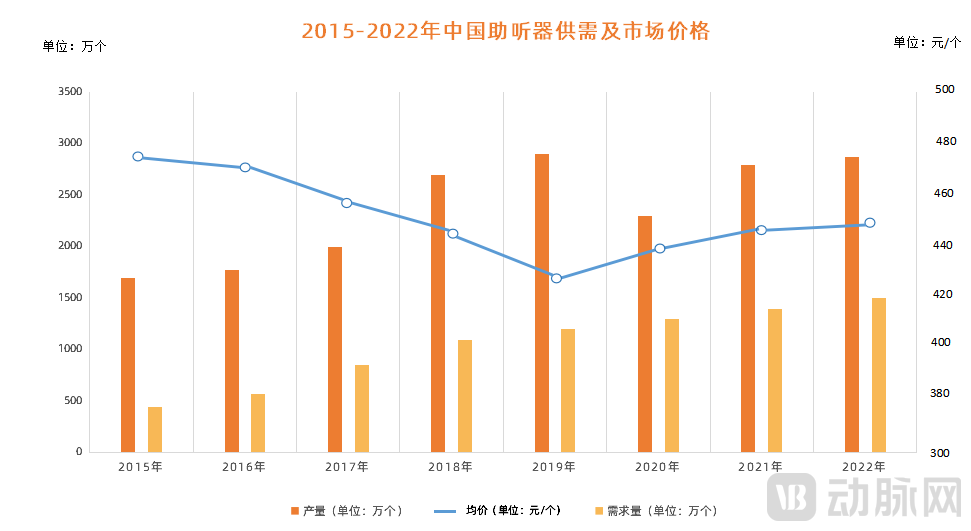
Figure 4. Supply, Demand, and Market Prices of Hearing Aids in China, 2015–2022 (Data Source: Zhiyan Consulting)
Note: In recent years, the production volume of hearing aids has significantly exceeded domestic demand, as many Chinese-made hearing aids have been exported to overseas markets. Meanwhile, domestic demand in China is rising rapidly. Taken together, these trends indicate that both domestic and export demands for hearing aids in China are continuously expanding.
Beyond pricing, distribution channels are also a key factor in bringing products to market. However, at the current stage, China’s hearing aid-related industrial chain remains underdeveloped, and a relatively standardized market system has yet to take shape. Consequently, the market circulation costs in the hearing care sector are currently very high. According to industry insiders,70% of the costs in the hearing aid industry are tied up in the distribution channel.。
What does the future hold?
Currently, as the industry remains in its early stages, the market competition for domestically produced hearing aids is relatively open. However, with the industry’s continuous development and increased investment from more investors, stakeholders are increasingly pondering:What Kind of Hearing Aid Company Will Stand Out in the Future?
In response, Dr. Chen Fei, founder of Eartech Hearing Aids, offered his perspective, stating, “First and foremost, companies must be capable of developing user-friendly products, as the hearing aid industry is fundamentally product-driven,”Therefore, efficacy is undoubtedly the foundation of everything.. Secondly, hearing aids also belong to the medical field; therefore, the corresponding service chain must be improved, namelyA mature solution should be in place for every stage, from screening and intervention to rehabilitation.. Finally,Certainly, enterprises must possess the core capability of ‘self-sustaining revenue generation’ to produce stable cash flow, which is particularly crucial in the current capital winter.。”
Extending from this corporate profile, the future development trends of hearing aids are also becoming increasingly clear.
First, product strength—including innovative technologies such as AI and interoperability—will generate greater synergies with hearing aids in the future.Taking Eartech as an example, it has set its sights on four key directions for the future: First, continuously exploring the potential of AI in the hearing aid sector to enhance algorithmic capabilities and make hearing aids smarter. Second, improving connectivity by linking hearing aids with electronic devices such as smartphones and smartwatches, thereby transforming them into personal tools for health management and companion care. Third, significantly extending battery life through upgrades in power source materials and improved energy consumption management. Fourth, integrating ergonomics and industrial design into product form factors to create increasingly refined hearing aids that meet users’ personalized needs.
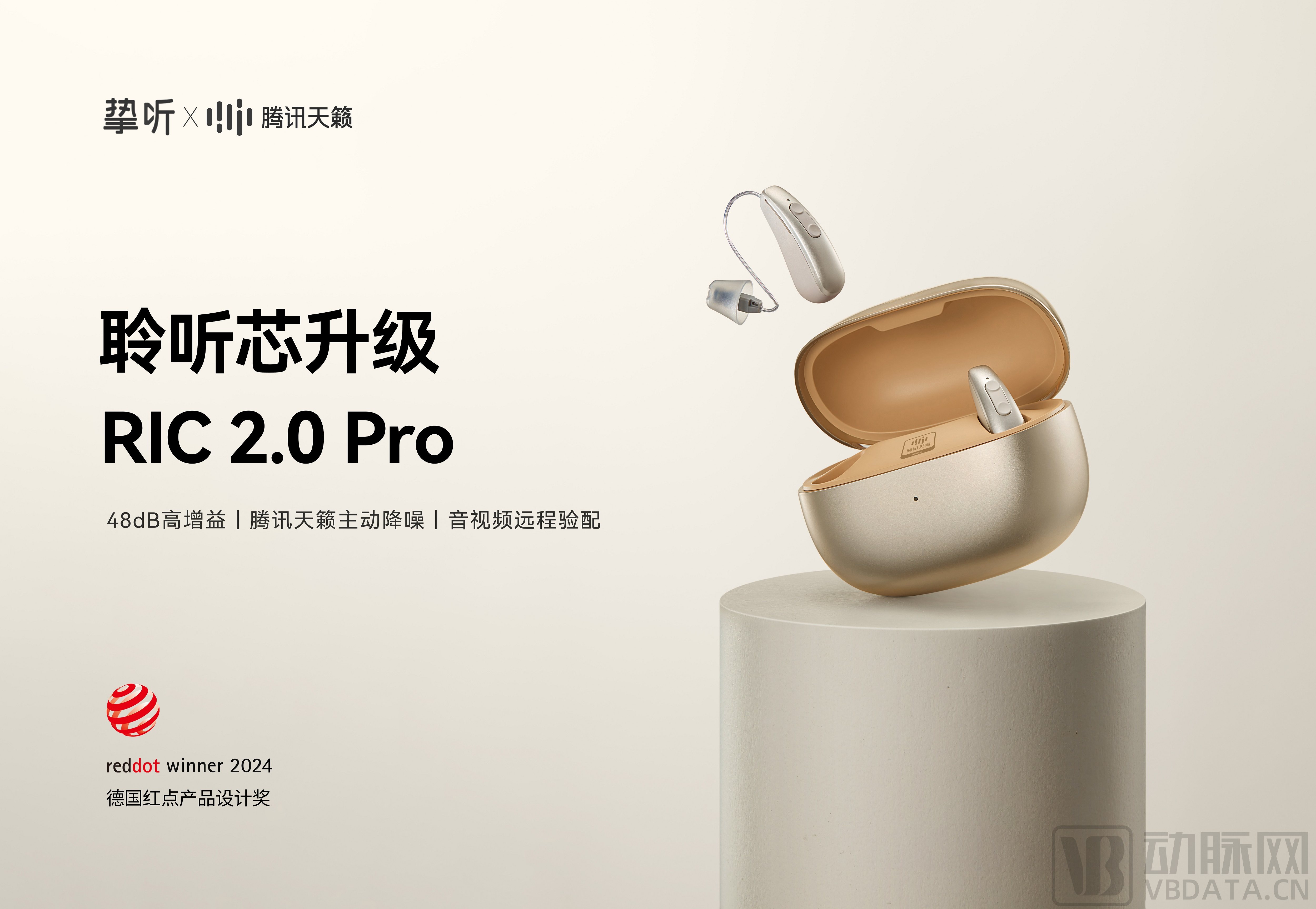
Figure 5. Display of the New Eartech RIC2.0 Pro
Secondly, in terms of service capacity, the “offline + online” service model will gradually become integrated, and the scope of services will begin to extend down to districts, counties, and remote areas.Taking Eartech as an example, the company has currently established a full-chain hearing care service ecosystem, forming an integrated online-offline service network. Offline, it operates 10 retail stores; online, leveraging partnerships with Tencent, JD.com, Xiaomi, and Tmall, it has secured corresponding channel resources spanning from product offerings to commercial implementation.
Building on this foundation, the service scope of hearing aids is expected to gradually expand in the future. Dr. Chen Fei, founder of Eartech Hearing Aids, commented, “As our user base continues to grow, along with an expanding network of partner chain pharmacies and distributors, we will progressively extend our reach from first- and second-tier cities into lower-tier markets. In addition to establishing offline stores locally, we will fully leverage intelligent technologies and remote solutions to deliver services to a broader population in need. For instance, in the area of hearing aid fitting and adjustment, Eartech has jointly unveiled advanced proprietary technology with its partner Tencent, enabling elderly users with hearing loss to access professional auditory rehabilitation services without leaving their homes.”
Finally, it is worth mentioning the “self-sustaining” capability, meaning that hearing aids will have more monetization avenues in the future, and even expand into overseas markets.. A key focus is on global expansion, which is the prevailing trend across the entire healthcare market, and the hearing aid sector is no exception.
In response, Dr. Chen Fei, founder of Eartech Hearing Aids, stated, “China is the global manufacturing hub, and the vast majority of Bluetooth earphones are made in China. As hearing aids are also active medical devices, Chinese-made hearing aids are fully capable of expanding into overseas markets after being refined in the domestic market. Furthermore, with the gradual maturation of the industrial supply chain,”In terms of unit price, domestically produced hearing aids will be more competitive. Coupled with the growing dissatisfaction in the global market toward the high pricing strategies of the six major manufacturers, Chinese-made hearing aids are poised to capture a larger market share in the future.Therefore, global expansion represents a significant opportunity for the entire medical device sector, including hearing aids.”
Looking back, although the hearing aid industry currently faces various challenges, this is in fact a necessary phase for any industry on the verge of rapid expansion. Driven by growing market demand from an aging population, empowered by innovative technologies such as AI and connectivity, and guided by industry pioneers like Eartech, the hearing aid sector is poised to reach a turning point soon. As competition intensifies, early entrants will naturally hold a competitive advantage.