

How a Chinese Medtech Firm Broke the Import Monopoly in Implant-Grade PEEK After 18 Years
At the end of 2022, China’s upstream medical industry was thrown into an uproar by the news that the country’s first medical-grade implantable PEEK material had received official approval.
The reason this is considered major news stems from the PEEK material itself.
In the 1960s, DuPont in the United States “accidentally” discovered PEEK material while researching polyimide resins. After Imperial Chemical Industries (ICI) of the United Kingdom successfully commercialized PEEK in 1978, the material rapidly found applications across multiple fields due to its excellent high-temperature resistance, mechanical properties, and chemical stability, and was even once hailed as an “important strategic material for national defense and military industry.”
Among the many application fields, the medical industry naturally holds a significant place. PEEK material is hailed as "the ideal material for next-generation implantable medical products," which also reflects the industry's optimistic outlook on the application prospects of PEEK in the medical and health sector.
However, similar to many high-end medical device markets, the market for medical-grade PEEK materials, particularly implant-grade medical PEEK, has long been monopolized by foreign products. This monopoly has led to issues such as exorbitant pricing, stringent procurement conditions, and even "selective" supply. Consequently, there is an urgent need for a competitive implant-grade medical PEEK material to break this status quo. Jusheng Medical's medical-grade PEEK material has become the first domestically produced, approved implant-grade medical PEEK material to break the import monopoly.
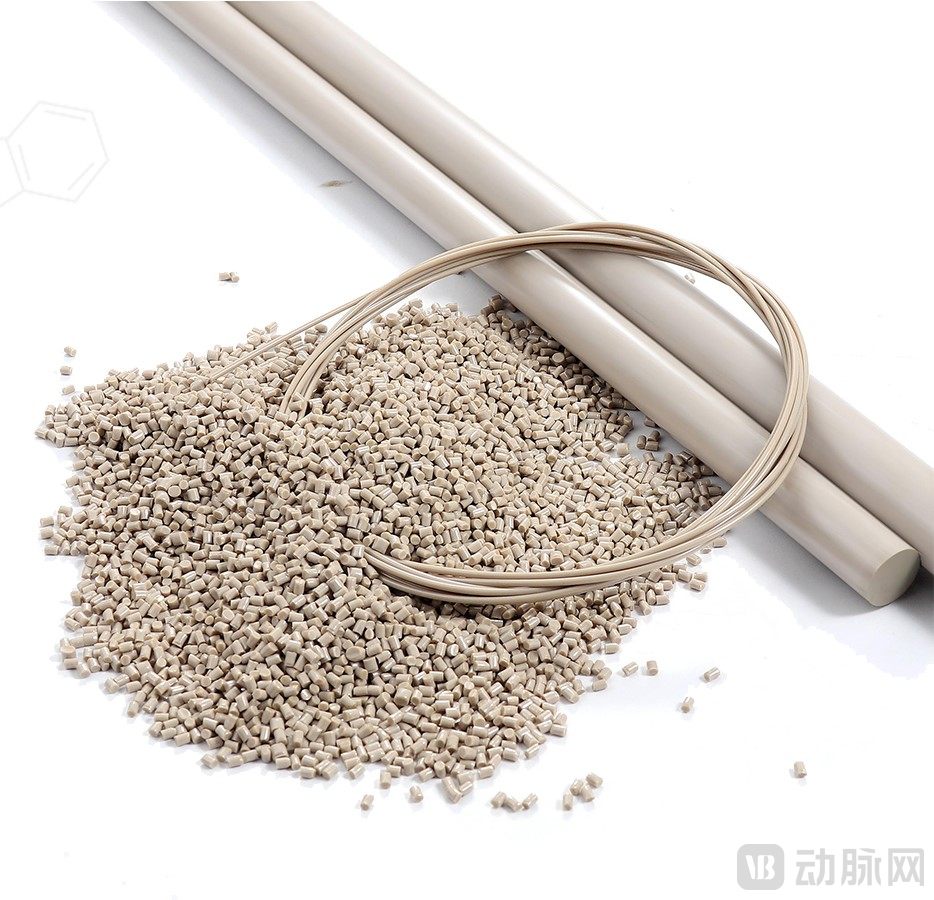
Jusheng Medical PEEK Material
One afternoon in April, VCBeat successfully reached Wu Weidong, General Manager of Constant Science & Technology, the parent company of Jusheng Medical. He shared the story behind Constant’s strategic layout in upstream raw materials and Jusheng Medical’s breakthroughs in overcoming the R&D and manufacturing challenges associated with medical-grade implantable PEEK materials.
The story traces its origins back to a major event in 2008.
In 2008, in addition to the Beijing Olympic Games, the Wenchuan Earthquake became a collective memory for the Chinese people. At that time, the number of fracture patients caused by the earthquake surged. Besides the scarcity of medical resources and closely related instruments and consumables, another category of related products was also in short supply: external skeletal fixators.
Furthermore, according to Wu Weidong, although the external skeletal fixation bracket market has become a highly competitive “red ocean,” there were only a handful of companies in this field 20 years ago. Established in April 2006, Wuhan Constant Science&Technolony Co., Ltd. was one of them. To this day, 18 years later, external skeletal fixation brackets remain one of Constant’s core products. The company has established stable partnerships with more than 70 tier-1 distributors, and its collaborative network now covers over 200 hospitals.
The development and stabilization of market partnerships naturally depend on product performance. VCBeat has learned that the Constant circular hinged external fixator adopts a ring-shaped structural design, enabling comprehensive fixation of foot bones to ensure stability and safety during treatment. Furthermore, as treatment progresses, the device allows for timely adjustments to angle and tension based on the patient’s recovery status, thereby achieving optimal therapeutic outcomes.
Furthermore, Wu Weidong stated that although Constant offers only one type of external fixation system, it comprises more than 600 models, enabling comprehensive coverage from the head to the feet.
During the Wenchuan earthquake, Mr. Huang Dengfeng, founder of Constant Science & Technology, rushed to the disaster zone to participate in relief efforts. It was during this period that a remark by Dr. Zhang Hui from West China Hospital of Sichuan University prompted Mr. Huang to reflect: “Why don’t you use polyether ether ketone (PEEK) material for stents?”
“To be honest, at that time we only knew PEEK as an industrial material and were unaware of its potential applications in the medical field,” Wu Weidong said with a smile during the interview.
Nevertheless, the physician’s remarks intrigued Mr. Huang Dengfeng. After conducting thorough research, he became firmly resolved to apply PEEK material in the medical field, convinced by its distinctive properties.
Taking medical-grade implantable PEEK material as an example, it not only features a reduced elastic modulus close to that of bone, helping to maintain the original strength of the surrounding bone tissue, but also offers radiolucency. It is transparent to X-rays and does not produce artifacts in CT and MRI scans, thereby facilitating the assessment of bone growth and the healing process.
Moreover, PEEK material exhibits excellent radiation resistance and high-temperature stability. PEEK components can function normally even under high-dose ionizing radiation, allowing for long-term use at temperatures up to 250°C, with short-term exposure tolerance reaching 300°C.
Moreover, in addition to its excellent biocompatibility (implant-grade PEEK boasts high purity, complies with ISO 10993 standards, causes no adverse effects, and exhibits superior biocompatibility), implant-grade PEEK materials can be incorporated with various additives to meet specific application requirements in different scenarios. Furthermore, their diverse molding and processing methods offer greater design flexibility.
However, applying this excellent material to the medical field is no easy task. As mentioned earlier, PEEK materials, especially medical implant-grade PEEK materials, have long been under import monopoly. Therefore, merely finding a “suitable” material supplier posed a significant challenge for Wuhan Constant Science&Technolony Co., Ltd.
However, it was precisely this “searching and seeking” that brought Constant into contact with another company. Unsurprisingly, that company was Jusheng Medical.
When Constant took over Jusheng Medical, it was evident that the company had not yet earned the title of “the first enterprise in China to produce medical implant-grade PEEK materials,” and, as revealed by Wu Weidong, Jusheng Medical was mired in consecutive years of losses at that time.
So, what qualities of Jusheng Medical attracted Constant Science & Technology, making their partnership a reality?
The core reason lies in Jusheng Medical’s mastery of PEEK material purification technology. As previously mentioned, purity is one of the primary criteria distinguishing medical-grade PEEK materials from implant-grade PEEK materials. This is because the synthesis of PEEK requires monomeric raw materials such as fluoroketones and phenols, along with catalysts like diphenyl sulfone. Consequently, the resulting PEEK material contains significant amounts of residual monomers, toxic additives, and various by-products, which pose substantial health risks to the human body.
In short, the purification process is critical, especially for implant-grade PEEK materials. Jusheng Medical holds core patents for PEEK material synthesis technology. Using 4,4'-difluorobenzophenone and hydroquinone as raw materials and employing nucleophilic substitution reactions, it can achieve the production and refined purification of high-purity, implant-grade PEEK materials. This is the key reason why Wuhan Constant Science&Technolony Co., Ltd. values Jusheng Medical.
However, the PEEK material produced in this stage can only be regarded as “raw material” in powder form, and how to process it into molded products has become a bottleneck restricting the development of Jusheng Medical’s PEEK materials. This has created an opportunity for Wuhan Constant Science&Technolony Co., Ltd. to “step in.”
This is because most members of Constant’s R&D team are alumni of Huazhong University of Science and Technology (HUST). According to Wu Weidong, materials processing is one of HUST’s leading academic disciplines. In other words, materials processing is a core strength of the Constant team.
Specifically, after Constant took over Jusheng Medical, it resolved the issue of stable production by spending two months living and working at the factory, troubleshooting equipment parameters one by one, and commissioning domestic manufacturers to customize production equipment.
To date, Constant (Jusheng Medical) has developed a PEEK cranial repair system based on PEEK materials. Compared with traditional cranial reconstruction materials, the use of PEEK for cranial repair is associated with fewer complications and superior aesthetic outcomes. Furthermore, leveraging CT or MRI scan data, neurosurgeons can utilize CAD/CAM systems to design patient-specific implants, thereby creating PEEK implants that precisely match the patient’s cranial anatomy.
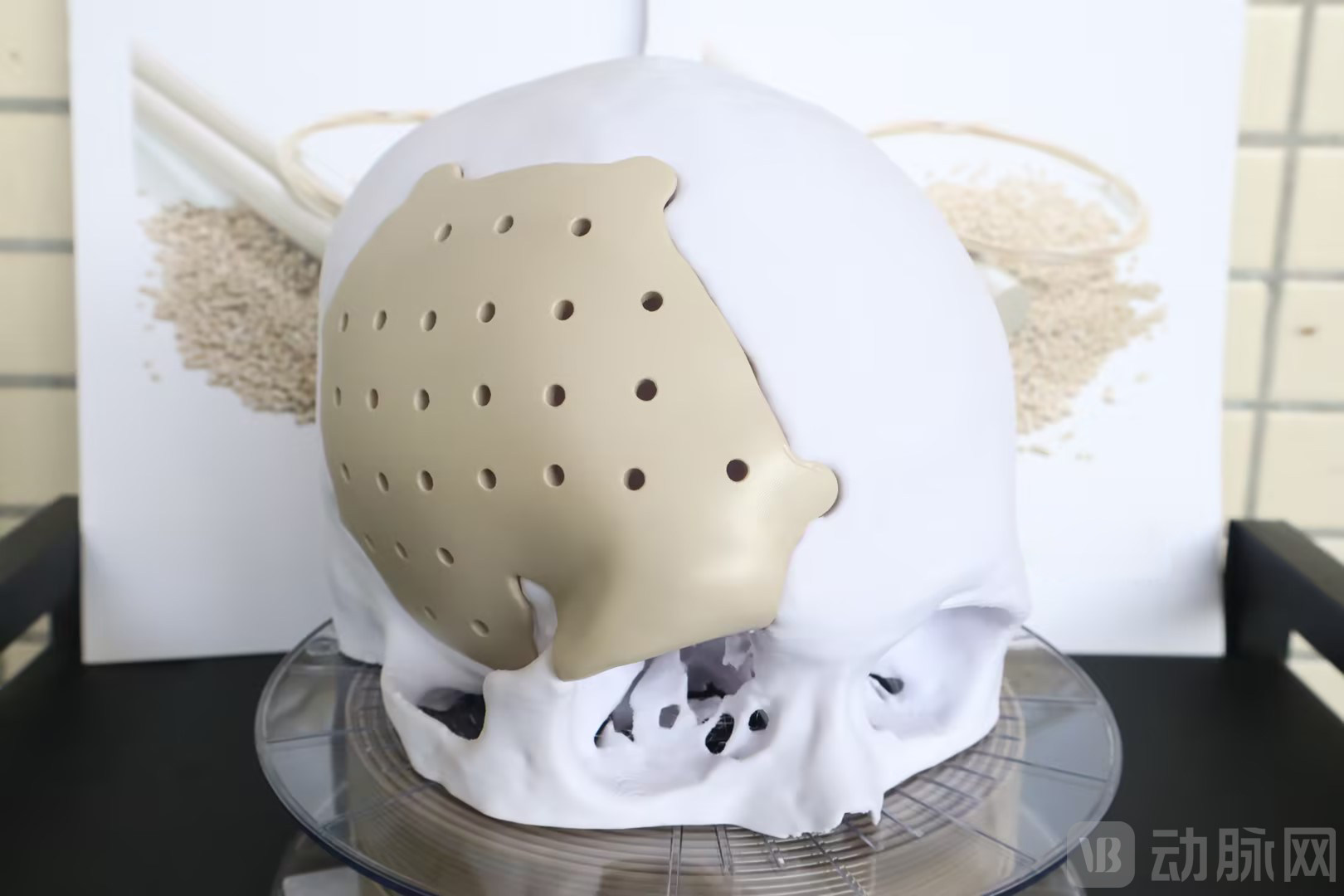
Constant (Jusheng Medical) PEEK Cranial Repair Products
It is reported that the product obtained approval from the National Medical Products Administration (NMPA) in December 2022, taking the lead in this regard. Currently, it has achieved a certain sales volume in more than ten countries, including Russia, India, Turkey, Brazil, Argentina, Iran, Egypt, and South Korea. Meanwhile, focusing on the field of bone repair, Constant Science & Technology (Jusheng Medical) is also actively developing new PEEK material implant products, with applications now covering bone repair across all anatomical sites, from the skull to the extremities.
“Some may wonder why we have successively entered the markets for external bone fixation devices and upstream PEEK materials, as these two areas appear to be unrelated. In reality, both strategic moves have been guided by a consistent overarching theme: making meaningful contributions to the field of bone repair,” said Wu Weidong. “Similarly, this same theme underpins our development and deployment strategy for PEEK-based products. Our cranial repair products are merely the starting point for our expansion into PEEK material applications in bone repair.”
The product portfolio strategy is well-conceived, and Constant has also developed a clear market expansion strategy.
After 18 years of development, Constant has accumulated extensive market experience and developed a mature marketing strategy. The company plans to extend this strategy to its PEEK product pipeline by collaborating with distributors to achieve comprehensive market coverage.
In the interview, Wu Weidong also revealed to VCBeat a significant adjustment in Constant Science & Technology’s business model. With further favorable policies and the steady enhancement of Jusheng Medical’s PEEK material production capacity, Constant Science & Technology will expand into the OEM/ODM sector to help more enterprises quickly understand and develop related products, thereby accelerating the clinical adoption and application of PEEK materials in the medical field.
“In recent years, the state has successively introduced relevant policies to promote the development of the ODM/OEM industry. This not only provides convenience for companies seeking to enter the market but also addresses the issue of relative overcapacity in certain sectors, serving as a beneficial initiative for both the nation and its people. With its capabilities in both raw material R&D and manufacturing, Wuhan Constant Science&Technolony Co., Ltd. can leverage this momentum to empower the entire industry to accelerate its development,” summarized Wu Weidong.