

Going Global: A Lucrative Frontier in Healthcare with No Dominant Players—Everyone Is a Founder Now
Over the past two years, “going global” has rightly become the keyword for the entire healthcare sector.
The logic behind this is not difficult to understand. On one hand, amid the market winter, the entire healthcare industry is seeking new business breakthroughs, and going global undoubtedly represents a significant incremental market; on the other hand, it stems from the industry itself, as in recent years, with the continuous advancement of frontier innovation and domestic substitution,Many of China’s medical products already possess the technical prowess to compete head-to-head with the world’s strongest rivals.。
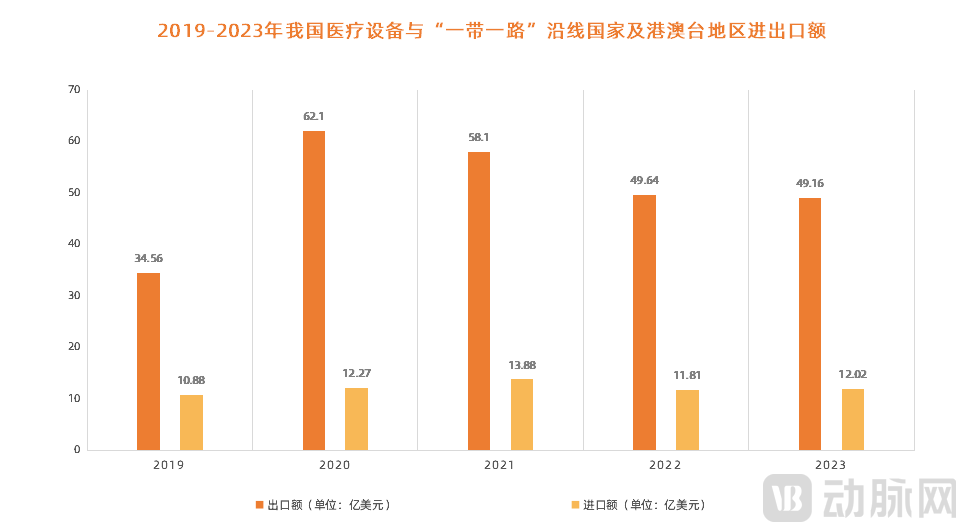 Figure 1. Import and Export Volume of China’s Medical Equipment with Countries along the Belt and Road Initiative and Hong Kong, Macao, and Taiwan Regions, 2019–2023
It is precisely for this reason that China’s medical sector has seen rapid growth in its overseas business operations in recent years. According to data from PharmaCube,In 2023, there were nearly 70 license-out deals for innovative drugs in China, with the total disclosed transaction value exceeding $35 billion, setting a new historical high.. The medical device sector is certainly no less impressive, according to statistical data,The overseas revenue of medical device companies listed on China’s A-share market has surged from RMB 25.7 billion in 2018 to RMB 108.1 billion in 2022, with a compound annual growth rate (CAGR) of 43.2%.。
At the capital level, overseas expansion is equally in full swing. According to Wang Junfeng, Co-Chief Investment Officer of Legend Capital,Legend Capital has helped more than 40 Chinese healthcare companies enter the Indonesian market, and engaged in direct dialogue with Indonesia's Ministry of Health and National Agency for Drug and Food Control (BPOM), facilitating the entry of Chinese technologies and assets into the Southeast Asian market. Additionally, in the Middle East,HeYu Capital has now secured commitments from dozens of Middle Eastern sovereign wealth funds., and has incubated and invested in multiple unicorn companies in Saudi Arabia and other regions, actively helping its Chinese portfolio companies expand into the Middle East.
Undoubtedly, China’s healthcare industry is entering an era of great exploration, with numerous market opportunities awaiting discovery; yet on the flip side of these opportunities, challenges also exist. In this regard, a senior expert remarked, “The biggest challenge currently facing global expansion is actually ‘information asymmetry’. Given the varying industrial, political, and economic environments across different regions worldwide, decisions on where and how to expand overseas require careful consideration.。”
Therefore, at present, everyone hopes to find a “guide,” and the newly upgraded 8th Future Healthcare Expo (hereinafter referred to as “VBEF”) may be a good choice.
It is reported that “VBEF,” co-hosted by VB100, VCBeat, Eggshell Research Institute, and Artery Orange, with Tianjin Economic-Technological Development Area (TEDA) as a co-organizer, and supported strategically by the Management Committee of Tianjin Binhai Zhongguancun Science Park and Beitang Bay Digital Economy Industrial Park, will be held in Beijing from May 7 to 10, 2024. Specifically, regarding global expansion,“VBEF” has currently collaborated with over ten national-level entities and assembled a large-scale “Overseas Buyer Group.”Meanwhile, “pioneers” in global expansion, including AstraZeneca and Legend Biotech, will also be deeply involved, engaging in dynamic exchanges on the latest practices and experiences in going global.
This may mark a new beginning for healthcare professionals currently awaiting opportunities to expand into overseas markets.
Going Global: “Communication” Is the First Step
“Ireland is a severely undervalued region.“This is a genuine reflection from Xiao Jia, Business Director for the Life Sciences Sector at IDA Ireland, on the current ‘overseas expansion fever.’ On the other hand, the founder of a company specializing in ophthalmic devices remarked, ‘Although Southeast Asia and the Middle East are currently receiving significant attention, we have limited understanding of these two major markets and lack corresponding information channels. Therefore, we remain in a wait-and-see stance at this stage.’”
It is not difficult to see from this that,A Significant “Information Gap” Remains in the Global Expansion of China’s Healthcare Sector。
To address this gap, in the past year or two, local governments and investment institutions have organized delegations to go overseas for “learning” purposes. Matrix Partners China, for example, saw its core team travel globally in 2023, visiting numerous large healthcare companies and startups. The aim was twofold: to gain an in-depth understanding of local industrial ecosystems, and to help portfolio companies seek more opportunities for overseas business collaboration, investment, and mergers and acquisitions.
Of course, communication is a two-way street, and the global community is currently sending positive signals to the Chinese market. According to observations by VCBeat, since 2023, various embassies and agencies responsible for supporting overseas expansion have been significantly increasing their staffing levels and deeply engaging with China’s healthcare industry. These efforts include regularly hosting industry conferences, leading Chinese healthcare companies and investors on exchange visits abroad, and even issuing targeted policies. The objective is self-evident: to accelerate mutual understanding.
In fact, this step is particularly critical. In this regard, an investor remarked, ““Going global” is, in fact, a relatively broad concept. With so many countries overseas, some offer profitable opportunities while others do not; this largely depends on the fit between the local industrial environment and one’s own products., for instance, if the local market already has well-established competing products, it will be extremely difficult for Chinese companies to break in. Additionally, on the demand side, if the target overseas market lacks sufficient market space driven by the product itself or supportive policy regulations, expansion will also face significant challenges.”
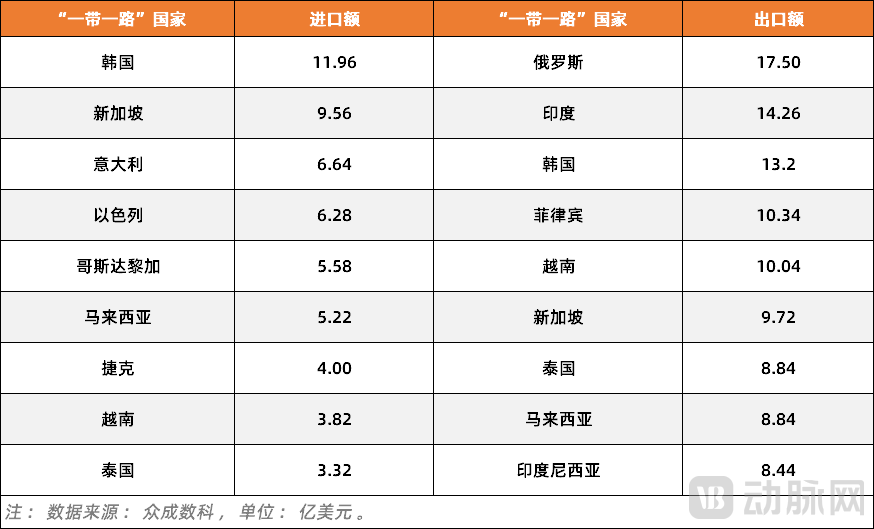 Figure 2. Import and Export of Medical Devices Between China and Major Countries Along the Belt and Road Initiative in 2023
Shawn Xiao, Director of Life Sciences at IDA Ireland, concurred with this view. He remarked, “Each region has its own distinct characteristics. For instance, Southeast Asia and the Middle East are characterized by relatively limited medical resources and large population bases, making them highly suitable for the overseas expansion of healthcare products. In contrast, the European and American markets boast strong R&D capabilities and robust industrial foundations, thus offering significant advantages in the global export of technologies.”
Therefore, it is crucial to gain a comprehensive understanding of the local healthcare market and its demands before expanding overseas. With this in mind, “facilitating exchange” became a key component of this year’s VBEF.
This is reflected in two aspects, the first being the “breadth” of communication. It is reported that this “VBEF” has linked up with more than ten national-level entities, covering various regions including Europe, North America, Australia, the Middle East, and Southeast Asia, each with its own independent exhibition area. In addition, the “breadth” of participants is also a major highlight; besides the “Global Buyer Group,” heads of overseas expansion from various countries, as well as local healthcare companies and investors, will all be participating. Notably,This “VBEF” also specially reached 500 leading global media outlets, covering tens of millions of healthcare professionals.。
Furthermore, in terms of “breadth,”“VCBeat Medical Innovation Product Launch Zone”has also attracted significant attention. It is reported that,This exhibition zone brings together nearly 200 cutting-edge innovative medical products from China, positioning itself as the premier launchpad for Chinese innovative medical products to go global.。
Certainly, in terms of the “depth” of communication, this “VBEF” has also made significant efforts. For example, it has established“Indonesia Market Entry Special Matchmaking Session”, primarily aimed at facilitating direct engagement between Chinese medical products that meet Indonesia’s needs and the Indonesian market. It is reported that numerous professionals well-versed in the Indonesian market and its demands will be in attendance, including Dr. Susilo Chandra, a board member of the Obstetric Anaesthesia Society of Asia and Oceania (OASAO) and convener of the Annual Meeting of Anesthesiology in Indonesia; as well as Liky Sutikno, Chairman of the China-Indonesia Chamber of Commerce, who possesses extensive knowledge of both the Chinese and Indonesian markets and is well-positioned to effectively promote bilateral cooperation.
In addition, in terms of "depth," co-hosted by GTJA Investment“Medical Device Global Expansion Forum & Global Medical Innovation Product Selection Fair”It is also highly representative. In terms of topic discussions, the event specially invited multiple professionals, including Qu Weixi, Deputy Director of the Chinese Academy of International Trade and Economic Cooperation under the Ministry of Commerce, and Cai Zixuan, Director of the International Department of the China Association for Promotion of UN Procurement, to closely address current hot topics in global expansion and provide in-depth analysis.
Furthermore, in advancing international expansion partnerships, Australia, Ireland, Singapore, the United Kingdom, Germany, and Catalonia (Spain) will all showcase their respective overseas expansion services and support policies. Taking Catalonia as an example, it will assist Chinese medical device companies intending to operate in Europe by connecting them with professional compliance service providers for access to the EU market. Additionally, it will provide a range of government-backed services, including site selection, project management and follow-up, interpretation of local investment incentive policies, and employee recruitment.
Finally, in terms of project matchmaking, nearly 10 Chinese medical device products will be showcased through centralized roadshows at the conference, based on the actual overseas expansion needs of various countries, to facilitate targeted international cooperation.
Avoiding the Hype: How Can “Going Global” Truly Achieve Monetization?
Although “going global” is a major trend across the healthcare sector, only a small fraction of companies have truly expanded overseas. This is due not only to “communication barriers” but also, to a large extent, to a lack of corresponding channel resources, namelyIt remains unclear how to expand overseas at this stage.。
Based on this, “VBEF” breaks down “going global” into three components: understanding global expansion, securing core channels, and building a comprehensive ecosystem.
Let us begin with “Understanding Global Expansion,” which entails gaining a clear perspective on international market entry and formulating corresponding strategies accordingly. Based on this premise, VBEF has established several core topics. In addition to providing detailed introductions to the industrial foundation, market environment, and policy regulations in each region, the forum facilitates in-depth exchanges and discussions on technology export, product internationalization, and capital globalization. Taking the “Forum on Overseas Expansion of Original Medical Technologies,” co-hosted by Boyuan Capital, as an example, it features specialized content such as interpretations of trends in technology export and sharing of typical case studies.
In fact, this is highly necessary, as opportunities for global expansion may well lie within. In an interview, Sean Jia, Life Sciences Industry Director at the Industrial Development Agency (IDA) Ireland, shared, “Although Ireland has a population of only 5 million, it is the second-largest exporter of medical devices in Europe. Consequently, many major device manufacturers have established their European headquarters in Ireland, which offers significant advantages in technological R&D. Additionally, Ireland’s unique geographic location makes it an ideal springboard for Chinese medtech companies seeking to enter the European and American markets.” This information is undoubtedly valuable for healthcare professionals currently awaiting opportunities to expand globally through technological innovation.
But this is only the first step; aligning with the right partners is also critical, which means “binding with core channels” when expanding overseas. In this regard, Qi Fei, Executive Director at Legend Capital, stated, “Due to differences in language, culture, politics, religion, and market access, building trust is extremely challenging. However, to successfully expand into overseas markets, companies must avoid significant strategic and tactical errors, making it crucial to identify reliable partners.。”
At this “VBEF,” a cohort of “reliable partners” was brought together. Take Lumina as an example: it is a service provider facilitating Chinese medical device companies’ expansion into the Indonesian market. To date, Lumina has established in-depth collaborations with more than 130 hospitals at various levels across Indonesia, covering departments such as urology, cardiology, ICU & emergency rooms, and clinical laboratories, as well as providing information system infrastructure and supporting facilities for newly built or expanded hospitals. According to Li Yaqi, Founder and President of Lumina, “Lumina has been committed to helping domestic manufacturers promptly obtain clinical feedback, develop medical devices better suited to Indonesia’s local conditions, and ultimately create a virtuous cycle underpinned by the strong ‘Made in China’ label, extending its reach to more hospitals and patients across Indonesia and even Southeast Asia.”
Of course, global expansion is a long-term endeavor that requires the support of a comprehensive ecosystem. Taking AstraZeneca, which has deeply participated in the “VBEF,” as an example, this multinational corporation rooted in China’s healthcare market is currently integrating resources to further build a robust ecosystem for Chinese healthcare innovation going global through strategic partnerships.
According to Chen Kai, Executive Director of AstraZeneca China and Head of the International Life Science Innovation Park and Regional Innovation Center, “AstraZeneca is committed to becoming a strategic partner for the global expansion of Chinese medical innovations, by building an innovative collaborative ecosystem.”Facilitate cross-sector partners—including those in pharmaceuticals, medical devices, diagnostics, digital health, and services—as well as portfolio companies and incubated projects, to expand into overseas markets as a cohesive group., achieving high-quality overseas implementation across dimensions such as product technology, solutions, and business models.”
It’s the Right Time to Go Global: We Are All “Entrepreneurs” Now
To many, “going global” is also a product of the times, mirroring the healthcare sector’s current collective pursuit of original innovation.
In response, Chen Kai, Executive Director of AstraZeneca China and Head of the International Life Science Innovation Park and Regional Innovation Center, stated, “Global expansion serves as a test and upgrade of new quality productive forces for China’s healthcare industry, while presenting systemic opportunities for innovative enterprises to establish their second growth curve.. By expanding overseas, Chinese medical enterprises can achieve iterative improvements across multiple dimensions during their globalization process, including market customers, clinical research, supply chain production, investment and financing, and talent development. In the future,China’s Medical Innovations Will Gain Increasingly Influential Voice on the Global Stage。”
But before that, many challenges must be confronted. Regarding risks, Zeng Yu, Founder and Managing Partner of Heyu Capital, pointed out, “In fact, in some emerging markets, whether it comes to government regulation or taxation, there are significant risks for investors and startups earning profits there. You may find yourself unable to repatriate your earnings, or face frequent policy changes. These uncertainties greatly test the adaptability and responsiveness of those expanding overseas.”
There are also cyclical issues. In light of this, a seasoned investor remarked, “"Going global may be buzzing, but it’s actually difficult to achieve significant results in the short term.", for instance, an innovative medical device company has been expanding into the Middle East for nearly two years, yet it has not seen any prospect of profitability so far. Therefore, this is a venture that requires long-term investment and realistic expectations.” Especially in the current market winter, “going global” actually demands greater courage.
However, this is only temporary. After all, for the vast majority of healthcare professionals, standing on the emerging business frontier of “going global,” everyone is essentially an “entrepreneur” at present and will naturally face many challenges. Addressing these issues requires the joint participation of healthcare professionals across the entire industry chain.
And in this historical transformation process of "going global,"“VBEF” will gradually become a bridge, fostering an ecosystem to empower more Chinese healthcare professionals in successfully expanding overseas and securing first-mover advantage.。
VCBeat’s 8th Future Healthcare Top 100 Conference has now been upgraded to the VBEF Future Healthcare Ecosystem Expo, which will be held onMay 7–10, 2024InBeijing · Beiren Yichuang International Convention and Exhibition CenterGrandly held. This edition of the exhibition is15,000+ Visits, 10,000 sqm Scale, focusing on new products and new technologies,New services, a new ecosystem, and new partnerships form an integrated system, complemented by the VBEF channel launched on the VCBeat app, creating the premier platform for showcasing innovation in the healthcare industry.
Here is,
Here it is,
Release of the Most Influential Rankings:Listed Companies Innovation Ranking + Future Healthcare 100 Ranking + Innovative Products Ranking, with 700+ listed companies engaging in on-site exchanges!
Currently, there are alreadyOver 600 companies and products have confirmed their participation in the exhibition, with more than 70% of the exhibition space booked., the global buyer group has collaborated withIndonesia, Singapore, Belgium, Ireland, Spain, Germany, Australia, the United Kingdom, Canada, and other countries. Few cooperative slots remain; enterprises, brands, buyer groups, and relevant organizations are welcome to discuss participation.
During the conference, download the VCBeat app and access the VBEF channel to receive real-time updates on featured presentations, connect with online exhibition resources, and instantly reach companies listed on the authoritative VBEF rankings.
In this era of uncertainty, seeking high-value resources and efficient connections will be your top choice.

Sign Up Now—Limited-Time Offer!