

Defying Aging: An Exclusive Interview with Professor Yang Maojun of Tsinghua University on His Breakthrough Longevity Platform
Flights from the United States to China take more than ten hours.
That’s enough time to watch three or four popcorn movies, eat two or three rounds of unappetizing airplane food, or doze off the entire journey while curled up and waking up with a stiff neck.
But in 2007, Professor Yang Maojun, who had just turned 31 and was about to return to China to join Tsinghua University, figured out during those dozen hours a proposition that could bring disruptive changes to healthcare.
The Overwhelming Tide of Global Aging
“Population aging is a significant social issue for our entire nation, as older adults are more susceptible to illness, which in turn increases the burden on individuals, families, and even society as a whole,” expressed Professor Yang Maojun with concern.
If these individuals could rejuvenate and regain their health, the national burden would be reduced, and limited social resources could be allocated more optimally.
According to 2022 data, the global population aged 65 and above has reached 780 million, accounting for 9.8% of the total population. Among many economies, Japan stands out significantly, with 29.9% of its population aged 65 and above, meaning one in every four people is an elderly individual. South Korea, under the dual pressure of aging and declining birth rates, has confirmed the theoretical possibility of its "natural extinction and national demise" within a century. For the current generation, which is more directly affected, the outbreak of the COVID-19 pandemic has severely impacted long-term health and life expectancy, leaving efficiently operating economies without a vibrant workforce to replenish them.
“Among the Eight Great Masters of the Tang and Song Dynasties, the six from the Song Dynasty had an average lifespan of 66 years over a thousand years ago, yet the current global average life expectancy is only 73.3 years. With the rapid advancement of technology over the past millennium, has this truly reached the limit of human longevity?” questioned Professor Yang Maojun.
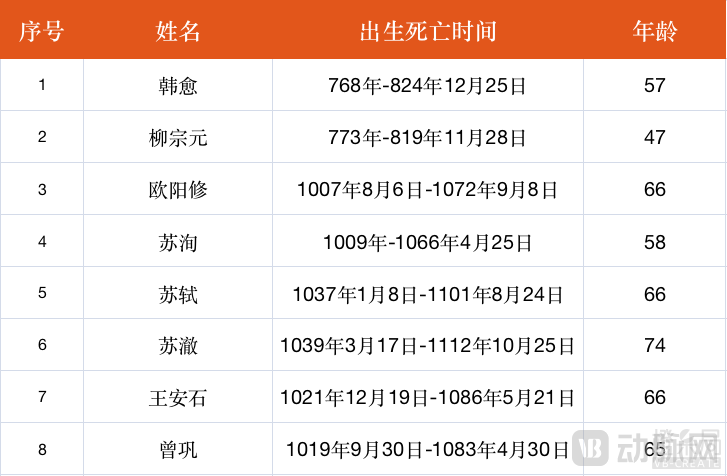
Data Source: Professor Yang Maojun
Professor Yang Maojun pointed out that numerous studies have shown that there is an upper limit to the number of times human cells can divide.Telomeres reach their limit after approximately 56 cell divisions, with each division corresponding to a renewal cycle of about 2.5 years, thereby deriving a theoretical maximum human lifespan of 125–150 years. If the lifespans of the entire human population are modeled using a normal distribution, the median falls precisely at around 75 years of age.
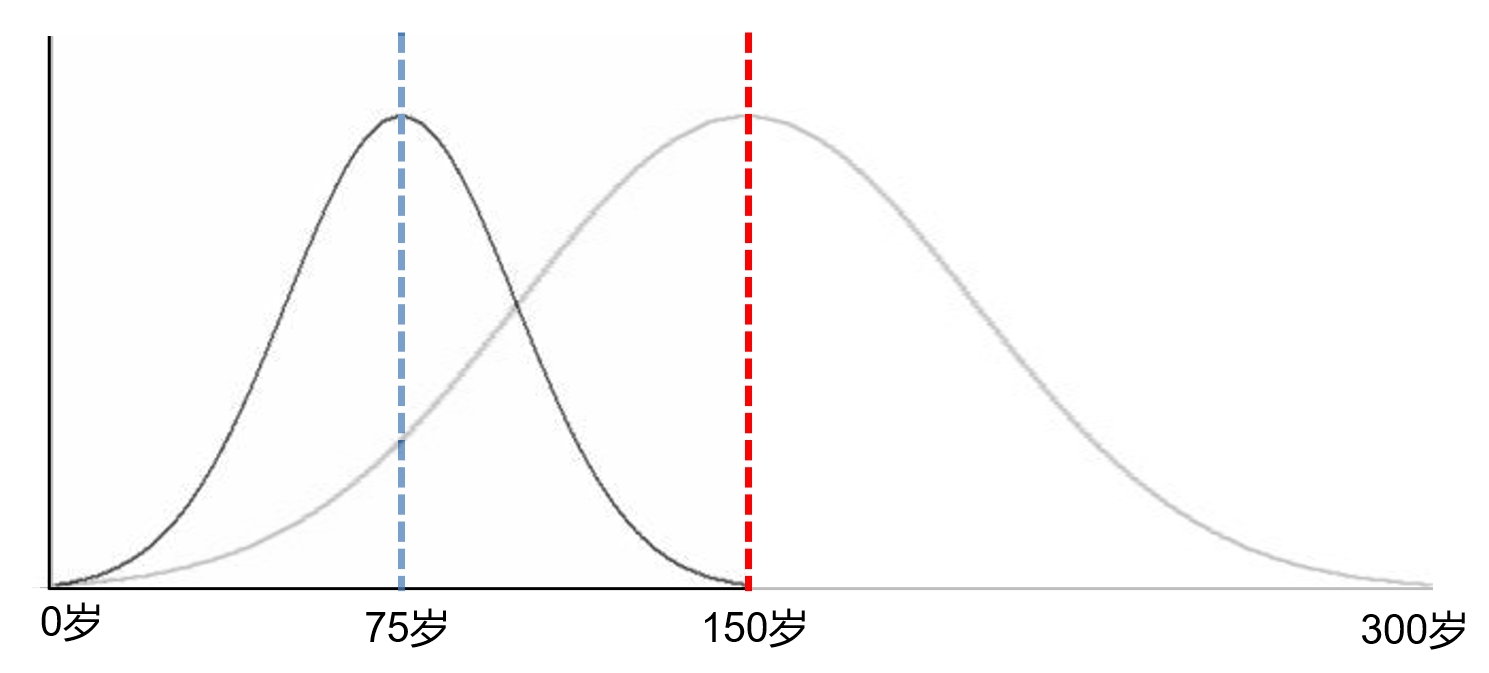
Data source: Professor Yang Maojun
He stated, “If the limits of lifespan can be broken through and this normal distribution extended, human average life expectancy will naturally increase. Therefore,”Our goal is to break through the limits of human lifespan.”
A Research Path with Clear Focus
On August 25, 2007, aboard a flight from the United States to China, Professor Yang Maojun—then 31 years old and on the verge of joining Tsinghua University as a professor and doctoral supervisor—ambitiously plotted how to “pull off something big” and fulfill the unachieved aspiration of Qin Shi Huang, Ying Zheng: attaining health and longevity.
Professor Yang Maojun reached the pinnacle of his career right from the outset.With a formal academic background in biochemistry, he pursued his master’s degree at Peking Union Medical College under the supervision of Academician Wang Linfang, focusing on spermatogenesis. During his doctoral studies at Tsinghua University, he worked with Academician Rao Zihe in the field of structural biology. Professor Yang Maojun completed his Ph.D. in just three and a half years, publishing 10 papers during this period, six of which as first author; his publications alone accounted for the total impact factor of all articles produced by his entire cohort. His postdoctoral research at the University of Texas Southwestern Medical Center also yielded substantial achievements, and a plaque bearing his name remains displayed on its walls to this day.
Standing at such a height, it seems that only by helping all humanity achieve its shared aspirations can one appease the unbridled boldness and grandeur of Professor Yang Maojun’s rhetorical challenge: “In your thirties, with the state providing you such an excellent platform, if you’re not going to pursue something monumental, what are you doing?”
We know that the human body takes in energy in a very simple way: through eating and breathing. After digestion, food “burns” together with oxygen in the body to release energy that the body can utilize. Based on this fundamental concept, Professor Yang Maojun also employed a rather philosophically nuanced approach to reasoning when formulating his research strategy.
“The operation of living organisms is essentially a process of entropy reduction. The human body is an ordered, closed system; to maintain this state of reduced entropy, it requires a continuous input of energy.”Where does this energy input process take place? Mitochondria.“He explained.”
Since then, Professor Yang Maojun has led the laboratory in conducting nearly 17 years of continuous research on mitochondria and their energy conversion processes.
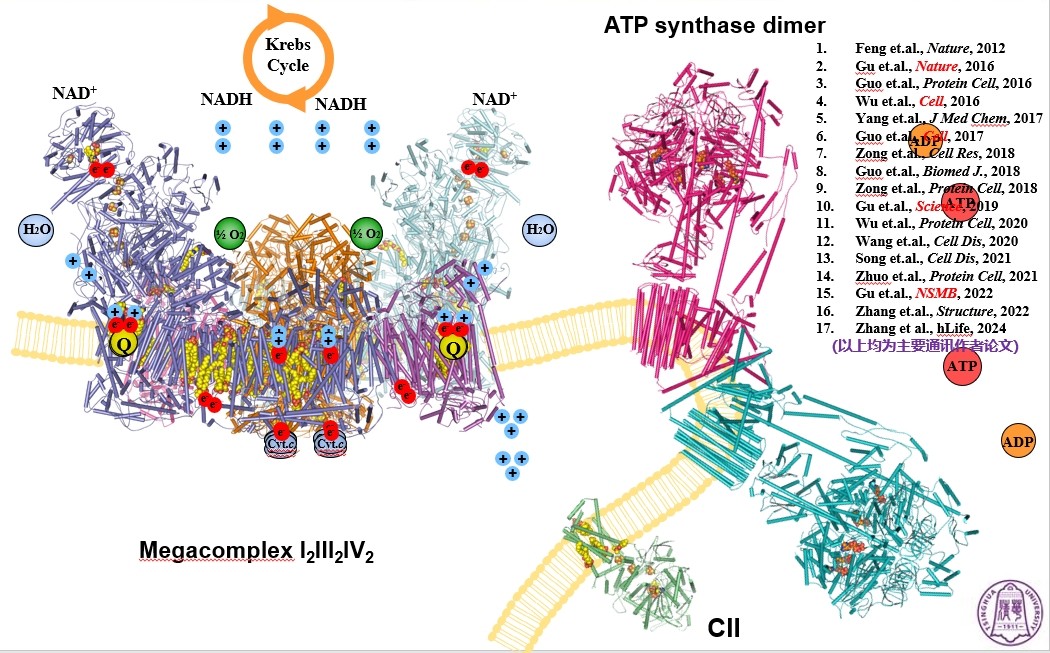
Image source: Professor Yang Maojun
The Yang Lab team reported the crystal structure of mitochondrial respiratory chain Complex I for the first time, and conducted detailed research on its function, mechanism of action, and drug development. They also discovered the mammalian and human mitochondrial respiratory chain electron transport chain supercomplexes and ATP synthase supercomplexes for the first time, and reported their high-resolution three-dimensional structures determined by cryo-electron microscopy. Since joining Tsinghua University, Professor Maojun Yang has published more than 50 SCI papers as corresponding author.including Nature (2012; 2015; 2016), Cell (2016; 2017), and Science (2019).
Professor Yang Maojun stated:“Mitochondrial dysfunction is associated with nearly every disease you can think of.”
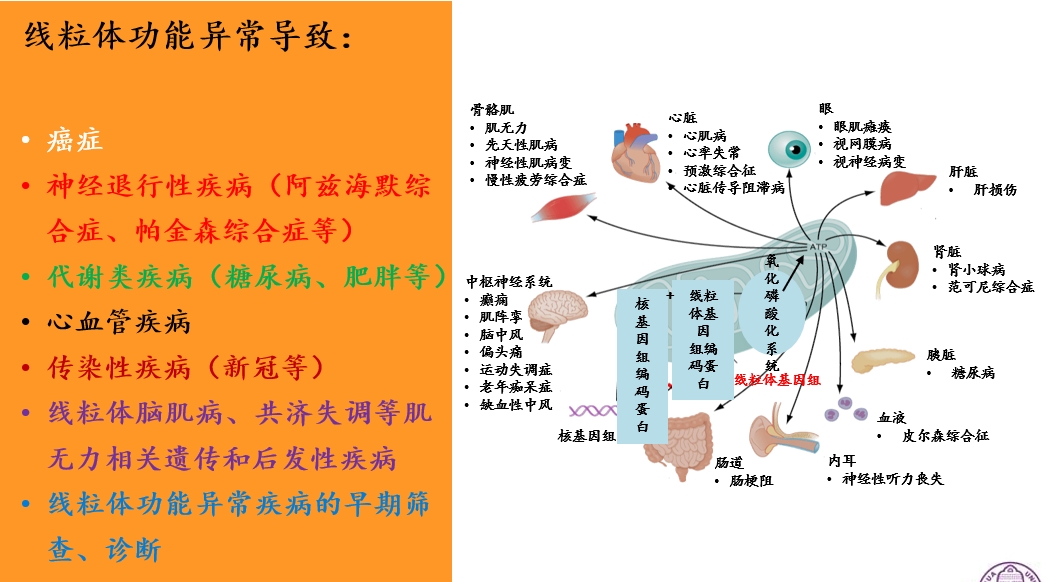
Image source: Professor Yang Maojun
Albert Einstein once said that the solution to a problem never emerges on the same level at which the problem was created, and Professor Yang Maojun seems to have found his own elevated bridge spanning the congested intersection.
Efficiently Advancing Industrialization
In Professor Yang Maojun's hypothesis,Human aging essentially begins with mitochondrial aging. He often says, “Aging is the root cause of most diseases,” so delaying or reversing aging can cure and prevent the majority of diseases.
As the powerhouse of cells, mitochondria utilize 95% of the oxygen in the human body to facilitate energy conversion. The functional integrity of mitochondria directly impacts overall health. This explains the common saying that “growing teenagers can eat their parents out of house and home,” while elderly individuals with dwindling vitality may struggle with the question, “Can they still eat?”
Mitochondria in human cells possess an independent genome, mtDNA. Compared to the nuclear genome, its mutation rate is nearly 300 times higher, and post-mutation clearance relies solely on fusion and fission mechanisms, resulting in a very slow repair process.The accumulation of mtDNA mutations leads to mitochondrial dysfunction, which in turn contributes to the development of severe diseases that pose significant threats to human health, including malignant tumors and neurodegenerative disorders.
The breakthrough to solving the problem is becoming increasingly clear.
Leveraging the team’s solid foundation in basic research and its exclusive patented technologies,Professor Yang Maojun Launches “Drug Development Platform for Enhancing the Body’s Oxygen Utilization Efficiency”, it has achieved a breakthrough in realizing the commonly understood process of “clearing out damaged mitochondria while preserving healthy ones” within the body. By enhancing mitochondrial activity and quality within cells, it restores cellular energy supply to a more “youthful” state. The biopharmaceutical company co-founded by Professor Yang MaojunQingbo Huinengand Flagship ProductsOxygen HealthRemarkable data have been achieved in both reversing aging and cancer prevention.
To validate the drug’s efficacy, the team initiated a clinical trial at Peking Union Medical College Hospital. Significant improvements in immunity were observed among participants receiving the medication, including the upregulation of immune pathways associated with leukocytes and lymphocytes, suppression of excessive immune responses related to cell proliferation, and reduced formation of vascular plaques. Assessments of immunological physiological age and methylation-based physiological age revealed that, after several treatment cycles, participants exhibited a reduction in physiological age of approximately 9 to 16 years.
Currently, Qingbo Huineng has obtained approval to conduct clinical trials for multiple projects in both China and the United States. In 2024, it plans to simultaneously launch Phase II clinical trials for five programs. The relevant teams are working diligently to accelerate the process, striving to bring these drugs to market as soon as possible to benefit a broad patient population.In Professor Yang’s words: “Strive to bring the ‘"Work Healthily for the Motherland for Fifty Years""replaced with"Work Healthily for the Motherland for One Hundred Years”。
On the path from fundamental scientific research to the initial “0 to 1” stage of industrialization, Professor Yang Maojun has shown no discomfort in transitioning from basic research to industrial applications. This may stem from the fact that, even on his flight back to China, he posed a clear question—one so closely tied to real-world challenges, and one that he and his team were so determined to solve. To date, the company has not produced a complete fundraising pitch deck, engaged in elaborate promotional rhetoric, or even established an official website. What it does have are technologies capable of solving practical problems, a dedicated team, and well-regarded products with a strong reputation.
The Source of Wild Ambition
Whether for Qin Shi Huang, who experimented with heavy metals in his quest for immortality, or for modern humans with cutting-edge technology at their fingertips, a drug capable of extending lifespan and preventing disease has been the long-held dream of humanity for thousands of years. This logical loop is so perfectly closed that when you attempt to scrutinize the deeper motivations of the scientists behind this technology, you may find yourself momentarily at a loss for words.
Why Break Through the Limit of Human Lifespan? Professor Yang Maojun’s Answer Has Three Levels.
After arriving at Tsinghua University, the philosophy of “Self-Discipline and Social Commitment” and the atmosphere of this prestigious institution inspired him to seek ways to contribute to the development of human society.In his view, “Life is short; one must leave something behind for the world rather than living solely for oneself. Human society has progressed from primitive barbarism to achieving spaceflight thanks to the incremental efforts of countless individuals.” Here, the “one” referred to by Professor Yang does not denote himself, but rather all of humanity. His sense of mission lies in enabling these countless individuals to live a few more years and make even greater contributions.
At a deeper level, from Professor Yang’s two mentorsAcademician Wang Linfang and Academician Rao Zihe.In his recollections, Academician Wang Linfang lived a life akin to that of a sage. As one of China’s first-generation experts in molecular biology, he cultivated a new generation of talent in biochemistry and molecular biology for the country. Academician Wang not only provided long-term professional guidance to Professor Yang Maojun but also exerted a subtle and profound influence on his thinking.As Professor Yang Maojun titled the memorial service for Academician Wang Linfang: “By never striving for greatness, it achieves true greatness.”Two decades ago, Academician Rao Zihe led Professor Yang Maojun in research on the SARS coronavirus. Through diligent efforts, they achieved a series of significant breakthroughs in elucidating the structures and functions of various viruses responsible for major human infectious diseases, as well as in structure-based drug design. Academician Rao’s relentless pursuit of scientific excellence has always served as an exemplary model for Professor Yang.
And the deepest layer of the answer to the question of why we must break through the limits of human lifespan is Professor Yang Maojun’s life creed:All Beings Are Equal。
Professor Yang Maojun’s mother was the most important person in his life. When he was a child, she told him there were three things he must not do.First, he must not serve tea or water to others; second, he must not do laundry or cook; third, he must not mistreat women. When relatives and friends asked for the rationale, the response was, “My son is destined for great things and cannot be burdened with such tasks.” These represent the most simple and primal aspirations of a traditional housewife. Underlying these wishes are three core values: equality and self-respect, self-actualization, and kindness and inclusiveness.Such family education served as the cause that shaped Professor Yang Maojun’s outlook on life, worldview, and values.Professor Yang Maojun has always held that while people often distinguish between high and low status, life itself knows no hierarchy of worth. He treats all lives with equal regard, free from preference or prejudice.
Shaped by the confluence of his family background, educational upbringing, and professional environment, Professor Yang Maojun is able to approach scientific research from a higher-dimensional perspective. In his view, no individual is distinct or hierarchically superior or inferior; every life is merely data awaiting optimization. All people are equal in his eyes, and in his journey to reverse aging, he is gradually embodying the Taoist ideal of “the sage is devoid of personal attachments” as written in the Tao Te Ching that rests on his bedside table.