

Northern China's Largest Medical Industry Park Generates RMB 65 Billion Annually and Files IPO Prospectus
In the aftermath of COVID-19 and amid increasingly severe geopolitical tensions, global capital markets have remained sluggish for years. In 2023, total global IPO fundraising amounted to just $111.7 billion, nearly a quarter less than the already depressed levels of 2022, marking the lowest point in the past decade.
Nevertheless, numerous companies in China’s healthcare sector have managed to gain a foothold. Leading enterprises have leveraged their supply chains and global market presence to reduce costs, hedge against regional risks, and thrive despite adverse market conditions. While startups struggle to replicate these strategies on their own, they may withstand macroeconomic pressures by forming industrial clusters and harnessing the power of ecosystems to emulate such pathways.
In this context, industrial parks with inherent ecological advantages have been endowed with new significance.
To safeguard the innovation environment for high-growth healthcare enterprises, numerous industrial parks have begun to continuously roll out “new policies.” Some parks are building ecosystem clusters that span the entire upstream and downstream value chain around specific niche sectors, thereby securing supply chain resources for leading companies. Others are intensifying policy support, focusing on cost reduction and efficiency improvement for startups’ operations, and even preparing channels for their future global expansion.
Among the operations of numerous medical and health industrial parks, Tianjin Economic-Technological Development Area (hereinafter referred to as “TEDA”) has adopted a unique approach.
Tianjin, where TEDA is located, borders the Bohai Sea to the east. It serves as a maritime and land convergence point for the Belt and Road Initiative, the eastern starting point of the China-Mongolia-Russia Economic Corridor, a key node in the New Eurasian Land Bridge Economic Corridor, and a strategic pivot for maritime cooperation. Within the framework of coordinated development of the Beijing-Tianjin-Hebei region, Tianjin has been assigned the functional positioning of “One Base and Three Zones,” attracting a large number of major projects, high-quality enterprises, and innovative resources.
After more than 40 years of development, TEDA has established multiple specialized healthcare and medical industrial parks, including the Nucleic Acid Drug Industrial Park in the West Area of the Tianjin Economic-Technological Development Area (TEDA), the Tianjin Zhongguancun Digital Healthcare Industrial Park, and the International Joint Research Institute for Biomedicine. These initiatives have attracted multinational corporations (MNCs) such as Novo Nordisk, Eli Lilly, GSK, and Bloomage Biotech, as well as leading domestic enterprises across various sub-sectors, including WuXi AppTec, CSPC Pharmaceutical Group, LinkDoc Technology, Chunyu Doctors, Meinian Onehealth, and Asymchem. Furthermore, TEDA ranked first in China’s pharmaceutical and biotechnology industrial park output value for 14 consecutive years, with its current annual output value exceeding RMB 65 billion, solidifying its position as the undisputed northern hub for healthcare innovation in China.
From ports handling logistics to hubs for R&D and manufacturing in the medical and health industries, why has TEDA been able to gain momentum so rapidly? What is the logic behind its industrial park development? And how can it support medical and health enterprises amid an economic downturn? To address these questions, VCBeat conducted an in-depth investigation into TEDA, seeking to uncover the true answers.
Assessing the development potential of an industrial park at a given stage essentially boils down to evaluating its “inherent advantages” and “acquired strategies.” For TEDA,Location is undoubtedly its greatest inherent advantage.
Tianjin, situated at the core of the industrial layout axis in the Beijing-Tianjin-Hebei region, has long accumulated advanced capabilities in manufacturing, logistics, and financial innovation. As Beijing’s burden from non-capital functions continues to grow, this municipality has naturally absorbed spillover frontier industries and high-caliber talent, thereby strengthening the hard power of its eco-industrial parks.
On the other hand, Beijing-based startups are also keen to locate their manufacturing operations in Tianjin’s industrial parks. This strategy allows them to benefit from lower land rents and labor costs while maintaining close geographical proximity between their R&D and production departments, thereby eliminating the need for frequent travel between the two cities.
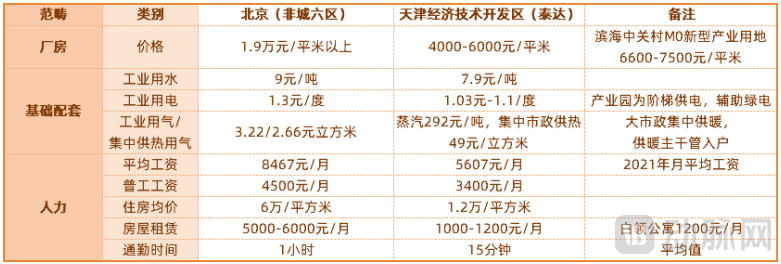
Comparison of Operational Indicators Between Tianjin Economic-Technological Development Area (TEDA) and Beijing (Excluding the Six Urban Districts)
Under the mutual engagement of the government and enterprises, “"R&D in Beijing, Manufacturing in Tianjin"Industrial Chain Collaboration ModelTypeSeizing the Momentum. On April 13 and 14, 2023, Beijing and Tianjin successfully held the Beijing-Tianjin Industrial Exchange and Cooperation Matchmaking Conference in the Binhai New Area of Tianjin. To implement the "Framework Agreement on Further Strengthening Strategic Cooperation" signed by the two municipal governments, specialized departments from both cities—including those responsible for economy and information technology (industry and information technology), science and technology, transportation, and human resources and social security—signed seven special cooperation agreements during the conference. These agreements aim to deepen collaboration in key areas such as industry, innovation, transportation, public welfare, and ecology, enhance the cooperative level of platforms like the Tianjin Binhai Zhongguancun Science Park and the Baodi Beijing-Tianjin Zhongguancun Science City, and accelerate the aggregation of high-end factors.
The integration of transportation between the two cities is a prime example of their cooperation. Tianjin is accelerating the development of the "Beijing-Tianjin-Hebei region on rails," focusing on expanding the "half-hour commuting circle" and the "one-hour transportation circle." By the end of 2023, the Jin-Xing Intercity High-Speed Railway connecting downtown Tianjin to Daxing International Airport was completed and put into operation, reducing the travel time from Tianjin’s urban area to Beijing Daxing International Airport to just 40 minutes. Meanwhile, Tianjin has launched customized express bus services from Wuqing District to Beijing, significantly improving commuting efficiency between the two cities. The "Tale of Two Cities" involving Beijing and Tianjin has become an inevitable trend.
Furthermore, the status of the Tianjin Free Trade Zone (FTZ) has brought numerous favorable policies to pharmaceutical and medical device companies establishing operations there. For instance, import registration applications for drugs that have been legally approved for marketing abroad but have not yet obtained registration approval in China may be submitted for special review and approval in accordance with the provisions for the special review and approval of new drug registrations. For medical devices that are urgently needed for clinical use by medical institutions and for which no same-variety products have been approved for registration in China, the Municipal People’s Government shall grant import approval, permitting their use only in designated medical institutions within the FTZ pilot zone.
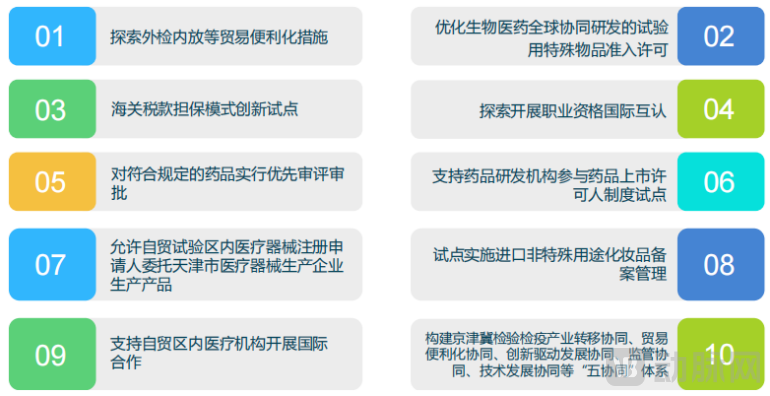
Relevant Policies on Biopharmaceuticals in the Tianjin Free Trade Zone
TEDA has leveraged the specialized capabilities of state-owned enterprises to further enhance investment promotion and corporate services within the park by establishing a presence in the Tianjin Binhai-Zhongguancun Science Park. Since Beitaowan Kefa moved into the park in 2020, it has taken over 247,700 square meters of vacant space and approximately 150,000 square meters of underground parking from Tianbao Holdings, Haitai Holdings, and TEDA Group. To date, through collaboration with various investment promotion departments in the Economic-Technological Development Area (ETDA), a total of approximately 223,000 square meters of space has been absorbed, achieving an absorption rate of 90%.
Revisiting Post-Establishment Strategies. When selecting a biomedical industrial park, enterprises primarily consider three factors: park policies, park services, and industrial clustering. TEDA has provided comprehensive solutions for each of these aspects.
Policy IncentivesTailored to the specific needs of each enterprise, preferential policies are determined based on the scale of the technology company and its developmental requirements at various stages. Upon completing the certification for park admission, technology companies will receive an initial round of financial rewards. Furthermore, if they meet specific criteria during subsequent R&D and equipment procurement phases, they will be eligible for a second, larger-scale subsidy.
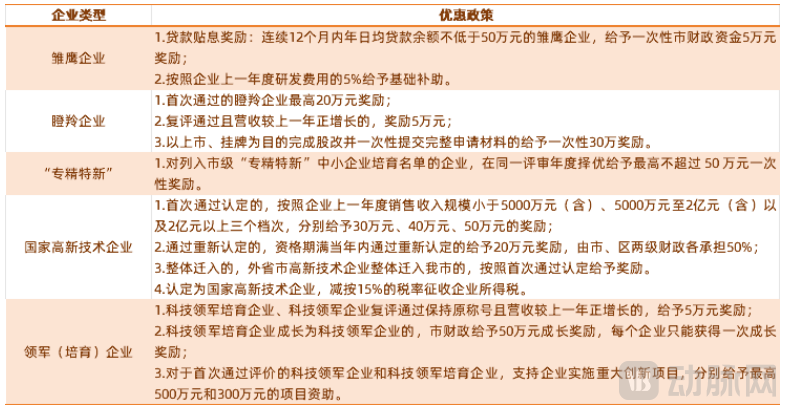
Tianjin Economic-Technological Development Area (TEDA) Enterprise Preferential Policies
R&D subsidies and equipment purchase grants are designed to alleviate corporate cash flow pressures. TEDA will provide basic subsidies equivalent to 5%, 2.5%, or 1.5% of the R&D expenses eligible for pre-tax super deduction in the previous year’s final tax settlement, along with incremental subsidies based on the growth rate over the preceding two years. The total subsidy amount for any single enterprise shall not exceed RMB 5 million. Regarding fixed assets, policies are still being optimized; TEDA plans to provide annual subsidies ranging from 10% to 15% of the value of fixed assets invested by park-based enterprises in the purchase of R&D, experimental, and production equipment.
Talent is also a key factor in TEDA’s policy formulation. In addition to the “Haihe Talent” program, TEDA has secured an additional 200 annual household registration quotas for the Beijing-Tianjin Zhongguancun Science and Technology City, helping companies retain talent as effectively as possible. Currently, TEDA has gathered nearly 20,000 professionals in the medical and health sectors, achieving coverage across the vast majority of healthcare industry segments.
Park ServicesThese are high-frequency items accessed in daily corporate operations and are often used to differentiate the quality of industrial parks. Consistent with most leading industrial parks, TEDA’s various zones have highly optimized their administrative processes, ensuring that multiple coordinated tasks are completed within one business day.
What sets TEDA apart is its ability to connect medical enterprises establishing operations there with Tianjin’s “green channel” for expedited regulatory approval by the Municipal Medical Products Administration. For companies based outside Tianjin that already hold medical device registration certificates, direct certificate conversion can be completed in Tianjin, with approval granted within one day. Furthermore, out-of-town enterprises possessing advanced technologies and products that fill gaps in Tianjin’s medical device sector may apply for the “green channel” through the Device Registration Division, significantly shortening the processing timeline.
Industrial ClusterThis represents TEDA’s greatest advantage. Leveraging its key industrial parks and years of accumulated expertise, Zhongguancun Development Group has nurtured a cohort of globally influential innovative enterprises in specialized pharmaceutical sectors, including antibodies, vaccines, and cell therapies. By the end of 2020, 20 life and health companies (including branches) within the Zhongguancun Park had successfully gone public, accounting for 38.5% of Beijing’s 52 listed pharmaceutical companies.
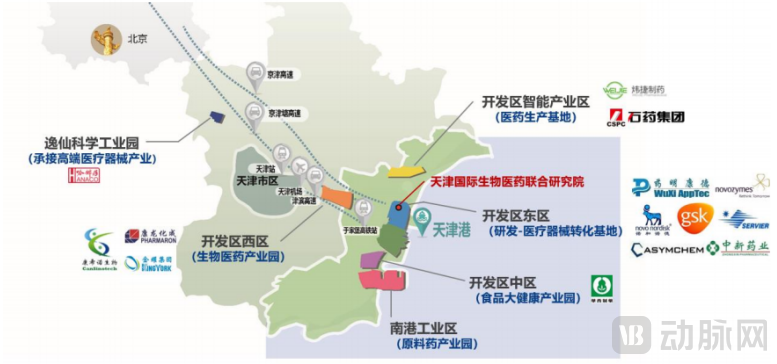
Binhai New Area Industrial Cluster
Furthermore, TEDA is leveraging proactive investments from Zhongguancun Development Group to fill gaps in the pharmaceutical and medical device industry chain or to inject capital into high-potential enterprises in specific sectors. To date, Zhongguancun Development Group has invested in 92 companies in the medical device sector, including 82 companies in in vitro diagnostics (IVD), high-value consumables, and medical equipment, thereby further enhancing TEDA’s industrial clusters in these high-growth niche segments such as IVD, high-value consumables, and medical equipment.
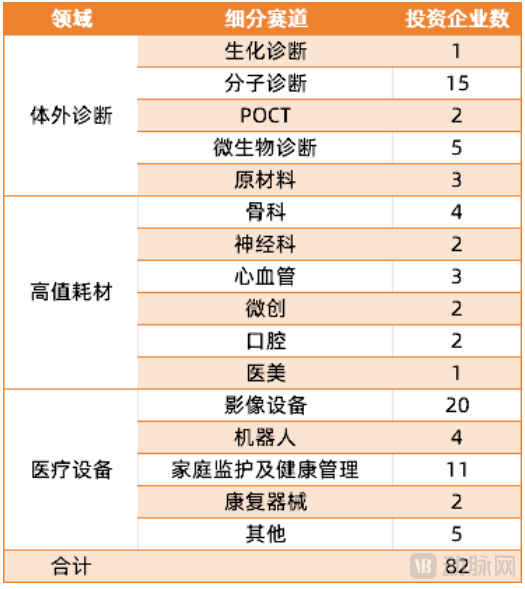
Zhongguancun Development Group’s Investment Sector: Strategic Layout in the Medical Device Track
Among the many enterprises in TEDA, a significant number have achieved rapid development within a few years of relocation. This growth is attributable not only to the companies’ own efforts but also to the industrial park’s sustained support for its tenants.
Bochuang Synthetic Biology, which established its presence in the Tianjin Binhai Zhongguancun Science and Technology Park last year, is a prime example. The company positions itself as an industrialization demonstration platform for synthetic biology, addressing upstream bottlenecks and supply chain shortages in the biopharmaceutical industry through fermentation and purification technologies, while providing comprehensive solutions ranging from equipment to processes.
To date, the company has established manufacturing production lines for high-end amino acids and their downstream products, as well as nucleosides and their derivatives. It is capable of strain improvement and customization for various raw materials, precise control of fermentation processes, optimization and customization of separation materials, and analysis of the impact of key impurities.
It took Bochuang Biotech only six months from its establishment to commence operations. A company representative told VCBeat, “Teda’s biopharmaceutical industrial structure is well-developed, providing substantial support for our rapid growth. Here, there are companies engaged in drug development, raw material production, purification, and process development like ours. This ecosystem facilitates frequent communication, collaboration, and joint R&D efforts.”
“Since the industrial park is very close to Tianjin University of Science and Technology, with only a 5-minute drive. This university has many outstanding students majoring in medicine and video production, and its related disciplines rank among the top in China. Therefore, it is easy to find suitable talent, which has accelerated our development to some extent.”
In addition to Bochuang Synthetic Biology, other industry-noted startups such as LinkCare and Fengcheng Biotechnology are also experiencing rapid growth with the support of the industrial park. As of 2022, TEDA had served more than 400 cutting-edge medical and health enterprises, over 30 high-level research institutions, and upwards of 17,000 industry professionals, collectively generating RMB 29.12 billion in industrial output value for the biopharmaceutical sector, which accounted for half of Tianjin’s total pharmaceutical industry output.
In the new year, TEDA, having already achieved remarkable success, has not slowed its pace.Earlier this year, TEDA entered into a partnership with VBEF, under VCBeat.This time, they aim to leverage the 8th VBEF Future Healthcare Ecosystem Expo to seek out next-generation medical innovations.
The 8th VBEF Future Medical Ecology Expo, organized by VB100, VCBeat, Eggshell Research Institute, and Artery Orange, co-organized by the Tianjin Economic-Technological Development Area (TEDA), and strategically supported by the Management Committee of Tianjin Binhai Zhongguancun Science Park and Beitang Bay Digital Economy Industrial Park, will be grandly held in Beijing from May 7 to 10, 2024.
For Teda, while sustaining the continuous development of its existing pharmaceutical and medical device ecosystem is important, maintaining a leading position at the forefront of innovation in the healthcare industry requires embracing the most cutting-edge biotechnological advancements and keeping pace with the times.
Under this objective, the 8th VBEF Future Healthcare Ecosystem Expo serves as the wedge that pries open the barriers between industrial parks and the most cutting-edge innovations.
Leveraging the expo, TEDA will enrich its ecosystem and attract more innovative enterprises to establish their presence; in turn, these innovators will avoid detours, rapidly developing by tapping into VBEF’s industrial chain ecosystem and TEDA’s infrastructure, thereby leading the wave of innovation in biomedicine.
VCBeat’s 8th Future Healthcare Top 100 Conference has now been upgraded to the VBEF Future Healthcare Ecosystem Expo, which will be held onMay 7–10, 2024InBeijing · Beiren Yichuang International Convention and Exhibition CenterGrandly held. This edition of the exhibition is15,000+ Visits, 10,000 sqm Scale, focusing on new products and new technologies,New services, new ecosystems, and new collaborative frameworks are being established in tandem with the launch of the VBEF channel on the VCBeat app, creating an optimal platform for showcasing innovation in the healthcare industry.
Here is,

Here it is,
Currently, there are alreadyMore than 600 companies and products have confirmed their participation in the exhibition, with over 70% of the exhibition space booked., the global buyer team has partnered withIndonesia, Singapore, Belgium, Ireland, Spain, Germany, Australia, the United Kingdom, Canada, and other countries. Limited partnership slots remain; enterprises, brands, buyer groups, and related organizations are welcome to negotiate participation.
During the conference, download the VCBeat app and access the VBEF channel to receive real-time updates on featured presentations, connect with online exhibition resources, and instantly reach companies listed on the authoritative VBEF rankings.
In this era of uncertainty, seeking high-value resources and efficient connections will be your top choice.
Sign Up Now – Limited-Time Offer!