

Yuanlai Technologies Files for IPO: MindLax Sleep Mat Reaches 52 Countries with Non-Pharmacological Sleep Solution
The number of people with sleep disorders in China is3hundred million, meaning that one in every five people suffers from sleep disorders. This is from "2023Data from the “White Paper on Healthy Sleep in China” indicates that sleep problems are causes or triggers of sub-health and numerous chronic diseases, while there are thousands of etiologies that may lead to sleep disorders.
Yet more people fail to manage their energy effectively. Unhealthy eating habits, inability to replenish physical stamina in a timely manner, habitual passive avoidance, and excessive immersion in short-form videos often lead to the unconscious misuse of our energy. Undoubtedly, persistent and widespread sleep issues—such as difficulty falling asleep, shallow sleep, and poor sleep quality—have become a pressing concern for individuals across all genders and age groups.
In this context,Shanghai Xinjing Shengyu Health Technology Co., Ltd. (hereinafter referred to as: MindLax)Leveraging the neurofeedback mechanisms in brain science,Material Innovation and Digital Content EncodingAs the two core technological barriers, pioneeredMulti-frequency Surface Waveguide System (MWS), and built its first product on this foundation—MindLax Sleep Blanket, leveraging “technological innovation” to help users improve sleep quality and alleviate stress.
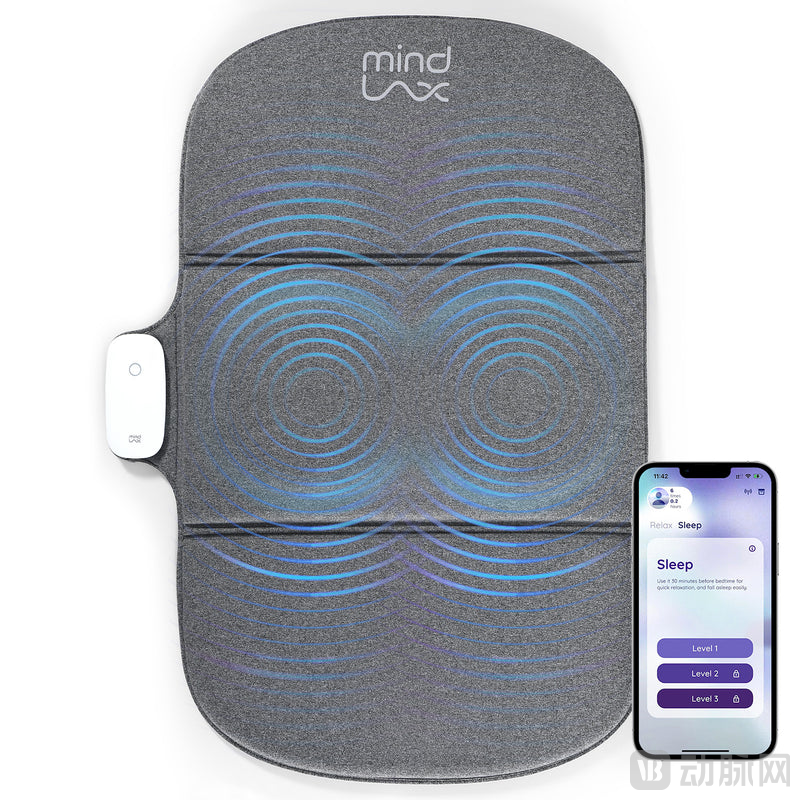
MindLax Sleeping Mat
“I sleep well, but an increasing number of people around me are grappling with varying degrees of anxiety, depression, and sleep disorders. However, only a small proportion of patients with sleep problems actually seek hospital-based pharmacological or psychotherapeutic treatment, and adherence to such treatments is often poor. This results in a large number of individuals with sleep disorders failing to receive effective and sustained relief. I aim to do something for this population by leveraging physical methods to trigger biofeedback, thereby regulating emotions and promoting neural relaxation.”“Yuanlai Technology’s founder and CEO, Liu Yitong, said in an interview.”
Before formally introducing the technical products of Yuanlai Technology, Liu Yitong first discussed his two entrepreneurial ventures, both of which were closely tied to cutting-edge technologies in the healthcare industry. These ventures became unicorns in the fields of global digital life and precision health management, as well as sports emergency care, respectively. During both periods, Liu served as Chief Technology Officer (CTO), focusing on technological innovation and research and development.
It is precisely based on her deep involvement in the healthcare industry that Liu Yitong has noted that, while addressing “major” diseases, the industry should also pay attention to the vast population of patients with sleep disorders.Thus, Liu Yitong, with over two decades of innovative experience in the big health industry and overseas work history, joined forces with her partners to break conventional boundaries. Leveraging dual-channel tactile and auditory technologies, they developed and established China’s first non-pharmacological sleep intervention system based on tactile technology within the field of cognitive neuroscience—the MWS System.
Music therapy targeting hearing is not uncommon, but how does touch heal our sleep?
The 1944 and 2021 Nobel Prizes in Physiology or Medicine were awarded for the discovery of sensory nerve fibers and tactile receptors, respectively. However, given the immense complexity of the human nervous system, the mechanisms underlying tactile transmission and regulation remain under active investigation. In recent years, breakthroughs in understanding the fundamental mechanisms of complex tactile perception and in core material technologies have propelled haptics to become a key direction for next-generation human-computer interaction.
“In haptic interaction, a significant trend is the leapfrog development from machine haptics to cognitive haptics. Machine haptics primarily refers to tactile sensation, which constitutes merely a perceptual function;”“Cognitive touch is not only about human perception; it also enables targeted regulation and intervention of cognitive states, thereby completing a closed loop of perception plus modulation,” introduced Liu Yitong.
Since 2018, Yuanlai Technology has pursued independent innovation and R&D based on the theoretical foundations of cognitive touch established by predecessors, ultimately developing a multi-frequency surface waveguide system capable of achieving a closed-loop perception and modulation framework.
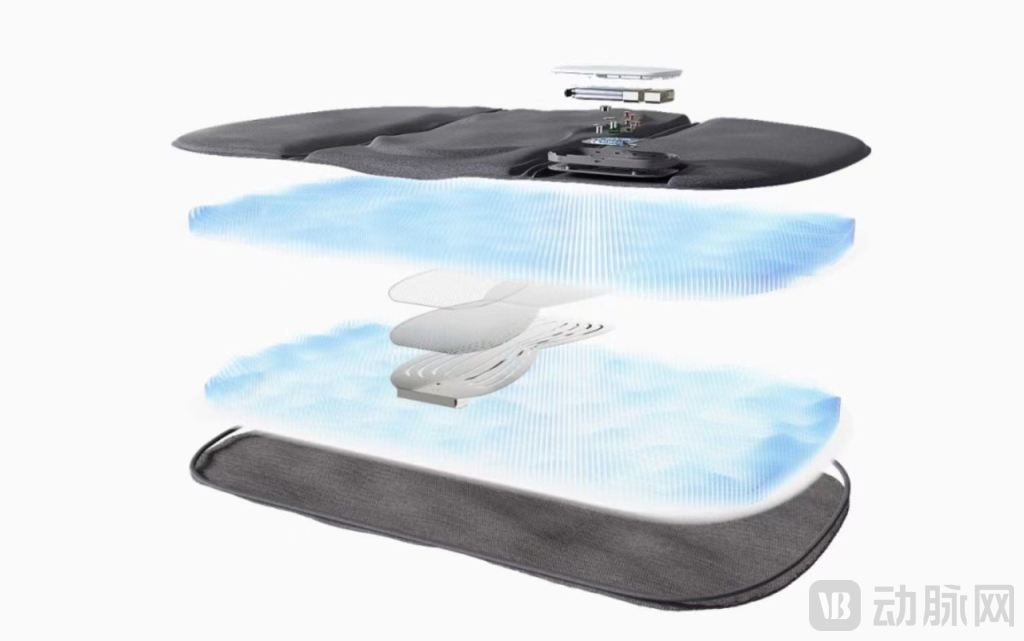
MindLax Sleep Blanket 3D Structure
The multi-frequency surface waveguide system features a hornless structure. It generates mechanical wave signals with specific Fourier transformations through material innovation, enabling users to perceive auditory and tactile vibrations via their ears and body. This process modulates neuronal transmission in the central, peripheral, and autonomic nervous systems. Upon receiving external signals, the nervous system adjusts brainwaves according to the external frequency, ultimately achieving synchronization between internal brainwave oscillations and external repetitive rhythms.
Liu Yitong explained, “This is also known as the ‘brainwave entrainment effect.’ The multi-frequency planar waveguide system can generate and induce typical brainwave patterns associated with sleep stages, guiding users into a relaxed state. Meanwhile, it employs a dual-channel pathway combining tactile and auditory stimuli to enhance the efficacy of neuromodulation, achieving seamless interaction.”
As previously introduced,Rare Alloy Materials and Digital Content Encodingare the two core technological barriers of Yuanlai Technology.
Rare Alloy Material Neuro Arc™Composed of various metals and gold foil treated with a specialized ion coating process.This material generates broadband, low-velocity sinusoidal carrier waves, producing 6–12 harmonics that are effectively tolerated by the human body—significantly exceeding the 4–6 harmonics typical of conventional metallic materials—with a wave propagation speed seven times greater than that of ordinary materials.
Neuro TIM™ Dynamic Digital Content Encoding TechnologyThe underlying logic is based on frequency encoding of rare alloy materials. By conducting in-depth research into the characteristics of the human sympathetic and parasympathetic nervous systems, the team has identified specific composite frequencies capable of precisely modulating the human nervous system.
In this regard, Liu Yitong offered an analogy: “Dropping a single pebble into water creates a central ripple, whereas dropping 1,000 pebbles simultaneously generates a more complex and multifaceted combination of ripples. As an innovative brain science company, MindLax leverages harmonics of varying frequencies, frequency combinations, and durations to interact and resonate with the human body, producing auditory sensations that directly envelop cranial nerves, thereby achieving neuromodulatory therapy.”
Sleep is the first practical application scenario that MindLax has entered. The MindLax Sleep-Enhancing Blanket featuresNo Complex Wearables, Efficient Instant Experience, Personalizationproduct design philosophy. Users do not need to wear any cumbersome devices; by simply lying directly on the “mat,” their level of “tension” can be scanned, and closed-loop regulation is employed to reduce sleep onset latency, increase the duration of deep sleep, and optimize sleep architecture.
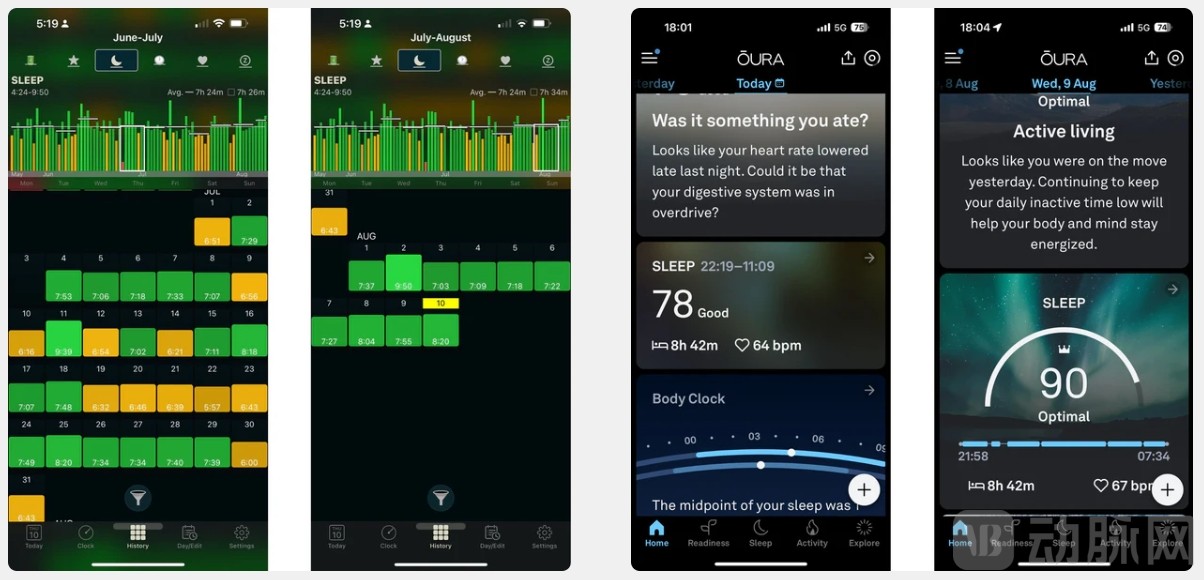
Sleep Monitoring Data for Some Users
More importantly, compared to conventional pharmacological treatments or transcranial magnetic stimulation therapy, the MindLax Sleep Aid BlanketNo drug side effects, no dependency, and no other harm to the human body. As a D2C consumer healthcare product, the Sleep Repair Blanket is foldable and portable,Width when folded: 70 cm; Weight including packaging: 1.6 kg, facilitating daily portability and logistics transportation.
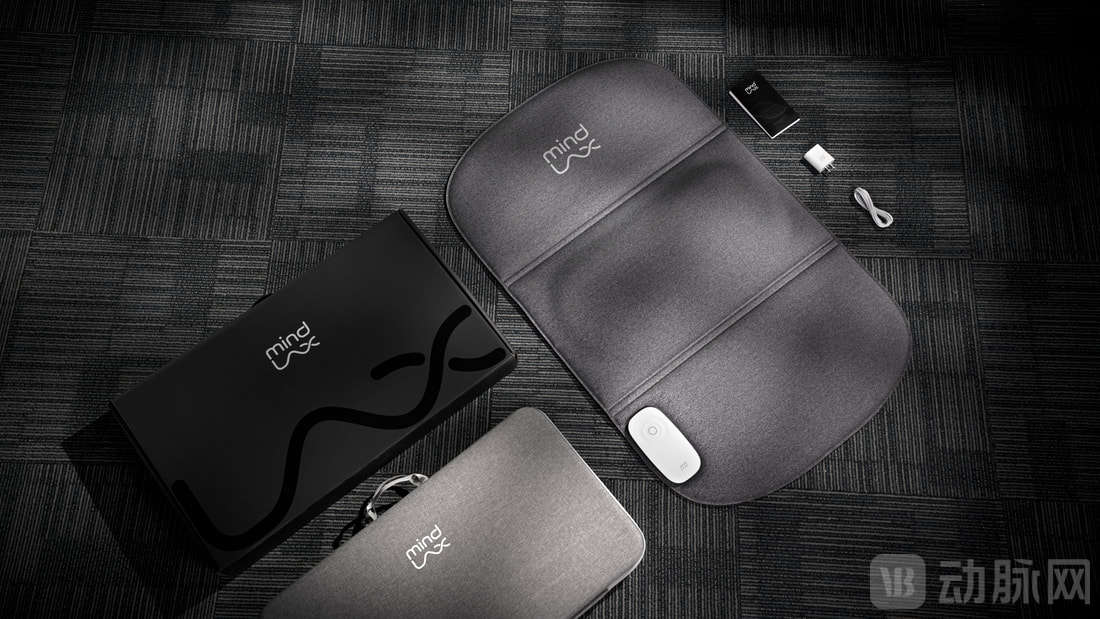
MindLax Sleep Aid Blanket Product Packaging
“After listening to user feedback, the second-generation MindLax product will be launched in the second half of 2024. The second-generation product will add an AI therapist functional module, addressing modern people’s dependence on electronic devices such as smartphones before bedtime. After subscribing to courses via the app, users can achieve deep relaxation and high-quality sleep by following voice-based human-computer interaction guidance, thereby establishing a natural sleep cycle,” said Liu Yitong.
At this stage, leveraging its innovative advantages in underlying module technology, the MindLax Sleep Aid Blanket has also gained recognition from numerous B2B clients. For instance, it has partnered with Alipay’s Sleep Health section, Yuanlai Technology, insurance agents from Weiyi Brokerage, and the Shanyu Nutritionist Platform to provide sleep management services for insurance agents and a broader user base. Furthermore,The company has also engaged in in-depth collaborations with leading new energy vehicle manufacturers, hotels, wellness and elderly care centers, and medical aesthetics clinics.
“Taking into account the consumption habits and purchasing power of different countries, the company selected Europe and North America as the initial launch markets for its products. Positive user feedback has already been received. Meanwhile, the team is actively expanding into the Asian market. In China, for example, the MindLax Sleep Aid Blanket is now available on major e-commerce platforms, with global direct sales conducted through the official website of Yuanlai Technology. Importantly, the company has simultaneously initiated the medical device registration processes in both China and Japan.”
Clinically, by the end of 2023, MindLax had completed a clinical research project at the Mental Health Center affiliated with Zhejiang University School of Medicine (Hangzhou Seventh People’s Hospital). The results indicated that the MindLax multi-frequency planar waveguide system reduced sleep latency by an average of 23.34%, while improving sleep efficiency and quality. Furthermore, scores on the PHQ-9 depression screening scale demonstrated that participants experienced alleviated depressive symptoms after using the product.
In the future, MindLax plans to be integrated into clinical treatment protocols and extended beyond hospital settings, establishing a truly evidence-based, companion-style, intelligent, and personalized sleep solution that achieves a closed loop of sleep monitoring, intervention, and data feedback.
After five years of accumulation and research and development, Yuanlai Technology has assembled a team with strong interdisciplinary expertise spanning materials science, sensors, cognitive science, and psychoacoustics, as well as integrated hardware and software capabilities, and has secured 12 patents.In March 2023, the company successfully completed a tens-of-millions-of-RMB angel financing round, exclusively invested by BlueRun Ventures.
At the end of the interview, Liu Yitong stated, “With the improvement in national living standards and deepening health awareness, the shortage of both sleep therapists and psychological counselors in China continues to widen.”Yuanlai Technology’s service layout establishes the “AI Healer,” empowering more scenarios through edge-side AI to deliver a better life experience for more users.
“Meanwhile, as a technology-driven enterprise, we will continue to tap into our technological potential and build high technical barriers. As the company further consolidates and expands its presence in the field of cognitive haptics, we aim to leverage Chinese innovation to launch more innovative and leading-edge products, achieve leapfrog development in brand building, bring MindLax’s products and brand to the global market, and create greater value for users.”