

Navigating Economic Cycles: Solutions for Non-Public Healthcare Challenges Unveiled at the 4th Boao Forum for Global Health
For a long time, China’s healthcare system has been dominated by public medical institutions, with non-public healthcare serving as an effective supplement to the public system. In 2023, the General Office of the State Council issued the “Opinions on Further Improving the Healthcare Service System,” which further defined the role of non-public healthcare by acknowledging that socially operated medical institutions may take the lead in forming or participate in medical consortia. The policy aims to enable non-public healthcare to better fulfill its complementary role, addressing functional gaps in the public healthcare system amid the increasingly severe challenge of population aging.
Despite the opportunities, most non-public healthcare providers still lag behind public medical institutions of similar standing in terms of physician resources and equipment configuration. Consequently, they frequently encounter challenges such as difficulty in establishing brand recognition, securing funding, and retaining patients during operations. If these issues remain unresolved, non-public medical institutions will struggle to accommodate the surging pressure from the demand side.
Exploring Future Possibilities and Identifying Effective Development Pathways for Non-Public Healthcare. On April 20, 2024, the China Grand Health Industry Leaders Conference with 1,000 Attendees and the 4th Boao Grand Health Forum, hosted by GE Healthcare, were held in Boao, Hainan. The forum brought together more than 1,000 industry leaders, including prominent figures, academic scholars, clinical experts, administrators of non-public medical institutions, and investors in the grand health sector. Notable attendees included Huang Qifan, former Mayor of Chongqing, and Liang Wannian, Executive Vice Dean of the School of Public Health and Health at Tsinghua University. Participants centered their discussions on the challenges facing the non-public healthcare sector, jointly exploring new approaches to differentiated and complementary development, specialty construction, cost reduction and efficiency improvement, as well as new pathways for upgrading medical value, against the backdrop of bolstered new-quality productive forces and the growing private economy.
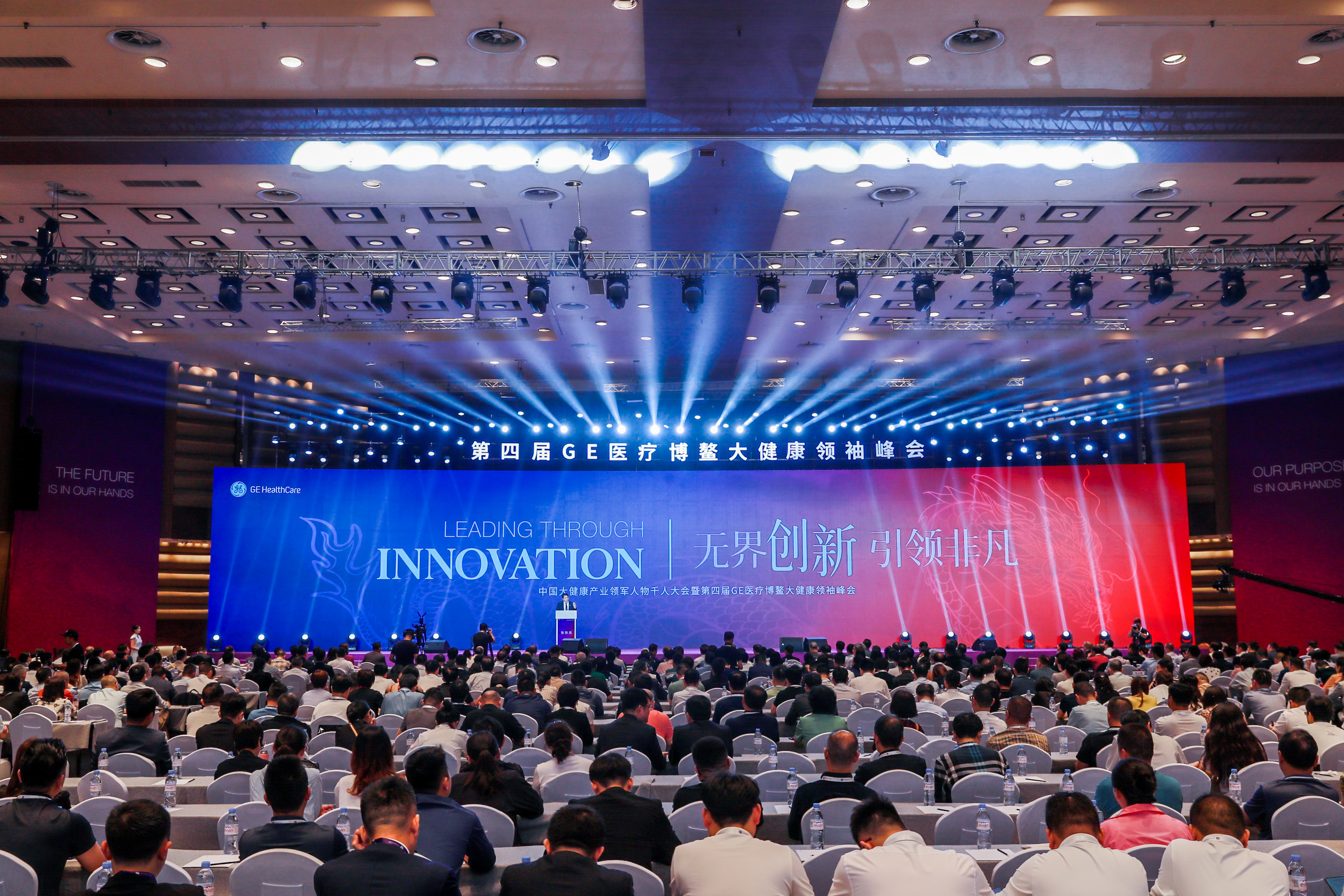
During the conference, experts drew on their professional expertise to conduct in-depth discussions on viable strategies for the development of private healthcare. By enhancing the service quality of private medical institutions, they aim to gradually alleviate the shortage of high-quality medical resources in China and achieve another round of supply-side innovation within the country’s healthcare system.
As a crucial component of non-public healthcare, many private hospitals have adopted the management paradigms of public institutions, yet lack the supporting advantages in talent, capital, technology, and brand equity. With the comprehensive integration of internet technologies into the medical sector, these operational disadvantages have been exponentially amplified, making patient acquisition increasingly difficult and rendering their current situation far more precarious than it was five years ago.
However, the aforementioned hospitals are not without opportunities. In recent years, many public hospitals have been attempting to establish health examination centers and international medical centers to cultivate high-end consumption—areas where non-public healthcare providers hold a distinct advantage. Therefore, if non-public healthcare institutions can identify appropriate market positioning and integrate top-tier technology, state-of-the-art equipment, optimal medical solutions, and premium services, they can still find turning points amidst adversity.
Positioning is the first aspect that must be clearly defined in the development of non-public healthcare. Wu Jiaxiang, President of Mingliu Health Industry Group, stated: “At the current stage, the key for non-public healthcare is to avoid homogenization. Taking first-tier cities as an example, these areas concentrate China’s highest-quality public medical resources and also host a large number of private institutions. If one merely operates general outpatient clinics or chain-based health checkup centers offering standardized services, it will be difficult to stand out amid intense competition.”
“Therefore, in the health checkup sector where Mingliu Health operates, we aim to maintain long-term relationships with high-net-worth clients while also exploring policy-driven segments, such as traditional Chinese medicine (TCM) wellness and elder care, which have received significant national attention in recent years and offer substantial growth potential.”
Having carved out market space through strategic positioning, non-public healthcare institutions must now leverage “service” to achieve sustainable development. While numerous factors influence service quality, Dai Hongdong, Vice President of GE Healthcare China and General Manager of its Non-Public Healthcare Business, summarized the key elements that private hospitals should prioritize in building their service capabilities using three Chinese characters centered on “Yi” (medical/healthcare) at this forum.
“The first ‘medical’ refers to the introduction of advanced medical equipment and technologies, as the capabilities in equipment and technology determine the scope of services a hospital can offer. To meet the high-end demands arising from premium consumption, private healthcare institutions may need to procure specialized equipment to support their projects.”
The second “Yi” refers to ultimate medical services. While constructing large and aesthetically pleasing hospital facilities may leave a favorable impression on patients, the key to truly retaining them lies in enhancing medical services, ideally achieving complete eradication of their conditions.
The third “Yi” refers to sustained medical innovation. When confronted with complex and refractory diseases, non-public healthcare institutions should also possess the courage to overcome the unknown, exploring innovative therapeutic approaches within a sound regulatory framework. In this process, non-public healthcare requires advanced medical equipment, cutting-edge technology, exceptional service, and boundless innovation.
Li Wei, founder and chairman of Yiling Hospital Management Group, provided a further explanation of Dai Hongdong’s “Three Medicals” concept using practical case studies. “Yiling positions itself in the consumer healthcare sector, where users do not settle payments through national medical insurance. Therefore, we need to build a medical service system centered on the health needs of each individual client,” Li stated in an interview. “As a medical and elderly care institution, we place greater emphasis on the supply-side scenarios and content of services such as prevention, screening, and chronic disease management. To achieve differentiation and deliver precise early screening and targeted interventions, comprehensive support from high-end medical equipment is essential.”
“To this end, we have engaged in extensive collaboration with GE Healthcare. By the end of 2023, we had jointly established ten health centers specializing in immunology and oncology, cardiovascular and cerebrovascular diseases, gastroenterology, metabolism, neurology, pulmonology, musculoskeletal and sports medicine, ophthalmology, stomatology, and reproductive health. These centers enable precise early screening, ultra-early assessment, and integrated management encompassing prevention, diagnosis, treatment, and rehabilitation for our patients, thereby building core competitiveness through systematic, differentiated, and high-quality medical services.”
As the conference organizer, GE Healthcare has been focusing on the development of private healthcare for over a decade and continuously tailoring solutions for it.
In the view of Liu Bin, General Manager of National Sales for GE Healthcare China’s Private Healthcare Business, private medical institutions in China are becoming increasingly segmented, with specialization deepening. “Ten years ago, our clients were mostly the top-tier private hospitals in the industry, which prioritized pricing and equipment configurations relative to local public hospitals. Today, however, most are pursuing specialized pathways. Health check-up providers such as Mingliu Health place greater emphasis on the screening process, demanding higher technical capabilities. Consequently, they pay closer attention to front-end screening considerations when selecting product tiers, thereby raising their requirements for our products.”
“On the other hand, we previously provided only single products to private hospitals. Now, however, we collaborate with our clients to explore how to better serve the general public and meet the needs of every patient, including those in a sub-health state. As a result, GE Healthcare has expanded its product portfolio to encompass the entire healthcare ecosystem.”
Therefore, GE HealthCare has evolved from its original role as an equipment and service provider into an enabler of the non-public healthcare ecosystem and the most valuable partner for non-public medical institutions.
At the summit, GE HealthCare also unveiled its newly upgraded “Five Centers 2.0” health solutions. Commenting on this, Zhang Yihao, Global Executive Vice President of GE HealthCare and President and CEO of GE HealthCare China, stated that GE HealthCare’s solutions will center on five key areas: specialized discipline development, lean cost management, systematic talent development, branded hospital image, and smart operational tools. These initiatives aim to comprehensively support non-public medical institutions in enhancing efficiency and quality, strengthening their competitiveness for sustainable development, and stimulating new-quality productive forces characterized by high quality, high efficiency, and advanced technology, thereby injecting new momentum into the accelerated growth of the non-public healthcare sector and the broader health industry.
Currently, many of GE HealthCare’s partners have already embarked on practical explorations based on its Five Centers health solutions. Notably, Ruici Medical, a leading provider of physical examination services, has collaborated with GE HealthCare to develop intelligent imaging products for precision health screenings. These innovations facilitate early detection of major diseases through AI-assisted ultrasound diagnosis for thyroid and breast conditions, as well as low-dose CT screening for lung diseases, thereby accelerating the widespread adoption of high-quality physical examination services.
According to disclosures made by Ruici Medical at the forum, the company will subsequently collaborate with GE Healthcare to establish a Smart Healthcare Innovation Center, leveraging AI to empower end-to-end disease management and enhance the quality control standards and operational efficiency of its health examination centers.
As one of the earliest companies to establish a non-public healthcare services team and deeply engage in the non-public healthcare sector, GE Healthcare has participated in the evolution of privately run healthcare from rapid expansion to refined development, witnessing the non-public healthcare industry gradually become an integral component of the healthcare service system.
Throughout its journey, GE HealthCare has not only provided advanced medical equipment and technical support to numerous non-public healthcare institutions but also leveraged its industry experience and professional expertise to provide robust safeguards for the healthy development of the non-public healthcare sector.
In the face of new challenges such as an accelerating aging population and the trend of diseases affecting younger demographics, GE Healthcare has not retreated. Instead, it has further refined its solutions to help non-public healthcare providers address increasingly diverse, multidimensional, and multi-tiered medical needs.
Dai Hongdong stated that GE Healthcare will leverage the advantages of “global resources + Chinese ingenuity,” collaborate with non-public medical institutions, integrate multi-dimensional resources from within and outside the industry, and customize and explore intelligent, integrated, and boundary-less innovative application scenarios. This will empower non-public healthcare to deliver greater value, serve as a robust complement to public hospitals, and enhance market trust in non-public healthcare services, confidence in its development, and brand reputation.