

Leading Medical Enterprises Are Building Ecosystem-Driven Platforms to Accelerate MedTech Translation: The Case of HaiYiHui
Beyond technology and the market, another invisible “war” is being fiercely waged among leading healthcare enterprises: innovation versus commercialization.
According to VCBeat, in the past few years, medical-engineering innovation platforms have emerged one after another, and most of them are backed by leading healthcare companies. For example, on the corporate side, includingAstraZeneca, Boston Scientific, Mindray, United Imaging, CSPC Pharmaceutical Groupetc., all currently have their own innovation and commercialization centers; additionally, on the capital side,Sequoia, Legend Capital, Matrix Partners China, CAS StarStar institutions are also making strategic moves in this regard.
Recently, another medical-engineering innovation platform backed by a leading healthcare enterprise has officially been launched, namely“Haiyi Hui”. It is reported that this is from the big health ecosystem brand under Haier GroupYingkang LifeLead, CollaborateChinese Research Hospital Association, Shandong Industrial Technology Research Institute, Archaeus CapitalA medical-engineering technology innovation and industrialization platform, jointly initiated and established, is committed to fostering original technologies for life and health.
In fact, as China’s healthcare industry enters a new cycle of innovation, focusing on innovation and translation is undoubtedly the right approach. Especially for industry giants, which possess resource advantages as well as the corresponding capabilities and influence, they are naturally well-positioned to empower scientific achievements and, to a certain extent, enhance conversion rates.
However, the path to commercializing research outcomes is fraught with challenges and remains long; consequently, certain doubts have begun to spread throughout the industry, such asHow Are These Medical-Engineering Innovation Platforms Actually Operated? Can They Truly Drive the Successful Translation of Scientific Research Achievements?In addition,In a market saturated with medical-engineering innovation platforms, what kind of platform will stand out in the future?
China’s Medical Innovation Is Reaching a Historic Inflection Point
Amid the market winter, every step is critical. For many leading healthcare companies, the willingness to invest heavily in building medical-engineering innovation platforms stems fromTo a large extent, it is because China’s medical innovation is ushering in unprecedented opportunities for development.。
Of course, this must be viewed from multiple dimensions.First, on the demand side, continuously evolving clinical needs are driving a new wave of innovation revolution.。
Taking population aging as an example, data from the National Bureau of Statistics shows that by the end of 2023, China’s population aged 60 and above reached 297 million, accounting for 21.1% of the total national population. By 2050, this figure is projected to rise to nearly 500 million. This indicates that clinical demand in the field of elderly health will expand rapidly in the future, creating an urgent need to accelerate the translation of innovations into practical medical products to address existing clinical gaps.
For clinical challenges that remain unresolved, market demand is expanding, with a increasingly pronounced trend toward younger patient populations. Taking leukemia as an example, clinical data indicate that there are currently approximately 4 million leukemia patients in China, with over 40,000 new cases diagnosed annually. The age of onset is predominantly under 35 years, with children accounting for more than 50% of cases. Although China’s hematopoietic stem cell registry has reached a capacity of over 3.2 million units, it still fails to meet the growing clinical demand. Consequently, research and development efforts focused on this disease area are being vigorously advanced.
Having outlined the requirements, we now turn our focus to innovation capacity. China’s medical innovation capabilities have improved significantly, fully enabling the pursuit of numerous cutting-edge technological research initiatives.。
According to the "World Intellectual Property Indicators" report, since 2021,China has ranked first in the world for three consecutive years in terms of the number of valid patents., and the gap with the United States, which ranks second, is widening. When it comes to specific innovation scenarios, a professor from a certain university stated, “A single laboratory building within a college may now house dozens of labs, most of which are led by heavyweight overseas-returnee experts and scholars. They have accumulated substantial valuable scientific research achievements in their respective fields of expertise and are bringing these results to China.”
It is precisely for this reason that many of China’s medical products now possess the technical prowess to compete on a global stage with the world’s strongest rivals, and are increasingly being exported to overseas markets. According to data from PharmaCube, nearly 70 license-out deals for innovative drugs were completed in China in 2023, with the total disclosed transaction value exceeding $35 billion. Notably,For the first time, the number of license-out deals for innovative drugs in China has surpassed that of license-in deals, indirectly demonstrating the continuous strengthening of China’s medical innovation capabilities.。
Finally, at the industry level, both healthcare companies and investment institutions are focusing on original innovation, with unprecedented levels of investment.。
Taking the corporate side as an example, among the 116 A-share listed pharmaceutical companies that have disclosed their 2023 annual reports,Cumulative R&D expenditure exceeded RMB 50 billion, with 85 pharmaceutical companies reporting year-on-year growth in R&D spending.. On the investment institution side,“Investing early, investing in small ventures, and investing in hard tech” has become a prominent doctrine across the entire capital market., according to incomplete statistics from the VCBeat database,In 2023, there were as many as 734 Series A and pre-Series A financing deals in China’s healthcare sector, accounting for nearly 50% of the total number of financing transactions.。
Beneath these data lie two typical phenomena in the industry: first, an increasing number of scientists are stepping out of laboratories and into the entrepreneurial arena, becoming core figures in healthcare companies; second, the proportion of scientists within the core teams of investment institutions has risen significantly. These scientists possess both technical expertise and market insight, enabling them to effectively drive the translation of valuable scientific achievements into practical applications.
Looking back, the iterative upgrading of clinical needs has once again made innovation the focus of the industry, placing it in a highly strategic position. The comprehensive enhancement of innovation capabilities has enabled numerous scientific achievements to be successfully incubated in laboratories. Finally, as these innovations are implemented in the industry, the full participation of healthcare companies and investment institutions drives the ultimate translation and commercialization of these cutting-edge results from the market side.
Therefore, for leading healthcare companies seeking new growth curves, participating in this space is effectively a strategic move to position themselves for the future.
MedTech Innovation Platform: Focusing on Ecosystem Building
Although medical innovation in China is rapidly gaining momentum, the country’s current conversion rate remains at a relatively low level. According to data released by the National Bureau of Statistics in 2020,China's rate of conversion of scientific and technological achievements into practical applications is less than 30%, which is significantly lower than the 60% to 70% average in developed countries in Europe and America.The key factor behind this phenomenon is that China has not yet established a comprehensive and mature innovation ecosystem.。
In this regard, at the founding ceremony of “Haiyi Hui,” Tan Lixia, Vice Chairwoman and Executive Vice President of Haier Group, Chairman of Yingkang Yisheng, and Chairman of Haiyi Hui, stated, “We are currently in a period of reshaping the global scientific innovation ecosystem, where technological innovation is truly transforming into a driving force for industrial development. This will accelerate basic scientific research, the translation of achievements, and the resolution of clinical challenges. To achieve this goal, the capacity for co-creating and evolving the ecosystem becomes critically important.”
That is to say,The faster the pace of technological iteration, the greater the need for system openness and ecosystem development.So, how should we understand this? In this regard, “Hai Yi Hui” provides a useful reference sample.
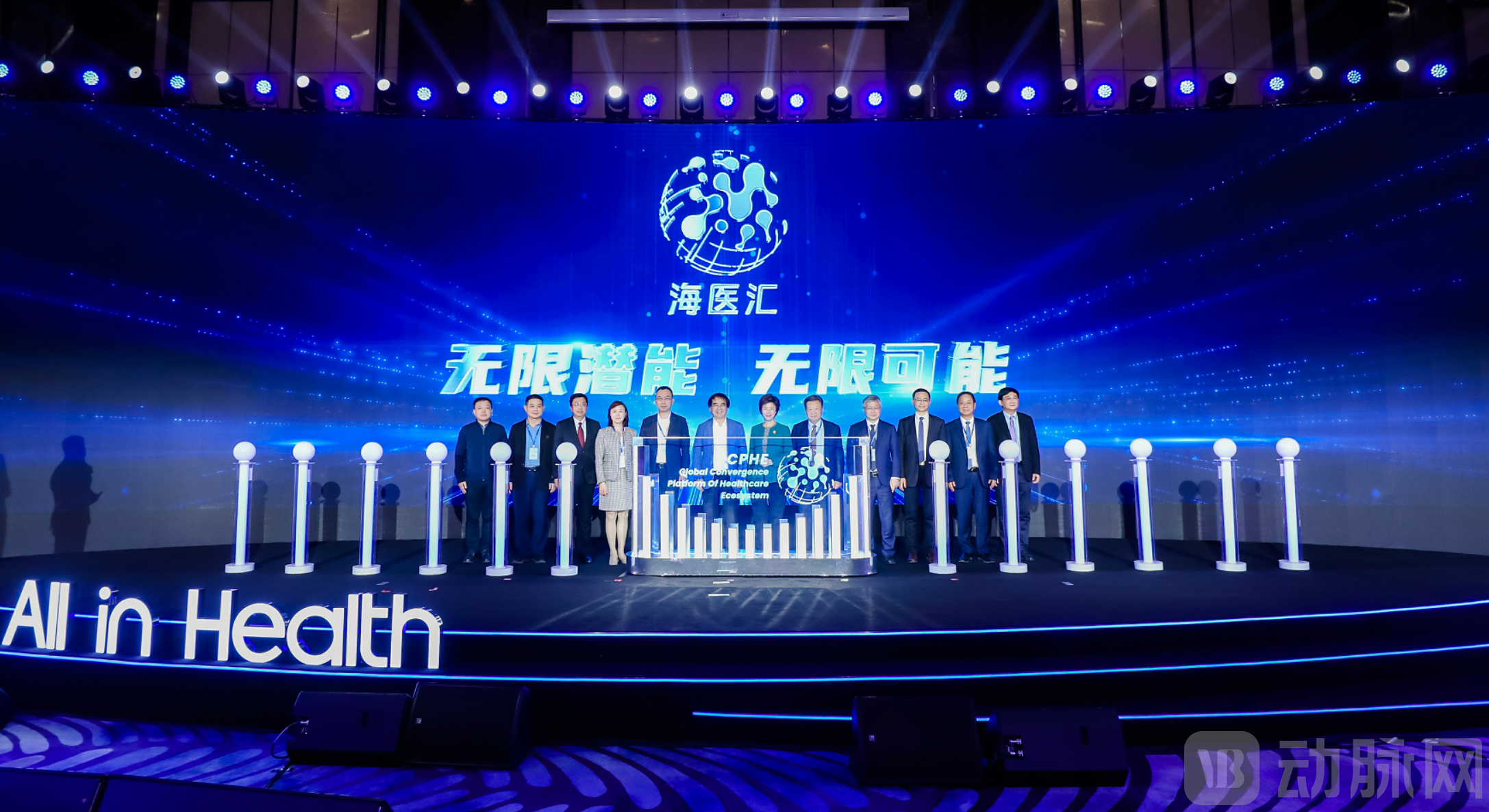
According to Gong Wenwen, Strategic General Manager of Yingkang Life and Director of Haiyihui, the three characters in “Haiyihui” precisely correspond to its three key characteristics.Here, “Hai” corresponds to “ecological nature.”, adhering to the principles of openness and sharing, with a focus on achieving deep integration among “clinical practice, industry, and capital”;“Medicine” corresponds to “public welfare.”, which does not prioritize profit as its core objective but instead seeks to tap into innovation across society at large;“Hui” corresponds to “applicability.”, driven by clinical needs to truly realize the principle of “from the clinic, back to the clinic.”
Specifically, taking “public welfare” as an example, HaiYiHui does not bind itself to excessive commercial elements but focuses on innovation itself, thereby unlocking greater innovative potential.。
In synergy with the Haiyi Hui Ecosystem Platform, the Haiyi Hui Fund was officially launched on the same day. The conference also announced the first batch of ecosystem enterprises and projects joining Haiyi Hui, including the world’s first full-chain research on intra-arterial targeted hypothermic brain protection, which represents a technological breakthrough in hypothermic brain protection. Hu Yu, Director of Haiyi Hui and Chairman of Archaeus Capital, stated: “All successful medical-engineering translations ultimately hinge on outstanding projects and enterprises. Haiyihui Fund will continue to contribute its strength to the development of the technological innovation industry that originates from and returns to clinical practice. We hope that an increasing number of high-quality projects and enterprises will join us.。”
Secondly, we focus on "applicability," meaning that Haiyihui closely aligns with clinical needs and facilitates zero-distance interaction between clinical practice and industry, thereby identifying innovative technologies that truly address real-world problems.。
It is reported that “Hai Yi Hui” mainly targetsBrain Science, Life Sciences, Women's Health, Blood Ecosystem, Precision Oncology, Medical Care and Rehabilitationsuch niche sectors, which share the common characteristics of strong technological innovation and substantial clinical demand. Taking brain science as an example, as a cutting-edge technology, it has demonstrated significant efficacy in treating conditions such as amyotrophic lateral sclerosis (ALS), epilepsy, and mental disorders. However, its practical implementation still faces considerable challenges at the current stage.
Based on this, "Haiyihui" has specially established three platforms, namelyClinical Innovation Interaction Platform, Integrated Industry Translation PlatformandSmart Medical Engineering BrainFocusing on the “Clinical Innovation Interaction Platform” as a key example, it efficiently links and deeply integrates core resources across the innovation ecosystem—including hospitals, research institutions, healthcare enterprises, and financial institutions—thereby empowering the translation of scientific achievements into practical applications. In terms of critical innovation resources, “Haiyihui” has already established in-depth collaborative partnerships with numerous top-tier research institutes.Including nearly 10 top-tier domestic and international universities, as well as over 30 national-level research institutions and hospitals, with coverage of more than 100 leading global academicians and clinical experts.。
Lastly, we should mention “ecologicality,” meaning that Haiyihui connects the innovation and translation chain, forming a complete, mature, and inclusive ecosystem for innovation and translation.。
Professor Cheng Heping from the School of Future Technology at Peking University stated, “Our philosophy aligns perfectly with that of Haiyihui. Although we originate from academia, while they come from the industrial and financial sectors, our shared vision is to integrate science, technology, engineering, industry, and society into an ecosystem—a large closed loop. This constitutes true core competitiveness and new-quality productive forces. In this process, we will cultivate cross-field, interdisciplinary, and multi-category talent.”
Hu Yu expressed his agreement, stating, “In the process of innovation and translation, industry, research, academia, business, and application are all occurring simultaneously; it is not a simple plane but a complex network structure., for instance, during the R&D phase, clinical considerations must be taken into account, and feedback from clinical practice should promptly drive improvements in R&D. Throughout this process, industry and capital must provide corresponding resources at different stages. Therefore,What Haiyihui truly aims to do is to integrate “industry, research, academia, economics, and application” into an organic system, and then equip it with an intelligent core, thereby addressing the multidimensional needs in medical innovation and translation.。”
Building on this foundation, Haiyihui has introduced two concepts: “Industry Partner” and “Capital Partner.” The concept of “Industry Partner” is straightforward—it leverages the industrial resources accumulated by Yingkang Yisheng to empower innovative achievements from an industry perspective, thereby bridging the “last mile” in commercialization. In contrast, “Capital Partner” primarily relies on the Haiyihui Fund to engage at the earliest stages of development, providing core elements such as strategy, resources, and team support throughout the incubation process.
Thus, it is not difficult to see that the three characteristics of Haiyihui are actually centered around the challenges in the three stages of medical innovation translation in China. Among them, “public welfare” corresponds to the exploration of innovative capabilities from “0 to 1,” “application-oriented” corresponds to the targeted incubation of achievements from “1 to 10,” and “ecosystem” corresponds to the industrial implementation of achievements from “10 to 100.”
How Can Medical-Engineering Innovation Platforms Break Through Amid Homogeneous Competition?
According to VCBeat, although there are already many medical-engineering innovation platforms on the market, most of them are backed by governments, research institutes, and leading healthcare companies.However, only a very small minority actually play a practical role, with a large proportion currently remaining “idle.”。
There are many core reasons for this, but the most critical one lies in homogeneous competition. That is, when everyone’s concepts, models, goals, and supporting resources are largely similar, medical-engineering innovation platforms that fail to establish differentiated advantages or lack steadfast determination will be the first to be eliminated by the market as the innovation process advances. In other words,As the translation of medical innovations deepens, medical-engineering innovation platforms will face a “major test” of survival of the fittest.。
So, what kind of medical-engineering sci-tech innovation platform can truly stand out? In the view of industry veterans, it must first closely align with clinical needs. Building on this foundation, it is essential to establish a robust innovation ecosystem that is sufficiently open and inclusive, capable of connecting and integrating every link in the innovation and translation value chain.
And this is precisely the original intention behind the establishment of Haiyihui. In this regard, Gong Wenwen, Strategic General Manager of Yingkang Yisheng and Director of Haiyihui, stated, “Cross-domain, interdisciplinary, and cross-industry collaboration remain our foundational commitment. Guided by visionary goals, we undertake difficult yet right endeavors to aggregate top-tier resources, driving synergy and co-creation among all stakeholders across the entire value chain ecosystem. This open ecosystem is inherently dynamic, boundary-less, and capable of self-evolution.。”
In fact, only after such an organic ecosystem is established can a medical-engineering sci-tech innovation platform possess the critical capabilities to mitigate risks and face competition. This is because innovation and translation must be open; they require the participation of more core elements from the industrial chain to jointly foster an ecosystem. As these core elements accumulate, the ecosystem becomes more vibrant, thereby truly driving the successful translation of valuable medical achievements. This creates a virtuous cycle.
Accelerating the establishment of this virtuous cycle is a shared challenge for the entire healthcare industry, and it is also the enduring goal pursued by medical-engineering innovation platforms such as Haiyihui.