

How ShiJie Medical Achieved Commercialization of Its Proprietary Neurovascular Radial-Access Devices Within Two Years
In 2003, Cai Shizhou, who was still pursuing a degree in clinical medicine, could hardly have imagined that he would go on to found a company named Shijie Medical in 2021.
Moreover, at its inception, the company secured over RMB 10 million in angel financing, followed by another round of tens of millions in 2023. During these two years, Shijie Medical had six projects pass technical evaluations, with four products obtaining medical device registration certificates and approval for medical insurance coding, thereby fully launching its commercialization journey.
Over the past two years, from product approval to the launch of commercialization, Shijie Medical has achieved one milestone after another. Notably, this period encompassed the majority of the pandemic era and the "winter" of healthcare financing. This inevitably raises the question: What has driven this company’s rapid development?
On an afternoon in April, this question was answered in detail by Cai Shizhou, founder of Shijie Medical.
Shijie Medical is an innovative enterprise engaged in neurointerventional procedures. However, unlike companies in the market that primarily focus on the transfemoral approach, Shijie Medical has chosen to concentrate on the transradial approach.
The transfemoral approach is currently the primary access route for neurointerventional procedures. Early transradial neurointerventional diagnosis and treatment were mostly performed in cases where femoral access was unattainable, such as bilateral femoral artery occlusion, bilateral iliac artery occlusion, or aortic occlusion. However, in recent years, the transradial approach has become a hot topic in neurointervention, with some scholars explicitly stating that it has the potential to surpass the transfemoral approach.
In the interview, Cai Shizhou also stated to VCBeat: “Currently, young neurointerventionalists are highly enthusiastic about performing transradial procedures, with ‘transradial’-related topics featured at nearly every academic conference.”
In response to the vigorous academic debate surrounding the transradial approach, the industry has also reacted swiftly. For instance, Medtronic previously launched its dedicated RIST catheter for the transradial approach in the United States. The entry of multinational medical device giants indirectly reflects the industry’s optimism regarding the adoption of the transradial approach in neurointerventional procedures.
The industry’s optimism regarding the transradial approach in neurointerventional procedures stems from several key factors. First, because the radial artery is superficial and surrounded by no major nerves or blood vessels, the risk of puncture-related complications is reduced; furthermore, any bleeding at the puncture site can be promptly detected and managed, with hemostasis and monitoring being easier postoperatively. Second, due to the dual arterial blood supply to the hand provided by both the ulnar and radial arteries, occlusion of the radial artery leading to compromised flow is unlikely to severely impair hand perfusion. Additionally, for patients, the transradial approach eliminates the need for bed rest and immobilization and avoids exposure of private areas, thereby enhancing both patient comfort and privacy.
Moreover, the transradial approach is characterized by a reduced nursing workload and shorter hospital stays, which can, to a certain extent, improve hospital bed turnover rates and catheterization laboratory utilization efficiency.
Furthermore, according to Cai Shizhou, the transradial approach can also help reduce medical insurance costs to some extent. Taking the United States as an example, medical expenses associated with transradial interventions are typically approximately $8,000 lower than those for transfemoral interventions. Therefore, the transradial approach offers significant socioeconomic benefits.
Overall, the transradial approach offers significant advantages in terms of procedural safety, patient comfort, and socioeconomic impact. Why, then, has it not become the mainstream access route for neurointerventional procedures?
Higher requirements for physicians’ professional competence represent one of the barriers limiting the adoption of transradial access in neurointerventional procedures. However, according to Cai Shizhou, a physician with experience in transfemoral procedures typically needs to perform only three to five transradial cases to achieve proficiency in the transradial approach. The true factor constraining the development of transradial access in neurointerventions is actually the lack of dedicated devices.
Against this backdrop, compounded by severe product homogenization in China’s neurointerventional sector and squeezed profit margins under volume-based procurement (VBP), transradial artery-related products appear to offer neurointerventional companies seeking a second growth curve a viable option, while also “opening up” a blue-ocean market for innovative startups.
This is precisely why Shijie Medical chose to launch its venture in this sector.
However, in contrast to the femoral artery, which is relatively large and offers a smoother access route, the radial artery is comparatively slender with a more tortuous and winding pathway. This imposes more refined requirements on devices designed for transradial access.
Specifically, the essence of the transradial approach is to establish transradial access, with core devices primarily including catheter sheaths, guiding catheters, and distal access catheters. According to Cai Shizhou, Shijie Medical has deployed a comprehensive product portfolio for the transradial approach, including long sheaths, guiding catheters, angiographic catheters, and selective catheters specifically designed for transradial procedures, thereby fully covering both access establishment and therapeutic products for transradial interventions.
Among these, Shijie Medical’s transradial neurovascular angiography catheters, neurovascular guiding catheters, introducer sheaths, and transradial distal access guiding catheters for neurovascular procedures have obtained registration certificates.
Furthermore, Shijie Medical’s distal access guiding catheters for transradial neurovascular procedures, neurovascular guiding catheters, and catheter sheaths have been successfully listed on procurement platforms in over 20 provinces and municipalities across China. Related products have also entered the admission processes of more than 50 hospitals. In addition, Shijie Medical achieved revenues in the hundreds of thousands in 2023 and is expected to reach break-even this year.
The rapid market acceptance and positive feedback for Shijie Medical’s transradial neurointerventional products are attributable to their robust product performance.
Specifically, given the relatively small caliber of the radial artery, both introducer sheaths and catheters must have minimal outer diameters while maintaining large inner diameters to accommodate surgical instruments. In response to this need, Shijie Medical not only offers introducer sheaths characterized by large lumens and slim outer profiles, but its transradial neurovascular guide catheters also feature an inner diameter of just 0.072 inches, enabling compatibility with a wider range of surgical devices.
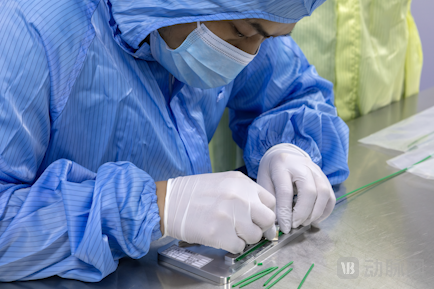
Furthermore, given the relatively tortuous and curved nature of the radial artery access route, Shijie Medical’s transradial neurovascular guiding catheter adopts a composite structure combining coiled spring reinforcement with braiding. This design provides superior resistance to ovalization and enhanced bendability. Additionally, the product features a beveled transition zone at the junction, which ensures more uniform stress distribution along the catheter body, thereby improving kink resistance and tensile strength. The Shijie Medical transradial neurovascular distal access guiding catheter can not only reach the C2 segment of the intracranial arteries and the V2 segment of the vertebral arteries, but its tip is also designed to be softer, preventing vascular injury during intracranial navigation.
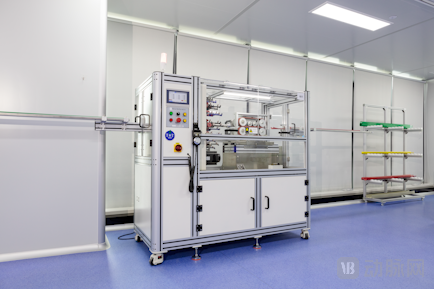
Regarding support performance, according to Cai Shizhou, Shijie Medical’s catheter sheath products utilize new materials to maintain the stability of the treatment system. Meanwhile, the neurovascular guiding catheters feature a five-level gradient in shaft stiffness, combining proximal support with distal flexibility, thereby ensuring smooth navigation through tortuous vessels while maintaining the stability of the treatment system.
Furthermore, it is worth noting that the Shijie Medical catheter sheaths and the distal ends of neurovascular distal access guide catheters are all coated with a hydrophilic medical coating. This not only facilitates smoother advancement but also reduces the risk of radial artery spasm and occlusion.
Meanwhile, in the interview, Cai Shizhou also emphasized: “Although Shijie Medical’s core technologies are built upon years of cardiovascular device R&D experience by engineers, the fundamental purpose of medical devices is to meet clinical needs. Therefore, within Shijie Medical’s product development system, physicians have absolute authority over device design. This approach not only prevents engineers from working in isolation but also ensures that products align more closely with clinical requirements.” Perhaps this is precisely why Shijie Medical has been able to launch a continuous stream of new products within just two years.
“In the future, in addition to continuing to expand its portfolio of transradial access and therapeutic products—particularly those for transradial therapy—Shijie Medical will also actively pursue overseas markets. ‘Currently, transradial neurointervention is still in its early stages, but this also presents significant growth opportunities for our company. We firmly believe that the transradial arterial approach will inevitably become the mainstream access route in neurointervention,’ summarized Cai Shizhou.”