

Domestic Neurosurgical Robots Achieve Core Component Localization, Accelerating Market Expansion Amid Policy and Demand Tailwinds
On April 25, the 2024 Zhongguancun Forum Annual Conference opened in Beijing. Under the theme “Innovation: Building a Better World,” the event highlighted frontier exploration and saw the release of a batch of major, cutting-edge scientific and technological achievements from fields such as artificial intelligence, life sciences, and new materials.
Compared with previous editions of the Zhongguancun Forum Annual Conference, it was evident that the 2024 conference showcased a greater number of robotic innovations, with embodied AI humanoid robots, bionic humanoid robots, and medical robots making prominent appearances.As a representative of cutting-edge innovation in the field of robotics, the development of surgical robots has also become a focal point of industry attention.
According to data from Yicai, by the end of 2023, approximately 40 surgical robot products had received approval from China’s National Medical Products Administration (NMPA) for market launch, covering multiple subfields including laparoscopy, orthopedics, neurosurgery, vascular intervention, and dental implantology.
Among them, neurosurgical robots have developed rapidly.In addition to the successful development of neurosurgical robots by foreign companies such as Prosurgics, Medtech, and Renishaw, multiple neurosurgical robots from domestic companies—including Baihui Weikang, Huake Jingzhun, and Huazhi Minimally Invasive—have sequentially received approval from the National Medical Products Administration (NMPA) for market launch and have been implemented in clinical practice.
In March this year, the State Council issued the "Action Plan for Promoting Large-Scale Equipment Renewal and Consumer Goods Trade-In," proposing to strengthen the construction of a high-quality and efficient medical and health service system, promote the iterative upgrade of equipment and information technology facilities in medical and health institutions, and encourage eligible medical institutions to accelerate the renewal and transformation of medical equipment such as surgical robots.This move provides policy-level support for the development of surgical robots. It is expected that the clinical penetration rate of surgical robots will increase in the future, and the market for neurosurgical surgical robots will also expand.
In recent years, the state has vigorously supported the development of innovative medical devices, and surgical robots, as a key area of focus, are being rapidly adopted in hospitals across China.According to data from China Robot Online, the market size of surgical robots in China was nearly RMB 8 billion in 2021 and is projected to grow to RMB 26.5 billion by 2026. In the domestic venture capital and private equity community, surgical robotics has also become a hot investment sector. Throughout 2021, more than 10 Chinese surgical robot companies secured individual financing rounds exceeding RMB 100 million, with total financing amounting to over RMB 5 billion.
As the aging population in China continues to grow, the incidence of brain disorders such as intracerebral hemorrhage, brain tumors, and functional neurological diseases is on the rise, accelerating the development and application of neurosurgical robots. Public data shows that the number of neurosurgical procedures increased from 441,000 in 2018 to 618,000 in 2022, representing a compound annual growth rate (CAGR) of 8.8%.
Due to the complex anatomical structure of the nervous system, neurosurgical procedures impose high demands on surgeons’ technical skills and clinical experience.
“Surgeons must be familiar with the anatomy and physiological characteristics of the central nervous system. Preoperative surgical planning and intraoperative maneuvers should aim to protect critical structures from damage as much as possible; intraoperative operations must be performed with caution and meticulousness to preserve normal neural tissue to the greatest extent. Although many new technical approaches have emerged, such as microsurgical techniques, neuroendoscopic techniques, and stereotactic techniques, which have promoted the development of neurosurgery,”However, in certain regions, particularly at the primary care level, there remains a shortage of both technology and talent."A senior medical device industry practitioner pointed out to VCBeat."
In March 2023, the State Council issued the “Opinions on Further Improving the Healthcare Service System,” which explicitly called for a more balanced distribution of medical resources across China and strengthened primary healthcare capabilities.
As a surgical assistance tool for neurosurgeons, neurosurgical robots can perform various neurosurgical procedures with precision, efficiency, and safety, effectively reducing the probability of iatrogenic injuries, facilitating rapid postoperative recovery, minimizing human operational errors, and improving medical efficiency and surgical quality. The clinical application of neurosurgical robots in primary hospitals can effectively address the challenge of insufficient diagnostic and treatment capabilities at the grassroots level, thereby promoting the decentralization of high-quality medical resources.
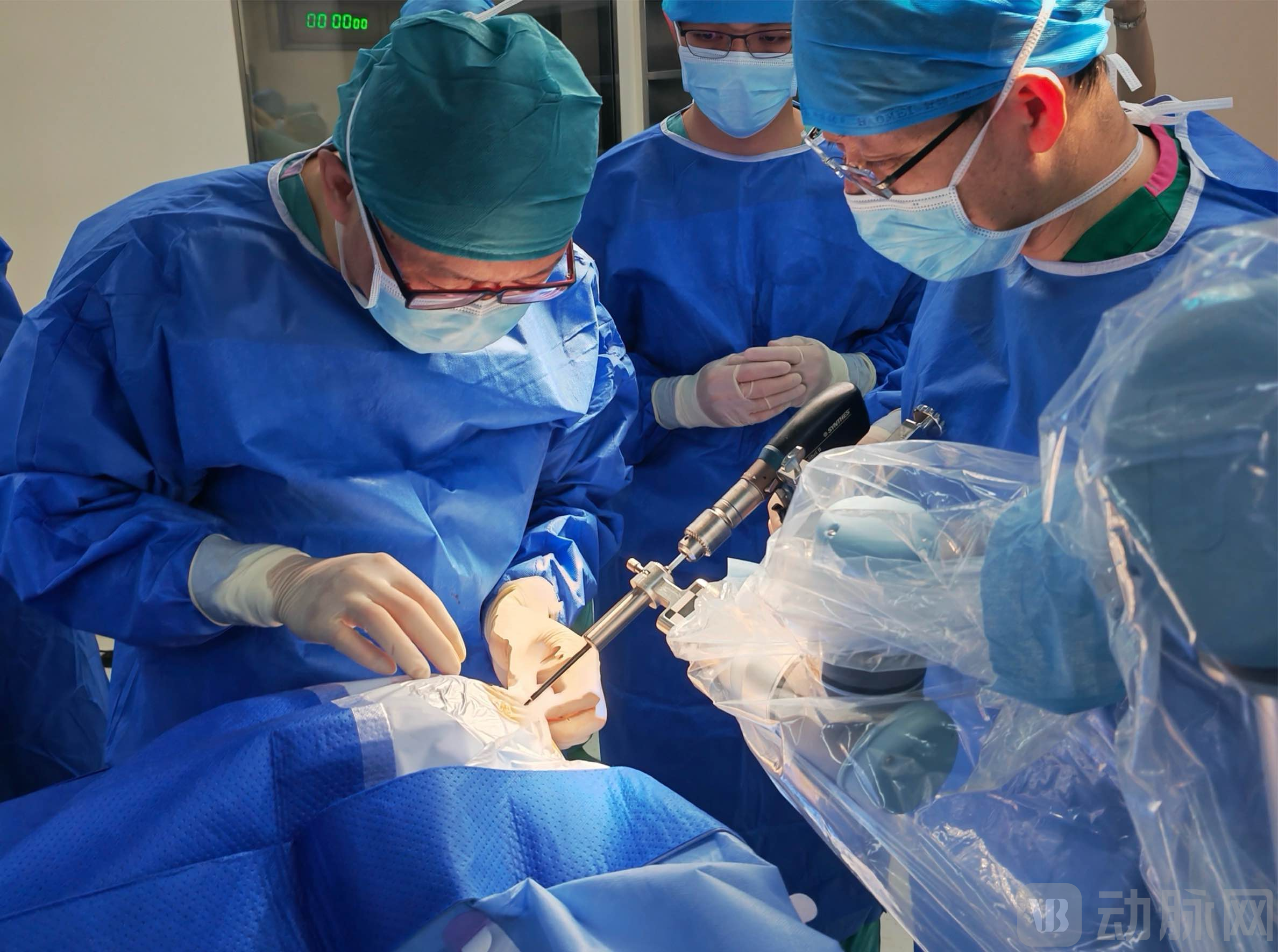
“For instance, acute intracerebral hemorrhage demands extremely timely intervention. Patients are typically treated at primary care hospitals; however, these facilities in China generally lack experienced neurosurgeons, making it difficult to provide timely and effective surgical treatment for patients with intracerebral hemorrhage,” the industry practitioner continued.
Currently, neurosurgical robots can precisely plan surgical procedures based on the location and shape of hematomas, assisting physicians in rapidly performing hematoma drainage and evacuation. These systems offer advantages such as minimal invasiveness, precision, and safety. Furthermore, for functional neurosurgical conditions like Parkinson’s disease and epilepsy, which demand higher surgical precision and greater physician expertise, neurosurgical robots also demonstrate significant clinical advantages in terms of precision, ease of use, and safety.
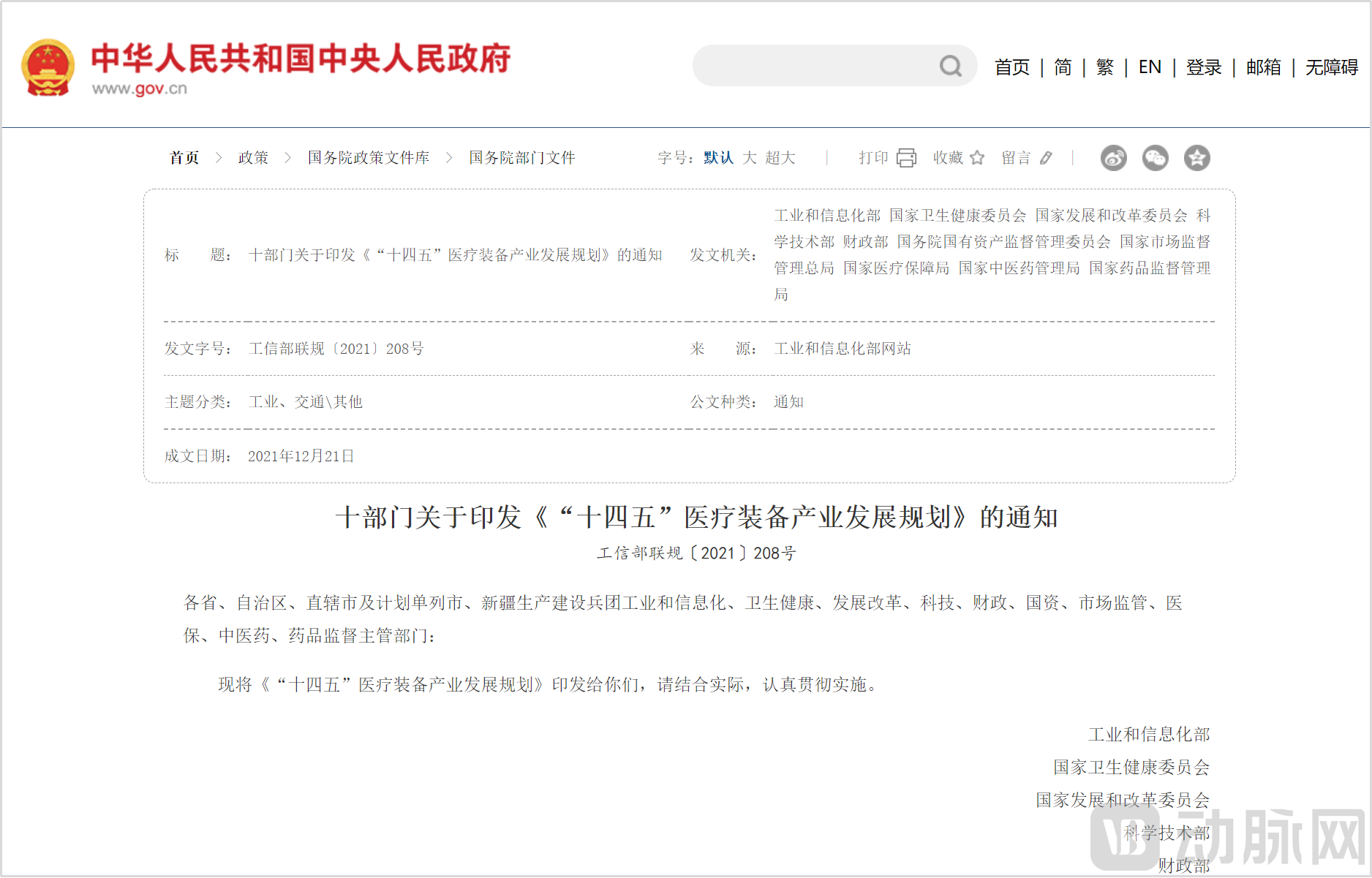
Since January 2012, when the Ministry of Science and Technology released《Special Plan for the Medical Device Technology Industry During the 12th Five-Year Plan Period》, formally proposing to “develop surgical robots and effectively change the status quo in which high-performance therapeutic products are monopolized by foreign companies and treatment costs are high”; by 2021, ten departments, including the Ministry of Industry and Information Technology, had officially released“14th Five-Year Plan” for the Development of the Medical Equipment Industry, which clarified the development goals, key tasks, and safeguard measures for the medical robotics industry during the 14th Five-Year Plan period; followed by the introduction of policies at the State Council executive meeting last August"Action Plan for High-Quality Development of the Medical Equipment Industry (2023-2025)"Reiterating the imperative to “accelerate efforts to address weaknesses in China’s high-end medical equipment sector,” improve relevant support policies, and promote the iterative upgrading of domestically produced medical equipment. With sustained policy support, domestic surgical robot companies have also entered a phase of rapid development.
In 2002, Huazhi Minimally Invasive launched the CAS-R-2 frameless stereotactic system. This device features a 5-degree-of-freedom passive robotic arm, requiring manual adjustment by the surgeon during surgery to align with the planned trajectory to the target.
In 2018, Baihui Weikang’s Remi RM-100 Neurosurgical Robot and Huake Jingzhun’s SR1 Neurosurgical Robot were successively approved. Both products feature a 6-degree-of-freedom automated robotic arm that automatically completes path planning and target localization during surgery.
In 2023, uNav-Brain 550, a neurosurgical surgical robot developed by United Imaging Intelligence, a subsidiary of United Imaging Healthcare, also received approval from the National Medical Products Administration (NMPA) for market launch. It assists clinicians in making precise judgments during various stereotactic procedures, thereby facilitating precision diagnosis and treatment in neurosurgery.
However, the core components of these domestically produced neurosurgical robotic systems that have been successively launched on the market—namely, optical tracking and positioning systems and robotic arms—still rely on imported products. Due to issues such as high costs, non-specialization for surgical use, and limited scalability associated with these imported core components, it is difficult to widely promote them in primary care hospitals across China.
Fortunately, the issue of domestic production for the aforementioned components has been resolved.
In 2022, Remebot’s self-developed Ruimi RM-50 surgical robot received marketing approval from the National Medical Products Administration (NMPA). The two core components of this product—the optical tracking locator and the robotic arm—have both achieved domestic production in China, breaking the passive situation of being constrained by foreign technologies (“chokehold” technologies). The Ruimi RM-50 has also become the first surgical robot in China with all core components domestically produced. Within one year of its market launch, the product achieved sales of 15 units and gained widespread recognition among primary-level hospitals.
With the gradual technological upgrades of domestically produced neurosurgical robots and the localization of core components, the costs for hospitals to purchase robotic equipment and consumables will decrease significantly. This not only breaks the monopoly of foreign technologies in the surgical robot market but also helps distribute high-quality surgical medical device resources to more primary care hospitals, benefiting a larger number of patients.
In fact, the current market landscape is indeed moving in this direction.
According to the 2023 procurement data, Huiwei Kang won bids for 39 units in the field of neurosurgical surgical robots, leading the domestic market share. Additionally, public statistics show that from 2018 to 2023, Chinese-made surgical robots have occupied more than 90% of the domestic neurosurgical robot market. Among them, Huiwei Kang's Ruimi series surgical robots took the lead in the domestic market with 85 units.
Guosen Securities’ healthcare and biotechnology team has publicly stated, “Neurosurgical robots are in the early stage of therapeutic adoption. Cultivating physicians’ usage habits and providing education on therapeutic knowledge are decisive factors for rapidly establishing a market foothold. For manufacturers, building academic platforms, leveraging key opinion leaders (KOLs) for mentorship, extending influence through satellite hospitals, fostering usage habits among young and middle-aged physicians, and building surgeon confidence are key to sustaining market share growth and maintaining customer stickiness.”
More notably, amid the market’s rapid development, domestic manufacturers have boldly ventured into international markets, successfully achieving commercialization and accelerating their global expansion to engage in “head-to-head competition” with multinational giants.
According to People's Daily, on March 22, 2024, the Ruimi RM-200 assisted doctors in successfully performing Kazakhstan's first robot-assisted SEEG electrode implantation surgery at the Presidential Hospital in Astana, Kazakhstan. This procedure also marked the international debut of a Chinese-made neurosurgical surgical robot.
“Domestic innovation in neurosurgical robots is poised to catch up and surpass. Surgical robots have already achieved initial domestic breakthroughs in orthopedics and soft-tissue applications, while neurosurgical surgical robots have completed their first-generation market deployment, with multiple Chinese companies having developed and launched their first-generation products. Domestic alternatives are expected to in the future”5-10“...achieve overtaking through annual iterations,” believes the pharmaceutical and biological team of Guosen Securities.
Cited Data:
(1) Yicai: “In-Depth | Vascular Interventional Surgical Robots Officially Move Toward Commercialization: What Are the Challenges?”; Link:
https://baijiahao.baidu.com/s?id=1786071771426496544&wfr=spider&for=pc
(2) People's Daily: "Chinese-Made Neurosurgical Robots Successfully Perform Clinical Surgeries Abroad"; Link:
https://m.peopledailyhealth.com/articleDetailShare?articleId=f3b3e65fd72d409b857e91559a7269a9
(3) Qixie Zhijia: “No. 1 in Market Share, Major Developments for Chinese-Made Neurosurgical Surgical Robots”; Link:
https://mp.weixin.qq.com/s/40-ndloWdAk_jSueJrYErg
(4) Qixie Zhijia: “Review of China’s Surgical Robotics Industry in 2023”; Link:
https://mp.weixin.qq.com/s/3NGda2Yh5cXyaOxTNKZbzA
(5) China Robot Network: “How Can Domestically Produced Surgical Robots Overtake on the Bend?”; Link:
https://www.robot-china.com/news/202208/04/72955.html