

Igniting the Engine of Industrialization: 2024 Brain-Computer Interface Industry Research Report Highlights Clinical Applications
Brain-Computer Interface (BCI) is a technology that directly connects the human brain with external devices, enabling control of these devices through neural signals such as electroencephalogram (EEG) waves. Currently, BCIs can be categorized into three major types based on their signal acquisition methods: invasive, semi-invasive, and non-invasive.
Based on the definition of broad-sense brain-computer interfaces (BCIs) and the current provisions of China’s “Medical Device Classification Catalog,” BCI-related devices are primarily classified as Class II and Class III medical devices. Given that Class III medical devices face significantly higher requirements than Class II devices in terms of registration difficulty, regulatory oversight, hierarchical level of the accepting authority, and application processing time, 80% of Chinese BCI companies have currently opted for non-invasive acquisition technology routes. For invasive BCI devices, the vast majority remain in the stages of clinical research and animal experimentation.
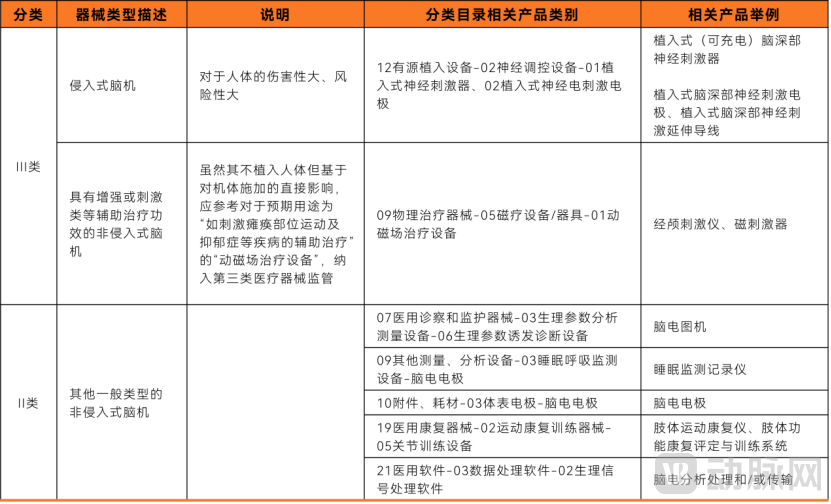
Classification Catalog of Medical Devices in China (Partial)
Data source: Center for Medical Device Evaluation, National Medical Products Administration; VCBeat
Currently, the majority of brain-computer interface (BCI) products approved in China are Class II medical devices, while Class III invasive devices are primarily used for neuromodulation. In terms of market access, non-invasive BCI systems face fewer regulatory restrictions and a more streamlined approval process compared to their invasive counterparts. As medical devices, invasive BCIs are subject to higher regulatory thresholds and longer approval cycles, significantly extending the timeline from research and development to commercialization. Due to their convenience, safety, and lower cost, non-invasive BCIs are widely adopted, laying the foundation for their dominance in the development of consumer-grade BCI technology in the near future.
To promote the continuous advancement of brain-computer interface (BCI) research and ensure its safety, it is particularly important to appropriately adjust the current clinical trial approval process. On this basis, it is necessary to establish and refine rigorous scientific evaluation standards and ethical guidelines for BCI systems. These standards and principles should not only reflect the technical characteristics of BCIs but also address issues of safety and efficacy across all stages, including research and development, clinical trials, market authorization, and widespread use.
Investment Trends Toward Caution, Seeking Evidence from Technology and Clinical Trials
In recent years, landmark events in the brain-computer interface (BCI) field have emerged continuously, with a sustained rise in the number of startups and frequent financing activities. However, current BCI industry financing remains in its early stages, with investment rounds concentrated primarily before Series C. Due to the high complexity of research in this domain, as well as technological maturity and commercial deployment speeds falling short of expectations, investors have become increasingly cautious about investing in such technologies.
No Breakthrough Technologies Emerge; Investment Market Remains Sluggish Overall
The current investment landscape for brain-computer interface (BCI) technology can be summarized in three phases: initial capital exploration during the startup stage, a slowdown in investment during the观望 period, and a buildup of momentum awaiting breakthroughs. In the early stages, despite optimistic expectations regarding technological feasibility, the lack of major technological breakthroughs and the absence of significant commercialization progress became apparent over time. Compared to other technological hotspots such as artificial intelligence, big data, and sustainable energy, investors exhibited greater caution toward BCI investments last year. On one hand, research progress has been relatively lagging, with primary bottlenecks remaining in the precision of signal acquisition, the accuracy of decoding algorithms, and the comfort of user experience. On the other hand, business models remain unclear, with limited clear pathways for market-ready products and services. Furthermore, the substantial initial investment required and the lengthy R&D cycles have dampened the interest of investors seeking short-term exit strategies.
Investors have begun to abandon “tentative” strategies, moving away from large-scale investments in startups that are still seeking their market positioning. Instead, they are increasingly favoring companies with clear technological roadmaps, aiming to identify and cultivate potential mid- to long-term investment opportunities. When evaluating potential investments, greater emphasis is being placed on patent barriers, the availability of validated technical prototypes, and the team’s ability to translate complex technologies into commercialized products. Furthermore, companies capable of rapidly obtaining regulatory approval and nearing commercialization have become a key focus of investors’ strategic preferences.
Challenges and Opportunities Coexist: Achieving Sustainable Development Through Internal and External Cultivation
In addition to relying on traditional venture capital and startup funds, companies can also broaden their financing channels. They should actively apply for government-supported innovation funds, technological innovation subsidies, and research project grants; participate in technology competitions and project tenders to increase visibility. Furthermore, companies can seek out investors or institutions with a strong interest and professional background in the brain-computer interface (BCI) field to establish strategic partnerships. By leveraging complementary strengths, both parties can collaborate on R&D, product promotion, and market expansion. Such investment partners not only provide financial support but also bring valuable industry resources, market channels, and business opportunities.
The key to attracting investor interest lies in a company’s technological strength and innovation capabilities. Internally, companies should review and reduce non-essential expenditures, optimize capital management, and increase R&D investment to continuously enhance their technological research and product development capabilities, thereby launching innovative product solutions that meet market demands. Furthermore, active collaboration with universities, research institutions, and expert teams can help overcome technical challenges through resource sharing and cost分担, thereby improving the quality and efficiency of R&D.
In addition to solidifying technical foundations, marketing capabilities are equally indispensable. Enterprises must conduct in-depth analyses of target markets and customer needs to formulate precise and effective marketing strategies and promotional plans. By actively participating in industry exhibitions, academic conferences, and business events, companies can showcase their technological advantages and product features, thereby enhancing brand visibility and influence. Furthermore, efforts should be intensified to popularize science by educating the public on the application prospects and social value of brain-computer interface (BCI) technology. This will raise public awareness and support, fostering a favorable public opinion environment and investment climate for the enterprise.
Strengthening Theoretical Foundations, Achieving Breakthroughs through Industry-Academia-Research Collaboration
1Academic Research: Tackling Fundamental Theories Through Interdisciplinary Efforts, and Vigorously Advancing Clinical Applications
Research levels are uneven, with a notable scarcity of clinical studies and applications.
Despite the establishment of interdisciplinary frameworks, the progression from catalytic technology R&D to clinical translation remains constrained. A review of existing literature indicates that while China has a relatively abundant volume of research in the field of brain-computer interfaces (BCI), it is predominantly concentrated at the level of technical research. In contrast, there is a notable scarcity of publications related to technology development, clinical studies, and applied basic research. This highlights a significant imbalance across different tiers of BCI research in China.

Research Levels of Core Journal Articles on Brain-Computer Interfaces in China
Data Source: CNKI, VCBeat
Brain-computer interface (BCI) technology is in an emerging stage of development. Fundamental theoretical and technical research serves as the prerequisite and foundation for other levels of research activities; therefore, technical research occupies a dominant position. Due to the high costs associated with high-quality R&D activities and clinical trials, funding shortages have become a bottleneck for translation. Particularly in the clinical research phase, stringent regulatory requirements for medical devices and complex, cumbersome approval processes further increase the difficulty of research. Meanwhile, ethical and privacy concerns arising from new technologies, along with strict regulations, constrain research progress, resulting in limited literature on related technology development and clinical studies.
Furthermore, in the process of translating research from the laboratory to the market, uncertainty regarding market demand has diminished the exploratory nature of applied basic research. Consequently, enterprises and research institutions often tend to allocate resources for application development only after clear market demands have emerged. With increased national policy support and greater financial investment, bottlenecks in clinical application are expected to be resolved, thereby facilitating the translation of technologies from the laboratory to the market.
2Patent Layout: Balancing Accuracy and Convenience, Open Innovation Is the General Trend
An analysis of the global distribution of brain-computer interface (BCI) patent applications reveals that popular technical themes are concentrated in electrodes, vision, feature extraction, electronic devices, and signal processing. These areas span multiple high-tech R&D frontiers, from materials science to artificial intelligence, image processing, and electronic communications. The focus on key domains such as data processing, human-computer interaction, neuroscience theory, and clinical applications reflects the comprehensive development needs of BCI technology in algorithmic innovation, hardware improvement, theoretical advancement, and translational clinical application.
The Surge in Domestic Patent Applications Coexists with Granting Dilemmas: Striking a Balance Between Technological Innovation and Patent Quality
According to statistical data from the past decade, China has witnessed a sustained growth in the number of patent applications in the field of brain-computer interfaces (BCI). Since 2015, to further advance the implementation of its intellectual property strategy, the country has accelerated the development of its intellectual property infrastructure. As a result, the number of BCI-related patent applications has increased significantly, reaching a historical peak in 2022; however, the growth in the number of granted patents has remained relatively slow.
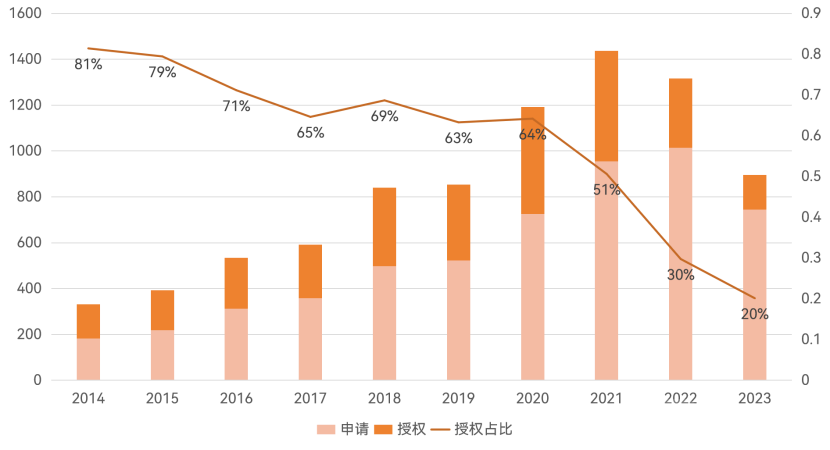
Trends in Brain-Computer Interface Patent Applications and Grants in China Over the Past Decade
Data source: Patsnap, VCBeat
In recent years, the Chinese government has implemented a series of incentive policies to promote technological innovation, encouraging enterprises, universities, and research institutions to actively engage in patent applications. In the frontier field of brain-computer interface (BCI) technology, both the strategy and volume of patent filings have shown an aggressive trend. A multitude of BCI patent applications of varying quality have emerged continuously; however, some of these applications may fail to secure patent grants due to insufficient innovativeness or commercialization potential.
As the current standards for evaluating the quality of brain-computer interface (BCI) patents have failed to keep pace with technological advancements, some companies have adopted a strategy of filing patents extensively to gain a competitive edge in market competition and technological development, thereby establishing technical barriers. However, given the extreme complexity and interdisciplinary nature of BCI technology, the criteria for assessing innovative achievements have become increasingly stringent in recent years. Some enterprises and research institutions lack in-depth understanding and research in this field; consequently, their patent applications often fail to meet the threshold for substantive innovation and thus do not satisfy the requirements for grant. Furthermore, as an emerging technological domain, BCI remains in the early stages of theoretical research and technical accumulation. Its relatively weak foundation for innovation makes it difficult to support the production of a large volume of high-quality patents.
Patent applications in emerging technology sectors have surged, yet grant rates remain sluggish. Beyond external factors such as lagging examination standards, significant contributing causes include enterprises’ and R&D entities’ insufficient emphasis on innovation quality and inadequate reserves in basic research. This contradiction can only be fundamentally resolved by persistently strengthening basic research to cultivate a fertile ground for innovation, while enterprises prioritize quality and shift their patent strategies at the conceptual level, focusing on innovation quality from the outset of the application process.
3Charting the Future: Multi-Pronged Collaboration Among Industry, Academia, and Research; Establishing an Industrial Cycle Is the Top Priority
Brain-computer interfaces (BCIs) have made significant strides in both academic research and industrial development, yet they still face numerous challenges and shortcomings. There is an urgent need to strengthen interdisciplinary integration, foster closer collaboration among industry, academia, and research institutions, and establish a sustainable ecosystem with multi-faceted investment from the government, enterprises, and society. It is essential to continuously deepen fundamental theoretical research to provide the driving force for technological innovation; meanwhile, emphasis should be placed on the quality of innovation, increased investment in preclinical studies, and overcoming regulatory and ethical hurdles. By keeping pace with cutting-edge technologies such as artificial intelligence and neuromorphic computing, and prioritizing application-driven demands, we can promote the full-process translation of BCI technologies from the laboratory to clinical practice, and ultimately to industrialization.
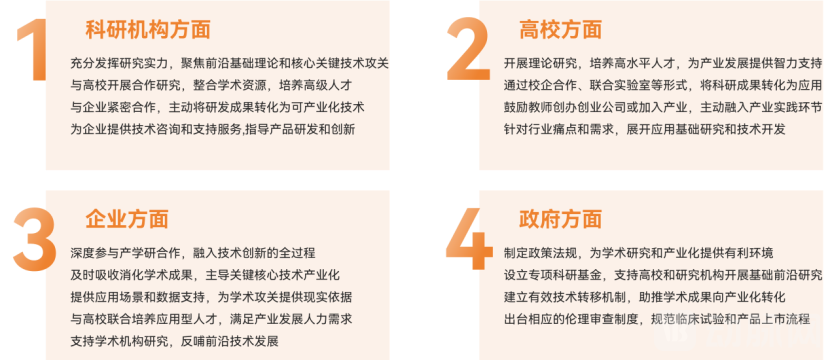
Brain-Computer Interface: The Industry-Academia-Research Collaborative Cycle
Source: VCBeat
From the government’s perspective, it is essential to establish a favorable policy and regulatory environment, set up scientific research funding programs, build technology transfer mechanisms, and implement clinical ethics review systems. Research institutions should dedicate themselves to breakthroughs in fundamental theories and key technologies, collaborate with universities to cultivate talent, and work closely with enterprises to translate research outcomes into practical applications. Universities should deepen their functions in theoretical research and talent development, achieve research commercialization through forms such as university-enterprise cooperation, and encourage faculty members to actively engage in industrial practices. Enterprises should deeply participate in the entire process of industry-academia-research collaboration and technological innovation, lead industrialization efforts, provide application scenarios for academic research, and support related studies by academic institutions. In this context, Shenzhen Zhongke Huayi Technology Co., Ltd. serves as an example demonstrating the unique advantages of the industry-academia-research collaboration model in the field of brain-computer interfaces (BCI). The company maintains close collaborations with multiple top-tier tertiary hospitals in China, has actively participated in the formulation of several industry standards—including “Transcranial Alternating Current Stimulation,” “Brain-Computer Interface Limb Rehabilitation Training,” and “Wearable Brain-Computer Interfaces”—and has become an important member of multiple professional associations. This approach effectively avoids the disconnect between scientific research and practical application, leverages the overall advantages of collaborative innovation, promotes the industrialization of original scientific achievements, and opens up a new track for the BCI sector. Only through top-level design and institutional safeguards can all parties achieve efficient alignment across the entire chain—from basic research and technology transfer to the industrialization of outcomes—thereby avoiding the fragmentation between “research” and “practice,” truly advancing BCI technology from the laboratory to industrial application, and establishing a virtuous cycle of sustainable development.
Having Cleared Technical Validation, the Dawn of Commercialization Emerges
1Global Clinical Outlook: Multi-Party Collaboration Leading New Trends in Disease Treatment
In the landscape of global clinical trials in the field of brain-computer interfaces (BCIs), interventional studies significantly outnumber observational studies, accounting for more than 80%. Among these, interventional studies are primarily focused on neurological disorders such as stroke, amyotrophic lateral sclerosis (ALS), and spinal cord injury, whereas observational studies are mostly concentrated on stroke, healthy subjects, and traumatic brain injury.
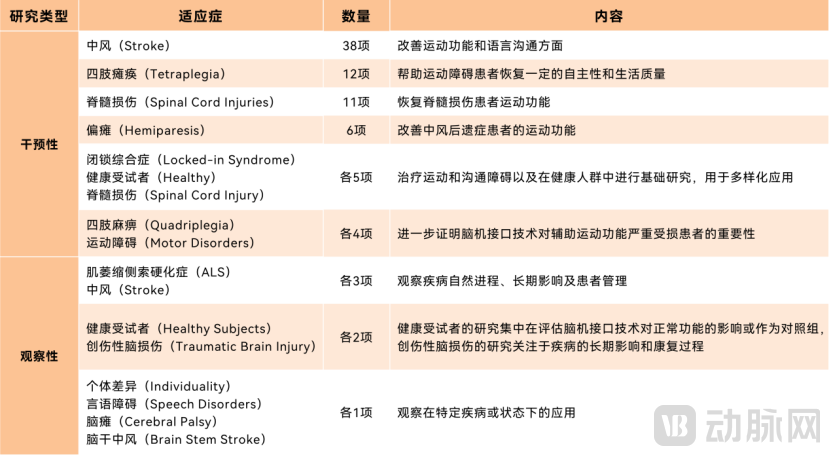
Indications Covered in Global Clinical Registrations of Brain-Computer Interfaces
Data source: ClinicalTrials.gov, VCBeat.
Integrating Medical Needs with Technological Innovation to Advance the Societal Adoption of Brain-Computer Interfaces
In recent years, significant advances in the study of neuroplasticity have revealed that the brain retains a certain capacity for self-repair and functional reorganization even after injury. Brain-computer interface (BCI) technology is uniquely positioned to facilitate and harness this plasticity, helping patients restore or improve impaired functions through training and feedback mechanisms. Conditions such as stroke, amyotrophic lateral sclerosis (ALS), and spinal cord injury have become ideal candidates for applying these new findings due to their profound impact on patients. Another appealing aspect of BCIs is their potential to offer highly personalized treatment plans. Unlike traditional “one-size-fits-all” approaches, BCI technology can bypass damaged neural pathways and tailor interventions to individual patients based on their specific conditions and patterns of brain activity. Given the substantial heterogeneity in the type and severity of injuries among patients with stroke, ALS, and spinal cord injury, this advantage has made BCIs a focal point for research and clinical application. Consequently, scientific resources and attention are naturally directed toward these high-need areas with broad prospects for technological implementation.
Notably, observational studies have included healthy populations in their scope. This strategy not only helps deepen the fundamental understanding of brain activity patterns but also provides a practical foundation for applications in both medical and non-medical fields. Observing and analyzing brain activity patterns in healthy individuals is a critical step in collecting baseline data, which is essential for distinguishing changes in brain activity between disease states and normal conditions, thereby offering precise references and controls for system design and optimization. By understanding the operational mechanisms of the healthy human brain, abnormal signals in disease states can be better identified and interpreted, leading to the development of effective intervention and treatment strategies. Another important objective of including healthy populations in observational studies is to explore the potential applications of brain-computer interfaces (BCIs) in non-medical domains, such as enhancing cognitive abilities and learning efficiency, as well as applications in entertainment and artistic creation. These studies not only broaden the prospects for application but also stimulate societal interest in and acceptance of new technologies, thereby promoting the social integration of brain-computer interfaces.
2Domestic Development Trends: Consolidating Foundations and Steadily Advancing into a New Era of Translation
Beyond Initial Exploration: Advancing Toward Clinical Application
As of February 2024, statistics from the Chinese Clinical Trial Registry indicate a gradual increase in the number of clinical trials related to brain-computer interfaces (BCIs) in China. Currently, the number of ongoing trials far exceeds that of completed ones, suggesting that BCIs are in a critical phase of translation from basic research to clinical application, with new concepts and technologies being actively explored and validated.
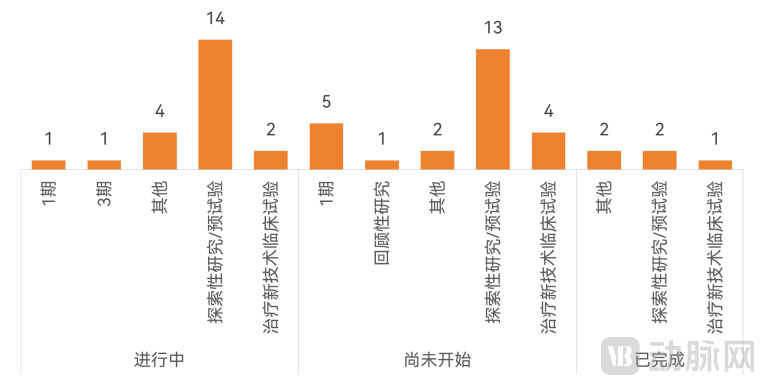
Distribution of Registration Statuses for Clinical Trials in China
Data source: Chinese Clinical Trial Registry, VCBeat.
Among brain-computer interface (BCI) clinical trials registered in China, approximately 65% fall under early exploratory research and pilot study phases, primarily aiming to collect preliminary data and evidence to lay a solid foundation for subsequent large-scale efficacy evaluations and clinical applications. Studies advancing to higher phases (such as Phase I and Phase II clinical trials) are relatively scarce, indicating a considerable gap before true clinical application can be realized. In terms of trial phases, China has basically caught up with international levels in the number of Phase I and Phase II trials, but lags significantly behind in Phase III trials. Conducting Phase III clinical trials typically entails high financial costs due to the need for recruiting large patient cohorts, establishing multi-center trial teams, and introducing advanced diagnostic equipment. In contrast, Phase I and Phase II trials involve smaller scales and lower requirements. Furthermore, the industrialization prospects of BCI technology remain uncertain, with insufficient expectations of market returns, which hinders the attraction of substantial social capital investment into Phase III trials.
Phase III trials are designed to conduct large-scale validation and assessment of new technologies or drugs based on prior research. However, brain-computer interface (BCI) technology still faces significant technical bottlenecks in key areas such as neural signal decoding and human-machine coupling, leaving a considerable gap before true clinical translation and application can be achieved. Before core technical challenges are overcome, the significance and necessity of conducting large-scale Phase III trials remain limited. In China, regulatory policies governing BCI clinical trials are still in their early stages, lacking clear guidance. The emergence of unexpected risks or safety hazards would severely impede the smooth implementation of these trials. Consequently, in the absence of a robust regulatory framework, enthusiasm for launching large-scale trials is likely to be dampened.
Healthcare Remains the Primary Direction for Industrialization, with Domestic and International Markets Exhibiting a Complementary Pattern
When determining the path for research and development, potential social benefits and economic returns have become important considerations, especially in the rapidly evolving field of medical technology. Clinical research in China on stroke, spinal cord injury, and disorders of consciousness is valued not only due to their high incidence rates and socioeconomic burden but also because of the long-term needs and complexity associated with rehabilitative therapy. This comprehensive therapeutic approach requires brain-computer interface (BCI) technology to support not only communication but also extensive rehabilitation training and functional reconstruction, reflecting a response to urgent domestic medical needs and strategic thinking that directs resources toward areas with the greatest possible social benefit. Unlike international research, which emphasizes technological innovation and scientific discovery, China places greater emphasis on ensuring the reliability and practicality of technological applications, while pursuing breakthrough progress and a deeper understanding of the mechanisms underlying brain function.
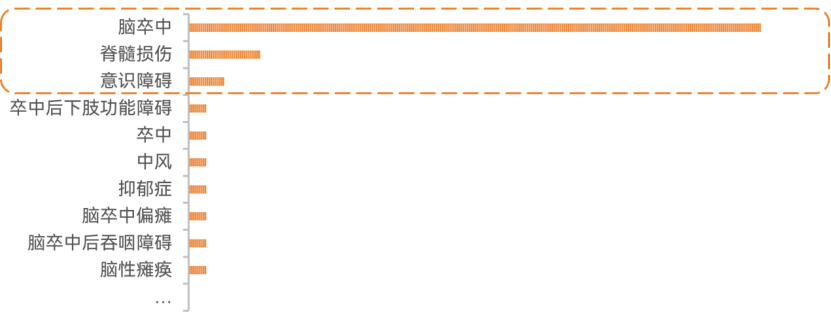
Major Indication Classification of Clinical Trials in China
Data source: Chinese Clinical Trial Registry, VCBeat
Differences in Clinical Research on Brain-Computer Interfaces Between China and Overseas: Underlying Logics of Disease Selection, Drivers of Technological Innovation, and Research Culture and Goal Orientation. These differences not only reveal the strategies and priorities adopted by different regions in addressing neurological disorders, but also reflect the value of diversity and complementarity in global scientific research. China’s focus on ensuring the practicality and reliability of technology, combined with international efforts to drive technological innovation and scientific exploration, has jointly advanced the development of brain-computer interface technology and its applications in the medical field.
Overcoming Technical Bottlenecks to Accelerate Industrialization
The development of brain-computer interface (BCI) technology has provided medical enterprises with diverse commercial pathways, which can be broadly categorized into two types: one comprises applications that can be rapidly deployed, such as consumer healthcare; the other involves more cutting-edge, specialized applications, such as serious medical care. The choice between these two pathways reflects a comprehensive consideration by enterprises of factors including market demand, entry barriers, return on investment cycles, capital requirements, and social impact.
1Technical Barriers: Technological Stagnation and Sluggish Industry Growth
In the early stages of widespread adoption, prioritizing and advancing brain-computer interface (BCI) as a strategic technology presents a critical opportunity to seize the competitive high ground. While various technologies and products are emerging in rapid succession, the underdeveloped state of the BCI industrial chain has resulted in significant vulnerabilities to supply-chain bottlenecks and substantial technological generation gaps.
Coexistence of Diverse Factors, Intertwined Technical Pathways
The absence of unified technical standards and pathways has led to exploratory research resulting in diverse technological development trajectories. The brain is an inherently complex biological organ, with different regions responsible for distinct functions. This complexity implies that no single technical pathway can meet the requirements of all types of brain-computer interface (BCI) applications; thus, the coexistence of multiple technical pathways is essentially an adaptation to the brain’s complexity. Furthermore, BCI applications are flourishing across multiple domains, each imposing unique technical requirements regarding signal precision, real-time performance, safety, and portability. Meanwhile, significant differences exist among various technical pathways in terms of safety and ethical considerations. Researchers and developers must carefully weigh these factors when selecting a technical pathway. In addition, advances in nanotechnology, flexible electronics, and sophisticated signal processing algorithms have opened new possibilities for designing novel electrodes and interfaces. These innovations have driven the parallel development of multiple technical pathways, thereby intensifying the trend toward diversification.
Differences in funding and policy support for scientific research across countries and regions have undoubtedly exacerbated the divergence in technological pathways. As research deepens and technologies mature, more definitive development trends may emerge in the future; however, for the time being, the coexistence of multiple technological pathways is expected to persist for some time.
Limited financial and human resources are spread across multiple parallel technological pathways, making it difficult to concentrate strengths for major breakthroughs, which undoubtedly leads to the fragmentation and waste of R&D resources. The coexistence of multiple pathways also exacerbates user uncertainty regarding technological directions, thereby hindering the rapid market promotion and adoption of products. Due to the lack of unified standards, systems and equipment across different technological pathways lack interoperability, limiting the integrity and collaborative development of the ecosystem. Upstream and downstream enterprises cannot collaborate efficiently, making it difficult to form a tightly integrated industrial chain. This not only affects the optimal allocation of resources but also impedes the advent of large-scale commercial applications. Furthermore, the coexistence of multiple pathways has intensified the demand for interdisciplinary composite talent; however, the highly specialized nature of current university training programs fails to quickly adapt to the needs of diverse technological routes.
To promote the sustained and healthy development of the industry, it is essential to gradually clarify dominant technological pathways through policy guidance and market mechanisms, while accommodating diverse application needs, and to drive the improvement of the industrial chain on this basis. Only by establishing relatively unified technical standards can upstream and downstream enterprises achieve efficient integration, concentrate R&D investments, ensure ecosystem interoperability, and enable talent development and technological accumulation to focus on breakthroughs. The refinement of the industrial chain will lay a solid foundation for the large-scale application of brain-computer interface (BCI) technology, accelerate the rapid development of this disruptive technology, and ultimately benefit a broader range of fields and populations.
Shallow Technological Pathways and Setbacks in Supply Chain Integration
Technological breakthroughs in the past two years have primarily focused on upstream industrial components, such as electrodes, chips, and EEG acquisition devices, initially demonstrating feasibility for engineering implementation. Although brain-computer interface (BCI) technology has made significant progress over the past few decades, it still faces numerous challenges and limitations that hinder its further development.
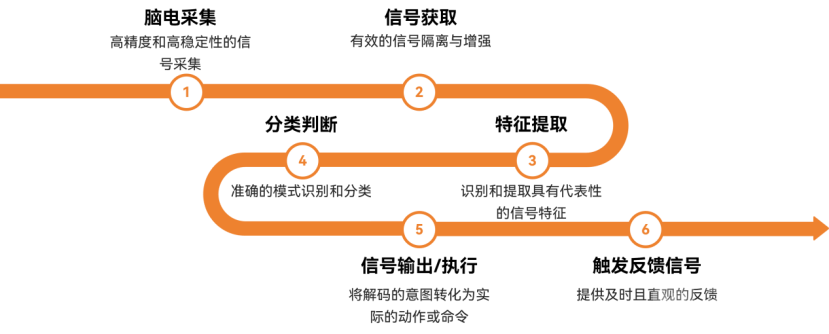
How Brain-Computer Interfaces Work
Data source: public information, VCBeat.
Signal acquisition directly defines the breadth of the application scope.To broaden the scope of signal acquisition, current brain-computer interface (BCI) systems often employ multimodal signal data, such as electroencephalography (EEG), eye tracking, and electromyography (EMG), fusing these heterogeneous signals to improve recognition accuracy. However, existing cross-modal processing algorithms still face challenges such as signal inconsistency, poor temporal synchronization, and latent feature coupling, thereby limiting the effectiveness of fusion processing.
Regardless of the technical approach adopted, improving signal quality is a critical hurdle that acquisition technologies must overcome. For invasive methods, extending the lifespan of implanted electrodes and addressing biocompatibility issues are paramount. For non-invasive methods, priorities include designing novel high-sensitivity sensor materials, optimizing sensor layout, and enhancing the signal-to-noise ratio. High-quality, high-precision neural signal acquisition forms the foundation of brain-computer interface (BCI) technology. Only when the quality of signal source acquisition is ensured can subsequent processing, decoding, and applications achieve optimal outcomes.
Signal analysis and decoding directly determine overall performance.Once signals are acquired, they must be analyzed and decoded through algorithms to convert them into instructions that machines can understand and execute. This task is primarily performed by algorithmic software, including machine learning algorithms, neural networks, and other data processing techniques. Although these technologies have made certain progress in enhancing the performance of brain-computer interface systems, limitations still exist.
Raw electroencephalogram (EEG) signals are extremely weak and are often accompanied by substantial non-target signals or noise. This necessitates algorithms that can not only accurately extract meaningful signals but also effectively suppress noise interference. Although machine learning and deep learning techniques, which are widely applied at present, can address these issues to some extent, they still exhibit limitations in terms of real-time performance and accuracy. Meanwhile, physiological and neural variations among individuals pose significant challenges to signal encoding and decoding. Such variability implies that algorithms must possess a high degree of adaptability and generalization capability. However, adapting to these individual differences typically requires large volumes of data and complex tuning processes, which not only increase the difficulty of system deployment and usage but also limit the universality and practicality of the algorithms.
Feedback and control technologies directly impact the final human-computer interaction experience.Feedback control technology converts decoded signals into actual machine or device operations, yet significant deficiencies remain in providing effective real-time feedback. Current feedback mechanisms rely predominantly on visual and auditory modalities, which fail to meet the requirements of all brain-computer interface (BCI) applications. For instance, the efficacy of traditional feedback methods is substantially compromised for users with mobility impairments or visual and hearing disabilities, thereby limiting the universality and acceptability of BCIs. Although researchers have recognized the importance of integrating tactile, visual, and auditory feedback and have begun exploring multimodal feedback mechanisms, the effective fusion of these diverse sensory inputs to create a natural and intuitive feedback environment remains an inadequately addressed challenge.
Currently, virtual reality (VR) and augmented reality (AR) technologies offer new possibilities for creating immersive feedback environments. Although these technologies have the potential to enhance users’ control precision and experience, further research is needed to determine how to efficiently integrate them into brain-computer interfaces and address the resulting technical challenges, such as increased system complexity and user adaptation issues.
System integration technologies are reshaping the architectural landscape.The implementation of brain-computer interfaces (BCIs) relies on the effective integration of multiple technical components, such as signal acquisition, processing, decoding, and execution devices. This requires close collaboration between hardware and software, as well as a deep understanding of the overall system architecture. Currently, the main challenges in system integration lie in device miniaturization, energy consumption optimization, and efficient communication among different components. With technological advancements, there is a growing user demand for device portability and long-term operational capability. Although progress in microelectronics and nanotechnology has made it possible to meet these goals, achieving higher energy efficiency and smaller form factors while maintaining device performance remains an urgent problem to be solved. On the other hand, to ensure efficient collaborative operation of the system, real-time and stable data exchange and communication among various components within the system are required. Wireless communication technology facilitates data transmission between components; however, ensuring the efficiency and stability of data transmission in actual complex application environments remains a significant challenge that cannot be underestimated.
2Replicating Commercialization Experience: Finding the Key to Breakthrough
To advance brain-computer interfaces (BCIs) toward full commercialization, in-depth learning can be drawn from multiple non-technical aspects of the healthcare sector. Although BCIs differ from traditional medical devices, their industrial development model can benefit significantly from the valuable experience of the medical device industry, particularly in establishing institutional frameworks for regulatory policies, approval and market access, ethical guidelines, and service models.
A sound regulatory and policy environment is a crucial safeguard for the development of the medical device industry.In the future, it is necessary to research and formulate relevant laws and regulations for brain-computer interfaces (BCIs), drawing on existing regulatory policy experience for medical devices. A similar market access system should be established, including measures such as tiered product registration management and clinical trial oversight, to set standard thresholds for the healthy and orderly development of the industry. Clear criteria for tiered classification should be defined, and standardized systems—such as a unified product classification catalog and quality management systems—should be developed. Approval requirements should be differentiated according to risk levels, thereby achieving refined risk control.
Build an ecosystem with close collaboration among industry, academia, research, and healthcare, and promote cross-sector integrated collaborative innovation.After years of development, the medical device industry has established a relatively mature industrial chain, characterized by a collaborative division of labor across multiple segments, including upstream basic research, midstream product R&D and manufacturing, and downstream clinical applications. Similarly, brain-computer interfaces (BCIs) require the integration of diverse resources, spanning upstream chip design and algorithm development to downstream clinical application and operational maintenance services. Furthermore, as medical devices must undergo extensive clinical trials to accumulate evidence-based medical data for market approval, BCIs should adopt this approach by prioritizing clinical trials and data accumulation from the outset of R&D, thereby laying a solid foundation for regulatory approval and clinical adoption.
A diversified business model has been established through medical services, value-added operations, and other channels.Beyond the product itself, brain-computer interfaces (BCIs) can also explore new revenue models such as service-based and subscription-based approaches, rather than being limited to product sales. For instance, companies could adopt an integrated “device + service” operational model that bundles product sales, surgical services, remote maintenance, and data analytics; or they could pursue a subscription-based model featuring “device subscription + value-added services.”
Drawing on the mature experience in the field of medical devices, we should not only learn from their lessons in technological innovation but also prioritize adopting their successful practices in industrialization pathways—such as business models, industry ecosystems, and regulatory frameworks—with a view to identifying a more efficient and sustainable route for the industrialization of brain-computer interfaces.
The above is an excerpt from the report. The overall framework of the report is as follows:
Chapter 1 Market Trends: Policy Regulations Drive Growth, Diverging Paths for Investment and Financing
1.1 Product Landscape: Non-invasive Technologies Lead the Way, While Invasive Solutions Are Poised to Break Through Regulatory Barriers
1.2 Investment Insights: Cautious Approach, Seeking Technological and Clinical Trial Evidence
Chapter 2 Research Landscape: Strengthening Theoretical Foundations and Achieving Breakthroughs through Industry-Academia-Research Collaboration
2.1 Academic Research: Tackling Fundamental Theories through Interdisciplinary Efforts, with Vigorous Promotion of Clinical Applications
2.2 Patent Layout: Balancing Accuracy and Convenience, Open Innovation Is the Prevailing Trend
2.3 Brain Research Institute: Diversified Innovation Breaks Through Bottlenecks, Pioneering the Exploration of Application Boundaries
2.4 Charting the Future: Multi-Pronged Collaboration Among Industry, Academia, and Research; Establishing an Industrial Cycle Is the Immediate Priority
Chapter 3 Clinical Progress: Beyond Technical Validation, the Dawn of Commercialization Emerges
3.1 Global Clinical Outlook: Multi-party Collaboration to Lead New Trends in Disease Treatment
3.2 Domestic Development Trends: Consolidating Foundations and Steadily Advancing into a New Era of Translation
Chapter 4 Development Trends: Overcoming Technical Bottlenecks and Accelerating Industrialization
4.1 Strategic Anchoring: Pursuing Both Short- and Long-Term Initiatives to Overcome Technical Gaps
4.2 Technical Barriers: Technological Stagnation and Sluggish Industry Growth
Please scan the QR code to add our assistant and obtain the full report. If you have already added the assistant, please initiate a conversation to request it.The report will be released on-site at the Brain Science Innovation and Development Forum of VCBeat’s “8th Future Healthcare Ecosystem Expo.”

Special Acknowledgments (listed in the order of research interviews):
Dr. Wei Pengfei, Founder and Chairman of Zhongke Huayi; Mr. Zhao Ang, CEO of Zhongke Huayi; Ms. Zhou Fangzhu, Brand Manager of Zhongke Huayi; Ms. Zhang Jieyu, Director of Scientific Research Achievement Transformation at Peking University Chongqing Big Data Institute; Mr. Wang Shoudong, Founder of Shenluo Medical; and Dr. Zou Si, Founder of the Brain-Computer Interface Community