

Medojoy Medical Leverages Aerospace-Grade Precision to Launch 'Ferrari of Photomedicine': The Xingchao Picosecond Laser System

Syneron
Provider of Medical Aesthetic Laser Equipment

WONTECH
Developer and Manufacturer of Medical Laser Equipment
Picosecond Laser,Due to its ultra-short pulse width and high energy、Capable of providingSpot and Acne Removal, Skin Tightening and Wrinkle Reduction, Scar and Tattoo Treatment, etc.Highly effective treatment outcomes with reduced damage to surrounding tissues, hailed as the in laser skin rejuvenation“Ferrari” and “Hermès”.
First, the picosecond has nothing to do with our skin; it is actually a unit of time, where 1 picosecond equals one trillionth of a second (10-12seconds). The so-called picosecond laser refers to one that possesses a picosecond (10-12second)-level pulse width laser.
Compared to traditional dyes and Q-switched nanosecond lasers, picosecond lasers can deliver extremely high peak power, instantly shattering melanin particles within the target area. These particles are then eliminated from the body through natural metabolic processes, achieving rapid, precise, and effective treatment of pigmented skin disorders. Furthermore, due to the ultra-short duration of laser action, normal cells outside the treatment zone remain virtually undamaged. To use an analogy, it is akin to directing the full force of a rocket launcher at a sparrow without damaging the branches it perches on.
Prior to 2023, only three picosecond laser devices had received regulatory approval in China: PicoSure from Cynosure (a foreign manufacturer), PicoWay from Syneron, and PICOCARE from WONTECH (South Korea). Recently, medaesthe (Shandong) Medical Device Co., Ltd. (hereinafter referred to as “medaesthe”) obtained NMPA approval for its “Second-Generation Nd:YAG Picosecond Laser Therapy System” (brand name: Xingchao Picosecond), making it one of only two domestically produced picosecond laser therapy systems with formal certification in China.
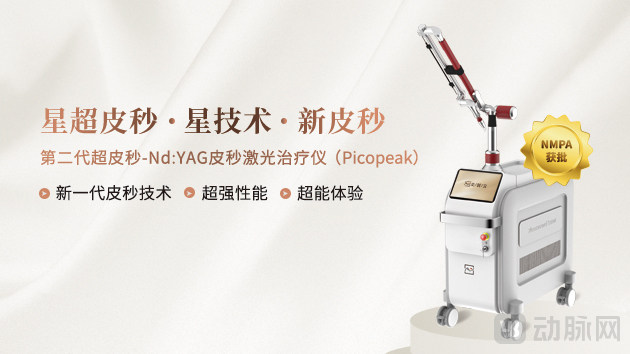
Medaesthe Second-Generation Nd:YAG Picosecond Laser Treatment System, Xingchao Pico
It is reported that the product will enter production in the second quarter of 2024. Compared with the previous generation of laser therapy devices, Star Ultra Picosecond offers a more cost-effective aesthetic solution better tailored to the needs of Chinese consumers, thanks to its higher precision and lower side effects, benefiting medical aesthetic institutions and beauty seekers across China.
Looking back at the development of picosecond laser devices, foreign manufacturers such as Cynosure, Syneron, and Korea’s WONTECH launched their picosecond laser systems as early as around 2013. In contrast, domestically produced picosecond lasers have only emerged in the past year, with just two products currently approved for market entry. Zhang Jing, co-founder of medaesthe, pointed out that this is primarily because picosecond lasers are classified as Class III medical devices, which entail substantial upfront R&D investment, long development cycles, stringent regulatory review, and relatively prolonged registration processes. Consequently, domestic manufacturers initially paid limited attention to such products or adopted a wait-and-see approach.
On the other hand, although foreign manufacturers entered the market earlier, their equipment must undergo a lengthy approval and registration process to enter China. Consequently, their strategic focus has been on horizontally expanding their product portfolios, with little progress made in vertically innovating single technologies.
Furthermore, differing consumer priorities lead brands to focus on different areas. Taking picosecond lasers as an example, tolerance to laser energy varies by skin type. As Caucasians, individuals of European and American descent can tolerate more aggressive, higher-energy treatments, and tend to prioritize concerns such as wrinkles, skin laxity, and tattoo removal. In contrast, the majority of Asians have Fitzpatrick skin types III–IV; for them, equivalent energy levels may be excessively high. Consequently, Asian consumers typically focus more on pigmentation spot removal and skin brightening.
However, the historical lack of domestic participants in the picosecond laser device sector has forced medical aesthetic institutions and consumers to bear high acquisition and treatment costs. Meanwhile, constrained by upstream suppliers, these institutions have struggled to provide more precise and personalized services to consumers in China.
Since graduating in 2010, Zhang Jing has been working as a physician in the Department of Dermatology at the Beijing Navy General Hospital. Over the years, she has gradually transformed from a “junior doctor” into a “leading expert.” She recalls that initially, only imported medical aesthetic devices were available; later, domestic manufacturers such as Keying Laser and Peninsula Medical began to emerge. She keenly recognized the rising trend of domestically produced medical aesthetic equipment.
After conducting in-depth market research both domestically and internationally, she discovered that China had surpassed its international counterparts in ultrasound and laser technologies. The domestic medical aesthetics industry was reaching a turning point, yet few manufacturers had established a presence in this sector. Consequently, she decisively reached out to a close industry friend of many years, resigned from her hospital position, and committed herself to building a national enterprise that better understands the needs of China’s medical aesthetics device market.
In February 2022, medaesthe (Shandong) Medical Device Co., Ltd. was registered and established.
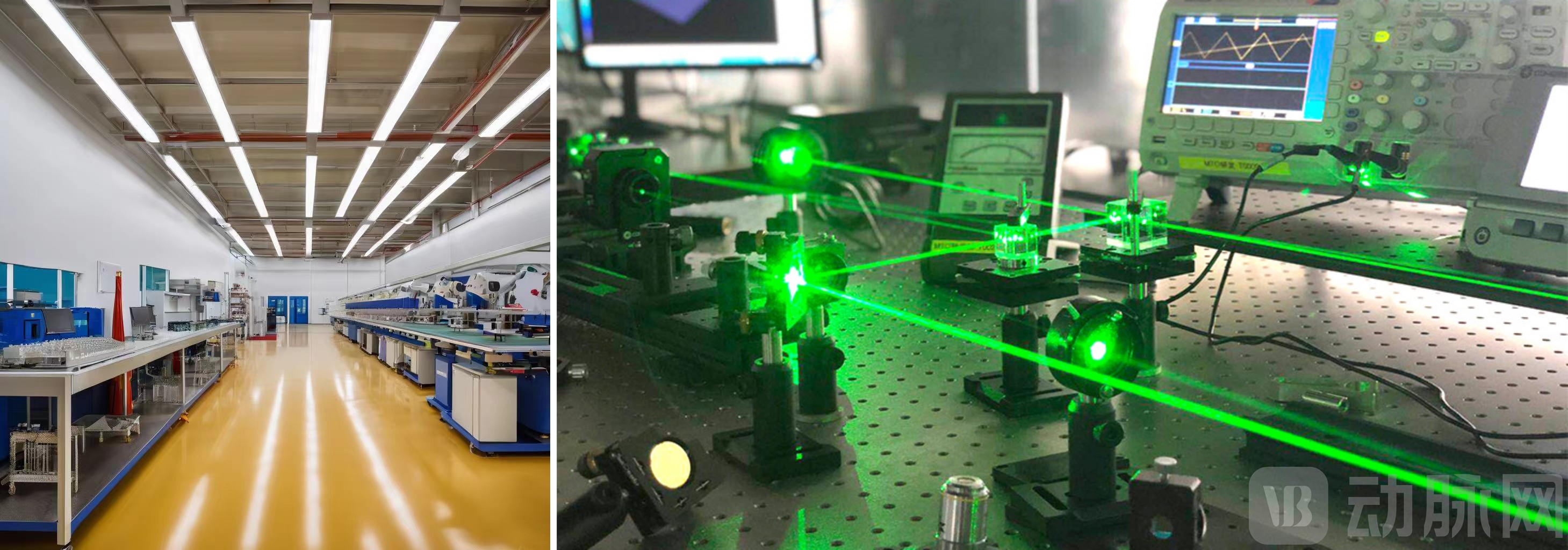
Medaesthe Workshop (Left) and R&D Lab (Right)
First-generation picosecond lasers are predominantly represented by compliant imported picosecond laser devices currently available on the market, most of which were launched around 2012.
The newly approved second-generation Pico-Nd:YAG picosecond laser treatment device—Star Pico, jointly developed by medaestheQilu Zhongke Institute of Optics and Photonics, Shanghai Jiao Tong University Center for AstrophysicsJointly developed. ItsBased on aviation laser technology, it integrates multiple cutting-edge technologies, including SOFT Star Technology, ultra-micro laser resonators, S-MOPA Star Technology, star waveform modulation technology, and real-time dynamic compensation algorithms for star filtering.
Compared to the first-generation picosecond laser,Star Ultra Picosecond has achieved a comprehensive innovation and upgrade from hardware to software in terms of light quality, innovative optical path design, light modulation technology, and laser emission algorithms., thereby achieving more significant efficacy, greater safety, and fewer side effects in the treatment of pigmented disorders, removal of tattoos in various colors, facial rejuvenation, and management of acne scars.
Taking the three key elements in picosecond lasers—pulse width, peak power, and optical path length—as examples.
Pulse width is a key performance parameter in medical laser technology, directly influencing the safety, efficacy, and scope of application of laser treatments. A shorter pulse width typically means that laser energy is released over a briefer period, enabling more precise therapeutic outcomes.Medaesthe features the shortest pulse width currently available in the industry, enabling stable output at approximately 295 picoseconds, which delivers superior therapeutic efficacy with minimal side effects and tissue damage.
Peak power is the maximum instantaneous power achieved by a laser within a single pulse. It influences the efficiency and safety of laser-tissue interactions and is one of the key factors in achieving effective medical treatments. Medaesthe’s Star Ultra Picosecond laser has been optimized in terms of peak power and pulse duration, boasting up to1.4GWpeak power,It enables the concentrated release of laser energy within an extremely short timeframe while ensuring uniform beam distribution, thereby allowing more precise control over the area of laser-tissue interaction. This reduces unnecessary thermal damage or tissue destruction, improves treatment efficiency, minimizes side effects, and enhances treatment safety.
The length of the laser optical path is closely correlated with energy fluctuations; the longer the optical path, the greater the energy loss and energy fluctuation during laser propagation.Through ingenious innovation, medaesthe has created the shortest laser optical path design currently available in the industry, with a length that is only one-half or even one-quarter of that of the first-generation picosecond laser. This ensures efficient and stable transmission of laser energy to the target area, thereby enhancing the depth of treatment penetration.
Furthermore,The Star Ultra Picosecond laser is also specially equipped with an optimized energy distribution mode designed specifically for lasers, reducing potential risks during treatment.Not only does it significantly reduce pigmentation, but it also enhances the overall stability of the device, allowing patients to experience less pain and discomfort during treatment, thereby making the procedure safer and more comfortable.
Meanwhile, the core hardware and software of Star Ultra Picosecond are independently developed and manufactured by medaesthe.The localization rate of the entire machine reaches 100%.With rapid iteration, lower acquisition and maintenance costs, it provides medical aesthetic institutions and beauty seekers with higher-quality, cost-effective options.
Technical thinking prioritizes foundational breakthroughs, while product thinking emphasizes end-user experience. Technical products are the tangible manifestation of a team’s core capabilities.
Medaesthe’s core team brings together senior elites from the medical aesthetics industry, including Dr. Zhang Jing, a clinician with over a decade of experience; executives from private enterprises specializing in R&D and manufacturing; and sales leaders from top multinational corporations in the medical aesthetics sector. The team shares a strong consensus on the development of medical aesthetic devices, ranking among the industry’s best in terms of both profound industry insights and abundant resources. Technical personnel account for as high as 60% of the team, which maintains close collaborations with research institutions such as the Qilu Zhongke Institute of Optics and Physics and the Center for Astrophysics at Shanghai Jiao Tong University, jointly promoting innovation and domestic substitution in medical aesthetic devices.
“As a domestic company with deep insights into China’s medical aesthetics market, medaesthe is committed to providing more cost-effective and innovative medical aesthetic devices. We thoroughly understand physicians’ professional needs, accurately grasp the expectations of aesthetic seekers and their requirements for energy parameters, and continuously explore the ideal form of next-generation picosecond technology based on these insights,” said Zhang Jing. She stated that the company places great emphasis on feedback and experiences from various stakeholders, including medical institutions, aesthetic seekers, and physicians, and revealed that the company has already embarked on the research and development of third-generation picosecond technology.
Meanwhile, Zhang Jing emphasized that the popularization of domestically produced medical aesthetic devices requires equal emphasis on both technology and market development.
On one hand, the domestic medical aesthetics market in China has experienced vigorous growth in recent years, with rapid product updates across both devices and injectables. To increase market share, any medical aesthetics product must focus on innovation and iterative development. Foreign manufacturers have seen few breakthroughs in this field over the past decade or so, creating valuable opportunities for Chinese medical aesthetics device manufacturers such as medaesthe. Leveraging advantages in stable quality, rapid innovation, and efficient iteration, domestically produced equipment not only helps medical aesthetics institutions generate greater profits but also provides cost-effective aesthetic solutions to consumers seeking beauty treatments. However, this also requires manufacturers to invest substantial capital and human resources in innovation and R&D, while possessing the ability to quickly discern and respond to industry development trends.
On the other hand, compared with traditional medicine, the medical aesthetics industry places greater emphasis on in-depth market understanding and refined operations.Zhang Jing believes that although technological innovation is indispensable, it is not the most critical factor. This is because medical aesthetic devices still lag behind traditional medical equipment in terms of technological sophistication. Therefore, it is more important to understand market demands, gain insights into the technical needs of clients and beauty seekers, and rapidly identify and iterate on trending technologies in the market.For instance, the recent surge in popularity of domestically produced ultrasonic facelift devices stems precisely from their accurate alignment with the market’s urgent demand for anti-aging technologies. This success relies on the team’s extensive industry experience and keen market insights.
Although it has been only one month since the Star Ultra Picosecond Laser received regulatory approval, several medical aesthetic institutions have already expressed their intention to purchase from medaesthe. For private institutions, medaesthe primarily adopts a direct sales approach; for public hospitals, it employs a distribution model.
Going forward, medaesthe will maintain a consistent market presence through diverse channels to ensure its products and brand image retain strong momentum and freshness. Leveraging its in-house R&D team and industry-academia-research collaborations with the Qilu Zhongke Institute of Optics and Materials and the School of Physics and Astronomy at Shanghai Jiao Tong University, medaesthe will continue to conduct market research and listen to end-user feedback, developing products that truly meet market demand and fulfill the needs of aesthetic seekers.
It is reported that the company has multiple products with registration processes underway simultaneously. In the future, the company plans to launch 2 to 5 new products annually, achieving comprehensive import substitution in the field of medical aesthetic devices.