

China's Ultrasound Technology Enters the Deep Waters of Minimally Invasive Intervention: High-End Ultrasound Transducers Achieve Domestic Breakthrough
Ultrasound imaging is currently one of the most widely and frequently used medical imaging technologies in clinical practice. Among its components, the ultrasound transducer is the core device of all ultrasound equipment; its performance directly determines the overall efficacy of the ultrasound system and accounts for approximately half of the total equipment cost. High-quality transducers can improve imaging quality, enhance diagnostic capabilities, and thereby increase the overall performance and reliability of the equipment.
The core component of an ultrasound transducer is piezoelectric material, which converts electrical signals into mechanical vibrations. These vibrations propagate through a medium as ultrasound waves and undergo reflection. The reflected ultrasound waves are received by the transducer, at which point the piezoelectric material reversibly converts the mechanical vibrations back into electrical signals. After processing, these electrical signals generate the images displayed on the screen. In short, by leveraging the energy properties of ultrasound—specifically the signals or acoustic energy generated in response to different human body tissues—the ultrasound transducer enables the diagnosis or treatment of abnormal conditions or diseases. Hence, it is often referred to as the “eyes” of the ultrasound system.
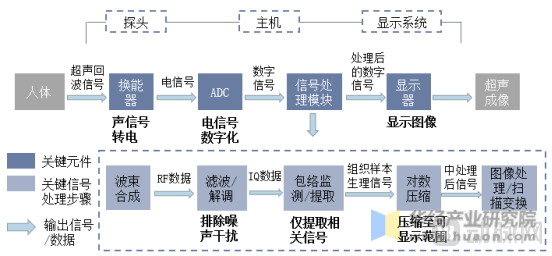
Signal Processing Workflow of Ultrasound Imaging, Image Source: Huajing Industry Research Institute
However, the core technologies of mid-to-high-end ultrasound transducers have long been monopolized by foreign companies. The underlying reason lies in core materials and manufacturing processes, with materials accounting for the majority of the challenge.
Cheng Peifeng, founder of Yisheng Weina, told VCBeat that high-performance transducers rely on high-performance dielectric materials. The current development trend in medical imaging transducers demands materials with both a high dielectric constant and a low Q factor to enable the manufacturing of high-bandwidth probes. However, as foreign countries started earlier in the research, development, and application of high-electromechanical ceramics and high-performance single-crystal materials, there remains a certain gap between China and developed nations in terms of core materials.
Overcoming material challenges is merely the first step; subsequently, manufacturers must surmount the hurdles of fabrication processes. These processes involve multiple technical difficulties, including material properties, machining precision, design complexity, and performance testing. For instance, material properties must maintain a high degree of consistency to ensure the stability and reliability of transducer operation. Furthermore, ultrasonic transducers may need to be designed for specific vibration modes—such as longitudinal, lateral, torsional, or combinations thereof—to accommodate diverse application requirements. This necessitates that manufacturers possess not only advanced knowledge in materials science but also multidisciplinary expertise in precision machining, electronic engineering, and acoustic design.
which recently secured tens of millions of yuan in Series A financing from investors including Qiaojing Capital and Xi Venture CapitalWuxi Yisheng Weina Medical Technology Co., Ltd. (hereinafter referred to as "Yisheng Weina"), represents domestic mid-to-high-end ultrasound transducers.
Yisheng Weina, established in 2021, is a high-tech company specializing in the design, R&D, and manufacturing of ultrasonic transducers. The company currently operates two factories (a piezoelectric smart materials factory and an intelligent transducer manufacturing facility) and one R&D center. Its product portfolio includes minimally invasive interventional ultrasound catheters and transducers, conventional external imaging probes, ultrasonic scalpel waveguides, piezoelectric inkjet printheads, ultrasonic drug delivery devices, high-performance piezoelectric ceramics, and single-crystal and polymer-based piezoelectric materials.
The core team members hail from the University of Science and Technology of China, Harbin Institute of Technology, Tongji University, Nanjing University, and Zhejiang University, and possess professional experience at renowned medical device companies such as GE and Philips.
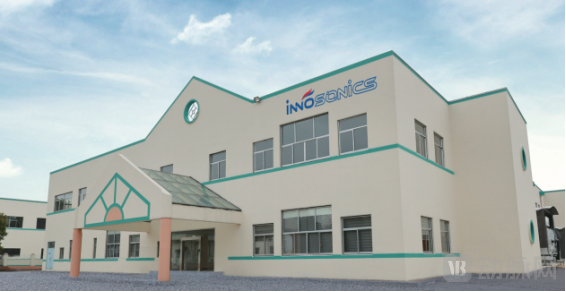
Currently, the application of medical ultrasound in China is mainly divided into two major categories: external diagnostic ultrasound and interventional ultrasound.
The development history of in vitro diagnostic ultrasound is relatively long, and its overall design architecture has become relatively mature and stable. Most in vitro diagnostic ultrasound transducers currently on the market still follow the basic concept of the transducer invented by Paul Langevin. Although continuous innovations in subsequent technical materials have improved the sensitivity and bandwidth of piezoelectric materials, the development of in vitro diagnostic ultrasound still faces certain bottlenecks, especially in terms of real-time performance and miniaturization required for clinical applications. There is still a lack of effective means for precise positioning and treatment during surgery.
In recent years, interventional ultrasound products such as ICE and IVUS have pioneered market entry in the diagnosis and treatment of cardiovascular diseases, demonstrating the broad application prospects of interventional ultrasound across multiple fields, including atrial fibrillation, structural heart disease, coronary intervention, urology, and the gastrointestinal tract.
Cheng Peifeng believes that interventional ultrasound needs to balance high performance and low cost to meet the demand for large-scale use.Regarding the current state of interventional ultrasound in China, probes with frequencies below 7 MHz basically meet most clinical needs, which is also the primary market for domestic imaging equipment manufacturers and suppliers. However, in the high-frequency, wide-bandwidth domain above 7 MHz, there is a significant technological gap, which has become a key factor constraining the further development of interventional ultrasound technology.
Yisheng Weina specializes in the R&D of ultrasound technology, with a focus on minimally invasive ultrasound procedures. The company’s business currently comprises three main segments: minimally invasive interventional ultrasound probes for therapeutic applications (including ICE, IVUS, and power-based ablation probes); mid-to-high-end conventional ultrasound imaging probes (including conventional probes, high-performance single-crystal probes, and electronic 4D matrix probes); and high-performance piezoelectric materials (including imaging-grade materials, power-grade materials, and piezoelectric polymers).
Currently, the materials used in the production of ultrasonic transducers by Yisheng Weina still follow the mainstream piezoelectric materials and piezoelectric single crystals, butThe Company Has Innovated in Manufacturing Processes。By leveraging semiconductor fabrication processes and integrating precision circuitry and packaging techniques for both CMUT (Capacitive Micromachined Ultrasonic Transducer) and PMUT (Piezoelectric Micromachined Ultrasonic Transducer), the company has successfully manufactured transducers with higher resolution, smaller form factors, and greater integration. This innovation not only enhances transducer performance but also lays the foundation for realizing electronic 4D matrix arrays.It is expected to bring new breakthroughs to the development of interventional ultrasound technology.
Cheng Peifeng stated that, leveraging the core technical team’s over 20 years of R&D and manufacturing experience in piezoelectric materials, Wuxi Yisheng Weina Medical Technology Co., Ltd. matches top-tier international material suppliers in the design, manufacturing, and performance of PZT high-electromechanical ceramics, P8 ceramics (PZT-8 type piezoelectric ceramics), and single-crystal materials. Furthermore, the company has substantial expertise in transducer materials, such as matching layers and backing materials, and is making rapid progress in the development of ultra-high bandwidth probes.
Leveraging the aforementioned independent innovation technology platform, Yisheng Weina has successfully manufactured 10F and 8F miniature interventional imaging probes, and has even completed the research and development as well as small-batch trial production of domestically leading 6F miniature interventional probes (phased array) and 60MHz miniature interventional probes (single-element).
Among them, Yisheng Weina’s 6F miniature interventional probe features a large depth of field, wide bandwidth, and high resolution, and can be used in clinical interventional ultrasound applications such as intracardiac echocardiography (ICE), coronary, gastrointestinal, respiratory, urological, orthopedic, and neurological procedures.
Cheng Peifeng told VCBeat that interventional probes, due to their compact size and the fact that the probe itself serves as an energy transduction unit, generate heat within the sealed catheter space. Consequently, their design considerations differ entirely from those of conventional probes, and the range of selectable materials is extremely limited. These probes must possess deep insertion capability, excellent acoustic coupling, good biocompatibility, and flexible steerability for navigation within blood vessels.
Taking Yisheng Weina’s 6F micro interventional probe as an example, its outer diameter is only 2 mm. Designing such a slender channel to accommodate both water irrigation and surgical instrument access presents a challenge akin to “performing elaborate rituals inside a snail’s shell.” Through in-depth communication with clients, the Yisheng Weina team continuously refined requirements and pursued excellence. To overcome the limitations of existing manufacturing technologies, the company actively introduced new suppliers, designs, and processes, striving for perfection in every detail. Through persistent experimentation and innovation, the successful production of this precision probe was finally achieved.
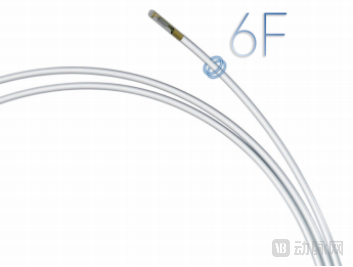
60 MHz Miniature Interventional Probe (Single-Element), Utilizing Single-Crystal and Dual-Piezoelectric Materials, Offers High Resolution for Applications in Intravascular Ultrasound (IVUS) and Endoluminal Ultrasound (mEUS).

It is worth noting that all of Yisheng Weina’s products are independently developed and manufactured in-house, ensuring a stable supply chain and more affordable pricing. Meanwhile, with bold innovation, Yisheng Weina continues to push the physical limits of ultrasonic processing, striving to develop more precise probes.
Cheng Peifeng emphasized that the company not only focuses on accurately diagnosing lesions in the early stage,It focuses more on the intraoperative and postoperative markets, using interventional devices to remove or treat lesions.
In addition to supplying core components, Yisheng Weina has established mature solutions across its ultrasound imaging series (10F miniature interventional imaging probes, 8F miniature interventional imaging probes, and conventional external imaging probes), ultrasound therapy series (high-intensity focused ultrasound ablation and ultrasonic scalpel transducers), and ultrasound aesthetics and rehabilitation series. The company also provides customers with customized high-power ultrasonic components and collaborative R&D and manufacturing services.
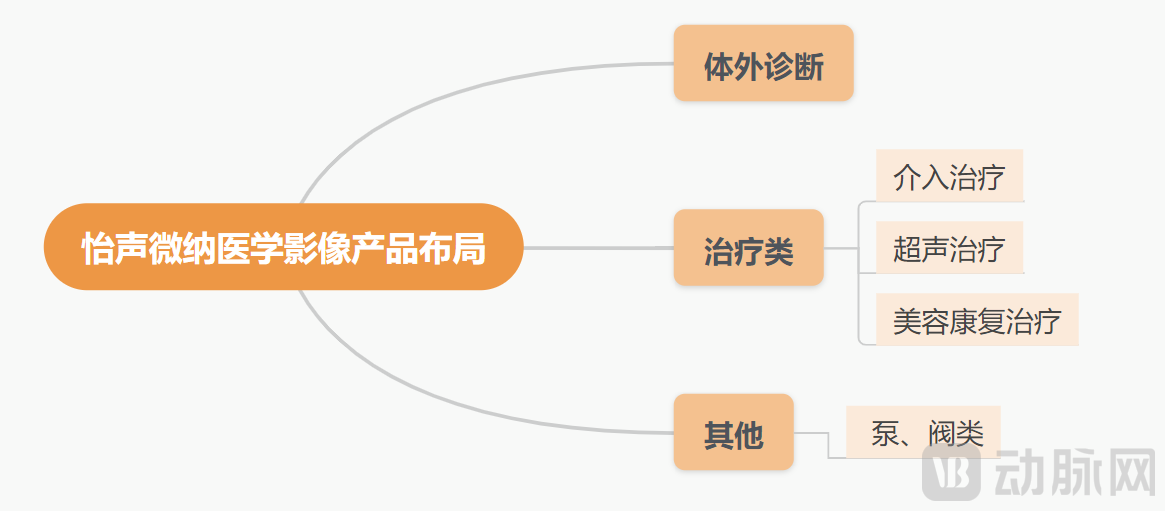
Yisheng Weina's Product Portfolio, Chart by VCBeat
Currently, Wuxi Yisheng Weina Medical Technology Co., Ltd. has established partnerships with multiple leading domestic manufacturers of minimally invasive devices and is actively expanding into overseas markets, engaging in in-depth negotiations with several international clients regarding its IVUS projects.
When discussing future plans, Cheng Peifeng expressed full confidence, stating that the company will continue to optimize its existing in vitro diagnostic products, promote their standardization, and accelerate their market launch to enhance self-sustaining revenue generation. Meanwhile, Yisheng Weina will increase R&D investment in interventional therapy products, seize the high ground in ultrasound-guided minimally invasive technology, and provide clinicians with more practical, user-friendly, and effective tools in the field of minimally invasive interventions.