

British Academician Unveils Cutting-Edge Non-Pharmaceutical Antiviral Innovation Featured in Top-Tier Journals: Birmingham Biotech Advances Global Commercialization with NoriZite® Platform

Birmingham Biotech
In Vitro Diagnostic Solution Provider
Universities are the lighthouses of technological innovation and the world of future technologies, serving as key hubs for frontier scientific research and important bases for technological innovation.
Since the 1980s, countries around the world have attached great importance to leveraging the scientific research and innovation resources of higher education institutions to serve socio-economic development. In China, the low rate of commercialization of academic research achievements has long been a significant challenge that remains unresolved. According to the "2022 China Patent Survey Report" released by the China National Intellectual Property Administration, the implementation rate of invention patents at Chinese universities stands at 16.9%, with an industrialization rate of merely 3.9%, whereas patent conversion rates in developed countries exceed 50%.
How to Enable Innovation Seeds to “Break Through the Soil” and Facilitate the Efficient Translation of Scientific Research Achievements Has Also BecomeThe 8th Future Healthcare Ecosystem Expo · Forum on the Translation of Scientific Research AchievementsIssues to be discussed.
This Forum on the Translation of Scientific Research Achievements is jointly organized by VBEF, VCBeat, and Birmingham Biotech (hereinafter referred to as “Birmingham Biotech”),On-site InvitationsRahul Agarwal, Life Sciences and Health Counsellor at the Commercial Trade Department of the British Embassy in China; Liam Grover, Fellow of the Academy of Medical Sciences; Wang Jingjing, Executive Director of the Global Health Industry Innovation Center; Zhang Suhua, Director of Industry-University Cooperation at Shanghai University of Medicine & Health Sciences; Xu Qian, Managing Partner at Danlu Capital; Dr. Julie Wang, Chief Technology Officer at Birmingham Biotech; Lou Dongyu, Chief Financial Officer at Yaoyuan Xindi; Li Mengze, Technical Transfer Project Supervisor at the Science and Technology Development Department of Peking Universityawaiting the in-depth participation of experts and scholars from home and abroad, as well as from the business, academic, and investment communities.
This year’s Forum on the Translation of Scientific and Technological Achievements adopted a “Keynote Speeches + Roundtable” format to jointly discuss innovative practices in translating scientific and technological achievements, and to explore innovative pathways, ecosystem development, and industrial symbiosis in this field.Among all the guests, Professor Liam Grover, who is based at a university and has extensive experience in translating scientific research achievements into practical applications, delivered a speech titled “Linking Innovation to Translation”.
In addition to being the youngest full professor in the history of the University of Birmingham and the founder and director of the UK’s Healthcare Technology Institute (HTI), Professor Grover was elected a Fellow of the Academy of Medical Sciences in recognition of his outstanding academic and societal contributions. For many years, Professor Grover has been dedicated to advancing the research and development of new materials, technologies, and therapies to facilitate better tissue healing and recovery. He has published more than 180 papers and holds over twenty patents.
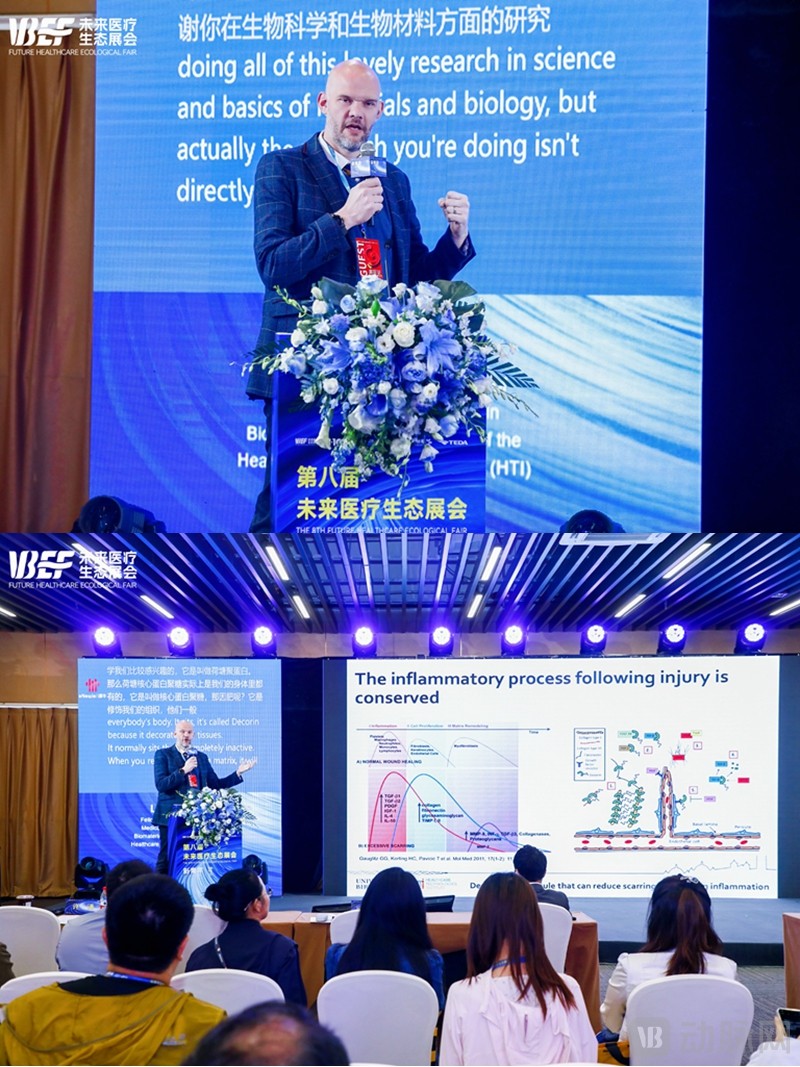
Lecture by Professor Liam Grover
Drawing on his more than two decades of experience in the biomaterials industry, Professor Grover presented a chronological overview that began with “hard materials,” such as biodegradable bone cement and bone screws; progressed to “soft materials,” including novel eye drops for bilateral corneal repair in patients with corneal injuries and innovative dressings that reduce scarring in patients with epidermolysis bullosa (EB); and culminated in the “invisible mask”—an innovative, long-acting, safe, and convenient intranasal protective spray developed within three months at the outset of the UK pandemic to prevent viral entry through the nasal cavity.
Professor Grover stated in his speech, “The fundamental purpose of my engagement in basic research and technology translation projects is to provide innovative solutions for unmet clinical needs, thereby benefiting patients. Over the past two decades dedicated to basic research, I have also been contemplating how to efficiently and effectively address challenges in technology R&D, product regulatory approval, manufacturing costs, and IP security, with the aim of establishing a translation paradigm.”
After Director Wang Jingjing, Division Chief Zhang Suhua, and General Manager Xu Qian shared their perspectives on topics such as “the current status of translation of scientific research achievements in China,” “new-quality productive forces,” and “integration of medicine and engineering,”Dr. Julie Wang, Chief Technology Officer of Birmingham Biotech, delivered a presentation titled “BHM Nasal Protective Spray: The Ultimate Viral Shield for Healthy Breathing.” Drawing on her collaboration with Professor Grover in technology transfer and commercialization, she comprehensively showcased the company’s successful experience as a translational platform, as well as the innovative value and social significance created by its products.
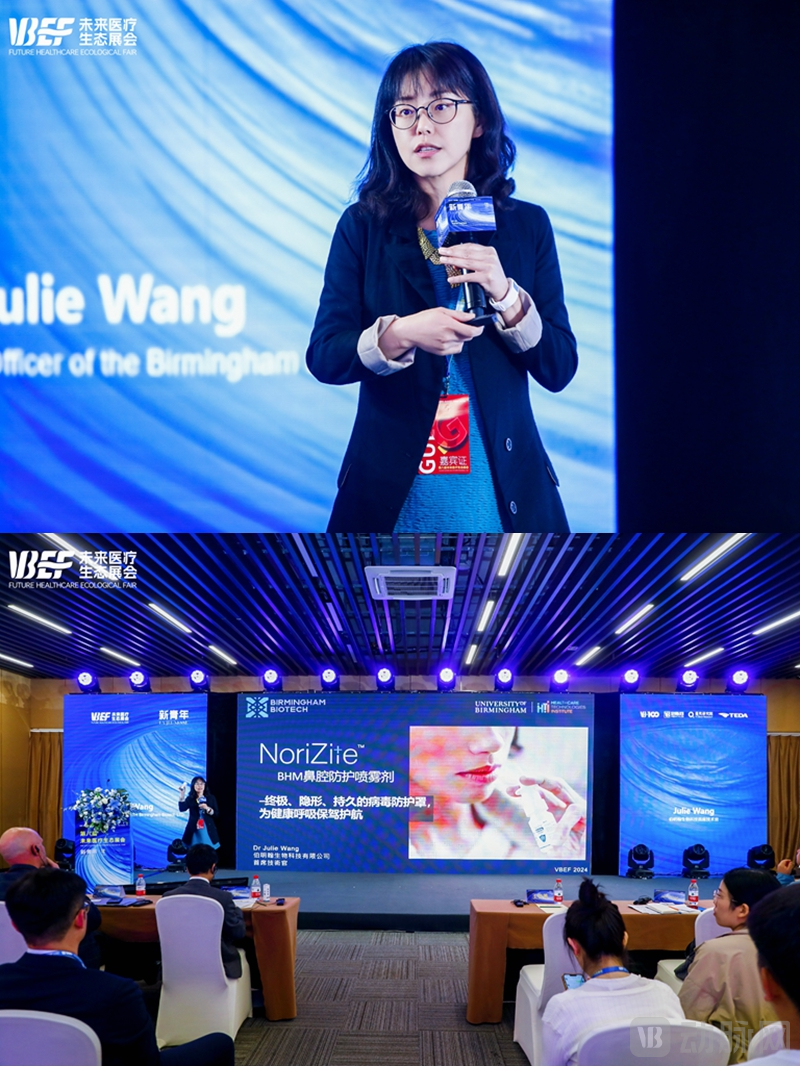
Dr. Julie Wang’s Lecture Scene
Dr. Julie Wang is a Senior Research and Teaching Fellow at the Nanomedicine Laboratory, King’s College London. She has published more than 60 academic papers, which have been cited over 10,000 times, and possesses extensive experience in product development, animal studies, and clinical trials.
“Birmingham Biotech focuses on the translation of various scientific research achievements across the value chain of prevention, diagnosis, and healthcare. The company has transformed the nasal spray invented by Professor Grover into a mature product and continues to explore NoriZite®“...utility value, with the aim of breaking away from the traditional ‘linear’ translation model and pioneering a groundbreaking, one-stop commercialization ecosystem. By synchronizing multi-track activities across R&D, manufacturing, regulatory affairs, and marketing, we can accelerate the productization and market adoption of cutting-edge technologies,” introduced Dr. Julie Wang in her speech.
Following the speeches, the guests engaged in discussions during the forum’s roundtable session on“Innovation and Practice in the Translation of Scientific Research Achievements: How to Better Build a Chain Collaboration of ‘Industry, Academia, Research, and Investment’?”This theme, jointly explore and share best practices and effective strategies for the translation of scientific research achievements.
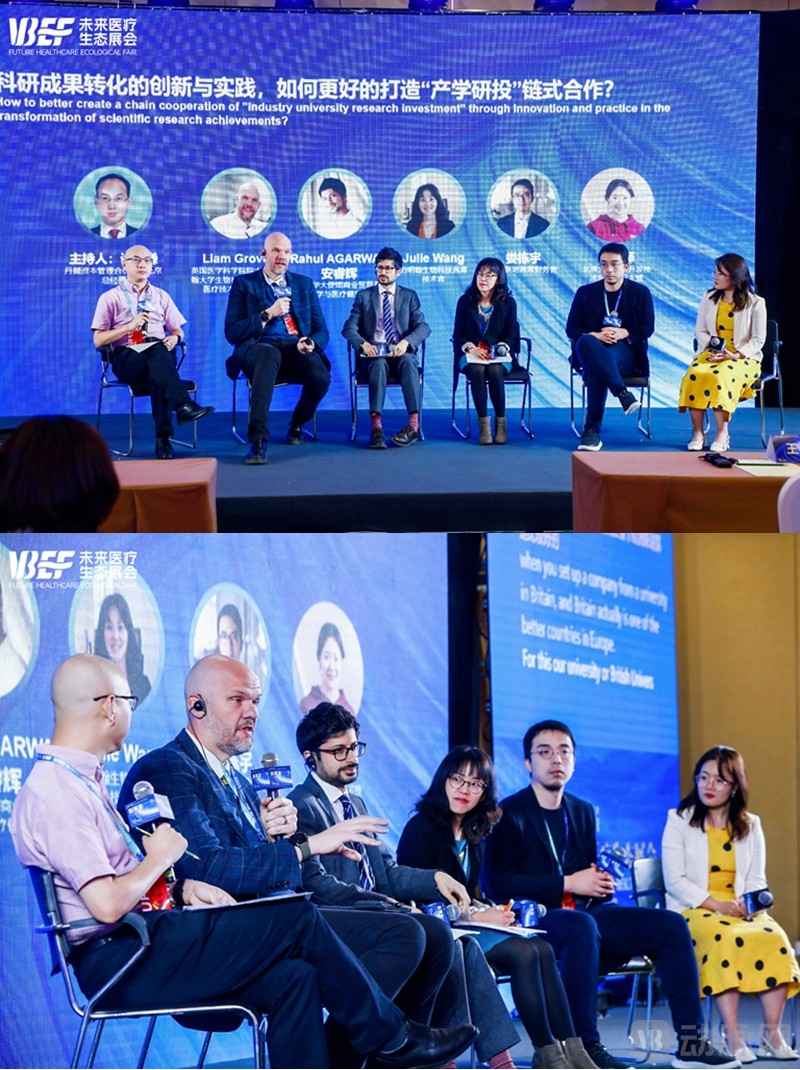
Roundtable Discussion
When discussing how scientists can find suitable commercial partners in the process of transferring and commercializing scientific research achievements, Professor Grover stated, “Both in the development and translation of technologies and products, it is essential to consider and select influential partners, such as physicians, investors, lawyers, and specialized distributors for different countries.”
Dr. Julie Wang continued, “As a comprehensive platform integrating investors, manufacturers, and distributors, Birmingham Biotech enables scientists to focus on their core competencies in basic research through its tripartite, diversified services.”, accelerating the translation of outstanding innovative achievements from universities—from the laboratory to the factory floor, and ultimately into the hands of global consumers. Building on Birmingham Biotech’s strong track record and reputation in the commercialization of nasal spray products, we also aspire to serve as a bridge for cooperation between China and the UK, fostering the development and global commercialization of more innovative products.”
The commercialization of scientific and technological achievements is a critical link in realizing the transition from science to technology, and from technology to the economy. Through the analyses provided by the various guests, it is evident that, on one hand, the translation of scientific research outcomes in universities worldwide is accelerating; on the other hand, achieving high-quality commercialization requires concerted efforts from all parties, particularly by instilling a commercialization mindset at the very stage of source innovation.
“As Professor Grover stated during the discussion, ‘How to incentivize innovators to continuously achieve source innovation and translate it into products that benefit patients and clinical practice is of critical importance to the nation and society. With the growing emphasis and promotion of university innovation and technology transfer by countries and various industry stakeholders, I believe the world will undergo even greater transformations in the future.’”
If Professor Grover's NoriZite®The invention process is likened to a "zero-to-one" breakthrough in original technological innovation.So, Birmingham Biotech on NoriZite®The translation of scientific achievements, on the other hand, transforms science into patient well-being, realizing a value leap from "1 to ∞."
From the laboratory to the factory, and finally into the hands of consumers, scientific achievements must align with social and market demands to break free from the “bookshelf” constraint. In this translation process, enterprises that possess both innovative and market-oriented attributes play a leading role, driving continuous innovation in response to market demand.
To promote NoriZite®To achieve the leap from “1 to ∞,” Birmingham Biotech, in addition to BHM NoriZite introduced earlier®In addition to the nasal protective spray, the oral spray product—BHM NoriZite—has also been successfully commercialized.®Oral protective spray, as well as multiple product lines under research and development for commercialization, including eye drops, intimate area protective gel, and wound dressings.
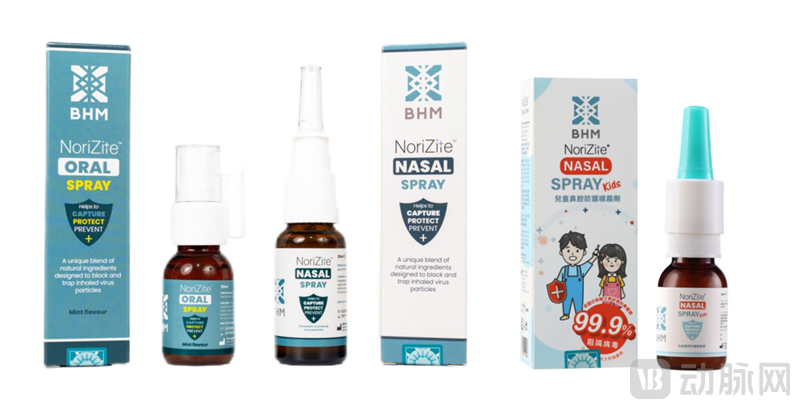
BHM NoriZite®Oral Protective Spray, BHM NoriZite®Nasal Protective Spray (Adults & Children)
First, BHM NoriZite®The core ingredients of the oral protective spray are also based on iota-carrageenan and gellan gum. On one hand, the feather-like spray generates a gel barrier that extensively covers the mucosal surfaces of the mouth and throat, capturing viruses and preventing oral transmission of infection. On the other hand, this gel barrier adheres to the mucosal surfaces for an extended period, forming a safe, long-lasting, and moisturizing protective film that alleviates dryness and pain in the mouth and throat.
It is worth mentioning that, just as Professor Grover developed BHM NoriZite®Nasal Protective Spray Was Originally Designed to Combat COVID-19: BHM NoriZite®Oral protective sprays are also closely aligned with user needs and social responsibility.
Hereditary Epidermolysis Bullosa (hereinafter referred to as EB) is a rare disease for which there is currently no curative treatment. Patients develop blisters or blood-filled bullae on their skin and mucosal tissues—including those of the eyes, oral cavity, esophagus, and respiratory tract—upon minor friction, leading to ulcerative wounds.
Birmingham Biotech maintains a strong collaborative relationship with the DEBRA charity, which is dedicated to improving the quality of life for patients with epidermolysis bullosa (EB). Furthermore, Professor Grover’s previous research has provided preliminary confirmation that BHM NoriZite®The active ingredients in the oral protective spray possess anti-scarring potential, which can reduce scar formation. For patients with Epidermolysis Bullosa (EB), BHM NoriZite® Oral Protective Spray reduces friction caused by speaking and eating through its lubricating and protective effects, thereby improving quality of life. Furthermore, as the product is non-medicinal, it is safe for long-term, multi-daily use by EB patients.
“Birmingham Biotech has repeatedly sponsored the DEBRA International Foundation, and its R&D team is also conducting clinical studies on the product’s anti-scarring and wound-healing effects, with the aim of further exploring BHM NoriZite®“Greater value of the oral protective spray helps improve the quality of life for EB patients worldwide,” said Xu Shizhe, CEO of Birmingham Biotech.
Professor Grover also stated at the forum, “Birmingham Biotech took only 14 months to bring the COVID-19 nasal spray project from concept to commercialization. Without this collaboration, the oral spray that could help EB patients improve oral wound healing would never have been commercialized.”
Meanwhile, based on NoriZite®Leveraging the aforementioned advantages, Birmingham Biotech is also developing wound dressings for applications in medical aesthetics, minimally invasive surgery, and other fields.On one hand, this antiviral dressing can remain on the wound surface for an extended period, maintaining a moist wound environment while reducing the risk of infection and accelerating wound healing. On the other hand, the dressing can be combined with various pharmacologically active ingredients to further minimize scar formation, shorten wound healing time, and achieve higher-quality wound repair outcomes.
Given the versatility, flexibility, and safety established by the underlying patents of NoriZite, Birmingham Biotech has also applied this technology to ophthalmology and gynecology from the perspective of patient benefit. The company continues to unlock scientific value through product innovation, developing translational products such as eye drops that enable prolonged drug retention on the ocular surface and intimate gels that block HPV transmission.
Time Flies, BHM NoriZite®Leveraging its distinct advantages, the nasal protective spray has continuously safeguarded hundreds of thousands of users across more than ten countries and regions on five continents, with “BHM” and “NoriZite” emerging as the preferred preventive nasal spray brands among consumers in Europe, the United States, and other regions.
“Taking the UK market as an example, NoriZite®“has become synonymous with epidemic prevention and has been included in the UK government’s 2023 recommended list for medical technology exports.” Discussing brand visibility, Xu Shizhe continued, “Brand building cannot rely solely on advertising; product performance, quality, and overall design are equally critical. It is precisely based on the positive ripple effect of word-of-mouth among consumers that NoriZite”®and BHM’s brand is gradually expanding its advantageous position globally. Recently, the company also received an official invitation from the Saudi Arabian government to introduce BHM NoriZite® Nasal Protective Spray into the Middle East market, thereby building a health barrier for more users.”
When NoriZite®While expanding into broader markets, Xu Shizhe, an overseas Chinese entrepreneur, also aims to benefit consumers in China and assume greater social responsibility. Since officially entering the Chinese market in late 2022, the company donated nasal spray products worth nearly RMB 1 million on two occasions to charitable organizations and the China Elderly Network during the second wave of COVID-19 infections in China, helping vulnerable groups such as the middle-aged and elderly resist viral infection.
Targeting the high-potential consumer healthcare sector, Birmingham Biotech has established an omnichannel presence spanning online and offline platforms as well as domestic and international markets. Notably, since entering the Chinese market, BHM NoriZite, known as the “BHM Liquid Mask,”®Nasal protective sprays have ranked among the top three best-selling “liquid mask” products on diverse e-commerce platforms, including Tmall, JD.com, Douyin, and Xiaohongshu, earning widespread recognition from consumers.
In the future, Birmingham Biotech will further promote long-term brand building in the Chinese market. The company expects to release a new Chinese brand name and logo in the second half of 2024, namely “伯明瀚™” and “诺瑞赞”.®“Continuation” BHM®” and “NoriZite®” innovative achievements and international image, strengthen brand recognition in the Chinese domestic market, and lay the foundation for the company's substantial future growth in the Chinese market.
As a prominent success story in the commercialization of scientific research at the University of Birmingham, Birmingham Biotech has undoubtedly provided a comprehensive, end-to-end service platform that unleashes the innovative potential of higher education institutions. Meanwhile, the company aims to replicate this collaborative innovation model with universities, extending it to more projects and ultimately establishing an open ecosystem for deep China-UK cooperation.
According to reports, Xu Shizhe has reached a long-term cooperation intention with the University of Birmingham, planning to establish an IP holding joint venture in 2025. The company aims to identify commercially promising intellectual property to build a “patent pool” and incubate selected scientific research achievements. Furthermore, unlike traditional commercialization service providers for intellectual property, the joint venture will no longer be limited to the simple transactional value of IP but will instead focus on long-term investment and conversion value.
Most importantly, Xu Shizhe hopes to deepen exchanges and cooperation between China and the UK through a model featuring R&D in the UK and subsequent development, manufacturing, and sales in China. This approach aims to facilitate the commercialization of more high-end medical technologies, ultimately benefiting the people of both countries, and to further expand products into the international market with the UK as a platform.
"Science knows no borders, but the ability to effectively translate scientific achievements into practical applications and sustainably unlock innovation value is indeed key for every university and nation to gain a strategic edge and seize the initiative in fierce international competition."
In this regard, both the University of Birmingham and Professor Grover have established in-depth partnerships with Chinese universities and institutions such as Tsinghua University.Meanwhile, Xu Shizhe also expressed his hope that Birmingham Biotech would establish collaborations with Chinese universities, particularly through a tripartite partnership involving the University of Birmingham. In the future, this collaboration would serve as a bridge to promote communication and exchange between China and the UK, as well as between their respective academic institutions, achieving mutual benefits and ultimately contributing to human health.
“As I mentioned in my post-conference interview with VCBeat, ‘I received numerous invitations from Chinese enterprises, universities, and manufacturers on site. In the future, leveraging the IP holding company established in collaboration with Birmingham Biotech, I hope to serve as an industry expert and consultant to identify more innovative achievements with clinical, social, and commercial value across the UK, China, and even globally. My goal is to industrialize these patents, promote their widespread application, and benefit the world.’”