

MedLinker MedGPT Achieves Breakthrough in Diagnostic Accuracy, Empowering Physicians through Generative AI Innovation

Medlinker
Chronic Disease Management Platform Provider
In early 2021, when IBM abandoned Watson after a decade of fruitless efforts, it likely did not anticipate that the technical challenges plaguing Watson would be resolved just two years later, thanks to the unexpectedly rapid advancements in large language models. Leveraging powerful semantic understanding and text generation capabilities, generative AI based on large models has overnight reignited the industry’s enthusiasm for building “AI doctors.”
Just recently,Medlinker’s MedGPT Once Again Leads the Industry, Becoming the First to Elevate Diagnostic Hit Rate to a Level Comparable to Human Physicians, Achieving a Historic Breakthrough and Laying the Foundation for Further AI Empowerment of Doctors。
Undoubtedly, generative AI demonstrates immense potential for disruptive innovation across many industries, including healthcare. There is a consensus within the industry that generative AI will unlock vast new possibilities for the healthcare sector. According to incomplete statistics from VCBeat Orange Data, from January 1, 2022, to June 28, 2023, there were over 160 global financing and investment events in the field of generative AI for healthcare, with cumulative investment exceeding $5.71 billion. In contrast to the recent “winter” experienced by digital health, generative AI can be described as “a fire in the winter.”
NVIDIA GTC, representing AI, and CHINC, representing healthcare informatization—two seemingly unrelated conferences—have nonetheless converged to showcase the thriving landscape of generative AI in healthcare.
In the context of medical texts, although previous AI approaches represented by NLP and CV boast the advantages of strong rule-based logic and high controllability, they face barriers in natural language communication and are unable to address systemic and complex issues.
Generative AI has achieved significant advances in natural language processing. Large models, represented by Transformer, possess far superior natural language communication capabilities compared to previous AI algorithms. They can perform high-concurrency, long-range learning and integration across massive volumes of medical texts and data, thereby enabling systematic integration for addressing complex problems.
Human-computer interaction is evolving from traditional user interfaces, operating systems, and impersonal electronic health record (EHR) systems toward fluid, natural language conversations that are more engaging. This shift in interaction paradigms will enable “AI doctors” or “AI health assistants” to play a role across all stages of clinical care, thereby empowering physicians and healthcare institutions.
Pre-consultation: Generative AI can leverage its robust information retrieval and reasoning capabilities to enhance disease prediction, thereby improving the accuracy of triage and patient guidance. During consultation: By analyzing multimodal data—including medical records, symptoms, and disease history—generative AI employs advanced analytics and intelligent algorithms to assist physicians with diagnostic support, treatment planning, and prognosis estimation. Post-consultation: Generative AI alleviates the workload of healthcare professionals by automating clinical documentation workflows and serves as an educational tool to disseminate accurate health knowledge and preventive measures to patients.
Especially for physicians, generative AI serves as a convenient repository of medical guidelines, enabling them to stay abreast of the latest advances in medical research, evidence-based medicine, and clinical guidelines, thereby enhancing their professional expertise and promoting improvements in healthcare quality.
Both in China and abroad, “AI doctors” or “AI health assistants” powered by generative AI are springing up like bamboo shoots after rain, with Hippocratic AI emerging as a standout. The startup, which developed a generative AI-based health assistant, was founded only in 2022 yet has completed three rounds of financing totaling $118 million within just one year, reaching a valuation of $500 million.
Although the underlying technologies are largely similar, there are distinct differences between AI health assistants and AI doctors. The former is primarily designed for general public use, providing broad recommendations with a higher tolerance for ambiguity among its target users. In contrast, AI doctors must operate within clinical settings, serving both patients and physicians, and are required to provide rigorous and accurate medical advice based on specific symptoms. The level of difficulty involved is not comparable.
Obviously, the accuracy of targeted medical answers will be the key to determining whether AI doctors can truly gain recognition.
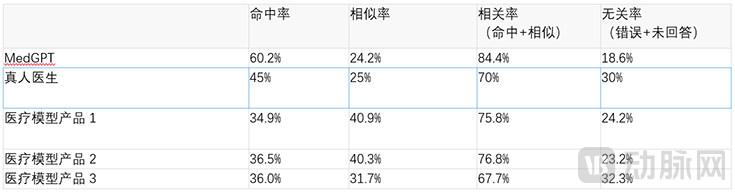
Medlinker, which once surprised the industry with its vertical large language model for healthcare, has achieved another breakthrough. In a recent test,Medlinker’s MedGPT achieves a diagnostic accuracy rate of up to 60%, representing a significant improvement over the approximately 35% average diagnostic accuracy rate of existing large medical AI models, and is also notably higher than that of human physicians.。
Prior to this test, Medlinker conducted internal testing on MedGPT. The results demonstrated that it could successfully pass the complete question banks of both the Chinese National Medical Licensing Examination and the US Medical Licensing Examination, achieving an accuracy rate exceeding 80%.
However, while exam results are certainly important, they do not necessarily reflect real-world performance, as the phenomenon of "high scores but low competence" is hardly new.
To validate the true capabilities of MedGPT, Medlinker decided to push MedGPT to its limits by establishing rather stringent testing conditions.
In this test, the AI is required to rely solely on medical records and further assess the patient’s condition through text-based question-and-answer interactions, ultimately providing a diagnostic opinion. Subsequently, the AI’s diagnostic opinion is compared against the confirmed diagnosis to evaluate the AI physician’s ability to deliver accurate medical diagnoses.
What’s more noteworthy,The entire Q&A session should, as much as possible, adopt the patient’s own manner of expression to simulate real-world scenarios. In previous similar tests, professionals were often assigned to “translate” patients’ expressions into standard terminology that is more easily understood by generative AI.. Clearly, this places more stringent demands on the semantic understanding capabilities of generative AI than ever before.
According to the testing criteria, if the AI provides a diagnostic opinion that is exactly identical to the confirmed diagnosis, it is considered a "hit." If the AI's diagnosis does not include the correct disease name but is highly similar to the target condition, and professional evaluation determines that further auxiliary examinations are required for a definitive diagnosis, it is classified as "similar." For example, if the actual confirmed diagnosis is "hyperthyroidism," and the AI provides a diagnosis of "thyroid disease," it is deemed "similar."
Both “match” and “similarity” are considered “relevant” to the confirmed diagnosis; otherwise, they are deemed “irrelevant.”
In addition to achieving a high hit rate of 60% in accuracy tests, MedGPT has increased its diagnosis-related rate to 84%, with an irrelevant diagnosis rate of only 16%. In other words, MedGPT is currently the most accurate AI doctor in China, even surpassing the performance of human physicians.。
Meanwhile,MedGPT does not merely provide a diagnosis; rather, with the goal of achieving a cure, it further formulates corresponding treatment plans based on the results of the preliminary and confirmed diagnoses.. For mild conditions that can be managed with pharmacological intervention, provide appropriate medication regimens and offer home delivery services; for severe conditions, recommend nearby medical institutions to the patient.
However, it is important to emphasize that even under relatively stringent testing conditions, this remains a theoretical test; MedGPT may still require more time for real-world application.
Medlinker has always been committed to serving physicians. This is evident in its evolution from a social app initially designed to meet physicians’ networking needs, to an internet healthcare platform providing online consultation services. MedGPT represents Medlinker’s latest endeavor to empower physicians through technology.With MedGPT’s breakthroughs in diagnostic accuracy and relevance, AI has finally become a reliable support system that physicians can depend on. It not only assists doctors in managing patient communications but also provides high-credibility auxiliary diagnostic references for clinical decision-making.。
Conversely, physicians have also played a pivotal role in Medlinker’s R&D—whether by providing feedback through participation in beta testing or by directly engaging in the research and development process. In fact,The development of MedGPT has received direct participation from medical experts at a series of top-tier hospitals, including West China Hospital, Huashan Hospital, Peking University First Hospital, Capital Institute of Pediatrics, Zhongshan Hospital, and Sun Yat-sen Memorial Hospital of Sun Yat-sen University.。
This also ensures the technical authority of MedGPT and its profound insights into medical scenarios, serving as a classic example of mutual empowerment between technology enterprises and physicians.
“Initially, the diagnostic accuracy of large language models was relatively low, and their use was subject to numerous limitations, requiring strictly standardized terminology input. At that time, their practical value seemed limited. However, after multiple rounds of iteration, MedGPT’s diagnostic accuracy has become quite high. In cases where the diagnosis is unclear or ambiguous, comparing MedGPT’s diagnostic suggestions with clinical judgment and conducting further tests along those lines yields accurate results in most instances. This approach has significantly improved diagnostic efficiency and continuously enhanced patient satisfaction. For us at the primary care level, this technology is truly meaningful.” A physician from a primary care hospital affiliated with West China Hospital, who has been participating in MedGPT’s beta testing, believes that the empowering effect of AI on physicians is becoming increasingly evident.
MedGPT’s empowerment of physicians extends far beyond assisted diagnosis. For the vast number of primary-care and early-career doctors, MedGPT serves effectively as a comprehensive database and knowledge base, while its AI-driven diagnostic reasoning provides valuable reference points to accelerate their professional development.。
Meanwhile,MedGPT also holds immense potential in empowering physicians to conduct clinical research.. Its powerful NLP capabilities enable it to serve as a reliable clinical research assistant, facilitating the faster collection of disease cases and data than ever before, and structuring this information for expert review and analysis.
Currently, this exploration is underway. According to Medlinker,Numerous experts from the Chinese Medical Association have expressed strong recognition of MedGPT and are already leveraging it for scientific research.. The outcomes that will emerge from the collaboration between experts and AI in the future are well worth anticipating.
Through MedGPT, we seem to be witnessing a brand-new panoramic view of healthcare gradually unfolding.
This is not Medlinker’s first breakthrough in generative AI. Since April last year, when Medlinker announced the launch of MedGPT, a large language model built on the Transformer architecture and fine-tuned for medical application scenarios, this highly anticipated generative AI has been achieving continuous qualitative breakthroughs.
It is recognized as China’s first large language model dedicated to healthcare, pioneering the introduction of a consistency verification mechanism for model algorithms to ensure medical accuracy. Furthermore, it has established a multidimensional evaluation system for diagnostic and therapeutic accuracy, enabling comprehensive analysis and assessment of MedGPT’s consistency and accuracy throughout the entire clinical care process.。
However, Medlinker believes that these measures are still insufficient. To evaluate the safety and efficacy of MedGPT, it is necessary to employ a real-world physician concordance benchmarking mechanism based on expert peer review. Consequently, in June of last year, Medlinker conducted China’s first concordance assessment between AI doctors and human physicians.
To ensure the rationality and scientific rigor of the evaluation, the consultation phase of this test was specially designed: After entering the examination room, patients communicate their medical conditions to medical assistants. The assistants then transmit the patients' chief complaints separately to human physicians and AI physicians via online text input, facilitating multi-round communication between the patients and the doctors. The ultimate objective is to conduct a consistency evaluation of the treatment plans provided by MedGPT and those provided by real physicians through a single-blind test.
Following the evaluation of the results by an expert committee composed of seven professors and specialists from Peking University People's Hospital, China-Japan Friendship Hospital, Fuwai Hospital, and Beijing Friendship Hospital,MedGPT achieved a 96% concordance rate with attending physicians from tertiary hospitals in diagnostic outcomes, marking the first demonstration of the efficacy and safety of AI-driven diagnosis and treatment.。
Furthermore,MedGPT has also achieved, for the first time, a leap in AI capabilities from online consultations to medical testing, enabling it to prescribe necessary medical tests for patients when diagnoses remain unclear.By leveraging Medlinker’s diverse cloud-based capabilities developed over years of construction (such as “Cloud Laboratory Testing”), the platform enables patients to complete the entire process—from consultation and testing to diagnosis and medication purchase—without leaving their homes. It also provides accurate disease diagnoses and designs subsequent treatment plans based on the medical examination data returned by patients.
These achievements made by MedGPT are enablingMedlinker has transformed from an internet healthcare model innovator into a technology-driven enterprise focused on medical AI.。
This achievement is no accident, but rather the result of Medlinker’s continuous accumulation and investment in this field over the years.
As early as 2017, when internet-based healthcare was still dominated by online consultations and lightweight medical inquiries, Medlinker began to abandon short-term thinking. It sought to identify the true value alignment between the internet and healthcare, aiming to find a more rational approach to serving both physicians and patients. Ultimately, Medlinker committed to the pathway of whole-course disease management for patients. By providing comprehensive care that includes medical screening and testing, diagnosis and treatment, and rehabilitation, Medlinker strives to benefit a broad patient population.
This requires starting from the ground up to establish and refine capabilities for cleaning medical big data and structuring its data—a process referred to as “doing the grunt work.” At the time, this “grunt work” was arduous and complex, but it ultimately facilitated the subsequent advancement of Medlinker AI.
In 2018, after laying out its chronic disease management strategy, Medlinker has been continuously improving horizontal disease coverage and vertical service enhancement and standardization. Centered on digital discipline construction, under the guidance of experts, and in combination with clinical guidelines and clinical pathways, Medlinker has gradually formed online standard operating procedures (SOPs) for disease management, creating a professional, standardized, and effective internet-based disease management system.
Subsequently, Medlinker expanded its strategic footprint into data mining, machine learning, deep learning, and knowledge graphs, deploying a suite of intelligent applications across prevention, diagnosis, and rehabilitation. These applications include smart body fluid testing, intelligent triage, TMD-assisted diagnosis, oral imaging recognition, and AI-powered medical assistants.
These application scenarios allowed Medlinker’s decision-makers to intuitively recognize the significant empowerment AI brings to healthcare, thereby further solidifying their future strategic plans.
In 2019, Medlinker began to establish AI diagnostic and treatment models for single diseases in phases. That year, Medlinker, together with the Third Affiliated Hospital of Sun Yat-sen University in Guangzhou, the International Research Center for Pharmaceutical Management at Peking University, Sanofi, and other institutions and enterprises, jointly created Asia’s first AI-based early screening model for multiple sclerosis.
According to independent external tests conducted separately by Medlinker and an expert team, the validation results were highly consistent with the model’s performance metrics. This AI-based early screening model enables 61%, 51%, and 49% of multiple sclerosis patients to receive advance warnings one, two, and three years earlier, respectively, thereby enhancing risk prediction and prevention capabilities for multiple sclerosis.
These findings were also accepted by the 8th Joint ECTRIMS-ACTRIMS Congress and published in the specialty journal *Multiple Sclerosis and Related Disorders*.
By 2021, Medlinker had initially established an AI-driven diagnosis and treatment system based on its internet hospital. Leveraging AI technologies such as natural language processing, image recognition, and cognitive computing, this internet hospital platform integrates online services, offline care, and medical teams, significantly enhancing consultation efficiency.
Although Medlinker’s early explorations in AI once encountered significant challenges, the launch of MedGPT has finally allowed these initial efforts to be integrated into a synergistic force. What others might perceive as time-consuming and labor-intensive has, in fact, become Medlinker’s “own pace of development” refined over years of exploration—adopting a deliberate, steady approach to achieve in-depth expansion in patient disease management.
It is not difficult to see that without years of sustained, in-depth accumulation, Medlinker could not have achieved its current success in the field of generative AI. The idiom “Heaven rewards the diligent” aptly describes Medlinker’s trajectory of rising to prominence through long-term preparation.
It is evident that,MedGPT’s High Diagnostic Hit Rate Opens Up Vast PossibilitiesIt will serve as an excellent consultant, providing physicians with recommendations for auxiliary diagnosis, treatment planning, and prognosis. In particular, MedGPT’s capabilities in multidisciplinary and rare disease diagnosis enable primary care communities to achieve the long-sought capability for multidisciplinary consultations, representing a significant boost for primary care physicians.
It also serves as a convenient knowledge base, helping young physicians stay abreast of the latest advances in medical research, evidence-based medicine, and clinical guidelines, thereby accelerating their professional development and ultimately enhancing the quality of healthcare.
It will also serve as a reliable assistant, leveraging its robust anthropomorphic communication and data analysis capabilities to facilitate doctor-patient interactions and assist with documentation, thereby alleviating physicians’ workload and enabling them to devote more energy to tackling complex and refractory diseases or advancing the translation of medical innovations into clinical practice.
For patients, this means a significant reduction in time and cost wasted on unnecessary examinations, thereby avoiding multiple trips to the hospital. The tiered diagnosis and treatment system, which has long struggled with effective implementation, finally has a solid foundation for execution. MedGPT also conducts targeted follow-up visits at staged intervals based on the patient’s diagnosis and medication regimen. By monitoring disease progression, it dynamically adjusts subsequent follow-up tasks through real-time interactions.
Even more promising is that, by leveraging Medlinker’s achievements in early disease screening and the support of intelligent wearable devices, MedGPT has acquired certain disease prevention capabilities. It can generate a disease prevention strategy report within three minutes, predicting the risk of over 50 severe and chronic diseases over the next decade.
It is not difficult to see that AI doctors based on generative AI, represented by MedGPT, are fully capable of reshaping internet healthcare. By integrating more services and technologies, internet healthcare, which has once fallen into a winter period, may have the opportunity to break through many constraints that limit itself, ushering in another spring for internet healthcare.
And this is merely the first small shock that generative AI has brought us.In Medlinker’s plans, MedGPT will play a more significant role in broader healthcare scenarios. Currently, Medlinker has rolled out a series of AI-enabled solutions for medical institutions, smart pharmacies, and intelligent pharmaceuticals and medical devices, and is in discussions with hundreds of organizations regarding potential collaborations.。
Taking medical institutions as an example, Medlinker has planned a highly detailed solution that leverages the capabilities of MedGPT to provide tiered services for primary care facilities, clinics, and hospitals (including hospital-affiliated internet hospitals). This solution covers a full-process closed loop encompassing “health consultation, pre-consultation triage, patient guidance, assisted diagnosis, medical record generation, report interpretation, follow-up, and prevention.”
Beyond physicians and medical institutions, MedGPT can also empower various stakeholders in the healthcare process: pharmacies can provide patients with more accurate medication purchase recommendations; pharmaceutical and medical device manufacturers can significantly improve patients’ Duration of Therapy (DOT), reduce complications and adverse reactions caused by improper treatment, and enhance patient satisfaction; insurance companies can achieve targeted outreach and precise underwriting; and health check-up centers and health management organizations will gain long-sought capabilities for patient health management.
For patients, this marks the end of an era in which they relied on search engines to access unfiltered medical content. Nearly 80% of health needs can be effectively addressed before visiting a hospital, enabling patients to gain a more comprehensive understanding of their conditions and explore additional treatment options, thereby seeking more targeted solutions. Currently, MedGPT covers over 2,000 common diseases (based on ICD-10 subcategories), accounting for 95% of patient visits.
While MedGPT’s recent achievements are certainly remarkable, it is even more crucial to recognize the powerful evolutionary capabilities of generative AI. In just about a year, MedGPT has continuously expanded its coverage of diseases and achieved significant improvements in safety, resulting in a qualitative breakthrough in diagnostic accuracy.
What’s even more anticipated is,According to VCBeat, more authoritative AI products developed through collaboration among higher-level experts are poised for launch.。
By leveraging MedGPT, many pain points in the healthcare sector can be effectively addressed. This will help supplement medical resources, promote the improvement of public health standards, address deficiencies in primary care services, enhance the efficiency of public health services, and resolve structural challenges such as the relative scarcity of high-quality medical resources and insufficient capacity in grassroots medical services.
It is conceivable that as AI further empowers physicians in the future and concrete scientific achievements emerge, the vision of technology reshaping healthcare will ultimately become a reality.
Editor's Note:For business collaborations, please contact Zhao Anqi (18610088198, zhaoanqi@medlinker.com).