

BioGBA Files IPO Prospectus After Winning VBEF Benchmark Industrial Park Innovation Award for Its CGT-Focused 'Super Factory' from R&D to Production
The Rapid Rise of China’s Biopharmaceutical Parks Is Becoming a New Engine Driving Innovation and Economic Growth in the Domestic Pharmaceutical Industry.
In recent years, driven by the dual forces of national policy support and market demand, biomedical industrial parks in China have sprung up like mushrooms after rain. They have not only grown rapidly in number but also demonstrated new potential in operational models, service systems, and innovation capabilities, becoming a significant driving force for the rapid and high-quality development of regional biomedical industries.
Among the many emerging biomedical industrial parks, the Greater Bay Area Biosecurity Innovation Port (“BioGBA”), a high-end biotechnology cluster platform under Guangzhou Development District Holdings Group Co., Ltd. (“Guangkai Holdings”), stands out as one of the fastest-growing and most differentiated.
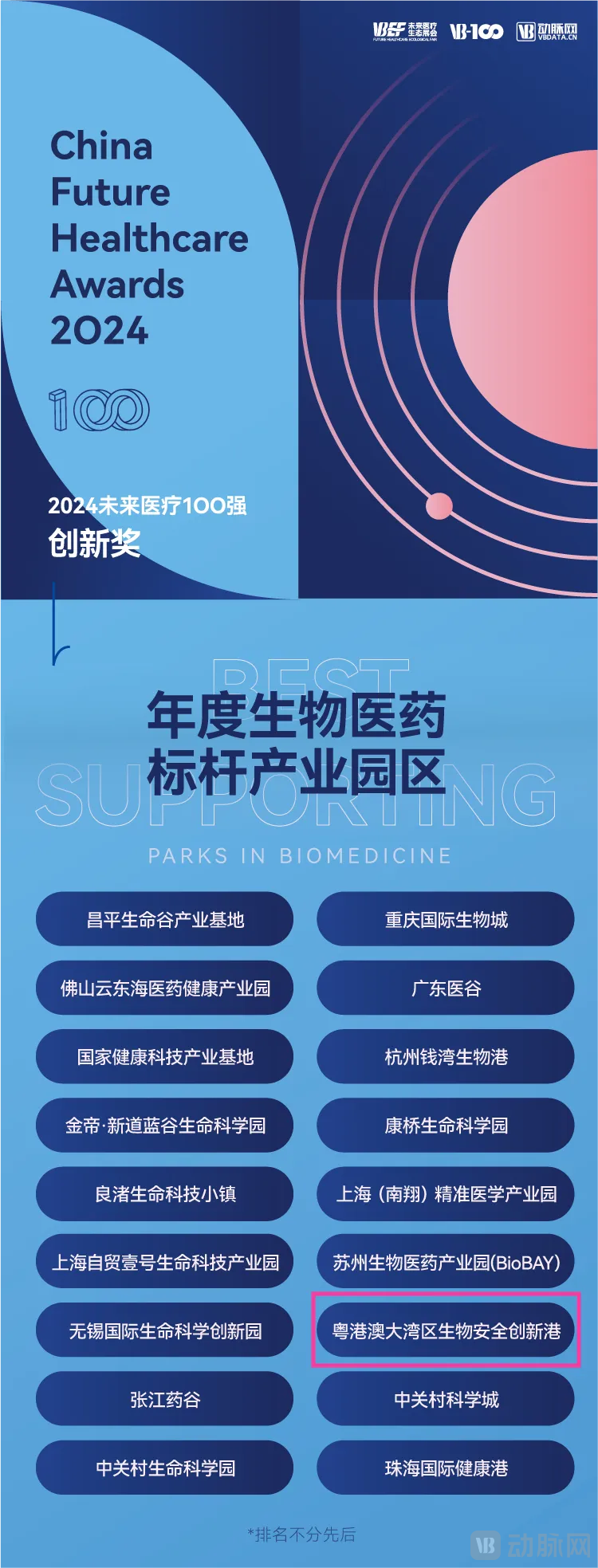
At the 8th VBEF Future Medical Ecosystem Expo held from May 8 to 10, BioGBA was honored with the “2024 Future Healthcare Top 100 Innovation Award – Benchmark Biopharmaceutical Industrial Park of the Year.” This recognition was bestowed in acknowledgment of its core strengths, including precise industry insights, specialized facility designs tailored to meet enterprises’ pilot-scale production needs, reliance on Guangkai Holdings’ industrial synergy platform, and comprehensive full-cycle industrial services.
This award not only signifies that BioGBA’s differentiated strategy and innovative development model have gained industry recognition, but also provides valuable reference for further exploring differentiated and specialized development of biomedical industrial parks in China.
Focusing on Pilot-Scale Production: Building a Strategic Link from Pharmaceutical R&D to Mass Production
The pilot-scale stage is a necessary transitional phase for enterprises moving from laboratory-scale experiments to industrial production. It requires specialized platforms to accommodate R&D or small-scale production needs, thereby laying the groundwork for future large-scale commercial manufacturing.
However, most R&D enterprises in the biomedical sector, particularly in the field of cell and gene therapy (CGT), are start-up small and medium-sized enterprises (SMEs). Building compliant pilot-scale manufacturing facilities in-house poses multiple challenges in terms of capital, technology, and time.
Specialized, shared pilot-scale production platforms are crucial for enterprises, yet specialized pilot-scale carrier resources in the current market are extremely scarce.
Niu Zhengguang, General Manager of Guangzhou Kaide Technology Industrial Park Co., Ltd., the owner of BioGBAAs mentioned in the interview, there are currently very few industrial parks in Guangzhou, let alone the entire Greater Bay Area, that focus on pilot-scale production, yet the market demands such specialized facilities. In response to the strong demand from both the market and enterprises for pilot-scale production platforms, BioGBA is positioned as a specialized base for pilot-scale R&D and manufacturing, with its architectural design and supporting infrastructure developed accordingly.
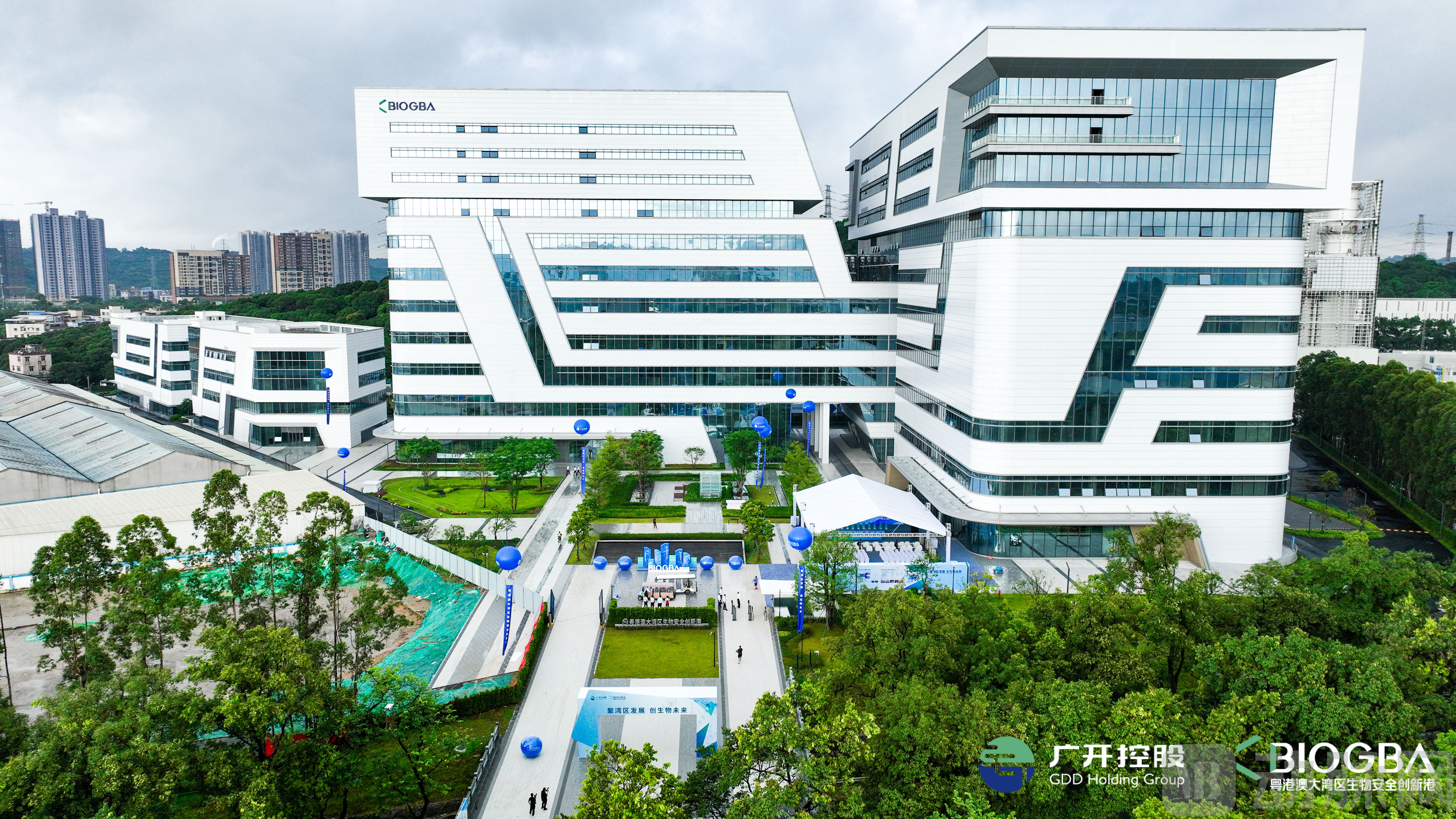
In terms of facility design, BioGBA fully accounts for the characteristics of the biosafety industry by creating specialized pilot-scale R&D and production spaces with high ceiling heights, wide column spacing, and high load-bearing capacities, thereby meeting the diverse needs of biopharmaceutical enterprises. “Taking standard workshops as an example, while ceiling heights in similar biopharmaceutical parks typically range from 4.5 to 6 meters, BioGBA’s maximum ceiling height reaches 7 meters. The maximum floor load capacity is up to 1.2 tons per square meter, approximately 2.5 times that of conventional industrial facilities,” stated General Manager Niu Zhengguang.
In terms of industrial supporting facilities, and in response to the biopharmaceutical industry’s need for continuous and stable production, Phase I of the project is equipped with a highly reliable dual-circuit power supply system featuring two high-voltage systems (one active and one standby) that automatically switch over in the event of a fault, thereby ensuring uninterrupted power supply. Meanwhile, the industrial park provides enterprises with a centralized wastewater treatment system with a maximum daily capacity of 500 tons and centralized cooling equipment with a capacity of 8,600 refrigeration tons (RT). These measures help reduce corporate capital expenditure and energy consumption while facilitating unified park management. Furthermore, Phase I has installed a centralized steam supply system on each floor, with a flow rate of 25 tons per hour, further enhancing convenience for tenant enterprises.
BioGBA’s high-standard facility design, flexible modular layout, and comprehensive supporting amenities precisely address the needs of biopharmaceutical companies during the pilot production phase. However, beyond establishing robust “hardware,” the innovative development of the biopharmaceutical industry places greater emphasis on the quality of its “software,” including support from policies, funding, platform services, industrial resources, and other facets.
From a software perspective, leveraging the strategic layout and industrial advantages of its parent company, Guangkai Holdings, in the fields of tech finance and biomedicine, the park has established four major service sectors: enterprise incubation services, technological innovation services, industrial financial services, and industrial collaboration services. These sectors will provide comprehensive resource support—including technical platforms, financial backing, and industrial services—to enterprises at various stages of development, thereby fostering cooperation and exchange among park tenants and cultivating an industrial ecosystem characterized by service-enabled empowerment, complementarity, and mutual benefit.
Furthermore, BioGBA has established a series of biopharmaceutical technology service platforms, including a drug R&D CRO platform, a technical service platform for clinical drug trials, and a one-stop service platform for medical devices integrating CRO, CDMO, and CSO services. These platforms provide enterprises with a range of services such as toxicology and pharmacokinetic studies, clinical trial management, and medical device product design and registration testing.
Targeting the upstream and downstream sectors of the CGT industry, accelerating the onboarding of three major categories of innovative enterprises
BioGBA’s industrial strategy focuses on the rapidly growing field of cell and gene therapy (CGT), attracting CGT companies while integrating core technologies to develop high-value sectors across the upstream and downstream value chain, including precision medicine, high-end medical devices, in vitro diagnostics, reagents, and medical laboratory services.
With advancements in science and technology and the growing demand for personalized medicine, the cell and gene therapy (CGT) industry is entering a period of rapid development, driven by its demonstrated potential in treating genetic disorders, cancer, and other major diseases. This momentum has attracted substantial R&D investment and significant attention from capital markets.
Meanwhile, China attaches great importance to the development of frontier fields such as cell and gene therapy (CGT). Policies have been introduced at national, provincial, municipal, and district levels to provide guidance, and the relevant policy and regulatory framework is gradually being improved, laying a solid foundation for the rapid development of the industry.
It is foreseeable that the demand for cell and gene therapy (CGT) products will continue to grow in the future. Currently, there are limited CGT products approved for market launch in China, but numerous companies are active across various therapeutic areas, with most products having entered clinical trials. It is expected that these products will be approved for commercialization within the next 3–5 years, leading to an expanding market demand for production vectors.
In light of this, General Manager Niu Zhengguang stated that the park’s enterprise recruitment plan will focus on three major categories of companies. The first category comprises CGT innovators whose products are in the Investigational New Drug (IND) stage. This is because, once their related product pipelines receive clinical trial approval, these companies experience an expanded need for pilot-scale manufacturing and a more urgent demand for physical facilities, along with future requirements for commercial production.
Second, CGT CDMO organizations. This is because the CGT sector is a high-barrier field constrained by process technologies, generating strong demand for CGT CDMO services. Meanwhile, CDMO organizations are also key to the park’s ongoing development of public technology platforms.
Third, based on the park’s strategic layout for the CGT industry chain, we will prioritize the introduction of enterprises that strengthen and supplement key links in the upstream and downstream sectors, such as manufacturers of core equipment and consumables. Additionally, we will selectively attract high-quality companies from other niche segments to establish operations here. Through subsequent industrial iteration, we aim to onboard more CGT enterprises. “Currently, there are very few CGT products on the market, with most pipelines still in the registration phase. Expanding investment promotion efforts to attract companies across the industry chain will effectively support the healthy and stable development of CGT enterprises,” said General Manager Niu Zhengguang.
Moving forward, BioGBA aims to establish a key carrier project for the agglomeration of high-end biotechnology industries, bringing together leading domestic and international research institutions, enterprises, and talent. This initiative will facilitate the exchange and collaboration of knowledge and technology, ultimately creating a biosafety industry hub that consolidates innovative resources and influence from across China and around the world. By providing a platform for aggregation and cooperation among China’s top-tier biosafety industry players, BioGBA will play a pivotal role in driving innovation and technological translation.