

Once 'Hot' BCI Startups Enter Investor 'Cooling-Off Period' as Key Players File for IPO
In early 2024, the joint team from Tsinghua University and Capital Medical University made new progress in brain-computer interface (BCI) research. The term “brain-computer interface” has once again frequently come into public view. The last time this technology was thrust into the spotlight dates back to 2021.
In 2020, Zhang Jianfeng, Dean of Alibaba DAMO Academy, stated that “the integration of the human brain with machines will help humanity transcend biological limits.” In the same year, Elon Musk successfully implanted a brain-computer interface device into a monkey’s brain. These developments seem to herald that brain-computer interfaces are poised to become the next major technological frontier.
However, this enthusiasm did not last long; financing activities declined rapidly in 2022 and have yet to rebound.We can view 2021 as a collective trial run for venture capitalists, after which they retreated to the sidelines to adopt a wait-and-see approach.
1. “If You’re Not Talking About Brain-Computer Interfaces, You’ve Definitely Missed the Next Big Trend”
“Back then, if you weren’t talking about brain-computer interfaces, it meant you hadn’t yet identified the zeitgeist.”An investor who has long followed brain-computer interfaces said this.
He opened WeChat, scrolled through his Brain-Computer Interface (BCI) contact group, and displayed his “network” to the Chengguo Bureau. The group included not only founders of BCI companies but also researchers and peers focused on BCI technology. At a glance, there were at least a hundred members.
This investor recalled,In 2021, if he spoke with five founders in a week, three or four of them would be working on brain-computer interfaces.When it came to the names of those researchers, he knew them like the back of his hand, able to quickly recall which professor was focusing on what research direction and how their projects were progressing.
Looking at the investment community, this is not an isolated case.In 2021, there were 76 financing and investment events in China's brain-computer interface (BCI) market, a significant increase from fewer than 50 such events in 2020.In this wave, nearly all well-known domestic investment firms have placed their bets.
Bo Rui Kang Ye received fromSequoia CapitalExclusively led a Series B financing round exceeding RMB 100 million; Ningju Technology securedMatrix Partners ChinaLess than eight months after securing a multi-million-dollar Pre-A financing round, Matrix Partners China led an additional Series A round exceeding RMB 100 million. Furthermore,Lotus Hill Ventures, Gaoling Ventures, Baidu VenturesNames such as VCBeat and VBInsight also frequently appear in news reports on brain-computer interface financing.
At this stage, investment and financing rounds are mainly concentrated before Series C, with almost all invested companies in the development phase.Undoubtedly, investors all aim to back a high-potential stock, hoping to ride the wave of its growth.
II. Chat Records Frozen in 2022
When this investor showcased their WeChat “network,” VCBeat discovered that many chat histories had been frozen since 2022. Of course, some chat threads remain active to this day.
He explained:“Everyone knows that the commercialization timeline for brain-computer interfaces is excessively long, so I later had to focus my efforts only on projects with concrete products.”
Currently, most investors in the brain-computer interface (BCI) market are maintaining a cautious stance. Many investors who once flocked to BCI technology have had their enthusiasm dampened—The technological maturity and commercial deployment speed of brain-computer interfaces have consistently failed to meet expectations.This has also forced many investment firms that employ a “quick-in, quick-out” strategy to withdraw their hands and give up.
Subsequently, the market tightened, compounded by the impact of certain force majeure factors,In 2022, the number of investment deals in the brain-computer interface (BCI) sector returned to approximately 50.Caution has become synonymous with investors.
Certainly, we continue to witness investment deals in the brain-computer interface (BCI) sector surpassing the RMB 100 million mark. For instance, in December 2022, NeuroXess secured hundreds of millions of RMB in Series A financing from multiple investors, including Sequoia Capital China. In January 2023, Yinghe Brain Science also raised RMB 100 million in angel-round funding from several institutional investors, such as Lilly Asia Ventures.
Most of the companies that have received investment possess a certain clinical foundation or a clear commercialization model.It is evident that investors have begun to abandon “tentative” strategies in favor of stability.
III. Slow Project Progress Leads to VC Withdrawal
The shifting sentiment among venture capitalists is inextricably linked to technological advancements and policy guidance.
1Imbalanced Technological Development
Brain-computer interface technology is aSignal Acquisition to Decoding and Encoding, with Final Feedbackprocess, and these steps fall under the research of different disciplines.
For instance, engineering disciplines require overcoming challenges such as signal processing and codec development, whereas neural coding and information transmission demand a solid foundation in biological knowledge. Previously,Prof. WeipengfeiDuring the interview, he stated that his background in biomedical engineering and his experience participating in the “Brain Map” research were both indispensable to his subsequent work on brain-computer interfaces. AndProfessor Li XiaojianIt was against the dual research backdrop of brain signal decoding and interpretation, as well as neural circuit analysis, that the decision was made to enter the field of brain-computer interfaces.
Since the initial conception of China’s “Brain Project,” the volume of research in the field of brain-computer interfaces (BCIs) in China has gradually increased. As of April 2024, there were a total of 235 publications related to BCIs in China, primarily focusing on technical research. In contrast, literature on technology development, clinical studies, and applied basic research remains relatively scarce. This has also led toSignificant imbalances exist at various levels in China's brain-computer interface research.
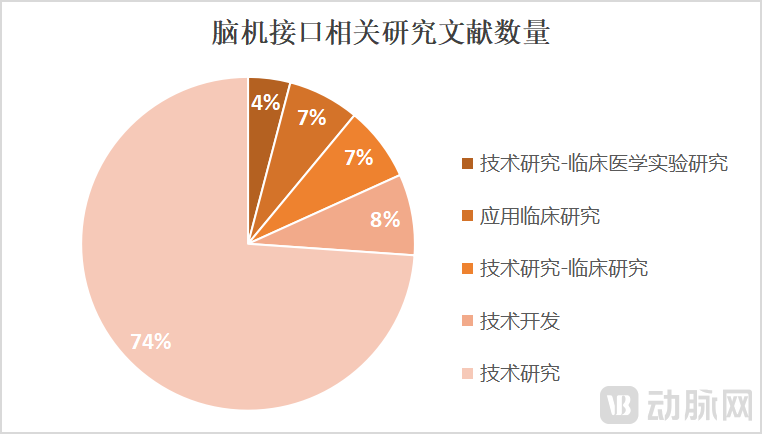 Data source: CNKI
Research imbalances have also affected China's brain-computer interfaceThe Dilemma of Hardware Research. Currently, in the field of BCI chips, particularly EEG acquisition chips, there is a high degree of reliance on overseas products, which undoubtedly constrains the development of our brain-computer interface application research.
Although Chinese researchers have made significant breakthroughs in the hardware field in recent years. According to data from Patsnap, the number of patent applications related to brain-computer interfaces (BCIs) in China has increased significantly, including a rise in hardware-related patents concerning electrodes, signal acquisition, and processing. In“Electrodes Thinner Than Hair: How Are They Driving a Multi-Billion-Dollar Brain-Computer Interface Market?”In a previous article, VCBeat’s Orange Bureau outlined the progress of domestic research on brain-computer interface (BCI) electrodes, revealing that the performance of Chinese-made electrodes has been comprehensively enhanced through the innovative efforts of researchers.However, due to its late start, there is still a certain gap compared with overseas enterprises.
The imbalance in brain-computer interface (BCI) research, coupled with the high barriers to entry inherent in the field itself, has led to slow progress in both technological and applied research. For venture capital (VC) firms,Uncertainty will increase investment risks.This is also a major reason why many have chosen to hold back and adopt a wait-and-see approach after their initial forays.
2Clinical and Regulatory Approval Bring Uncertainty
Regarding the commercialization of brain-computer interface products, safety is more important than technical feasibility.
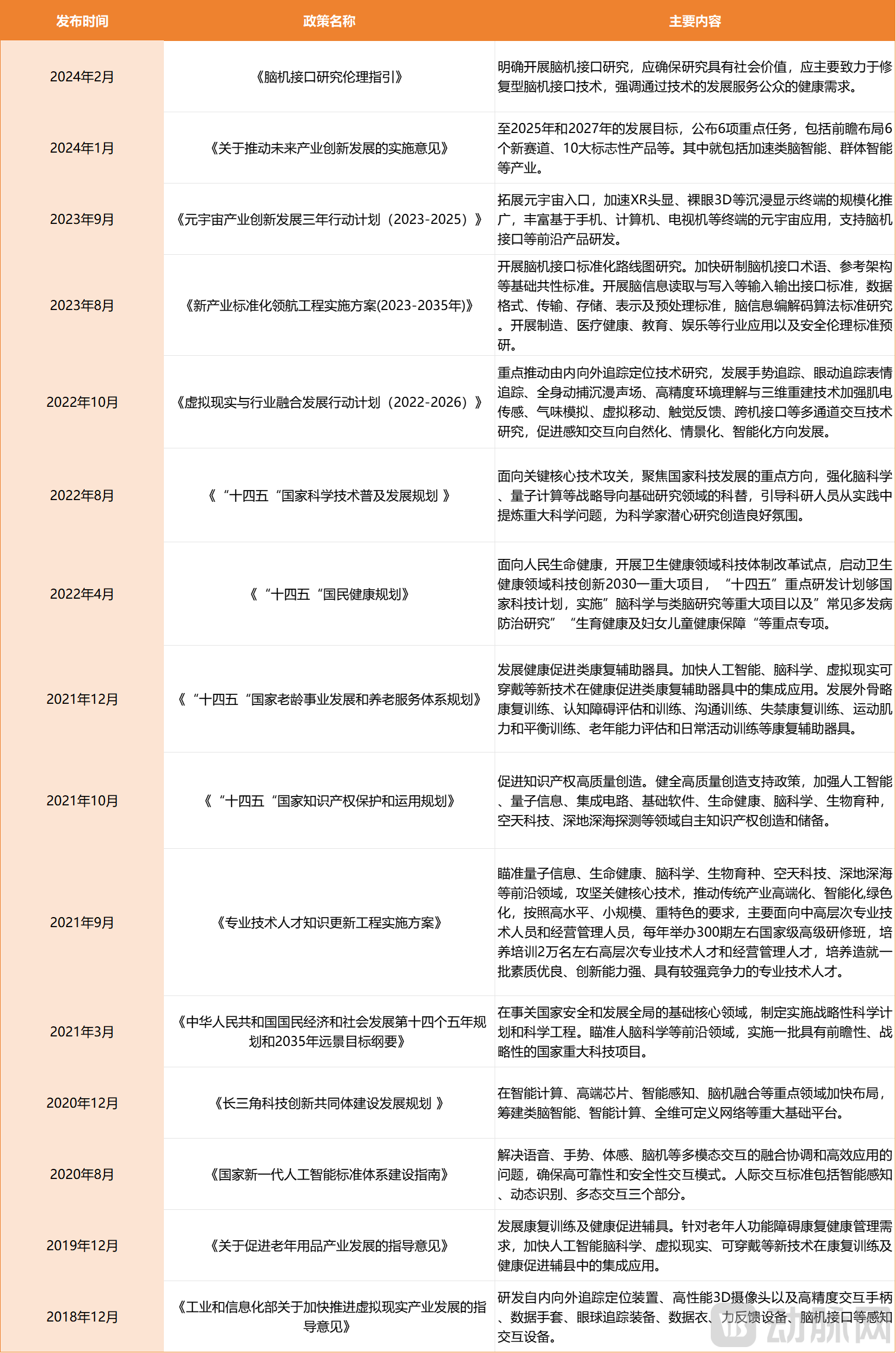 Data Source: CBN Data
Since 2018, China has introduced a series of policies to encourage the development of brain-computer interfaces; however,Subject to ethical considerations and approval regulations and procedures, the path to practical implementation of brain-computer interfaces still requires further exploration.
From the perspective of acquisition technology, brain-computer interfaces can be divided into three categories, namelyInvasive, Semi-Invasive, and Non-Invasive. The safety and efficacy of the three technologies each have their own unique characteristics.
Although invasive methods can obtain the highest-quality neural signals, they require direct contact with brain tissue, carry a high surgical risk, and are prone to postoperative complications such as immune rejection and tissue infection. There have already been precedents of failed invasive brain-computer interface surgeries overseas. For example, in May 2024,Neuralink Announces Hardware Issue in Device Implanted in First Human Subject, Considering Removal
Compared to invasive methods, semi-invasive and non-invasive approaches offer higher safety but lower neural signal precision, making them well-suited for certain medical and consumer applications.
Due to differences among the three categories of technologies, the regulatory approval requirements for brain-computer interface (BCI) technologies in China also vary. In accordance with the provisions of the Medical Device Classification Catalog,Brain-computer interface-related devices are primarily classified as Class II and Class III.Invasive brain-computer interfaces undoubtedly require Class III approval, which entails significantly greater difficulty and stricter regulatory requirements than Class II approval.
Therefore,80% of China's brain-computer interface companies have opted for non-invasive acquisition technology.,andThe vast majority of invasive brain-computer interface devices are still in the stages of clinical research and animal experimentation.. According to statistics, currently onlyPINS MedicalandJingyu MedicalSome invasive brain-computer interface products have been submitted for Class III medical device registration and successfully approved, but none have achieved large-scale commercialization.
Beyond safety, more meticulous planning is also required at the ethical level.Once a patient’s brain signals are extracted, how should they be kept confidential? How should patient privacy be protected?Moreover, the lack of effective solutions and best practices for such issues on a global scale has further constrained the development of brain-computer interface (BCI) technology in China.
3Serious Healthcare: A Difficult Move to Make
Currently, most commercially available products are Class II medical devices, primarily non-invasive. Functions involved includeEEG Machine, Sleep Monitoring, Sports Rehabilitation Assessmentetc., most of which are suitable for home use or rehabilitation centers.
From a functional perspective, the majority of currently deployed brain-computer interface (BCI) products are designed to serve motor functions, andXiaoPrimarily fee-for-service healthcare, but in fact, the clinical community has greater expectations for the application of brain-computer interfaces in the field of psychiatric disorders. However, this has not yet been realized due to reasons such as the immaturity of etiological theories and the difficulty in identifying precise targets.
Therefore, some brain-computer interface (BCI) companies have chosen to first enter the lower-barrier consumer market, focusing on areas such as monitoring patients’ cognitive abilities and cultivating children’s attention spans. While generating revenue, they continue to deepen their BCI research, simultaneously striving for technological breakthroughs and awaiting changes in the clinical trial approval process. Of course,More companies are seeking viable commercialization pathways to support their smooth operations.
Overall, “milestone” application technologies in the brain-computer interface (BCI) field remain scarce, while the market is still exploring viable commercialization pathways.The substantial initial investment and protracted R&D cycles deter investors seeking short-term exit strategies., thereby leading to the emergence of this “cooling-off period.”
IV. Overseas Brain-Computer Interfaces Are Accelerating Their Practical Application
There are still many constraints in the development of brain-computer interfaces in China that need to be broken. Looking overseas may provide new insights.
First, from the perspective of research types, overseas brain-computer interface (BCI) research can be mainly divided intoInterventional and ObservationalTwo types.
Interventional applications aim to improve patients’ impaired functions through brain-computer interface (BCI) technology, thereby achieving therapeutic effects and enhancing their quality of life. In contrast, observational studies focus on monitoring the changes that occur in patients with specific diseases following exposure to BCI technology, with the primary goal of advancing subsequent disease diagnosis and treatment and expanding the applications of BCIs.
In terms of quantity, overseas brain-computer interface (BCI) research is predominantly interventional, accounting for more than 80%. Regarding indications, overseas BCI researchers have focused significantly on neurological disorders such as stroke, amyotrophic lateral sclerosis (ALS), and spinal cord injury, a trend that complements domestic BCI research in China.
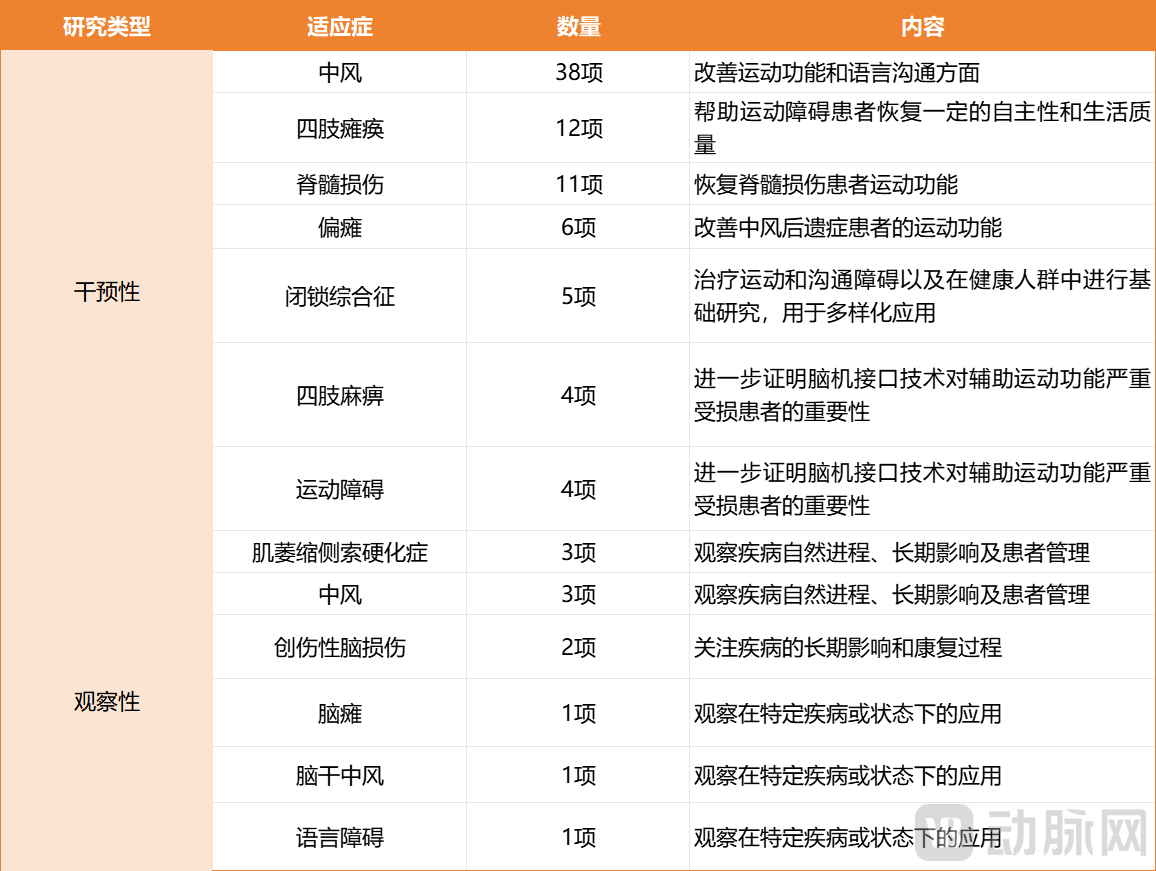
Data Source:ClinicalTrials.gov
Notably, overseas researchers have also employed brain-computer interface technology to conduct observational studies.Comparing signal expression in the brains of patients with that of healthy individuals not only deepens fundamental research at the forefront of brain science, but also provides a practical foundation for future brain-computer interface applications in disease treatment.
From a technological perspective, more overseas companies are attempting invasive brain-computer interfaces. Taking the United States as an example, in addition to Elon Musk’s flagship company Neuralink,Synchron、Paradromics、Precision、BlackrockCompanies such as [etc.] have all adopted invasive technologies. This is also related to policies such as clinical approval in the United States.
Previously, the U.S. FDA issued“Nonclinical and Clinical Considerations for Implantable Brain-Computer Interface (BCI) Devices for Patients with Paralysis or Amputation—FDA Staff Guidance”, which clearly stipulates the requirements for implantable BCI medical devices when applying for an Investigational Device Exemption (IDE) or market registration, and provides recommendations from the perspectives of non-clinical studies, animal testing, and clinical trials. These clear policy provisions also facilitate product commercialization.
V. Going Global: Exploring Breakthrough Strategies
Domestic Brain-Computer Interface Implementation Is Rife with Uncertainties: Can Going Global Be the Way Forward?
Unlike other fields, the brainThe field of brain-computer interfaces is increasingly focused on conducting clinical trials and registration overseas.. For instance, the First Affiliated Hospital of Xi’an Jiaotong University, the First Affiliated Hospital of Nanjing Medical University, and Tiantan Hospital are all conducting overseas registered clinical trials for their projects.
Such “global expansion” offers three advantages.
I., conducting trials overseas can circumvent the current regulatory restrictions in China, enabling earlier progress in trial outcomes and facilitating subsequent studies.II., registering in internationally recognized clinical trial databases can also enhance the credibility of the study and expand the international influence and recognition of the research team.III., the research team can also bring their experience in overseas registration and clinical trials back to China, providing a reference for the subsequent development of the domestic brain-computer interface market.
In addition to independently "going global,"Additionally, some research teams have chosen to collaborate with overseas institutions on joint research projects., which not only enables the acquisition of broader and more diverse data but also facilitates knowledge sharing to achieve mutual benefits.
Of course, the “global expansion” of brain-computer interfaces (BCIs) may well be a clever strategy to navigate the current “wait-and-see” period. Although investors have become increasingly cautious about BCI technology, they remain optimistic about its prospects when confronted with robust technological capabilities and clear commercialization models. The still-undefined market resembles a bamboo forest after rain: seemingly quiet on the surface, yet already poised for rapid growth.
At the 2024 Future Healthcare Ecosystem Expo,Academician Zhao Jizong stated, “Brain-computer interface is a marathon.”Information related to brain-computer interfaces is often associated with terms like “breakthrough” and “leading-edge.” In reality, however, the development of brain-computer interfaces is a long-term endeavor requiring sustained effort, rather than a short sprint.
Looking at the global landscape, no team can yet claim to have reached the finish line in the brain-computer interface (BCI) race. It is advisable to exercise greater patience and perseverance, while awaiting the advent of explosive growth.