

AI Is Now Essential in Medical-Engineering Integration: Insights from the China Medical-Engineering Convergence Conference
In the 1980s, with a new round of reforms in the higher education system, a large number of independently established medical colleges and universities merged with comprehensive universities or universities of science and engineering, and the concept of integrating medicine and engineering rapidly gained traction within research and academic institutions in China.
Forty years on, “integration of medicine and engineering” remains a frequently discussed topic. Yet this oft-repeated theme is by no means static.Under the validation of practice and the iteration of technology, it has once again revealed its connotations of constancy and flux.
At the 8th Future Medical Ecosystem Expo,VCBeat, in Collaboration with the Chinese Association of Medical Biotechnology and Tsinghua University School of Clinical Medicine, Hosts the China Conference on Integration of Medicine and EngineeringAt the conference, a group of practitioners in medical-engineering integration shared their reflections and insights from their practical experiences.
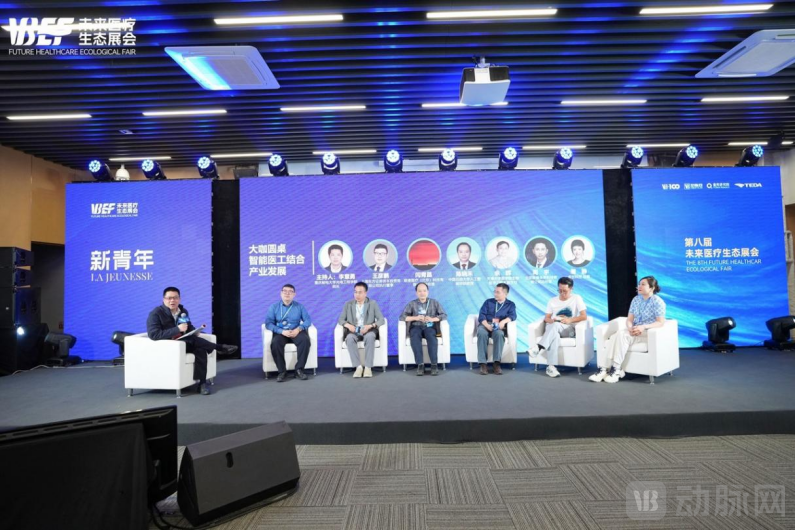 Roundtable Discussion: Experts Exchange Views on the Development of the Intelligent Medical-Engineering Integration Industry
I. The Integration of Medicine and Engineering Is By No Means a “One-Off” Endeavor
Med-Eng Integration, as the name suggests, is the product of collaboration between medicine and engineering. In the traditional sense, the med-eng integration process involves physicians identifying clinical needs and submitting them to engineering experts, who then translate these ideas into reality.
As the integration of medicine and engineering deepens, many participants in this interdisciplinary field believe that,A Successful Med-Eng Collaboration Is Never Achieved by Mere “Interdisciplinary” Efforts, this process necessarily involves multiple rounds of integration, feedback, and convergence.
The first integration occurs during the requirements definition phase.The research and development of innovative medical devices originates from clinical practice and is ultimately implemented in clinical settings, with the needs being identified by healthcare professionals working on the front lines. Therefore, when clinicians identify a need and propose an anticipated solution, engineering professionals must engage in the process to provide recommendations based on scientific and engineering principles.
The second integration occurs during the validation phase.Medical products are ultimately intended for clinical use, and their merits and drawbacks must be evaluated by clinical healthcare professionals. However, initial prototypes inevitably fall short of fully meeting the needs of medical practitioners. It is through continuous feedback from healthcare workers and iterative refinement by engineering teams that a finalized prototype can be developed.
At the conference, Professor Wang Guangzhi, a tenured professor at Tsinghua University, also proposed:“In the long chain of medical-engineering integration, division of labor and collaboration are just as important as interdisciplinary convergence.”Currently, specialization and personalization have become important trends in medical development, which also requires medical device products to demonstrate professional medical expertise. For instance, while healthcare professionals need to focus on disease diagnosis, formulation of treatment plans, and details such as patient care, engineering technicians can leverage cutting-edge technologies like big data and artificial intelligence to analyze and mine medical data, thereby providing strong support for disease prevention, diagnosis, and treatment.
By focusing on their core competencies, stakeholders can enhance the efficiency and quality of collaboration, ultimately achieving a closed-loop process for medical device innovation from R&D to commercialization.
At the conference, Professor Wang Guangzhi also used the “Green Channel” for innovative medical devices as an example to substantiate this viewpoint. Publications, patents, proof of concept, prototype development, and preliminary preclinical validation are necessary conditions for passing the national review of innovative medical devices. This process cannot be accomplished independently by any single role, such as a physician or an engineer; it invariably involves collaboration between medicine and engineering. If the degree of innovation in the working principle or mechanism is insufficient, or if the clinical value is not clearly demonstrated, the device will fail to gain registration through the “Green Channel.”
Of course,Regardless of the model of cross-sector collaboration, meeting medical needs must take precedence over technological innovation.The core objective of integrating medicine and engineering is to provide novel solutions for the medical field. This requires physicians to establish the framework and define specifications, while engineers and technical professionals must innovate within this framework. Such an approach ensures alignment with clinical needs and fulfills the purpose of medical-engineering integration.
II. Interdisciplinary Talents Should Also Have a Primary Focus and Secondary Specializations
In medical-engineering collaborations, interdisciplinary talents play a pivotal role.
As interdisciplinary talents possess expertise in both medicine and engineering, they serve not only as vital links facilitating communication between these two fields but also offer unique perspectives that may yield novel insights. Consequently, many research-oriented universities and institutions have made the cultivation of such interdisciplinary talent a key focus of their educational strategies.
Taking Tsinghua University as an example, it cultivates students’ interdisciplinary capabilities in medicine and engineering by offering comprehensive majors, implementing a flexible major selection system, and providing research opportunities.However, capacity building is only one part of the teaching process; under this model, it is even more important to foster an awareness of interdisciplinary integration in talent development.
In past interviews conducted by Orange Bureau, statements from many “Tsinghua-affiliated CEOs” have also validated this perspective. For instance, Dr. Shang Fang, a graduate of the Department of Precision Instruments at Tsinghua University, mentioned in an interview that teamwork requires a certain degree of “redundancy,” with each member having distinct areas of focus, thereby enabling synergistic and mutual support.
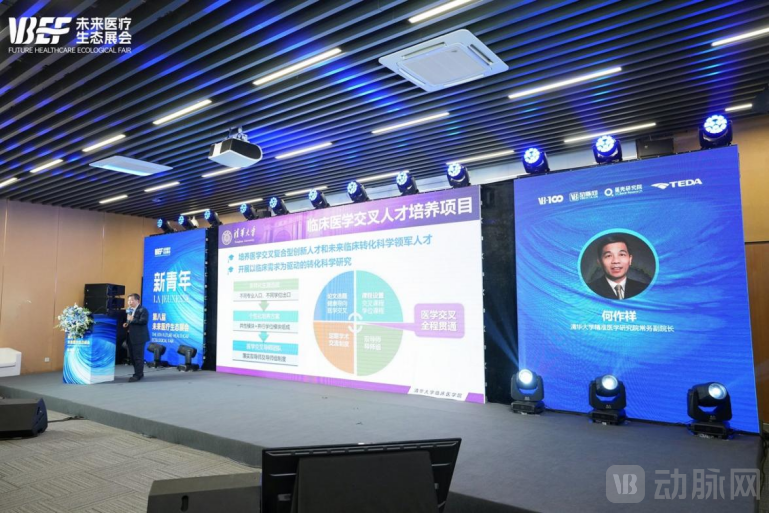 At the conference, guests sharedExperiences and Perspectives on Cultivating Interdisciplinary Talents in Medicine, Engineering, and Healthcare
A significant knowledge gap exists between medicine and engineering; interdisciplinary talents must still establish their own focus and priorities to identify the right career paths and directions.Cultivating interdisciplinary talent in medicine and engineering does not aim to train physicians as engineers, nor does it seek to have engineers diagnose and treat patients; rather, its core objective is to bridge the communication gap between medical and engineering professionals.
It requires both interdisciplinary integration and division of labor with collaboration; from this perspective, the cultivation of composite talents aligns perfectly with the core essence of medical-engineering cooperation.
III. The “Industrial Revolution” Spurred Iterative Advancements in the Integration of Medicine and Engineering
In recent years, the continuous emergence of technologies such as big data and artificial intelligence has sparked a revolution in the field of engineering. Benefiting from medical-engineering collaboration, this revolution has also provided strong support for the prevention, diagnosis, and treatment of diseases.
In the speeches by the guests,“Artificial Intelligence”This term appears with high frequency. Meanwhile, it has become one of the most hotly debated topics in the medical community, precisely because this technology permeates every aspect of healthcare.
First, in the diagnostic phase, artificial intelligence can enhance the precision of disease diagnosis by analyzing massive datasets and leveraging large model matching. Particularly in disease domains where pathogenesis remains unclear and diagnosis relies solely on behavioral observation, the integration of AI has significantly improved diagnostic accuracy.
Taking childhood autism as an example, existing products can leverage artificial intelligence to analyze children’s behavioral postures, thereby generating relatively accurate assessment results. These results ultimately serve to assist physicians in making clinical judgments.
Furthermore, the combination of “medical imaging + artificial intelligence” and “remote consultation + artificial intelligence” can simulate physicians’ clinical reasoning and diagnostic thinking, thereby providing reliable diagnoses and treatment plans. This not only enhances diagnostic efficiency for clinicians but also conserves medical resources and alleviates the pressure on healthcare services.
Secondly, in the treatment phase, artificial intelligence has also demonstrated certain advantages. Taking surgery as an example, precision surgery involving AI is also referred to as the "Surgery 4.0" era.
For surgeons, the four most critical elements during surgery are perception, cognition, decision-making, and manipulation. Currently, surgical equipment equipped with artificial intelligence technology has achieved continuous quantitative monitoring of functions and risk prediction. Furthermore, back-end systems leveraging multi-dimensional, large-scale data can provide personalized surgical plans to assist physicians in performing procedures. The development of laparoscopic surgical robots serves as a highly representative case in point.
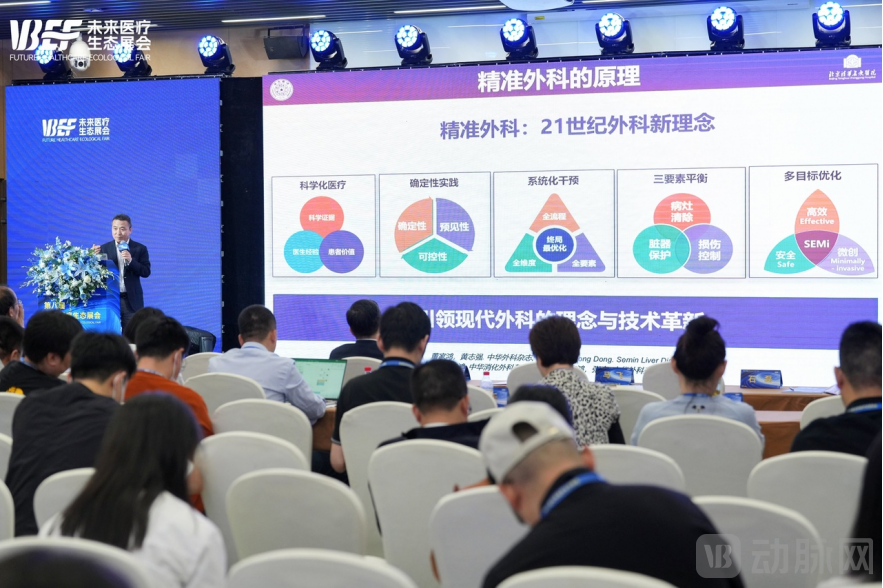 GuestDiscussing the Importance of Engineering Technologies in the Advancement of Surgery
Finally, in the prognosis stage with patients as the audience, artificial intelligence can also play a role. For patients with chronic diseases, continuous monitoring, assessment, and maintaining adherence are particularly important. These tasks can be remotely handled by therapeutic medical devices, which manage patient data in a patterned manner to facilitate the next clinical visit.
Hu Jian, Senior Vice President of Yidu Cloud, and Zhang Huai, Deputy Dean of the Nanjing Jingzhan Artificial Intelligence Research Institute, also shared their team’s research achievements in “Healthcare + Artificial Intelligence” at the conference.
However, “healthcare + artificial intelligence” is a double-edged sword. After highlighting its advantages, the panelists also raised concerns about existing problems and challenges, such as data privacy, ethical issues, technological maturity, and even matters pertaining to trust between physicians and patients.
Therefore, in promoting the application and development of artificial intelligence in the healthcare sector, researchers must not only consider legal and technical challenges but also proceed with appropriate caution.Medicine is a discipline of prudence, and even more so, one that requires warmth. Only under the radiance of humanity can advanced technologies demonstrate their true value and purpose.