

New Horizons in Health Management and Health Insurance: Insights from the Innovation Forum at the 8th Future Healthcare Ecosystem Expo
With the continuous advancement of the Healthy China strategy, coupled with sustained economic development and rising public health awareness in China, both the health management and health insurance industries have entered a phase of rapid growth. Since 2019, the Chinese government has successively introduced policies to encourage and promote the integrated development of health management and health insurance. For instance, the “14th Five-Year Plan for National Medical Security,” issued by the General Office of the State Council in 2021, explicitly encourages commercial insurance institutions to provide comprehensive health insurance products and services spanning multiple areas, including medical care, disease management, rehabilitation, long-term care, and maternity care. Consequently, the integrated development and ecosystem building of health management and health insurance have become a consensus and prevailing trend within the broader healthcare industry, serving as a significant force driving the high-quality upgrade and development of China’s medical and healthcare sector.
At the Forum on Innovative Development of Health Management and Health Insurance, held on the afternoon of May 9 as part of the 8th Future Medical Ecosystem Expo, the following experts delivered insightful presentations and engaged in discussions centered on the theme of innovative development in health management and health insurance. They focused on emerging trends, upgrades, explorations, and advancements in these fields:- Yang Bin, Director of the Smart Health Center at the Institute for Precision Medicine, Tsinghua University - Xu Bingyu, Founder and CEO of Huamei Haolian - Xing Jing, Founder and CEO of Shangyong Technology - Lü Hui, Business Head of the cross-border medical service platform “Xikang Wanjia” - Yu Jun, CEO of Alanbell Health Technology Group - Yuan Qilong, Executive General Manager of Xin’antang Health Management Co., Ltd. - Ren Zhao, Chief Actuary and General Manager of the Innovation Business Department at Yuanmeng Kangjian - Wang Shili, Vice President of Ningxia Saishang Group and Chairman of Zhongheng Future Foods (Shanghai) - Guo Peng, CMO of Alanbell Health Technology Group - Wang Kun, General Manager of BluePass Zhenlan Health under Magnesium Health (MedicTrust)
Yang Bin, Director of the Center for Smart Health, Institute for Precision Medicine, Tsinghua UniversityIn"Digital and Intelligent Health Management Across the Full Life Cycle"During the themed sharing session, he analyzed the digital and intelligent development of future health management from the perspective of new quality productive forces. He pointed out that current lifecycle health management faces challenges such as insufficient understanding and shortages of medical resources. The Smart Healthcare Innovation Platform established by Tsinghua University leverages digital technologies to address these two major issues. He introduced that, by utilizing digital technologies, Tsinghua University has transformed expert knowledge into intelligent systems to support primary healthcare, thereby extending expert capabilities to the grassroots level; developed precision medicine systems, such as carotid plaque detection and intelligent respiratory sound analysis, which have improved diagnostic and treatment efficiency and accuracy; and employed intelligent tools to assist with out-of-hospital care. Furthermore, the university has developed an intelligent emergency response system and a digital therapeutics platform. These innovative technologies and platforms have been applied in multiple fields, demonstrating significant social benefits and driving the development of the healthcare industry.

Yang Bin, Director of the Center for Smart Health, Institute for Precision Medicine, Tsinghua University
Founder of Huamei Haolian,CEO Xu BingyuCentered around《"AI Reshapes Health Management and New Opportunities for the Development of Health Insurance"Delivered an inspiring keynote address. She emphasized that AI technology holds vast potential in healthcare, with applications ranging from health data monitoring and analysis, intelligent diagnostic assistance, personalized health guidance, and chronic disease management to resource allocation and optimization. She noted that AI not only enhances the accuracy and efficiency of integrating health management with health insurance but also expands the reach of these services, thereby driving product innovation. Intelligent underwriting represents a particularly practical application scenario. Huamei Haolian has leveraged AI-driven underwriting engines and pricing models to eliminate manual underwriting for insurance policies targeting middle-aged and elderly individuals who are exempt from medical examinations. Furthermore, by incorporating early screening into the entire end-to-end health management process, the company has truly realized the integration of AI with health management and health insurance.

Xu Bingyu, Founder and CEO of Huamei Haolian
Founder of Shangyong Technology,CEO Xing JingAt“Digital Health Empowering Oncology Disease Management under the Commercial Insurance Payment System”She shared her practical observations and insights on the role of commercial health insurance in oncology disease management. Citing a set of data, she highlighted that the incidence of cancer is rising rapidly, leading to mounting pressure on commercial insurance payers and an increasing treatment burden. In response, commercial health insurance has entered a stage of proactive management for hematologic malignancies. She introduced how Shangyong Technology deconstructs the cancer treatment workflow and provides whole-course disease management services to insurance clients, based on guidelines from the National Health Commission and the NCCN, as well as real-world cases. By leveraging data and system-based interventions in the medical process, Shangyong Technology ensures patients receive optimal treatment plans and timely support, achieving significant results in correcting diagnostic and therapeutic deviations and facilitating out-of-hospital rehabilitation. “We look forward to transforming the highly complex cancer treatment process into a simple and clear one through our data capabilities and deep online collaboration with medical resources,” she said, outlining her vision for the future.

Xing Jing, Founder and CEO of Shangyong Technology
Cross-Border Medical Service PlatformLu Hui, Head of “Jikang Wanjia” BusinessAround“Exploring the Path of One-Stop Overseas Medical Services”The speaker delivered an insightful presentation. She noted that the rising demand for high-quality medical services is a key driver prompting Chinese patients to seek treatment abroad, with Japan, a country boasting top-tier medical standards, being an excellent choice. She highlighted that Japanese healthcare has distinct characteristics, particularly excelling in elderly care and oncology. Emphasizing personalized treatment, Japan leads in radiotherapy, proton therapy, and off-label therapies, offering humanized services at a cost-effective price point. In the realm of chronic disease management, Japan focuses on lifestyle-related diseases, anti-aging, and cancer prevention. With ten years of deep engagement in Japan’s healthcare industry, Jiankang Wanjia has established international green channels to top-tier Japanese specialists. By providing one-stop overseas medical services, including expert consultations and health advisory, the company aims to enable Chinese patients to access world-class medical and health guidance.

Lv Hui, Head of Business at the Cross-Border Medical Service Platform “Jikang Wanjia”
Alambel Health Technology GroupCEO Yu JunDone on the forum“Intervention and Management of Chronic Diseases and Aging through Digital Health and Integrative Medicine”keynote address. He noted that aging is increasingly regarded as a disease state, with chronic diseases and cancer becoming integral components of the aging process; thus, future healthcare will need to address the challenges posed by chronic diseases and aging. The solution to these two major challenges lies in integrative medicine. He introduced that Alanbell centers on integrative medicine, encompassing clinical medicine, preventive medicine, chronic disease management, psychology, sociology, and other fields. Through tiered management and interventions, it provides personalized solutions tailored to patients’ varying health conditions. Adhering to the “Three Capabilities” philosophy—quantifiable, visualizable, and manageable—Alanbell leverages precise diagnostics and algorithms to customize health management plans for clients, thereby realizing a client-driven model of future healthcare.

Yu Jun, CEO of Alanbell Health Technology Group
Yuan Qilong, Executive General Manager of Xin'antang Health Management Co., Ltd., mentioned in his thematic presentation titled “Innovative Explorations in the Wellness Tourism Market”: China’s health and wellness tourism market is growing rapidly but remains structurally fragmented, with indistinctive wellness characteristics. Market challenges include: difficulties in scaling non-standardized products due to the inherent conflict between customization and mass production; challenges in achieving efficient, centralized management of cross-regional services, as geographic disparities hinder consistent service experiences; and building brand loyalty for low-frequency services, which requires overcoming the non-essential, infrequent nature of such offerings to establish consumer trust. These challenges must be addressed through innovative strategies and management models to promote the healthy development of the health and wellness tourism market. He introduced that Xin’an Tang anchors itself in the Xin’an Medical system, establishing a differentiated positioning by engaging in health management within health-wellness and tourism scenarios. It maximizes resource utilization by delivering tailored services across different scenarios, thereby meeting more diverse consumer needs.

Yuan Qilong, Executive General Manager of Xin'antang Health Management Co., Ltd.
Ren Zhao, Chief Actuary and General Manager of the Innovation Business Department at Yuanmeng KangjianUnder the theme of “Integrated Innovation in Insurance and Services for Disability and Dementia Among the Elderly,” Yuanmeng Health shared its explorations in insurance and service solutions for elderly individuals with disabilities and dementia. He pointed out that China is facing the challenges of population aging and a growing prevalence of disability and dementia. Currently, there is a substantial number of disabled elderly aged 60 and above who require continuous, professional care, placing significant economic and psychological burdens on their families. In response, Yuanmeng Health has proposed a comprehensive, targeted protection scheme that covers all stages of disability and dementia and integrates insurance services. By leveraging advanced technologies such as medical big data, smart IoT home systems, and intelligent life-monitoring solutions, the company provides multidimensional, one-stop services—including risk prevention, emergency rescue and monitoring, rehabilitative and nursing care, and medical expense coverage—focused on the prevention and intervention of Alzheimer’s disease, accidental falls, and stroke. These efforts aim to enhance customers’ experiences in healthcare, health management, and emergency rescue, while also creating greater value for insurance companies and service providers in the realm of coverage for vulnerable populations, thereby making insurance more compassionate and providing customers with dual-layer protection.
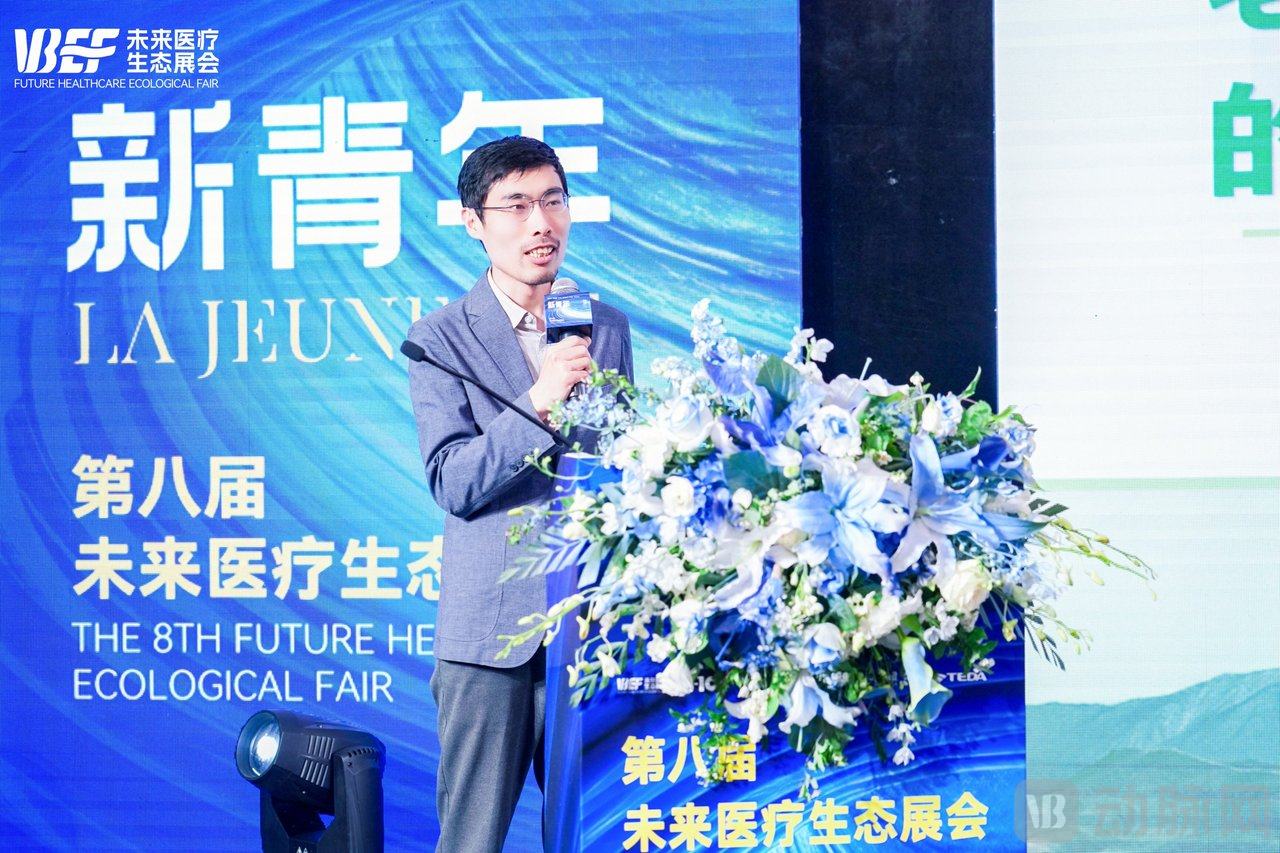
Ren Zhao, Chief Actuary and General Manager of the Innovation Business Department at Yuanmeng Kangjian
Wang Shili, Vice President of Ningxia Saishang Group and Chairman of Zhongheng Future Foods (Shanghai), in the session titled “Supply Chain Challenges and Opportunities for High-Quality Protein”It was noted that the market demand for functional proteins is growing rapidly, spanning multiple sectors including nutritional foods. Saishang has consistently prioritized raw material sourcing and quality, emphasizing the critical role of milk protein as a foundation for life and health. As a manufacturer of milk protein and milk fat, Saishang is committed to extracting high-quality raw milk protein from fresh milk through low-temperature nanofiltration membrane separation and concentration. This process preserves essential nutrients such as active immunoglobulins, lactoferrin, eight essential amino acids, and native milk calcium, thereby creating product differentiation. She introduced that Saishang focuses on maintaining the activity of these components, ensuring maximal nutrient retention through precise temperature control. She showcased the diversity of raw milk protein powder and its applications in the medical field, such as addressing hypoproteinemia in cancer patients. Finally, she expressed her expectation to develop series products including peptides and amino acids in the future, leveraging functional synergies to contribute greater value to the healthcare industry.
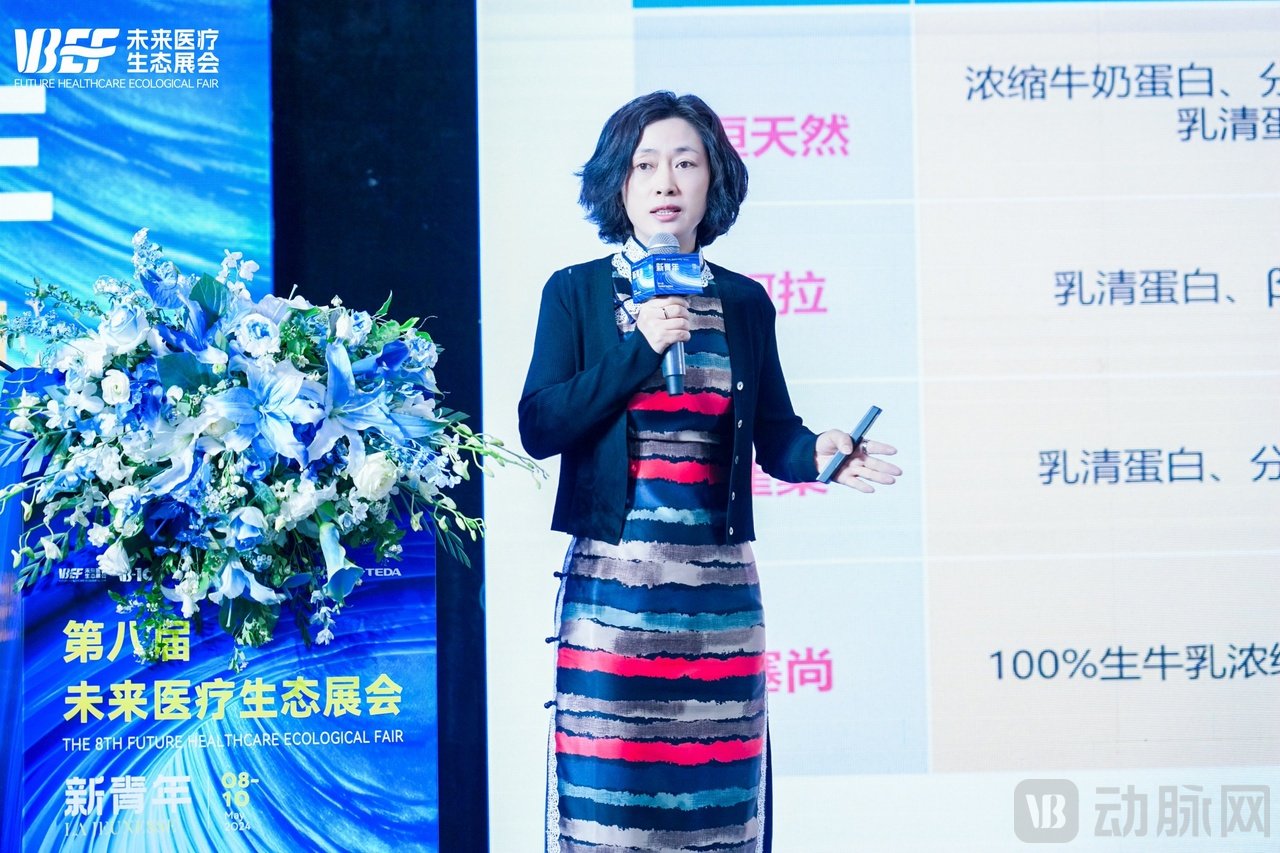
Wang Shili, Vice President of Ningxia Saishang Group and Chairman of Zhongheng Future Foods (Shanghai)
During the roundtable discussion, Xing Jing, Founder and CEO of Shangyong Technology; Guo Peng, CMO of Alanbell Health Technology Group; and Wang Kun, General Manager of BluePass Zhenlan Health at Medxlink Health, centered on"How Can Health Insurance and Health Management Achieve Localized Integration?"Engage in insightful sharing and discussion.
How Can Health Insurance and Health Management Align with Consumer Needs?Xing JingIt is believed that third-party companies should help patients perceive the tangible value of insurance by providing appropriate treatment pathways, shortening treatment cycles, and improving prognostic outcomes, thereby enabling insurers to fulfill their indemnity obligations comprehensively and promptly at the lowest possible cost.Guo PengIt is noted that, in response to the challenges posed by an aging population, insurance companies should shift their focus from claims settlement to service delivery, providing accessible, respectful, and life-saving services. Meanwhile, given customers’ emphasis on early-stage health management, insurers should strengthen disease risk prevention and control, and promote the effective integration of commercial health insurance with public medical insurance.Wang KunIt was stated that the current health insurance market is experiencing severe fragmentation. Meanwhile, the insurance ecosystem is undergoing a localized transformation toward the health insurance sector. Whether health insurance requires the establishment of a robust insurance ecosystem has become a significant challenge; consequently, health management companies will assume a critical role within the industry chain.
In addition, the panelists shared insights and engaged in discussions on hot topics such as compliant data acquisition and privacy protection, future trends in the integration of AI technology and insurance, strategies to enhance insurance awareness and enrollment among the elderly, approaches to breaking the homogenized competition in medical insurance, and future trends and strategic layouts for health insurance and health management.

“Roundtable Discussion: How Can Health Insurance and Health Management Achieve Localized Integration in China?”
With continuous technological advancements and growing societal demands, the deep integration of health management and health insurance holds great promise. Attendees unanimously agreed that only through sustained innovation and in-depth collaboration can a more robust and efficient ecosystem for health management and health insurance be built, thereby providing people with more comprehensive and higher-quality health protection services.