

Midea Building Technologies Upgrades LIFE Solution to Empower Hospitals with Energy Efficiency and Operational Excellence
Since the National Development and Reform Commission, together with the Ministry of Industry and Information Technology and six other ministries, jointly issued the Guiding Opinions on Promoting the Healthy Development of Smart Cities in August 2014, proposing for the first time the advancement of smart hospital construction, the development of smart hospitals has become the central theme of hospital development and construction in China.
Subsequently, policies promoting the development of smart hospitals have been continuously strengthened—from defining the roadmap for smart hospital construction, to proposing the focused development of a “trinity” model comprising electronic medical records (EMR), smart services, and smart management, and further to incorporating smart hospital initiatives into the performance evaluation system for public hospitals. This policy momentum has attracted numerous enterprises to enter the market, thereby driving the rapid growth of related industries.
Unfortunately, however, there is still no consensus on the question of “what constitutes a smart hospital.” In response, Midea Building Technologies, in collaboration with the Hospital Logistics Department of Fudan University, co-authored the White Paper on HEST Four-Dimensional Smart Hospital Construction, which points out that the connotation of smart hospital construction encompasses four dimensions:
First, a people-centric approach should be adopted, with particular attention paid to the needs of three key groups: patients, medical staff, and hospital administrators. Second, from an economic perspective, the goals of smart hospital development are to enhance efficiency, conserve energy, and reduce costs. Third, from an engineering standpoint, Midea Building Technologies believes that various advanced technologies should be applied in the construction of smart hospitals. Fourth, from a sociological perspective, smart hospital development also aims to improve satisfaction among medical staff and patients, mitigate doctor-patient conflicts, and alleviate the strain on medical resources.
Driven by a profound understanding of smart hospital development and precise insights into construction needs, Midea Building Technologies has developed its unique LIFE Smart Hospital Solution. This solution has been implemented and validated in thousands of hospitals across China, while rapidly iterating from version 1.0 to version 3.0.
From May 17 to 19, 2024, during the CHCC2024—the 25th National Hospital Construction Conference and International Exhibition on Hospital Construction, Equipment, and Management (hereinafter referred to as “CHCC2024”)—Midea Building Technologies showcased the distinctive features and advantages of its LIFE3.0 solution. Under the theme “Energy Saving and Burden Reduction, Upgrading Medical Efficiency,” it invited numerous industry experts to discuss the development of smart hospitals in the new era.
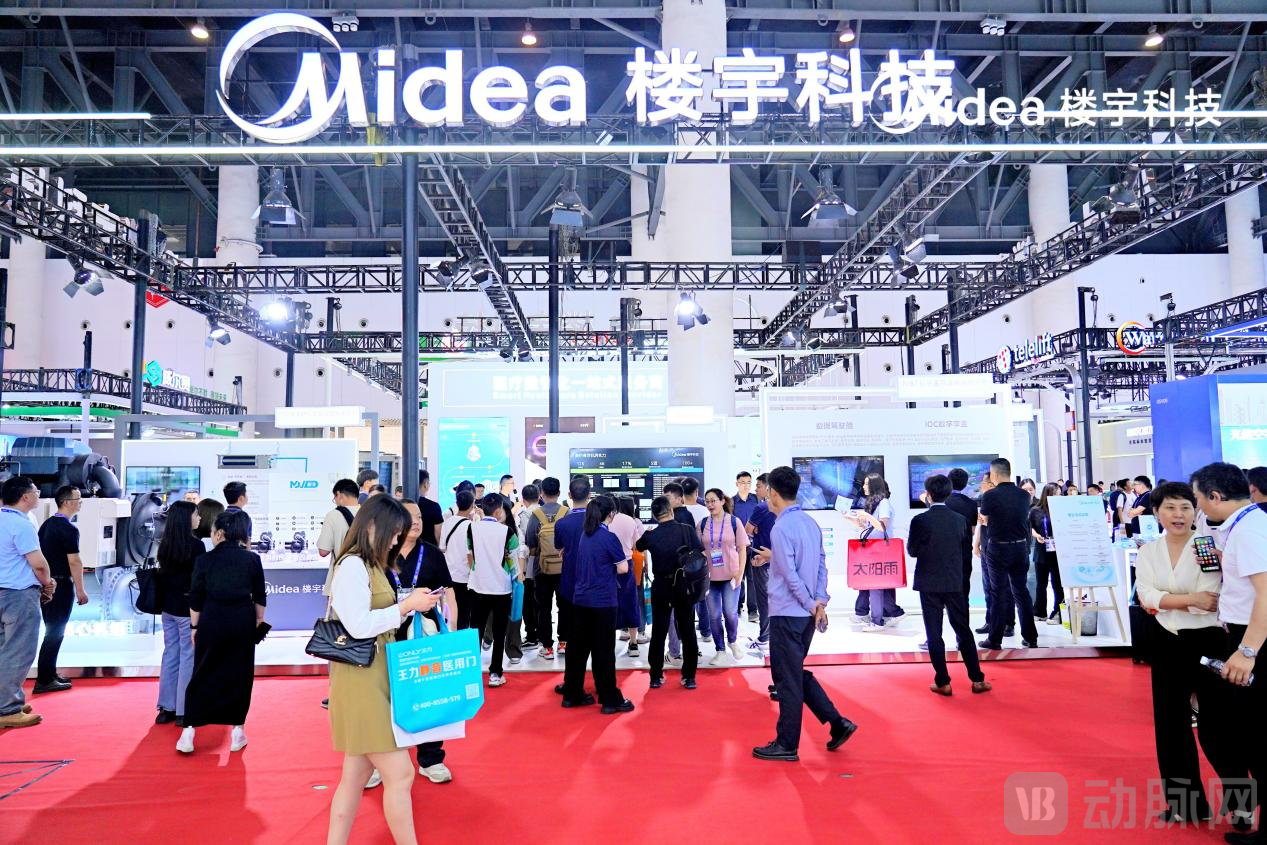
From this exhibition and forum, we have gained a profound appreciation of Midea Building Technologies’ precise grasp of the emerging demands in smart hospital development, as well as a comprehensive understanding of how its LIFE 3.0 solution empowers hospitals to achieve holistic intelligent upgrades.
Midea Building Technologies’ LIFE Smart Hospital Solution has been somewhat distinctive from the outset.
Specifically, the LIFE Smart Hospital Solution has emphasized, since its Version 1.0, the integration of four key “flows”—personnel and logistics flow, information flow, experience flow, and energy flow—to achieve comprehensive coverage of the requirements for smart hospital development.
Subsequently, building on the foundation of completeness, Midea Building Technologies released the LIFE2.0 solution and introduced the design philosophy of “Large Platform, Small Scenarios,” which constitutes the most critical underlying logic of Midea Building Technologies’ smart hospital solution.
According to Dr. Sun Jing, General Manager of Midea Smart Building Control under Midea Building Technologies, the traditional approach to building smart hospitals typically involved designing underlying systems based on the specific needs of each scenario first, and then integrating them into a technical platform. However, this not only leads to difficulties in use and fragmented user experiences, but also prevents the hospital from influencing subsystems through the top-level system. Furthermore, due to the strong coupling between various subsystems, the iteration speed of the entire system becomes extremely slow.
However, drawing on practical experience and extensive discussions with numerous hospitals, Midea Building Technologies has proposed a new construction logic: first integrate all technologies and resources around specific scenarios and medical workflows by building a digital platform, and then rapidly combine various subsystems to create new applications. This approach effectively addresses challenges such as usability difficulties, fragmented user experiences, and slow iteration cycles.
“Meanwhile, the entire solution is ‘scalable’ thanks to its high flexibility. ‘It’s akin to raising a child: in the early stages, you certainly want them to develop comprehensively across moral, intellectual, physical, aesthetic, and labor domains; but as they reach a certain stage of growth, you inevitably focus on cultivating specific skills. In other words, your growth trajectory depends on what goals you aim to achieve,’ said Sun Jing.”
Therefore, the next key focus of the LIFE solution is to empower hospitals with goal-oriented support for smart hospital development. From the perspective of Midea Building Technologies’ LIEE 3.0 solution, this goal is to facilitate the construction of a smart hospital that is energy-efficient, safe, and more efficient.
Energy efficiency, safety, and operational efficiency are critical components of hospital construction.
During the conference, both Midea Building Technologies and industry representatives invited to the forum highlighted issues such as high energy consumption, diverse energy types, complex energy systems, and low operational efficiency in hospitals. For instance, Gan Lingli, Deputy Chief Engineer of the Third Design Institute at Sichuan Provincial Architectural Design and Research Institute, stated that healthcare facilities have the highest energy consumption among major public buildings, approximately 1.5 times the average of other major public buildings.
Lv Jindong, Division Chief and Master’s Supervisor at Shanxi Provincial People’s Hospital, also stated that the average energy consumption of hospitals is approximately 50% higher than that of other major public buildings. Furthermore, traditional energy management approaches lack scientific and flexible mechanisms, compounded by incomplete technological retrofits in some older hospital facilities, resulting in significant energy waste within hospitals.
From a safety perspective, Zeng Libo, Director of the Public Utilities Industry at Midea Building Technologies, stated that the construction cycle of hospitals in China has roughly gone through stages of slow growth, development, rapid expansion, and the current transformation phase. This means that for large equipment such as air conditioning systems, they have gradually entered the failure period due to wear and tear. In light of this, combined with the mainstream trend of smart hospital construction, many hospitals also have a need for energy-saving retrofits out of safety considerations.
Therefore, against this backdrop, stakeholders across the industry are actively advocating for, providing guidance on, and implementing the development of energy-efficient, low-carbon, green hospitals. The National Health Commission has incorporated “a gradual reduction in energy consumption expenditure per RMB 10,000 of revenue” into the performance evaluation system for tertiary public hospitals, making energy conservation a mandatory indicator in the national performance assessment of these institutions.
Overall, hospital energy efficiency management primarily faces two challenges: first, certain equipment exhibits high energy consumption; second, the lack of refined management at the current stage results in energy waste.
In response, Midea Building Technologies has developed an integrated hardware-software comprehensive solution.
First, from the perspective of equipment energy consumption, variable refrigerant flow (VRF) systems, chillers, and heat pump products are key areas of focus. Midea Building Technologies’ digital VRF solution adopts the MDV New Generation Series—specifically designed for retrofitting projects—combined with the “i-Manager” mode, enabling upgrades without replacing wiring, refrigerant piping, or indoor units. Moreover, for systems with poor heat dissipation, Midea’s intelligent spray cooling solution can further reduce both air conditioning power consumption and water usage. Notably, among the many energy-consuming devices in hospitals, HVAC systems account for the largest share of energy use. Undoubtedly, Midea Building Technologies’ digital VRF solution effectively addresses this critical challenge in hospital energy management.
In addition, Midea Building Technologies’ VRF digital-intelligence solution comes standard with the i-Manager cloud-based centralized controller, which provides features such as schedule management and monthly analysis reports, enabling more efficient and energy-saving equipment management. “The biggest difference between our VRF solution and traditional VRF systems lies in its intelligence,” said Zeng Libo, Director of the Public Utilities Industry at Midea Building Technologies. “For instance, our VRF system does not require any additional building automation devices, software, or so-called AI algorithms at the equipment level. By integrating the control core of individual units, we can achieve intelligent diagnostics, such as detecting whether air ducts are clogged with dirt or whether heat dissipation is unobstructed.”
Taking Heyou International Hospital as an example, the project initially faced challenges in determining whether energy waste occurred during normal operations due to unclear energy consumption levels and a lack of measurement standards. To address this issue, Midea Building Technologies analyzed the situation using its intelligent “i-Butler Solution” and found that 80% of the entire administrative building’s energy consumption came from air conditioning systems. Furthermore, AI-driven analysis of “forgotten shutdowns” revealed that during September 2023, up to 73 indoor units remained on between 9:00 PM and 6:00 AM. Even after implementing automatic shutdowns after work hours, up to 32 units still remained on in October. In response, Midea Building Technologies optimized the system to automatically shut down every two hours, which is expected to achieve approximately 10% in energy savings.
Furthermore, through its AI-enabled “overcooling and overheating” control system, Midea Building Technologies identified that in September 2023, up to 80 indoor units were set at excessively low temperatures during periods of low outdoor temperature, resulting in significant fresh air energy consumption. Optimizing these settings would enable He You International Hospital to achieve an additional energy savings of approximately 5%. Moreover, by implementing detailed energy consumption breakdowns and establishing unit-level performance assessments, Midea Building Technologies can deliver further energy savings of approximately 5%–10% for He You International Hospital.
Overall, with AI-powered intelligent analysis and management, Heyou International Hospital can achieve energy savings of approximately 20%-25%.
As for chillers, the application of magnetic bearing chillers has become a mainstream trend in scenario-based applications such as the retrofitting of hospital central energy plants. In response, Midea Building Technologies has independently developed the Kunyu new-generation magnetic bearing variable-frequency centrifugal chiller. Its high-precision magnetic bearing control technology enables stable levitation of the rotor shaft with an accuracy of 0.5 microns, while also achieving a lower refrigerant leakage rate.
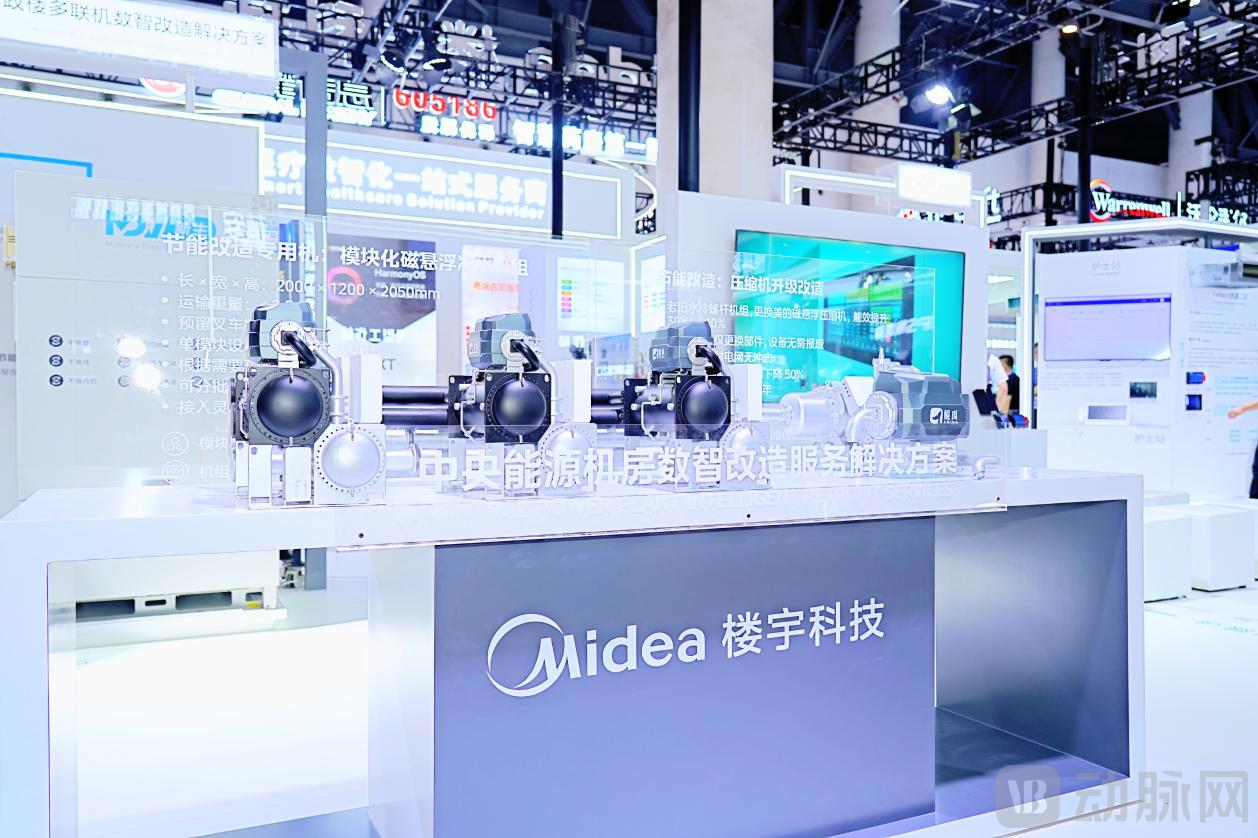
Moreover, unlike traditional feedback control systems, Midea’s Kunyu new-generation magnetic bearing variable-frequency centrifugal chiller integrates an AI-driven intelligent system that adaptively monitors operational status and proactively optimizes adjustments to maintain peak performance. The unit achieves a Coefficient of Performance (COP) of 7.41 and an Integrated Part Load Value (IPLV) of 10.2. Additionally, its modular design allows for flexible capacity expansion and convenient installation.
Furthermore, Midea’s independently developed magnetic levitation compressor is compatible with chillers from various brands, addressing the energy-efficiency retrofit needs of aging water-cooled screw chiller units that have not yet reached their end-of-life. Post-retrofit, energy efficiency improves by 30%–40%, main unit maintenance costs decrease by 50%, and the return on investment period is 3–5 years.
However, as previously stated, equipment management is merely one of the core components of hospital energy consumption management. Achieving systematic, comprehensive, and refined management of energy usage clearly relies on the support of specialized systems and software.
In this regard, Midea Building Technologies has launched a full-link solution for high-efficiency plant rooms. Through an integrated hardware and software design combining HVAC, automation control, and programming/software, it performs load simulation, design optimization, control refinement, efficient construction, and smart operation for cooling stations, thereby achieving end-to-end efficient design, construction, and delivery with the end in mind. Meanwhile, the High-Efficiency Plant Room Editor facilitates digital implementation of the solution, the Virtual Commissioning Platform empowers parameter tuning, and the Cloud Energy Efficiency Platform enables intelligent operation and maintenance.
It is also worth noting that at this exhibition, Midea Building Technologies set up three major display areas centered on green and low-carbon development, safety and cleanliness, and medical efficiency enhancement in hospitals. These areas showcased not only energy-saving retrofit solutions tailored to various hospital scenarios but also comprehensive smart healthcare solutions covering diverse settings, including hospital outpatient and emergency departments, clean zones, inpatient wards, and logistics command centers.
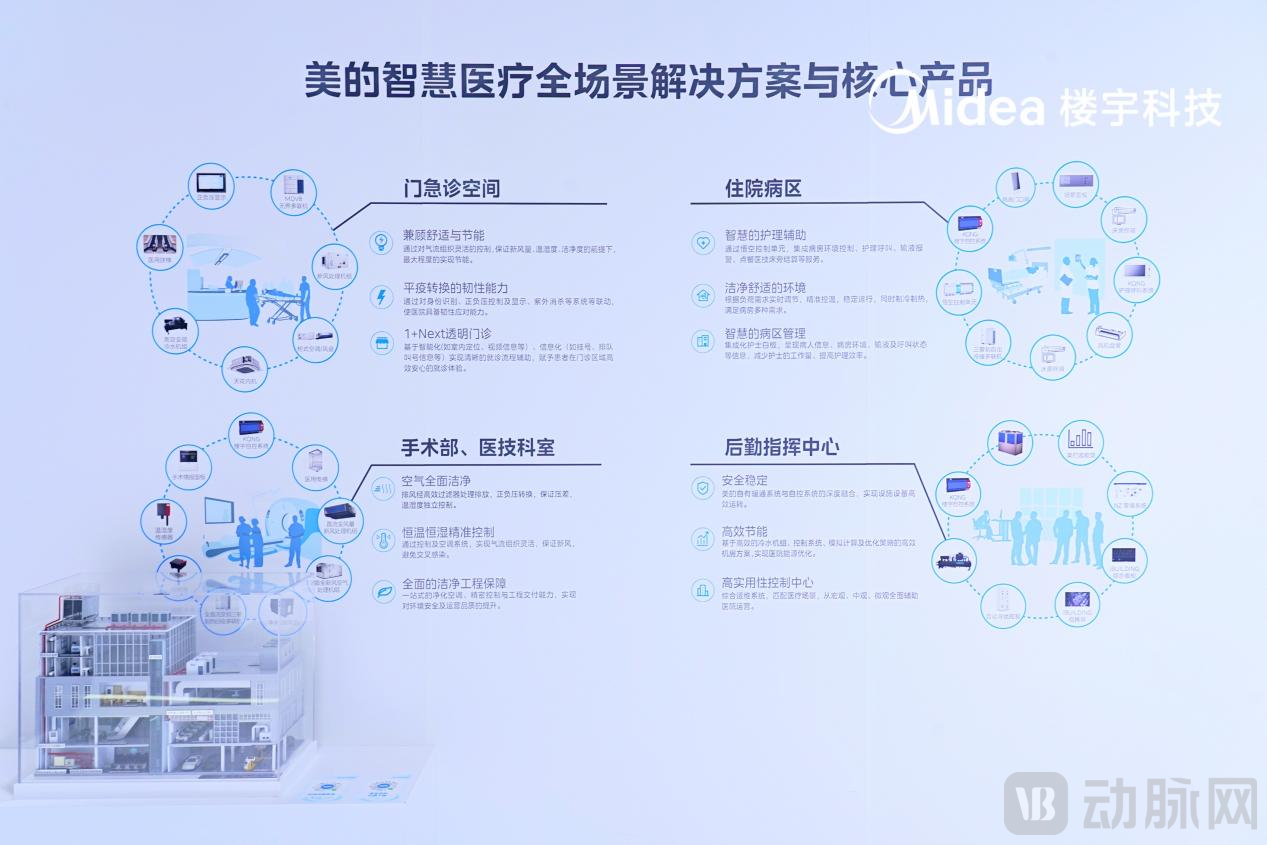
Taking Midea Building Technologies’ solution for clean areas as an example, this offering covers the full lifecycle of cleanroom engineering services, including consultation and design, equipment supply and procurement, and construction. For large, concentrated purification zones such as operating departments and ICUs, Midea Building Technologies provides a combination of four-pipe air-cooled heat pumps, medical cleanroom integrated units, and centralized operating room control systems. The Kunyu four-pipe scroll air-cooled heat pump unit enables simultaneous cooling and heating, delivering efficient thermal energy sources; while the cleanroom terminal units and control systems maintain constant indoor temperature, humidity, and cleanliness levels.
In light of the high infection risk and small scale of fever clinics and PCR laboratories, Midea Building Technologies has adopted a combination of 100% fresh air direct expansion units and purification-type multi-split systems, which are characterized by their compact size, flexibility, and high efficiency.
Furthermore, to address the common pain points in outpatient settings where patients face opaque and unclear processes and medical information, Midea Building Technologies has launched the “1+NEXT Transparent Outpatient” solution. By integrating the outpatient information system with intelligent medical assistance systems, it enables transparent healthcare delivery, allowing all information to be queried and pushed through a single platform, thereby significantly improving diagnostic and treatment efficiency as well as patients’ healthcare experience.
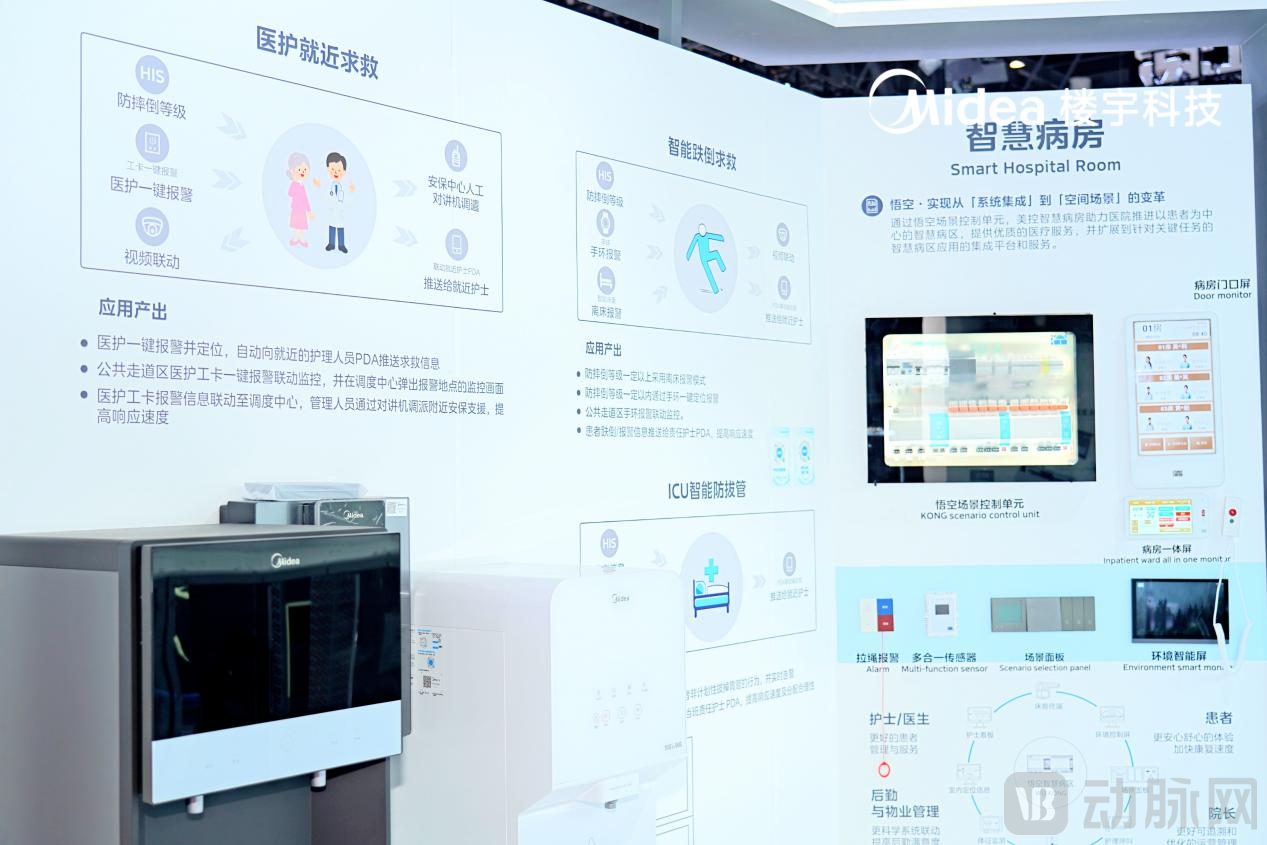
In the smart ward scenario, Midea Building Technologies’ “Wukong” Scene Control Unit enables interconnection and cross-operation among more than 20 systems, including nearby nurse call, intelligent fall detection alerts, and ICU intelligent anti-extubation monitoring. Through multi-dimensional deployment, it alleviates healthcare staff’s workload constraints and drives a transformation from “system integration” to “scenario-based applications.”
Meanwhile, for facility operations and maintenance scenarios, Midea Building Technologies has developed the iBUILDING Operations Command Center, which integrates data from building systems (building automation, HVAC, elevators, etc.) and medical information systems (HIS, medical imaging, and medical logistics). It provides macro-, meso-, and micro-level dashboards tailored to different user roles, comprehensively supporting hospital operations.
The wave of smart hospital construction is surging forward, with growing and evolving demands. In this process, policymakers responsible for top-level design, as well as hospitals and numerous enterprises involved, must grasp the underlying logic and pace of development, while remaining attuned to emerging needs and trends. For Midea Building Technologies, the launch of its LIFE 3.0 solution and subsequent iterative updates will not only empower smart hospital development but also fulfill its vision of “giving time back to healthcare professionals and leaving complexity to Midea.”