

China Telecom Enters Healthcare IT with Full-Stack Capabilities: Files IPO Prospectus for YiKang Health Tech Subsidiary
A giant has entered the field of healthcare informatization.
First, in January, China Telecom ensured the official operation of a domestically produced database in the core system of Peking University First Hospital. This marks one of the first successful explorations in China where hospitals have adopted domestically produced databases for their core business systems in production environments. Leveraging the TeleDB database on Tianyi Cloud, it enables real-time exchange of patient information and data between hospital campuses, with elastic scaling to meet the high-concurrency demands of hospital operations.
Subsequently, at the 2024 CHIMA–China Telecom Special Technical Forum held recently,China Telecom’s wholly-owned subsidiary, Zhongdianxin Yikang, has officially unveiled its full-stack capabilities in healthcare informatics.As a platform-based company under China Telecom that centrally conducts digital health industry operations, China Telecom Yikang was established with the important mission of empowering the healthcare sector on behalf of China Telecom.
If the industry’s starting point is defined as “the inclusion of healthcare informatization as one of the ‘four beams and eight pillars’ of deepened healthcare reform since 2009,” then China Telecom is a latecomer. Yet this late entrant is held in high expectation.
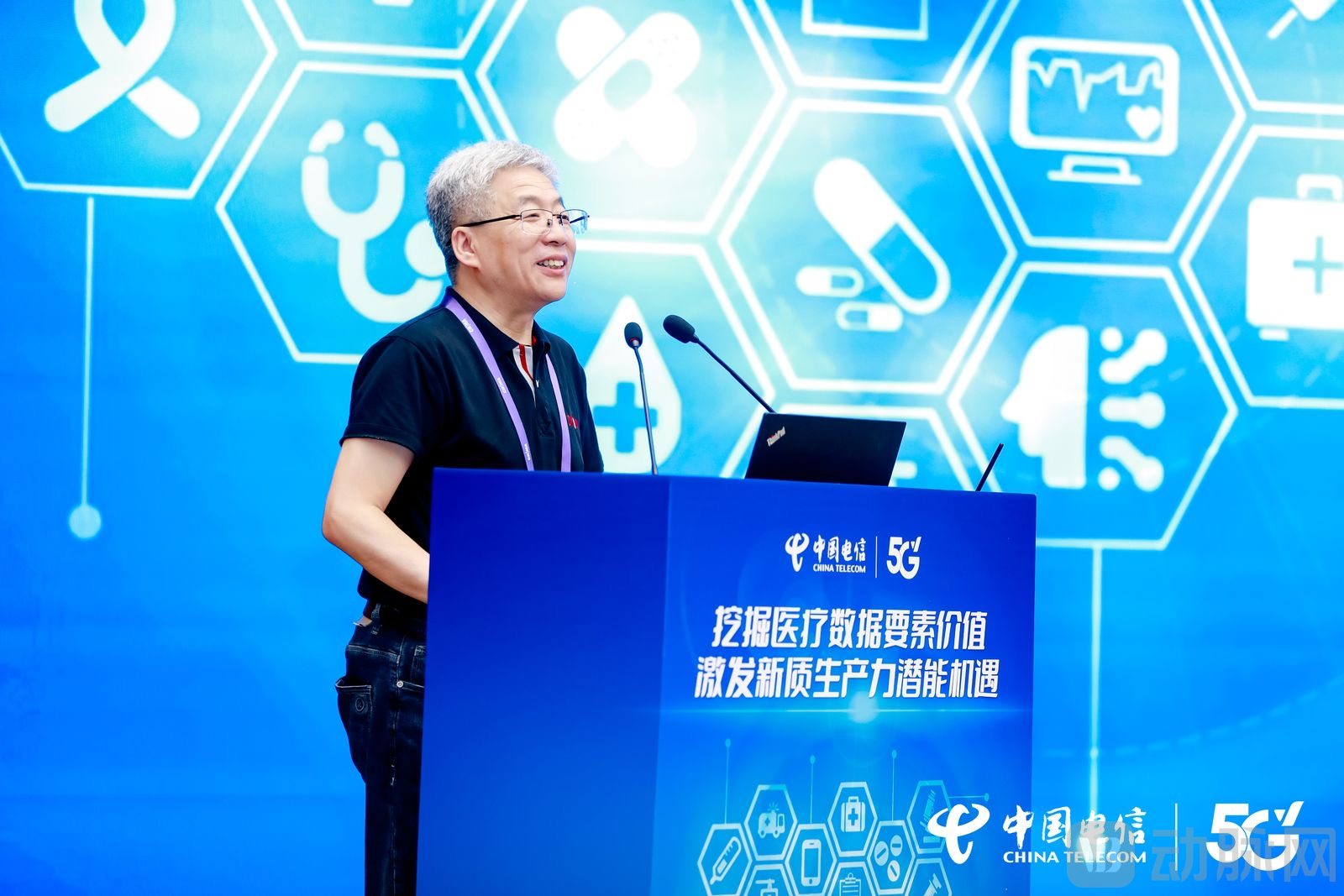
Chairman of the Information Professional Committee, Chinese Hospital AssociationWang Caiyoustated that, driven by the dual forces of favorable policies and technological advancements, the value of data as a factor of production is being re-evaluated, ushering in significant development opportunities for the healthcare informatics industry. This presents an ideal moment for China Telecom to leverage its multifaceted advantages in technology, talent, and network infrastructure. “We hope China Telecom will collaborate with various industry stakeholders to fully unlock the value of healthcare data.”
Just as oil is to industry, healthcare data elements have become a critical engine driving the development of new-quality productive forces, with unlocking the value of massive healthcare datasets being key to this process. However, the failure of IBM Watson Health, despite its substantial investment, demonstrates that extracting value from big healthcare data is by no means a smooth path.
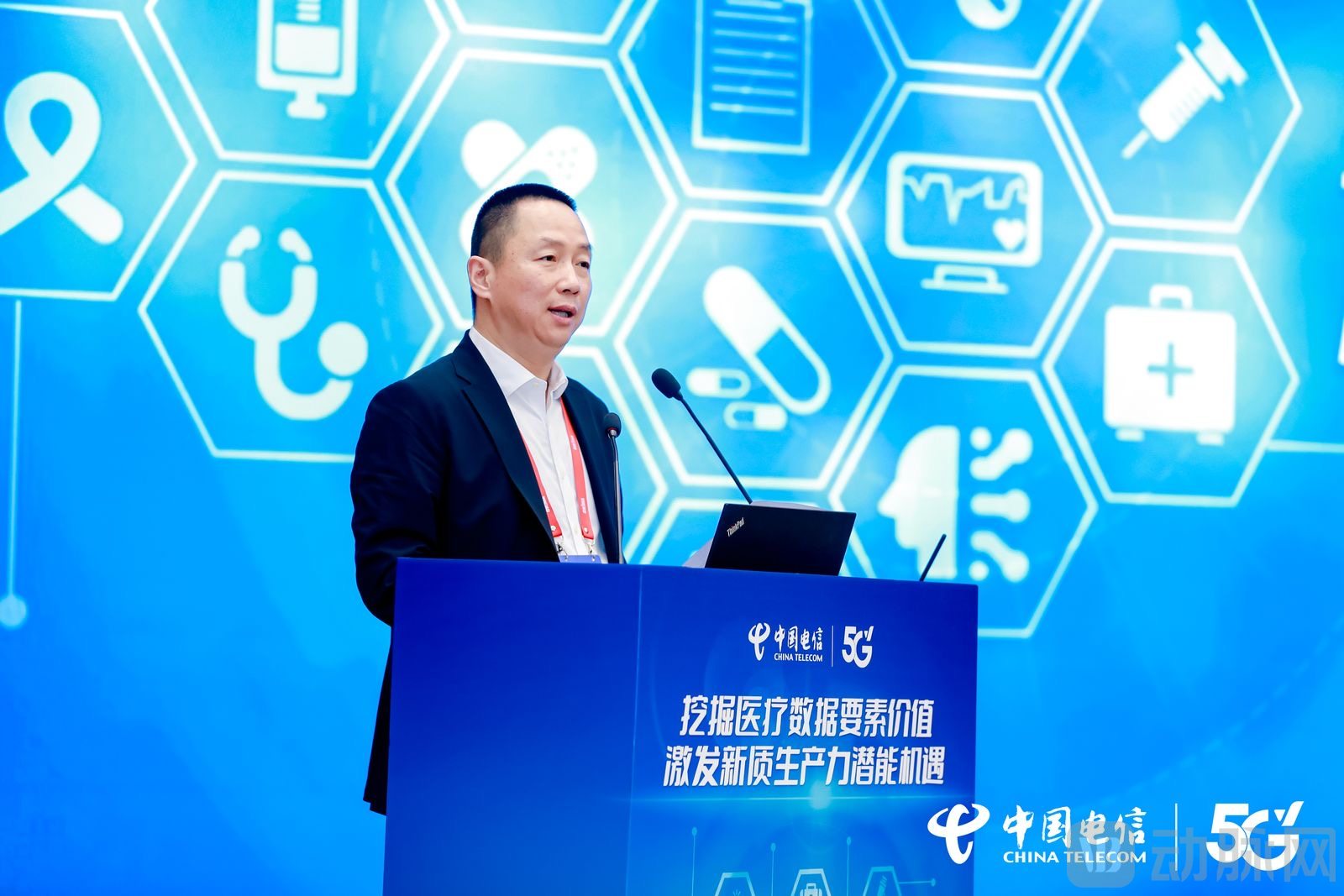
In this regard, the President of the Healthcare Industry Division of China Telecom Group Co., Ltd. and General Manager of China Telecom Yikang Technology Co., Ltd.Liu YumingEmphasizing its cloud-network integration advantages, China Telecom is building robust healthcare informatization capabilities. With enhanced professional expertise, superior service, and a more open mindset and mechanism, it collaborates with extensive industry ecosystem partners to jointly drive high-quality development in the healthcare sector, contributing to the realization of the “Healthy China” initiative.
Can China Telecom’s strong resolve be translated into significant results? Where will China Telecom, with its inherent ecosystem, lead the healthcare informatization industry? The 2024 CHIMA – China Telecom Special Technical Forum may serve as an excellent window for observing China Telecom’s strategic moves.
As the healthcare industry shifts from a “disease-centered” to a “health-centered” model, driving high-quality development of public hospitals, artificial intelligence and large-model technologies are spurring new trends such as the restructuring of business operations, processes, and services. Amid this transformation, China Telecom is also undergoing rapid and significant changes.
Liu Yuming stated that Tianyi Cloud’s annual revenue in 2023 entered the RMB 100 billion tier, achieving breakthroughs in the deployment of 10,000-GPU computing clusters and domestically produced computing infrastructure. It also released and open-sourced China Telecom’s self-developed general-purpose large language model (LLM), along with its Xingchen series of domain-specific LLMs for scenarios including healthcare.
"Meanwhile, China Telecom has specially established Zhongdianxin Yikang to 'integrate internal and external resources, strengthen the R&D team, focus on building industry-specific digital platforms and application capabilities, and enhance comprehensive healthcare informatization service capabilities,' mentioned Liu Yuming in his speech."
and from the Vice President of the Healthcare Industry Business Unit of China Telecom Group Co., Ltd.Pang JinFrom the remarks, we can discern China Telecom's confidence in its strategic expansion into new domains.The establishment of China Telecom Yikang is not only a timely response to the new phase of healthcare informatization, but also the natural culmination of China Telecom’s decade-long strategic layout in the healthcare sector.
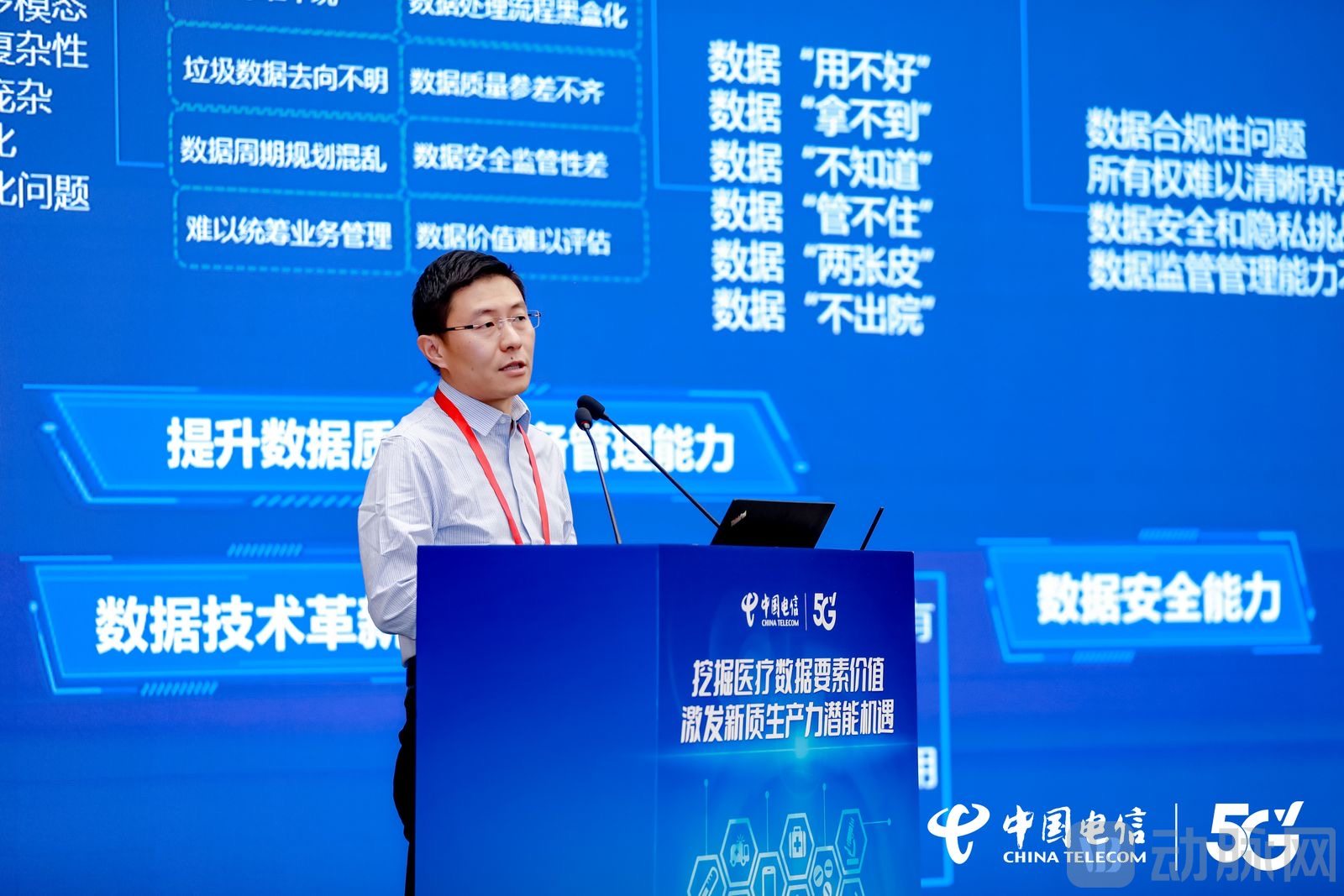
From the broader perspective,With the introduction of 20 data-related policies and the “Three-Year Action Plan for ‘Data Element X’ (2024–2026),” among others, the cultivation of the data element market is accelerating. Driven by advancements in artificial intelligence and large language models, data elements are generating new value increments and facilitating novel circulation and integration, thereby fostering new quality productive forces in the healthcare industry.
However, China faces the challenges of massive medical data volumes and a low level of value realization from such data. Current data processing capabilities are insufficient to meet the big data productivity demands driven by new quality productive forces. According to the survey results on hospital big data applications in the "National Health Informatics Survey Report," the average adoption rate of medical big data in tertiary hospitals in China was less than 20% in 2021, and less than 5% in secondary hospitals. Even for clinical data, which has garnered the most attention, only one-fifth of hospitals have attempted to conduct related research.
Challenges such as the scarcity of high-quality datasets, an underdeveloped data industry ecosystem, high costs of acquiring data resources, and insufficient policy and legal support for data circulation are hindering the flow of medical data and limiting the iteration of data-driven artificial intelligence technologies.
Pang Jin shared that to drive the industry’s transition from “having data available” to “maximizing data utilization,” a new entity characterized by new quality productive forces is needed to assume responsibility for data security governance and big data industry management. Such an entity must have a deep understanding of the unique characteristics and development patterns of the healthcare informatics industry, and more importantly, possess a secure and trustworthy identity attribute.
Among the many industry participants, China Telecom has actively leveraged its role as a leading state-owned central enterprise in data elements since launching its medical and healthcare business in 2013. By driving high-quality development across the entire medical sector with new quality productive forces, it better empowers the medical and healthcare industry.
The confidence to continuously invest in the healthcare informatics industry also stems from China Telecom’s accumulation of experience over more than a decade.Currently, China Telecom has deployed the National Health Big Data Platform in two provinces (Gansu and Qinghai) and 19 prefecture-level cities, achieving interconnectivity and data sharing among over 80% of medical institutions within these provinces. It provides medical imaging cloud services to more than 2,800 medical institutions across 14 provinces, has built county-level medical consortium platforms for over 109 districts and counties, and established mutual recognition platforms for laboratory and examination results in Hebei, Shandong, and Gansu provinces as well as nine prefecture-level cities. Additionally, it has supplied hospital information platforms to numerous tertiary hospitals, assisting them in passing evaluations for electronic medical records and interoperability.
Focusing on China Telecom's BusinessAs China Telecom’s wholly-owned subsidiary dedicated to the healthcare sector, China Telecom Yikang integrates internal and external group resources to build a platform-driven, technology-oriented, and capability-focused enterprise for the medical industry. Centered on its self-developed industrial digitalization platform, it provides full-lifecycle services for healthcare informatization.
The release of full-stack capabilities in healthcare informatization also marks a further upgrade of China Telecom’s comprehensive service capabilities for the healthcare industry.

(On-site invited guests, including representatives from the Health Commission of Anhui Province, the Health Commission of Hubei Province, Peking Union Medical College Hospital of the Chinese Academy of Medical Sciences, Peking University First Hospital, Jiangsu Province People’s Hospital, Zhongshan Hospital Affiliated to Fudan University, and the Jiangsu Provincial Health Information Center, jointly witnessed the launch)
China Telecom’s determination to advance medical informatization is ultimately reflected in its substantial investments in technology, services, and talent resources.
Deputy General Manager of China Telecom Yikang Technology Co., Ltd.Niu BaotongA detailed introduction to China Telecom’s full-stack capabilities in healthcare informatization.
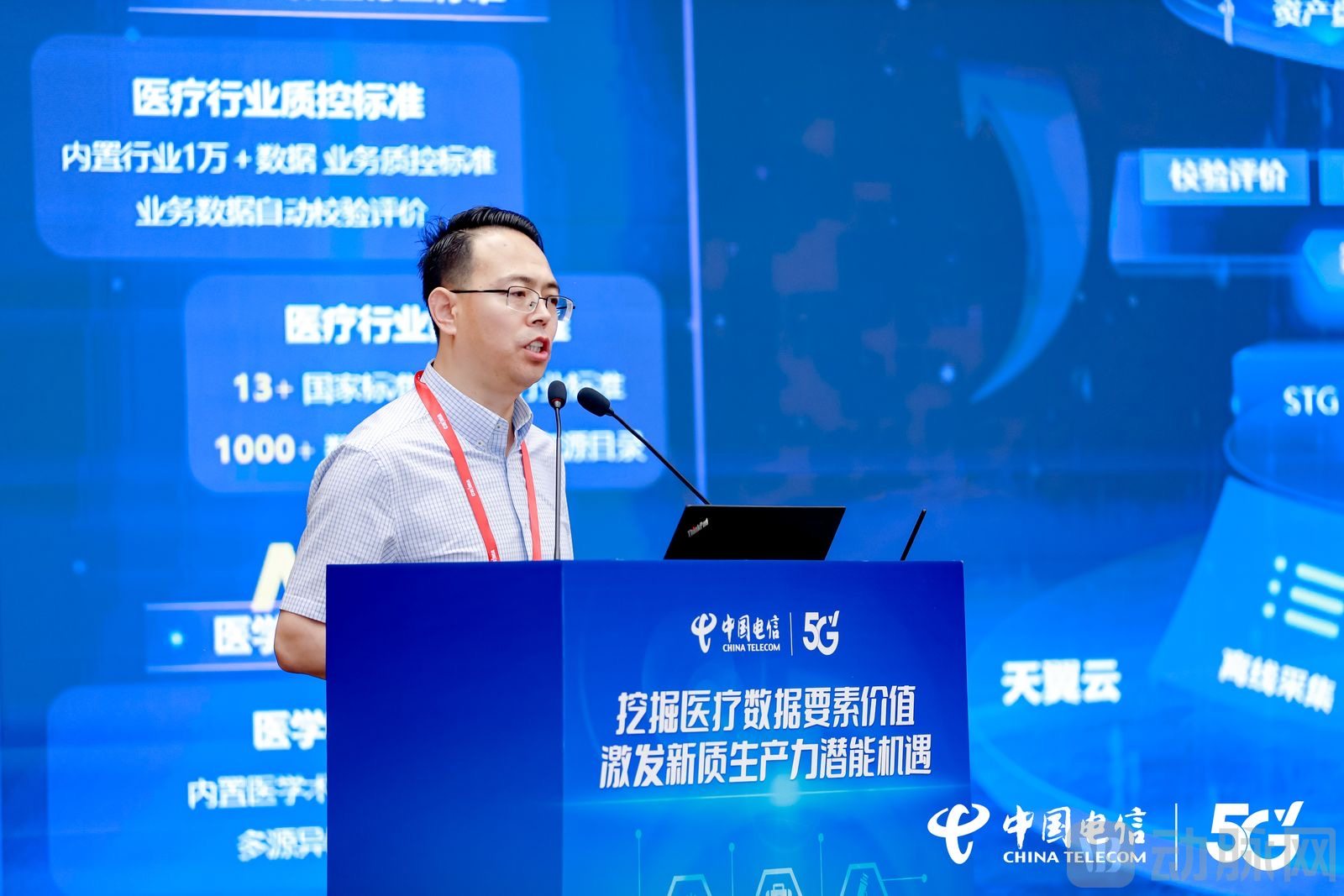
He stated that, leveraging its digital health new infrastructure capabilities characterized by cloud-network integration, security and trustworthiness, and exclusive customization, China Telecom has gradually expanded its business scope from traditional data transmission to data storage, data governance, and analytics. By building full-stack capabilities and focusing on the data ecosystem and operations, it has established a healthcare big data foundation based on a lakehouse architecture to enable data-driven, business-oriented, and shared interoperability. This provides scenario-based applications covering regional healthcare, public health, smart hospitals, and smart medical insurance through ecological integration, thereby achieving comprehensive full-stack capability development in cloud migration, data utilization, and intelligence empowerment.
Niu Baotong stated that in the field of healthcare informatization, China Telecom aims to become the leader of the data foundation, the operator of business platforms, and a participant in innovative applications.
In terms of the data foundation, China Telecom has established the Jishi Medical Data Foundation and the Jishi Medical Large Model Foundation, leveraging dual middle-platforms to enable end-to-end management and one-stop empowerment of healthcare data elements.
Currently, the Jishi Medical Data Foundation has established a data capability platform that covers the entire lifecycle of healthcare industry data, enabling end-to-end management of medical data elements. The Jishi Medical Large Model Foundation, built upon China Telecom’s Telechat large language model, provides developers with an integrated development workflow for large models and supports customized deployment to meet end-user requirements. To date, it has developed several specialized models, including the Jishi Medical Insurance Policy Consultation Large Model, the Infectious Disease Prevention and Control Large Model, the Smart Health Large Model, and the Imaging-Assisted Diagnosis Large Model.
In terms of business platform operations, China Telecom, leveraging its Atomic Capability Platform, has deconstructed and encapsulated all its self-developed, proprietary, and ecosystem capabilities into atomic units, thereby restructuring the operational business model to provide continuous project operations and specialized, localized delivery services.
Specifically, this model leverages China Telecom Yikang’s industry-specific operational capabilities to serve the entire country, with localized delivery provided by China Telecom’s 31 provincial and municipal branches along with local secondary development teams. It establishes centralized operation and maintenance management platforms at both national and provincial levels, and provides remote O&M services through a unified national O&M private network integrated with hospital systems, thereby achieving comprehensive coverage of medical institutions at all levels.
About Innovative Applications, China Telecom has not only organized its R&D teams to carry out self-developed technological innovations, but also adopted an open and inclusive approach by fully integrating ecosystem partners to achieve industry resource sharing.
Currently, China Telecom boasts an R&D team composed of elite talents from top domestic and international universities, as well as industry and technical experts. Its core members have over ten years of experience in the digital and intelligent development of the healthcare sector. Leveraging a vertically integrated provincial and municipal health joint team of more than 8,000 people across the group, China Telecom delivers integrated professional services covering consultation, construction, delivery, and operation and maintenance. Niu Baotong stated that China Telecom has successively established three major R&D centers in Lanzhou, Beijing, and Jinan, with plans to add regional R&D centers in the future to achieve a balanced regional layout of its R&D system and product delivery capabilities.
Meanwhile, China Telecom Yikang is actively collaborating closely with ecosystem partners through joint laboratories and participation in industry standards and specifications. It has also engaged in multiple national-level scientific research projects, continuously expanding the scope and domains of its collaborations to provide more professional and comprehensive services to the healthcare industry.
Overall, whether it is the state’s vigorous promotion of market-oriented allocation reforms for data factors, the surge in construction of next-generation hospital data centers on the hospital side, or the continuous emergence of data products from healthcare IT enterprises, all these phenomena indicate that the healthcare informatization industry is entering a stage focused on the value application of data factors.
As China Telecom carries the high expectations of the government, industry, and society in its endeavor to “mine” medical data, it may face more unknown changes in the future while also poised to yield greater achievements. It remains to be seen what further moves China Telecom will make in the healthcare informatics sector, a prospect worth anticipating.