

Shanben Biotech Secures Tens of Millions RMB in Angel Funding to Advance Gene Silencing Technology for High-Specificity Antibody Reagents
VCBeat has learned at the earliest opportunity that a leading domestic company specializing in high-specificity antibody reagentsHefei Shanben Biotechnology Co., Ltd. (hereinafter referred to as:Shanben Biotechnology)Announced the successful completion ofOctober CapitalAn exclusive angel round financing of tens of millions of yuan. The proceeds from this round will be used to continuously develop high-specificity antibodies and lentiviral libraries, stable cell line libraries, and cell lysate libraries based on the ShGE™ gene silencing platform, and to engage in in-depth business collaborations with leading companies in the global life sciences industry, thereby accelerating R&D and commercialization processes.

Shanben Biotech officially commenced operations in 2023. As a technology-driven enterprise with a global outlook, it is dedicated to the mission of “solving the problem of antibody non-specificity through genetic engineering methods.” Its predecessor was GenuIN Biotech LLC, based in Virginia, USA. With R&D and industrialization bases in Hefei, China, and Maryland, USA, the company concurrently advances technological and product development in both countries. By leveraging global scientific research resources, integrating international advanced engineering technologies with the high-end manufacturing cluster advantages of the Yangtze River Delta, Shanben Biotech develops a comprehensive series of innovative research reagents to meet the growing demands of precision medicine worldwide.
The Company's Main Products IncludeHigh-specificity antibodies, lentiviruses, cell lysates, biological reagents, and kits for research and diagnostic use, validated by gene knockdownWait, the company has currently established collaborations with renowned domestic and international research institutions, including Tsinghua University, Yale University, Columbia University, Duke University, the National Institute of Allergy and Infectious Diseases (NIAID) of the U.S. National Institutes of Health (NIH), and the Chinese Center for Disease Control and Prevention (China CDC).
Research reagents have long lacked uniform standards, resulting in uneven quality.
The research community and industry organizations have long called for the establishment of more stringent quality standards for antibody reagents.
“The use of antibodies for scientific discovery is very common in many biological laboratories, but it poses a challenge for everyone: antibody specificity. If the specificity of an antibody cannot be verified, it often misleads researchers into drawing confusing conclusions, resulting in wasted time, money, and rare samples,” said Professor Xiaoyong Yang from the Department of Comparative Medicine at Yale University.
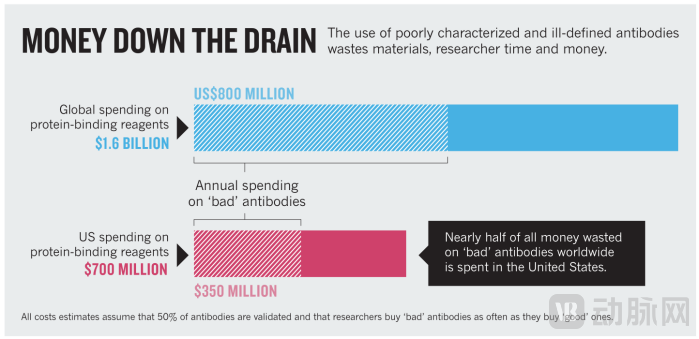
According to data from Polaris Market Research, the global market size for research antibodies was approximately USD 3.6 billion in 2020. The market is projected to grow to around USD 6.4 billion by 2028, with a compound annual growth rate (CAGR) of 6.5%. The United States, as the largest market for research antibody reagents, also faces the common challenge of significant difficulties in antibody quality control (QC). Currently, the pass rate for antibodies used in research worldwide is low. Poor antibody specificity leads to irreproducible experimental results, while antibody quality issues result in wasted resources, high time costs, and non-reproducible published papers. To address these problems, the scientific community and industry organizations commonly call for the establishment of stricter quality standards for antibody reagents and strengthened market regulation to ensure the quality and reliability of research antibody reagents.
Globally, life science reagents in Europe and the United States have developed earlier, with leading companies mastering cutting-edge technologies and driving innovation and development in the global life sciences industry. Over 90% of China's antibody reagent market is monopolized by European and American countries, with primary antibodies mainly relying on imports. Key players include U.S.-based companies such as Thermo Fisher and CST, as well as European companies represented by Abcam from the UK and Merck from Germany.
After nearly a decade of rapid development, the Chinese antibody reagent market features numerous participants and low concentration. Currently, most companies in the industry are distributors for international brands, while a few domestic independent brands have also emerged from these distribution companies. However, there has been a persistent lack of platform-based service providers to bridge upstream manufacturers and downstream customers. With the improvement in quality, domestic antibody brands hold significant market potential.
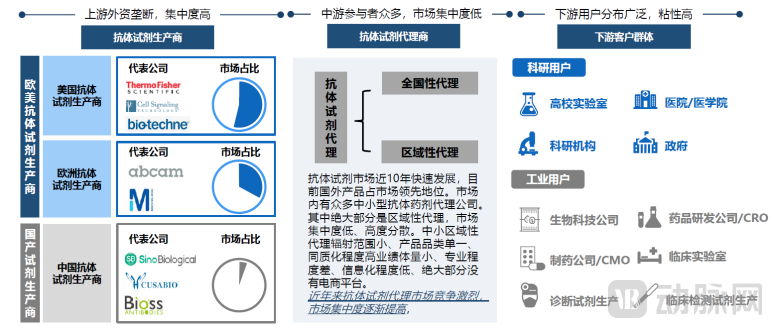
Source: Frost & Sullivan Analysis
Led by Tim Hao Shi, the R&D team hails from internationally renowned institutions such as Yale University and Virginia Tech. Through more than a decade of sustained investment, the team has developed the ShGE™ gene silencing platform, which employs lentivirus-mediated shRNA interference to downregulate genes at the mRNA level, thereby achieving gene silencing. According to recommendations from the International Antibody Working Group, antibody validation using genetic engineering is considered the gold standard; however, traditional gene silencing techniques are costly and time-consuming.
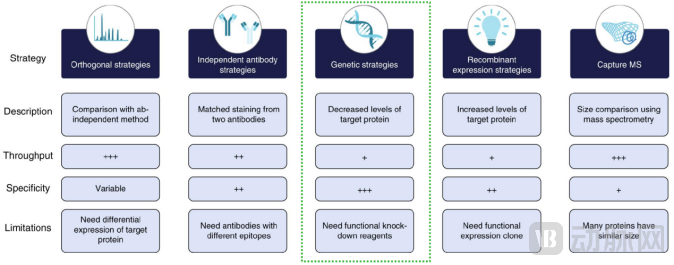
Source: International Working Group for Antibody Validation (IWGAV).
Compared with gene knockout technology, the ShGE™ platform enables gene silencing for nearly 20,000 protein-coding genes in humans, offering broader coverage. The platform optimizes traditional laboratory workflows, significantly reducing the cost of gene silencing by 95% per gene, shortening the experimental timeline from six months to two weeks, and increasing the success rate from 40% to 70%. Its modular workflow facilitates high-throughput, low-cost gene silencing, greatly enhancing operational convenience and efficiency. Furthermore, compared with gene knockout technology, the ShGE™ platform incurs lower validation costs and is better suited for high-throughput validation, providing researchers with greater flexibility and convenience.
It is reported that,Shanben Biotechnology has developed and commercialized over 2,000 products based on its ShGE™ gene silencing platform, and has established commercial partnerships and achieved large-scale sales with numerous renowned domestic and international enterprises, including Thermo Fisher, Bioss, and several publicly listed companies in China.
About October Capital
October Capital is a rapidly growing, emerging private equity investment management firm founded by former senior executives from leading domestic securities firms, along with core members of their equity investment and investment banking teams. October Capital operates three management platforms, with assets under management exceeding RMB 6 billion. Since its establishment in 2016, the firm has invested in more than 90 projects, with nearly 30 portfolio companies successfully listed on China’s A-share market and close to 10 projects having filed for initial public offerings (IPOs).