

Midea Steps Up Investment in Smart Healthcare with Paradigm-Shifting LIFE3.0 Solution
Nearly a decade has passed since August 2014, when the Chinese government issued the Guiding Opinions on Promoting the Healthy Development of Smart Cities, first proposing the advancement of smart hospital construction. Over these ten years, the concept of “smart hospitals” has evolved from an abstract notion derived merely from technology and outcomes, transcending the scope of simple technological accumulation or single-function applications. It has gradually developed into a concrete, multi-layered system with its own distinct trajectory for growth.
Accompanying this trend is the growing participation of outstanding domestic manufacturers, continuously enriching the dimensions of available solutions. Today, the industry features not only established enterprises and emerging startups with years of deep expertise in smart healthcare, all innovating their own solutions, but also tech giants entering from other sectors, exploring new directions for the development of smart hospitals.
This trend was already evident at the recently held National Hospital Construction Conference and International Hospital Construction, Equipment and Management Exhibition (hereinafter referred to as CHCC 2024).
At the exhibition, Midea Building Technologies debuted as a “Smart Hospital Partner,” showcasing its “LIFE 3.0 Smart Hospital Solution.”, deeply integrating its technological advantages and innovation capabilities with the healthcare industry to raise the technical barriers of its core products,Move beyond the conventional, piecemeal approach to hospital intelligence—characterized by modular upgrades, equipment additions, and software replacements—and refocus on efficient resource coordination, energy conservation, and operational burden reduction, thereby redefining the pathway for smart hospital development.
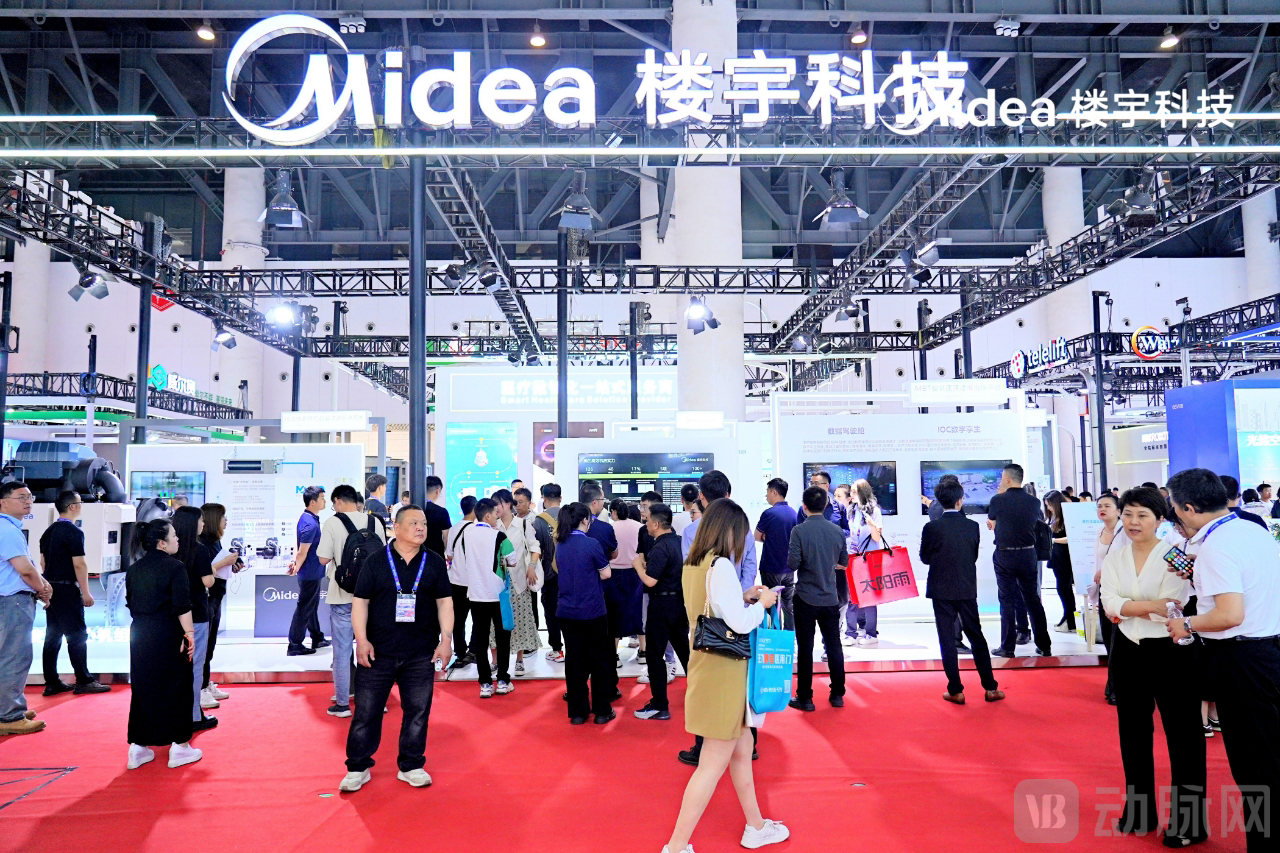
Currently, the development of "smart hospitals" has become a crucial pillar for modern hospitals to achieve transformation and upgrading. At the national level, policies are being actively refined to provide robust policy support and clear strategic direction for the construction of smart hospitals.
In 2020, the Guiding Opinions on Strengthening Operational Management of Public Hospitals proposed accelerating efforts to address shortcomings and weaknesses in internal operational management, seeking efficiency gains through refined management, while clarifying key tasks for operational management. In 2021, the General Office of the State Council’s Opinions on Promoting High-Quality Development of Public Hospitals further advocated shifting the development model of public hospitals from scale expansion to quality improvement and efficiency enhancement, and transitioning their operational mode from extensive management to refined management. Subsequently, the Action Plan for Promoting High-Quality Development of Public Hospitals (2021–2025) specified the direction for building “three-in-one” smart hospitals, prioritized informatization as a fundamental area of hospital infrastructure, and positioned it as a crucial lever for improving performance in the National Performance Evaluation and for establishing and sound modern hospital management systems.
A careful reading of the policy reveals that,TransportationThe focus of operational management has been refined to encompass various aspects, including resource allocation, financial management, asset management, logistics management, operational risk management, internal performance evaluation, and the development of information systems for operational management.
Nevertheless, although existing policies provide guidance for industry development, how to fully unleash the potential value of “smart hospital” construction remains a challenging issue that hospitals and vendors must jointly address based on their actual circumstances.
For instance, in the actual construction of hospitals, many institutions have devoted significant effort to innovating systems and applications while neglecting top-level design and corresponding infrastructure development. This has resulted in many smart hospitals being functional yet inefficient, with high costs that fail to deliver commensurate value.
Meanwhile, the escalating complexity of systems has driven exponential growth in various data flows, sharply increasing the difficulty of governance. Although traditional IT enterprises possess considerable experience in building smart hospital systems, they may not necessarily achieve seamless integration between systems and infrastructure. Consequently, it is by no means easy for hospitals to identify a comprehensive solution that encompasses both smart hardware and software development.
Addressing these pain points, Midea Building Technologies has developed innovative solutions that open up new possibilities for smart healthcare construction. These solutions are grounded in the company’s core competencies in top-level design and planning for smart hospitals, intelligent integration tailored to medical scenarios, and product development capabilities spanning HVAC, building automation, elevators, and cleanroom engineering.
At the CHCC, Dr. Sun Jing, General Manager of Midea Building Technologies’ Meikong Smart Building Division, provided a new definition for the development pathway of smart hospitals.
In the vision of Midea Building Technologies,The definition of a “smart hospital” must continuously “evolve” in tandem with the times and the needs of both patients and healthcare providers. Only with institutional and mechanistic support, coupled with top-level design spanning the entire lifecycle, can its sustained operation be effectively ensured.Traditional healthcare systems feature a technology-centric, hierarchical technical architecture. Hospitals are unable to leverage top-level systems to influence subordinate subsystems. Meanwhile, due to the strong coupling among these subsystems, the overall iteration speed is extremely slow, often resulting in scenarios where systems become obsolete upon completion.
Therefore,Midea Building Technologies has broken away from traditional smart hospital construction models by proposing the “LIFE” framework,Emphasizing IntegrationTraffic Flow (Logistics), Information Flow (Information), Experience Flow (Feeling), Energy Flow (Energy), integrate technology and resources in a flattened manner around clinical scenarios and medical workflows, enabling “smart” capabilities to permeate every specialized healthcare space. By aligning with the specific needs of each space, solutions can be rapidly decoupled, iterated, and recombined into new applications to meet hospital requirements.
Based on this concept, Midea Building Technologies launched in 2019LIFE1.0, by addressing four dimensions—personnel and logistics flow, information flow, experience flow, and energy flow—we have established a comprehensive solution framework for smart hospital construction, leveraging the capabilities of the enterprise’s “grand platform.” By 2022, we further launchedLIFE2.0, leveraging the three-dimensional methodology of “large platforms, small scenarios” to empower various healthcare spaces and drive the transformation from “system integration” to “scenario-based applications”; while the newly launchedLIFE3.0It represents a comprehensive evolution and upgrade of systems and product solutions across various specialized spaces, centered on energy conservation, safety, and efficiency, reshaping traditional medical processes and models to achieve efficient coordination of medical resources.
Under this framework, Midea Building Technologies has launched solutions focusing on four key areas: outpatient and emergency spaces, inpatient wards, surgical departments and medical technology units, as well as the logistics command center.Midea Smart Healthcare Full-Scenario Solutions and Core Products. Among them,SolutionIncluding scenario-based solutions such as smart diagnosis and treatment spaces, smart wards, and logistics command centers,Productranging from small components such as valves, temperature control panels, and variable frequency drives (VFDs), to large-scale systems including system platforms, elevators, fluorinated refrigerant-based HVAC units, and water-cooled HVAC units.
Today, Midea Building Technologies is further upgrading the technology of its core products under the guidance of LIFE 3.0, in order to achieve“Energy Saving and Burden Reduction” “Medical Efficiency Upgrade”goal.
Hospitals, as complex buildings that combine the attributes of public and industrial structures, consume significant amounts of energy. Relevant data indicate that the energy consumption per square meter in hospitals may exceed that of conventional buildings by 30%–50%.
Last year, the National Health Commission revised and issued the *Operational Manual for Performance Appraisal of National Tertiary Public Hospitals (2023 Edition)* in light of the latest policy documents. The optimization of Indicator 34, “Energy Consumption Expenditure per RMB 10,000 of Revenue,” further demonstrates the state’s determination to strengthen energy conservation management in hospitals and achieve the goals of energy saving and emission reduction.
However, to achieve “energy conservation and burden reduction” and “upgrade medical efficiency,” it is essential to first address the industry’s high energy consumption and substantial carbon emissions.
As a typical example of “energy conservation and efficiency enhancement,” Midea Building Technologies has provided a full-link solution for high-efficiency plant rooms, specifically targeting the central energy plant room scenarios in hospitals.
In terms of chiller host equipment, Midea has broken the limitations of traditional centrifugal chillers that require oil for maintenance, and independently developedKunyu New-Generation Magnetic Levitation Variable Frequency Centrifugal Chiller, thereby reducing machine operating power, energy consumption, and equipment maintenance costs. It is reported that thisThe system-wide unit energy efficiency reaches up to COP 7.41 and IPLV 10.2.。
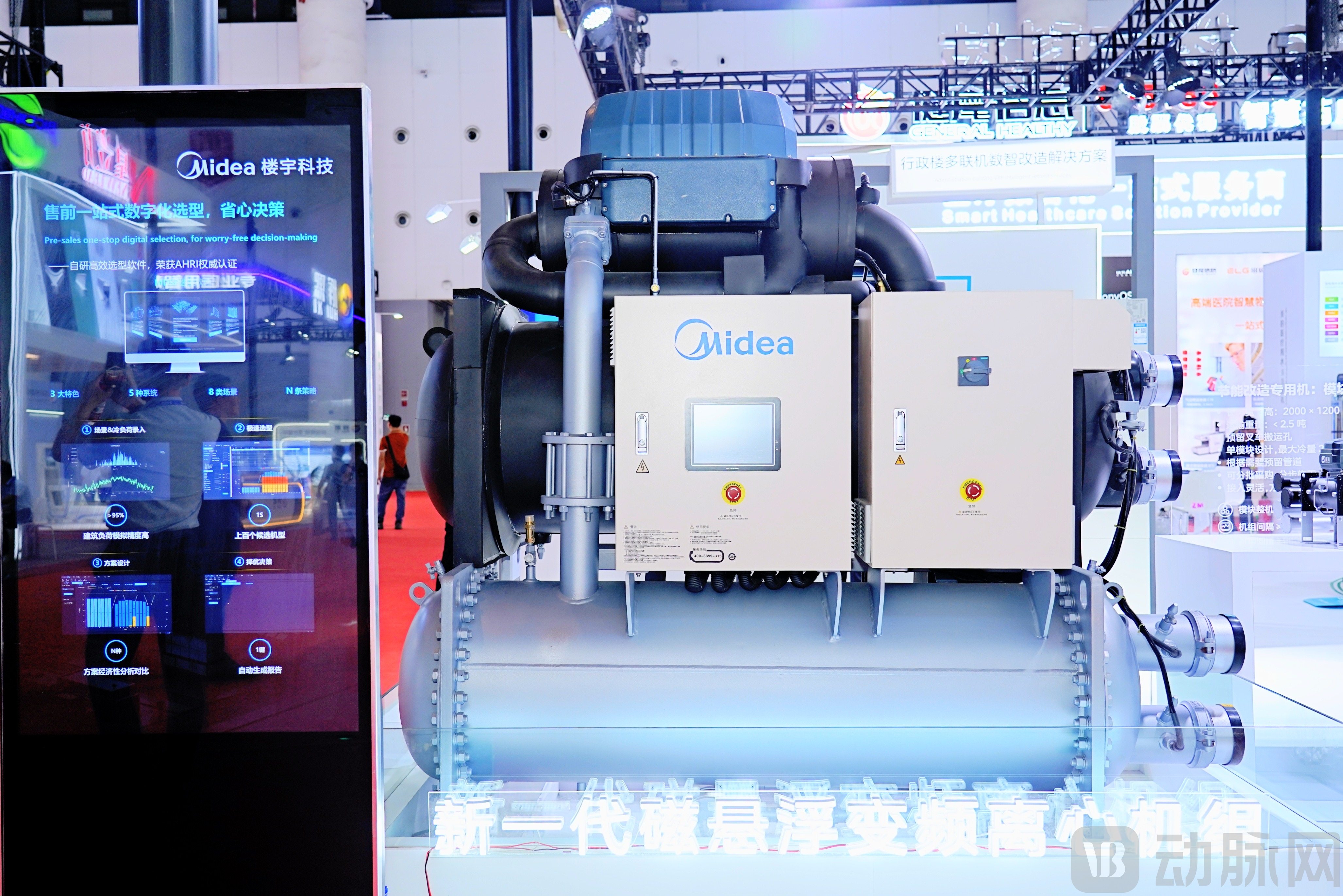
In addition, Kunyu's new-generation magnetic levitation variable-frequency centrifugal chiller adopts a modular design, enabling flexible capacity expansion and convenient installation in retrofit scenarios.
Midea has also launched its self-developed magnetic levitation compressor, which is compatible with host units from various brands, addressing the energy-saving retrofit needs of aging water-cooled screw chiller units that have not yet reached their end-of-life service period. After the retrofit,Energy efficiency improved by 30%–40%, and host maintenance costs reduced by 50%.
In addition to reducing the proportion of hospital energy consumption by upgrading hardware with core technologies, Midea Building Technologies has also independently developedi-Steward Smart O&M Software, by providing services such as schedule management, locking functions, permission settings, multi-level administrator configurations, and monthly analysis reports, as well as analyzing usage behavior through built-in algorithms, it further reduces the energy consumption of air conditioning equipment and improves equipment management efficiency.Achieve integrated hardware-software design for HVAC, automatic control, and programming by leveraging both hardware devices and software systems.
In this regard, Lv Jindong, Director of the Department of Preventive Healthcare Management at Shanxi Provincial People's Hospital, commented in light of the hospital’s actual conditions.“Traditional energy management approaches lack scientific and flexible mechanisms, and the retrofitting of older hospitals has been incomplete, resulting in significant energy waste in healthcare facilities. Currently, however, energy conservation and consumption reduction have become key indicators in the ‘National Performance Evaluation’ for public hospitals. Chinese manufacturers have substantial opportunities in logistical management scenarios such as water, electricity, gas, heating, environmental hygiene, and building infrastructure. Midea Building Technologies provides an excellent example: its independently developed Kunyu next-generation magnetic bearing variable-frequency centrifugal chiller achieves energy control at the design principle level. Furthermore, the company has further reduced the proportion of energy consumption in hospitals through its intelligent operation and maintenance system.”
Leveraging its strengths in hard technology and software systems, along with a deep understanding of smart hospital development, Midea Building Technologies’ solutions have now been implemented inImplemented in 316 cities and 2,071 hospitals across China. Including Shanghai Tongji Hospital, Guangzhou First People's Hospital, and Shanxi Provincial People's Hospital,Public Hospital, including Heyou International Hospital and Shanghai Jiahui International Hospital, among othersPrivate Hospital。
He You International HospitalAsComprehensively Implement Midea Building Technologies’ Smart Hospital Construction Philosophymedical institutions have truly achieved a patient-centered, flat, and centralized diagnosis and treatment process by ensuring the completeness of various functional modules, adopting top-level design, and implementing layered construction and phased implementation of each subsystem, thereby optimizing the healthcare experience. Meanwhile, data-driven approaches are employed to enhance hospital operational efficiency, address hospital management challenges across different scenarios, and build an integrated smart healthcare service platform that combines smart medical care, smart services, smart management, smart operations and maintenance, and smart logistics, thus establishing a distinctive smart hospital.
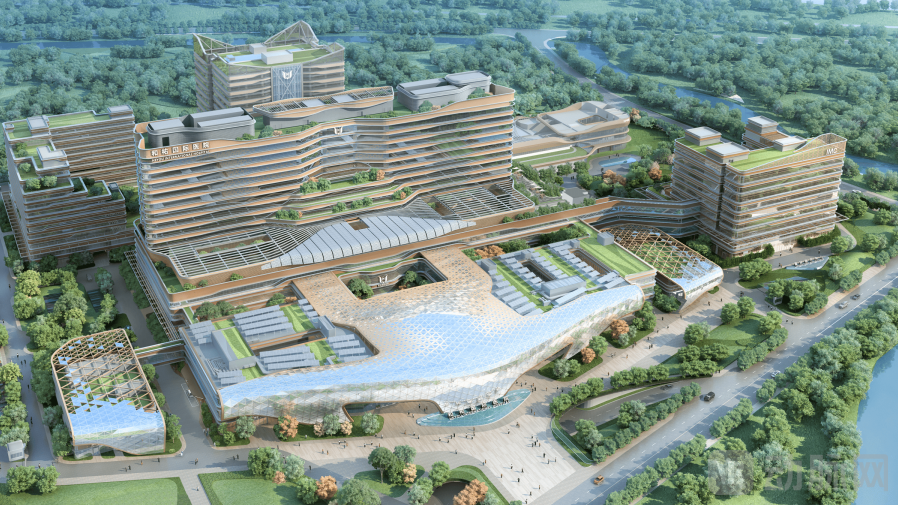
Drawing on the case of the Heyou International Hospital project, Dr. Sun Jing shared insights into the value of its solutions: “Although the administrative building of Heyou Hospital has a floor area of only 29,000 square meters, its monthly energy consumption exceeds RMB 500,000. Based on this figure, the hospital’s annual energy consumption after full operation is estimated to reach RMB 60 million. Achieving a 20% reduction in energy use would save RMB 12 million, equivalent to approximately RMB 200 million in medical revenue for the hospital. On this basis, it is estimated that the hospital’s annual energy costs exceed RMB 60 million. If the 20% energy-saving target is achieved, annual energy savings are projected to amount to approximately RMB 12 million.”
In advancing the development of smart hospitals, Midea Building Technologies has undoubtedly refined its vision for smart healthcare by conducting in-depth research and implementing its “LIFE” solution, thereby driving progress in the medical industry. The value of this solution will continue to be demonstrated through its practical application in hospital settings.