

Pioneering Covalent Targeted Radioligand Platform from Peking University Featured in Nature After 50-Year Gap in Radionuclide Therapy Publications
On the evening of May 23, 2024, the Nature website published a research paper titled “Covalent Targeted Radioligands Potentiate Radionuclide Therapy” by the team of Liu Zhibo from the Department of Applied Chemistry, College of Chemistry and Molecular Engineering, Peking University.
It is understood that,This marks the first time since 1977 that Nature has published work related to radionuclide therapy, and it is the first paper in the field of radiopharmaceutical therapy in nearly 50 years.
The paper reportsDisruptive Technologies in Class I Radiopharmaceutical Design and Outstanding Clinical Data Poised to Rewrite Clinical Practice Guidelines for Related Diseases. Clinical research has developed a novel class of therapeutics based on modern covalent drug molecular engineering, namely Covalent Targeted Radioligands (hereinafter referred to as CTRs). The efficacy of this platform technology has been validated at the molecular, cellular, murine, and patient levels, overcoming the bottleneck of suboptimal therapeutic efficacy associated with fibroblast activation protein (FAP, a pan-cancer target)-targeted radioligands due to insufficient tumor uptake and retention.
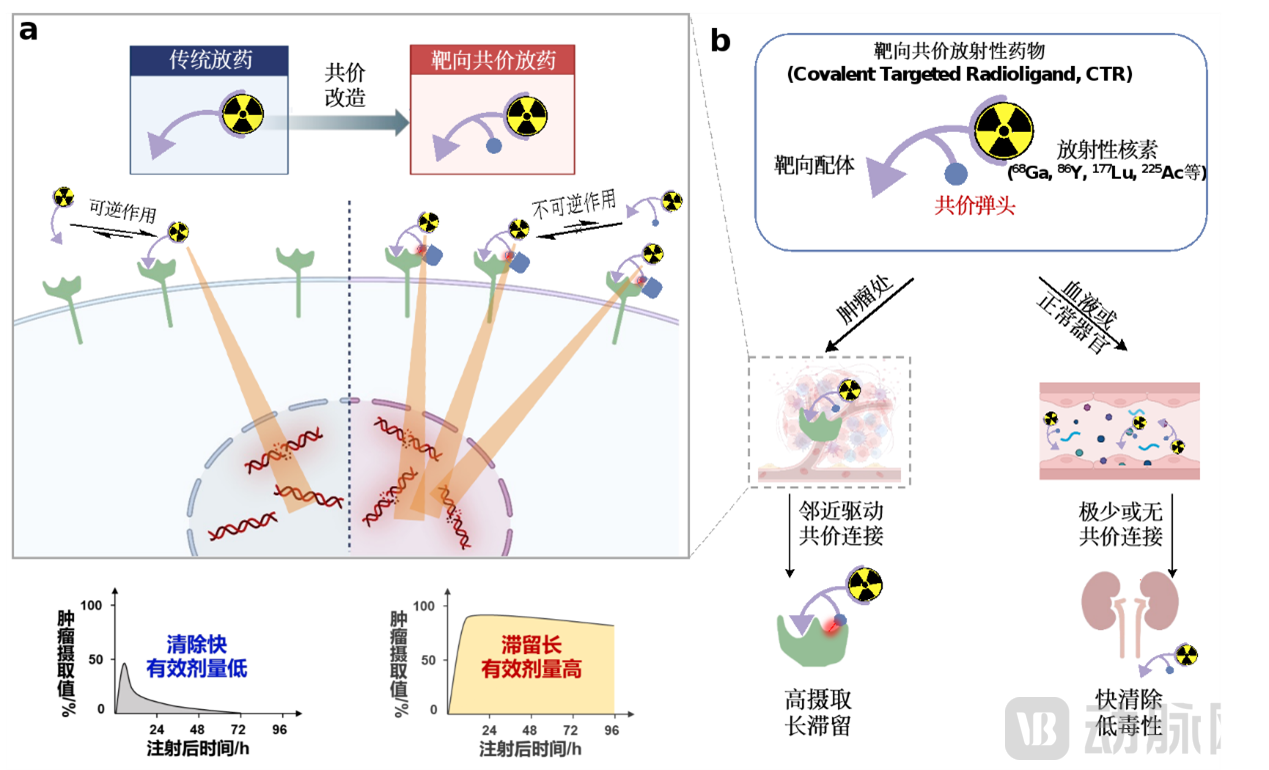
Mechanism of Action and Advantages of Targeted Covalent Radiopharmaceuticals
Liu Zhibo is a Professor and Doctoral Supervisor at Peking University, a recipient of the National Science Fund for Distinguished Young Scholars, Deputy Director of the Department of Applied Chemistry in the College of Chemistry and Molecular Engineering, Principal Investigator at the PKU-Tsinghua Center for Life Sciences, and Lead Scientist at Changping Laboratory.
To address the bottlenecks in the development of novel radiopharmaceuticals and China’s long-standing reliance on imported medical isotopes and radiopharmaceuticals, Professor Liu Zhibo’s team is dedicated to applied basic research in the field of radiopharmaceutical chemistry.Significant breakthroughs have been achieved in key scientific issues, including the structure-activity relationships of radiopharmaceuticals, radiopharmaceutical-driven in vivo chemistry, and their health effects.Published over 30 papers as corresponding author in journals such as Nature, Nature Communications, ACS Central Science, JACS, and Angewandte Chemie. Undertook more than 10 research projects, including the National Science Fund for Distinguished Young Scholars and the Key R&D Program of the Ministry of Science and Technology (Young Scientist Project). Proposed a novel concept for medical radionuclide production, “online dissolution of solid targets,” and achieved the first domestic preparation of scarce medical radionuclides, including Ac-225, Pb-212, Bi-213, and Y-86, using self-developed equipment. Developed several Class 1 innovative radiopharmaceuticals, such as borono acids, which have demonstrated success in clinical trials.
Mentioned in this paperTargeted Radionuclide Therapy (TRT) is a transformative therapeutic approach for addressing metastatic lesions in advanced-stage cancer,Targeting molecules that are highly expressed specifically in tumors, high-affinity specific binding ligands (such as antibody molecules or peptide molecules) are used as carriers to deliver potent beta or alpha therapeutic radionuclides (with ranges limited to the micrometer-to-millimeter scale) to tumor sites. This approach leverages the physical cytotoxic effects of the radionuclides to achieve molecular-level precision radiotherapy.
It is worth noting that radionuclide-targeted drugs, through nuclear radiation, not only kill tumor cells on the surface or in the superficial layers of tumor tissue but also eliminate tumor cells within solid tumors by leveraging the penetrating power of nuclear radiation, known as the “crossfire” effect. Compared with pure biological and chemical drugs,Radiopharmaceuticals possess greater cytotoxic potency.Furthermore, for small tumor lesions or metastases that cannot be detected by imaging diagnostics or surgical exploration, targeted radionuclide therapy will demonstrate its unique therapeutic efficacy.
To optimize the efficacy of molecular-level precision radiotherapy via targeted radionuclide therapy, three major challenges have long persisted: First, enabling radionuclides to precisely locate tumor cells (through ligand-target binding), i.e., achieving superior tumor targeting; Second, prolonging the retention of radionuclides at the tumor site to ensure sufficient cytotoxicity against tumor cells within the limited decay period of the therapeutic radionuclides; Meanwhile, ensuring rapid metabolic clearance of radionuclides from normal organs to minimize treatment-related side effects.
Addressing the challenges in all three areas simultaneously is fraught with difficulties, yet it is key to further improving the efficacy of TRT.
The CTR platform, pioneered by Professor Liu Zhibo’s team, offers a distinct advantage as a novel drug modality that enables highly selective immobilization of radioligands within tumors. This technology enhances tumor uptake and retention of radioligands while ensuring minimal accumulation in the bloodstream and healthy tissues, holding promise for overcoming the longstanding challenge of balancing safety and efficacy in conventional radiopharmaceuticals.
According to the official website of the College of Chemistry and Molecular Engineering at Peking University, CTR has achieved three major technological breakthroughs: CTR enables irreversible, selective covalent binding to the pan-cancer target FAP; CTR-FAPI demonstrates superior PET imaging contrast; and CTR enhances targeted radionuclide therapy by improving retention.
Among these, the rational application of covalent warheads is one of the key factors for the success of Covalent Targeted Radioligand Therapy (CTR). A common concern regarding covalent drugs is the unpredictable off-target toxicity. Since radioligands are generally highly hydrophilic and contain multi-charged chelators, most radioligands have limited passive permeability across cell membranes; therefore, the off-target effects of CTR on intracellular proteins may not be a significant issue. Researchers primarily evaluated the selectivity of CTR-FAPI for FAP against homologous membrane proteins and found that it maintained a high 104-fold selectivity for FAP. Furthermore, CTR-FAPI demonstrated extremely low off-target reactivity in both mouse plasma and patient urine.
In terms of PET imaging contrast, based on a series of molecular experiments and cellular validations, researchers further verified in both cell-derived xenograft (CDX) mouse models with high FAP expression and patient-derived xenograft (PDX) mouse models that Ga-68-labeled CTR-FAPI demonstrated more than twofold higher tumor uptake than the original FAPI, while exhibiting rapid clearance from healthy tissues. In a preliminary clinical study on tumor imaging, this strategy identified more medullary thyroid carcinoma lesions than other methods (including conventional FAPI-PET/CT), indicating that CTR-FAPI has the potential to become a next-generation FAPI-PET probe with higher sensitivity.
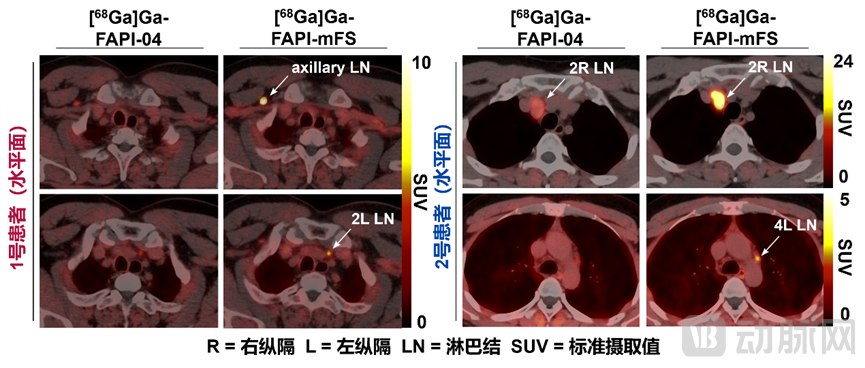
Targeted covalent radiopharmaceuticals exhibit high sensitivity in cancer patients, enabling the detection of tumor lesions that are difficult to diagnose with existing drugs.
It should be noted that the advantages of 68Ga-FAPI PET/CT tumor imaging (PET/CT imaging using 68Ga-labeled fibroblast activation protein inhibitor molecular probes) have become increasingly prominent in recent years. Solid tumors, such as breast cancer, colorectal cancer, and pancreatic cancer, exhibit strong desmoplastic characteristics, leading to a significant increase in tumor-associated fibroblasts and extracellular matrix fibrosis.
In 68Ga-FAPI PET/CT tumor imaging, the low background uptake in muscles, blood pool, liver, and brain results in high specificity and sensitivity for detecting, characterizing, and localizing small primary lesions and metastases, thereby providing valuable decision-making support for selecting treatment modalities such as radiotherapy and chemotherapy. Furthermore, 68Ga-FAPI accumulation is minimally affected by local inflammation, allowing for accurate delineation of tumor boundaries. This facilitates the differentiation between residual/recurrent disease and post-radiochemotherapy fibrosis, supporting biological target volume delineation and treatment response assessment. Meanwhile, 68Ga-FAPI exhibits very low non-specific intestinal/peritoneal uptake, offering advantages in visualizing peritoneal metastases and gastroenteropancreatic lesions.
In enhancing targeted radionuclide therapy by improving retention, researchers labeled CTR-FAPI (i.e., FAPI-mFS) with the β-emitting radionuclide Lu-177 and the α-emitting radionuclide Ac-225, respectively. This approach nearly completely inhibited the growth of subcutaneous tumors with high FAP expression in mice during subsequent treatment. Another SuFEx-engineered radioligand targeting prostate-specific membrane antigen (PSMA) also demonstrated superior therapeutic efficacy. Given the broad range of proteins that can be conjugated with SuFEx warheads, this strategy may be applicable to radiopharmaceuticals targeting other molecules and provides a new avenue for modulating the pharmacokinetics of other low-molecular-weight conjugate drugs.
According to Frost & Sullivan data, the market size of radiopharmaceuticals for diagnostic imaging and therapeutic applications in China has increased from RMB 2.2 billion in 2017 to RMB 3.0 billion in 2021, and is expected to continue growing in the future. The market size is projected to reach RMB 26.0 billion by 2030, with a compound annual growth rate (CAGR) of 22.7% from 2025 to 2030. Meanwhile, Fortune Business Insights reports that the global nuclear medicine market is expected to grow from USD 8.4 billion in 2023 to USD 29.4 billion by 2030.
From a global market perspective, the development of radiopharmaceuticals has been relatively rapid. According to the Pharmaprojects database, more than 60 radiopharmaceuticals have been approved by the FDA for marketing, with nearly 20 approved in the past decade. Among these are nine radionuclide drug conjugates (RDCs), including Novartis’s two blockbuster innovative radiopharmaceuticals: Lutathera (177Lu-dotatate, indicated for the treatment of somatostatin receptor-positive gastroenteropancreatic neuroendocrine tumors) and Pluvicto (177Lu-PSMA-617, the first radiopharmaceutical targeting prostate-specific membrane antigen).
Nuclear medicine in China started late and experienced a prolonged period of stagnation. However, recent national policy support and growing market demand have ushered in new development opportunities for this field. Nevertheless, there is still a long way to go from research and development to market application. Currently, the majority of radiopharmaceuticals used clinically in the domestic market are generic versions of foreign products, with a scarcity of independently developed, original radiopharmaceuticals and few new products launched in recent years. This implies that local enterprises need to adopt differentiated strategies to establish their competitive advantages.
The “Medium- and Long-Term Development Plan for Medical Radioisotopes (2021–2035),” jointly issued by eight national ministries and commissions, explicitly states: “China’s progress in the development of radiopharmaceuticals has been slow, with a lack of independently developed, original radiopharmaceuticals. Most radiopharmaceuticals used in clinical practice are generic versions of foreign products.” Meanwhile, diagnostic radiopharmaceuticals are often used in conjunction with PET/CT or SPECT/CT equipment in clinical settings. If imaging equipment is regarded as the “gun,” then radiopharmaceuticals are the “bullets.” The advancement of nuclear medicine relies on both equipment and pharmaceuticals; only their combination can enable effective targeted diagnosis and therapy in nuclear medicine. To this end, the national government has called for strengthened independent research and development of both radiopharmaceuticals and nuclear medicine equipment.
Perhaps in response to this demand and to accelerate the filling of gaps in market and clinical needs, Raidio, which holds China’s first Class 1 innovative nuclear medicine drug, 99mTc-3PRGD2, has signed a commercialization cooperation agreement. Under this agreement, Raidio has granted Baiyang Pharmaceutical exclusive commercialization rights in mainland China for its independently developed portfolio of radiopharmaceuticals and imaging equipment, including 99mTc-3PRGD2. Furthermore, as a strategic investor in Raidio, Baiyang Pharmaceutical Group, the parent company of Baiyang Pharmaceutical, has joined hands with Raidio to plan an integrated “pharmaceutical-device” full industry chain. Beyond radiopharmaceuticals, the two parties are collaboratively deploying resources in the research, development, and manufacturing of nuclear medicine molecular probes and high-sensitivity nuclear medicine SPECT/CT systems.
Nowadays, the report by Liu Zhibo’s team on targeted covalent radiopharmaceuticals has added a significant milestone to China’s independent R&D capabilities in nuclear medicine technology, with its subsequent commercialization and practical application also holding great promise. Currently, China’s nuclear medicine industry has formed a duopoly dominated by Dongcheng Pharmaceutical and China Isotope & Radiation Corporation, resulting in a relatively stable competitive landscape. However, as more differentiated new technologies that emphasize integrated theranostics and precision medicine from the early stages of independent R&D emerge, the future competitive landscape of the nuclear medicine market is expected to undergo transformation and move towards diversification.
References:
PKU Breakthrough! Nature Publishes Liu Zhibo Team’s Report on Targeted Covalent Radiopharmaceuticals
Changping Laboratory Official Website