

Lingshi Zhiyuan Completes Angel Financing to Accelerate Development of Universal TCR Fusion Protein Therapeutics
VCBeat has learned at the earliest opportunity that,Shanghai Lingshi Zhiyuan Biotechnology Co., Ltd. (hereinafter referred to as “Lingshi Zhiyuan”)Announced the completion of its angel round financing. The proceeds from this round will be primarily used to optimize the core technology platform and key pipeline molecules, as well as to conduct Investigator-Initiated Trials (IIT) for its TCR drug pipeline. The company is currently actively advancing its Series A financing round and has received interest and term sheets (TS) from several renowned biomedical investment institutions. It expects to close the Series A round as soon as possible to accelerate the IND filings and clinical development of its core pipeline.

The Lingshi Zhiyuan team has accumulated 7 years of experience in the field of TCR discovery and TCR drug development, and has independently developed“ TCR MinerTMDiscovery Platform”and“Soluble TCR Engineering Technology”Leveraging two major technology platforms, the company is a platform-based enterprise with capabilities in both TCR discovery and TCR drug development. By targeting intracellular targets that account for 80% of the human genome, TCR therapies hold promise for providing novel treatment options and hope to the 80% of tumor patients who do not respond to immune checkpoint inhibitor therapy. The company is currently focused on the discovery and development of monoclonal TCR drugs for solid tumors, with future expansion planned into areas such as autoimmune diseases.
CAR-T cell therapy has dominated the field of hematologic malignancies, with nine CAR-T therapies approved globally to date, achieving remarkable outcomes in this area. However, progress in CAR-T cell drugs for solid tumors has been slow. In contrast to CAR-T cells, TCR-T cell therapies have demonstrated exceptional therapeutic potential in the treatment of solid tumors. Multiple clinical studies have shown that TCR-T cells can provide survival benefits to patients with advanced solid tumors.
Recently, Immatics announced the latest data on its T-cell therapy IMA203 (a TCR-T cell drug) for the treatment of patients with metastatic melanoma, showing that 87% of patients achieved tumor shrinkage and the confirmed objective response rate (cORR) reached 55%.
Engineered T-cell receptors (TCRs) can be developed into soluble TCR fusion protein therapeutics. In 2022, the U.S. FDA approved Kimmtrak, an innovative TCR-based therapy, for the treatment of unresectable or metastatic uveal melanoma. It has since been approved in more than 30 countries, including the United States, the European Union, Canada, Australia, and the United Kingdom, with its sales continuing to grow.
Compared with TCR-T cell therapy, TCR fusion protein drugs offer advantages such as lower manufacturing costs, "off-the-shelf" availability, and the potential for repeated dosing, gradually becoming a popular strategic focus for pharmaceutical companies both in China and abroad. TCR fusion protein drugs are a novel class of bispecific or multispecific TCR-based therapeutics. They consist of an engineered high-affinity TCR and an effector domain (e.g., CD3). The engineered TCR component recognizes specific antigen-HLA complexes on the surface of tumor cells, while the T-cell-activating antibody component recruits and activates T cells to exert anti-tumor cytotoxic effects.
Shanghai Lingshi Zhiyuan Biotechnology Co., Ltd. features a highly differentiated technology platform:1. TCR MinerTM can discover novel pHLA and TCR【Figure 1. TCR Discovery Technology Platform】;2. The TCR drug technology development platform has the capability to simultaneously develop TCR-T cell drugs and TCR fusion protein drugs, especially with its proprietary solubility engineering technology for TCR fusion protein drugs, making it a scarce core TCR drug development platform globally.
Currently, 100% of the company’s TCR pipeline consists of First-in-Class projects, with a strategic focus on gastrointestinal tumors [Figure 2. Product Pipeline], including targets that have historically been challenging to drug, such as:Star targets such as RAS G12V and TP53. Currently, the core pipeline has demonstrated excellent preclinical results, entered the clinical research phase (IIT), and preliminarily proven its safety and efficacy, thereby completing clinical proof of concept.. More importantly,Shanghai Lingshi Zhiyuan Biotechnology Co., Ltd. has identified preliminary preclinical candidate (PCC) molecules for its KRAS G12V TCR fusion protein therapeutic and is continuing to optimize them, with plans to initiate Investigational New Drug (IND) applications in both China and the United States this year.
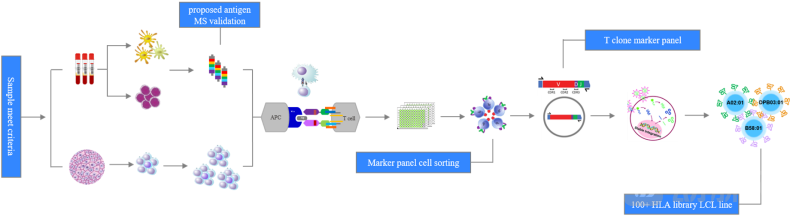
Figure 1. TCR Discovery Technology Platform and Technical Roadmap

Figure 2. Product Pipeline
In fact, the TCR itself serves as the “radar of a cruise missile.” In addition to its application in the development of cell therapies and T-cell engagers, it holds promise for conjugation with cytotoxic agents and radionuclides to create novel drug modalities.
Shanghai Lingshi Zhiyuan Biotechnology Co., Ltd. has currently established collaborations with leading pharmaceutical and biotechnology companies across various fields to jointly develop and advance multiple TCR fusion protein drug modalities, including but not limited to TCR bispecific antibodies, TCR toxin conjugates, and combinations with mRNA vaccines.Given the targeting and effector capabilities of TCRs, it is believed that they will certainly secure a place in the global pharmaceutical market in the future, potentially even giving rise to blockbuster products.
Mr. Cao Wei, Founder and Chairman of Lingshi ZhiyuanStatement: We extend our sincere gratitude to the investors for their high recognition of the Lingshi Zhiyuan team and its core technologies, as well as their strong support. This round of investment will press the start button for the company’s accelerated development. In the future, the Lingshi Zhiyuan team will continue to strive to promote and lead the development and widespread adoption of TCR-based therapies, bringing new treatment options and hope to patients with solid tumors.