

IMS Precision Medicine Files IPO Prospectus Following Breakthrough in Gout Risk Assessment and Tens of Millions RMB Angel Funding
Gout has long been dubbed the “crown of pain” due to the severity of its attacks. According to the 2019 Chinese Guidelines for the Diagnosis and Treatment of Hyperuricemia and Gout, hyperuricemia is clinically diagnosed when serum uric acid levels exceed the saturation concentration of 420 μmol/L on two separate days. When individuals are found to have elevated uric acid levels during routine health check-ups but remain asymptomatic, this condition is clinically diagnosed as asymptomatic hyperuricemia.
Retrospective study results indicate that the majority of patients with hyperuricemia remain in a long-term asymptomatic state, with only approximately 10% eventually progressing to gout attacks. Clinical data from both domestic and international sources demonstrate that higher serum uric acid levels and longer disease duration are associated with an increased risk of developing gout. However, gout flares are influenced by multiple factors beyond serum uric acid levels, including age, genetic predisposition, dietary habits, and environmental factors. Relying solely on current serum uric acid indicators is insufficient for identifying individuals at high risk of gout attacks, thereby precluding the implementation of early, precise interventions for these high-risk patients.
In the face of China’s vast population of patients with hyperuricemia, there is an urgent need for precise technical means to control the risk of gout attacks. This may explain the theme of World Gout Day on April 20, 2024: “Precise Prevention and Control, Enjoy Life.” On this very day, iMSpc Biotech (hereinafter referred to as “iMSpc”) launched the world’s first gout risk assessment test based on Liquid Chromatography-Tandem Mass Spectrometry (LC-MS/MS) technology. Leveraging iMSpc’s proprietary metabolomics technology and machine learning models, this product can identify individuals at high risk of gout attacks among patients with hyperuricemia in advance. It assists clinicians in initiating early intervention and scientifically evaluating the effectiveness of prevention and control measures, thereby filling a significant gap in the precise risk assessment and early management of diseases within the field of hyperuricemia and gout diagnosis and treatment.
iMSpc Biotech is a technology enterprise dedicated to the precise detection of hyperuricemia and gout, as well as the commercialization of innovative diagnostic and therapeutic technologies. The company has recently secured tens of millions of RMB in angel-round funding from Suzhou Yisheng Capital.
The research and development process for many of the company’s core patented technologies can be traced back to 2016, originating from a collaboration under the Ministry of Science and Technology’s Key R&D Program for Precision Medicine in Hyperuricemia and Gout. This program involved the Institute of Metabolic Diseases at Qingdao University, Professor Li Changgui (a Taishan Scholar), and Professor Yin Huiyong, Chief Scientist at the Center for Metabolomics and Mass Spectrometry, Institute of Nutrition and Health, Chinese Academy of Sciences (currently Tenured Professor in the Department of Biomedical Sciences at City University of Hong Kong).
On March 25, 2021, the research paper titled “Serum metabolomics identifies dysregulated pathways and potential metabolic biomarkers for hyperuricemia and gout,” co-authored by Professor Yin Huiyong’s research group at the Shanghai Institute of Nutrition and Health, Chinese Academy of Sciences, and Professor Li Changgui’s team from the Affiliated Hospital of Qingdao University, was published online in Arthritis & Rheumatology, the official journal of the American College of Rheumatology.
This study utilized high-resolution mass spectrometry-based metabolomics and machine learning systems to reveal significantly altered metabolic pathways in gout and hyperuricemia, successfully identifying 13 potential metabolites that sensitively distinguish between asymptomatic hyperuricemia and gout. Furthermore, the study identified seven metabolites as potential biomarkers for differentiating gout from asymptomatic hyperuricemia, which holds significant clinical implications for predictive models distinguishing gout from hyperuricemia.
Leveraging the scientific research achievements from its collaboration with the Affiliated Hospital of Qingdao University and the Institute of Nutrition, Chinese Academy of Sciences—a “national team” in the field—the company has continuously increased its R&D investment and completed the second iteration of its proprietary gout metabolic profile testing method. Meanwhile, the proprietary machine learning model used for risk assessment has undergone multiple upgrades, achieving further improvements in prediction accuracy. A novelty search conducted by an authoritative institution has confirmed that the model’s performance is at a leading level domestically.
Thus, on World Gout Day, April 20 this year, iMSpc Biotech successfully launched the world’s first mass spectrometry-based kit for detecting gout-related metabolic markers. This kit enables assessment of gout attack risk in patients with asymptomatic hyperuricemia, with results reported as “low risk vs. high risk.” It provides clinicians with critical decision-support information, guiding patients to promptly adopt targeted therapeutic interventions and lifestyle modifications, thereby effectively reducing the risk of gout flares.
Leng Xiang, the company’s CEO, began his career as a surgeon. Over the past two decades in the healthcare industry, he has held key positions at multiple Fortune 500 companies—including Johnson & Johnson and Ping An—as well as at state-owned medical big data enterprises. From the company’s inception, he successfully recruited Cao Rong as Chief Operating Officer (COO). Cao had previously worked with Leng for many years at Ping An and Lianren Health and brings extensive experience in implementing pharmaceutical enterprise projects. Since then, the company has continued to bring on board several like-minded industry veterans to assume critical leadership roles.
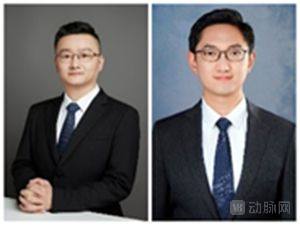
CEO Leng Xiang COO Cao Rong
Professor Li Changgui, the founding scientist of iMSpc Biotech, serves as the Executive Head of the Hyperuricemia Group under the Endocrinology Branch of the Chinese Medical Association, Chairman of the Asia-Pacific Gout Alliance, Director of the Shandong Provincial Clinical Medical Center for Gout, and Dean of the Institute of Metabolic Diseases at Qingdao University. He also served as the editor-in-chief of the 2019 "Chinese Guidelines for the Diagnosis and Treatment of Hyperuricemia and Gout." Furthermore, the biobank for hyperuricemia and gout, established over many years by the affiliated hospital, has accumulated 100,000 samples as of 2024, making it the largest of its kind globally.
Professor Yin Huiyong is the former Chief Scientist at the Center for Nutrition and Metabolism Mass Spectrometry Analysis, Chinese Academy of Sciences; Secretary-General of the Asia-Pacific Gout Alliance; and Tenured Professor in the Department of Biomedical Sciences at City University of Hong Kong. He also contributed to the compilation of the 2019 edition of the "Chinese Guidelines for the Diagnosis and Treatment of Hyperuricemia and Gout."
The iMSpc Biotech team maintains ongoing, close collaboration with Professors Li Changgui and Yin Huiyong in both clinical and research domains, ensuring the company’s sustained vitality in clinical promotion and continuous R&D.
Acute gout attacks cause severe pain and can lead to serious complications or even disability, making them the primary concern for both physicians and patients with gout.
Current diagnostic methods are lagging. Although serum uric acid is a widely used and important biochemical marker for the clinical diagnosis of gout, this single indicator cannot assess or predict the risk of gout flares in patients with hyperuricemia, nor can it accurately identify patients who require early treatment.
A major factor limiting the widespread adoption of urate-lowering therapy is that all currently available urate-lowering drugs carry certain safety concerns, with overtreatment leading to risks outweighing benefits. Commonly used urate-lowering agents—allopurinol, benzbromarone, and febuxostat—also have safety limitations, primarily posing risks of hypersensitivity reactions and cardiovascular, hepatic, and renal adverse effects. Evidence indicates that, globally, adherence to urate-lowering therapy among gout patients is poor.
Therefore, as public health awareness continues to rise, a growing number of people recognize that the benefits of early detection and prevention far outweigh those of treatment after disease onset.
iMSpc Biotech has firmly addressed core clinical pain points by launching a diagnostic product for “Acute Gout Attack Risk Assessment.” This tool aids in diagnosing suspected gout patients and predicting gout flares in individuals with long-term hyperuricemia, thereby precisely identifying patients who require early therapeutic intervention. In the future, the company will also introduce a diagnostic product to predict the frequency of gout attacks, facilitating precise subtyping of hyperuricemic gout and personalized medication management.
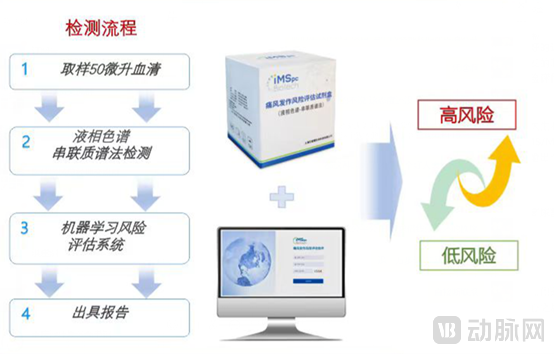
Image provided by iMSpc Biotech
Recently, iMSpc Biotech has signed a tripartite strategic cooperation agreement with KingMed Diagnostics and Bioprofile Technology. This strong alliance focuses on the translation and application of gout risk assessment products, as well as future market promotion, aiming to rapidly bring the latest scientific achievements into clinical practice and to the market, thereby serving hundreds of millions of patients with hyperuricemia and gout.
Specifically, BioQuest leverages its end-to-end integration capabilities—spanning project consultation, R&D, regulatory compliance, and large-scale manufacturing—to ensure that iMSpc Biotech’s innovative achievements strictly adhere to regulatory standards and efficiently translate scientific research into commercial products. Meanwhile, KingMed Diagnostics capitalizes on its strengths in research translation to drive the clinical validation, commercialization, and market adoption of this product.
Going forward, iMSpc Biotech will also integrate services such as targeted gout medications, health management systems, health insurance, customized nutritional supplements, and medical consultation assistance, thereby unlocking a multi-billion-dollar industrial ecosystem in the field of precision prevention and control of metabolic diseases.
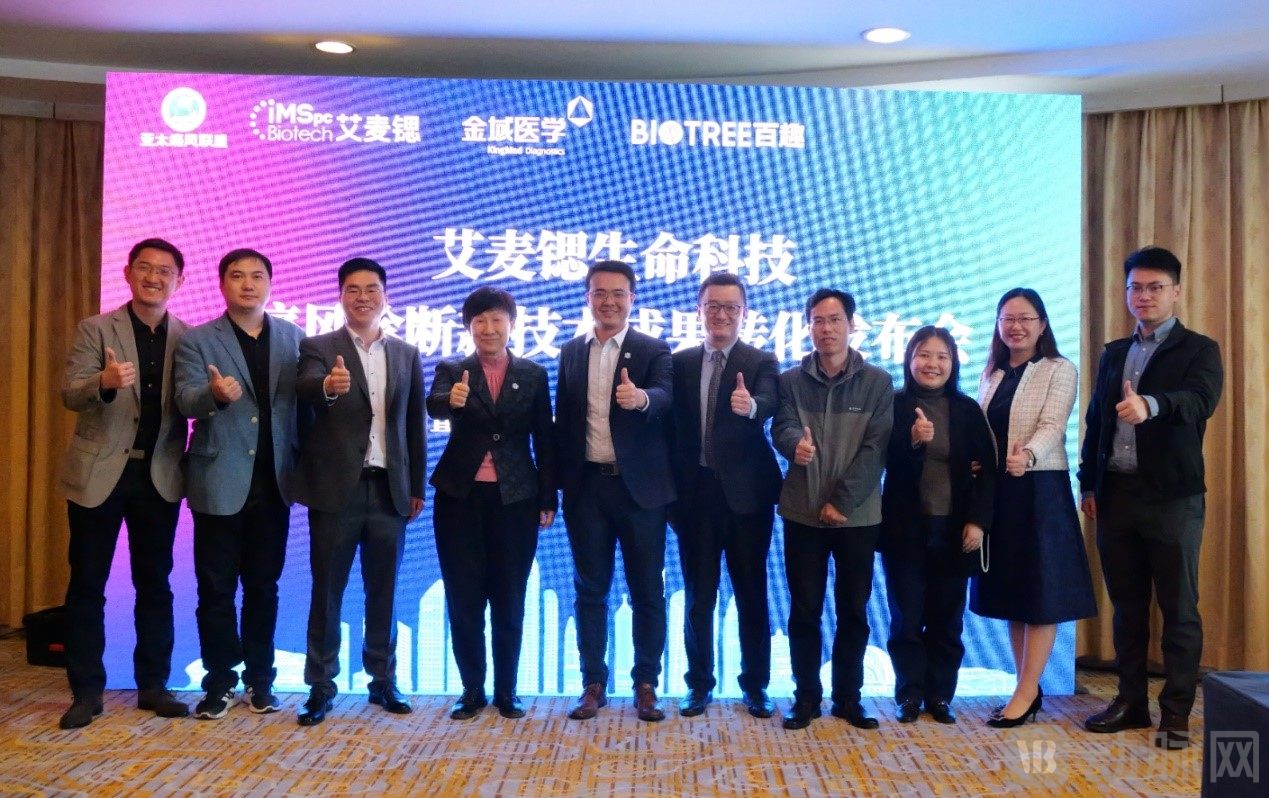
Group photo of representatives from iMSpc Biotech, KingMed Diagnostics, and BioNovoGene. Photo provided by iMSpc Biotech