

Nosekai Tech CEO Liang Li: Pioneering 'Pain-Free' Nasal Surgery with China's First Nasal Cavity Stent Now Launched
Nasal congestion is a common symptom. It often occurs during colds, allergies, or sinusitis flare-ups. While nasal congestion can be temporary, it may also become chronic, with certain nasal conditions leading to frequent episodes.
According to statistics, there are over 350 million patients with rhinitis in China, as well as tens of millions of patients with deviated nasal septum and adenoid hypertrophy; these conditions can all lead to nasal obstruction.It is no exaggeration to say that everyone has friends around them who have long been troubled by nasal congestion.
Currently, medications are available to alleviate nasal congestion caused by nasal mucosal congestion in conditions such as allergic rhinitis and atrophic rhinitis; however, more severe cases of nasal obstruction can only be improved through surgery. Some patients have stated:“It’s not that we don’t want to perform the surgery, but that we dare not.”
What instills fear in patients is not the surgical procedure itself, but the postoperative nasal packing. While rhinologic surgery has become increasingly mature through several iterations, the materials used for postoperative packing have seen little change over the past few decades.
Existing packing materials cause significant discomfort to patients.. First, postoperative patients need to have expandable sponges packed in their nasal cavities for 48–72 hours. During this period, patients can only breathe through their mouths, enduring not only various discomforts caused by impaired breathing but also inevitable dryness of the lips and tongue. Second, removing the expandable sponges causes a stinging sensation, as well as a tearing feeling as the congealed blood separates from the sponge. Some patients have described it as “feeling like their soul was sucked out of their brain.”
From the perspective of Professor Liu, who has many years of frontline clinical experience,When safety and efficacy are assured, the comfort of medical care is equally important.In response to the above market imperatives and clinical pain points, Nosecare Technology andBeihang UniversityandPeking University Third HospitalCo-developedNovel Nasal Stent。
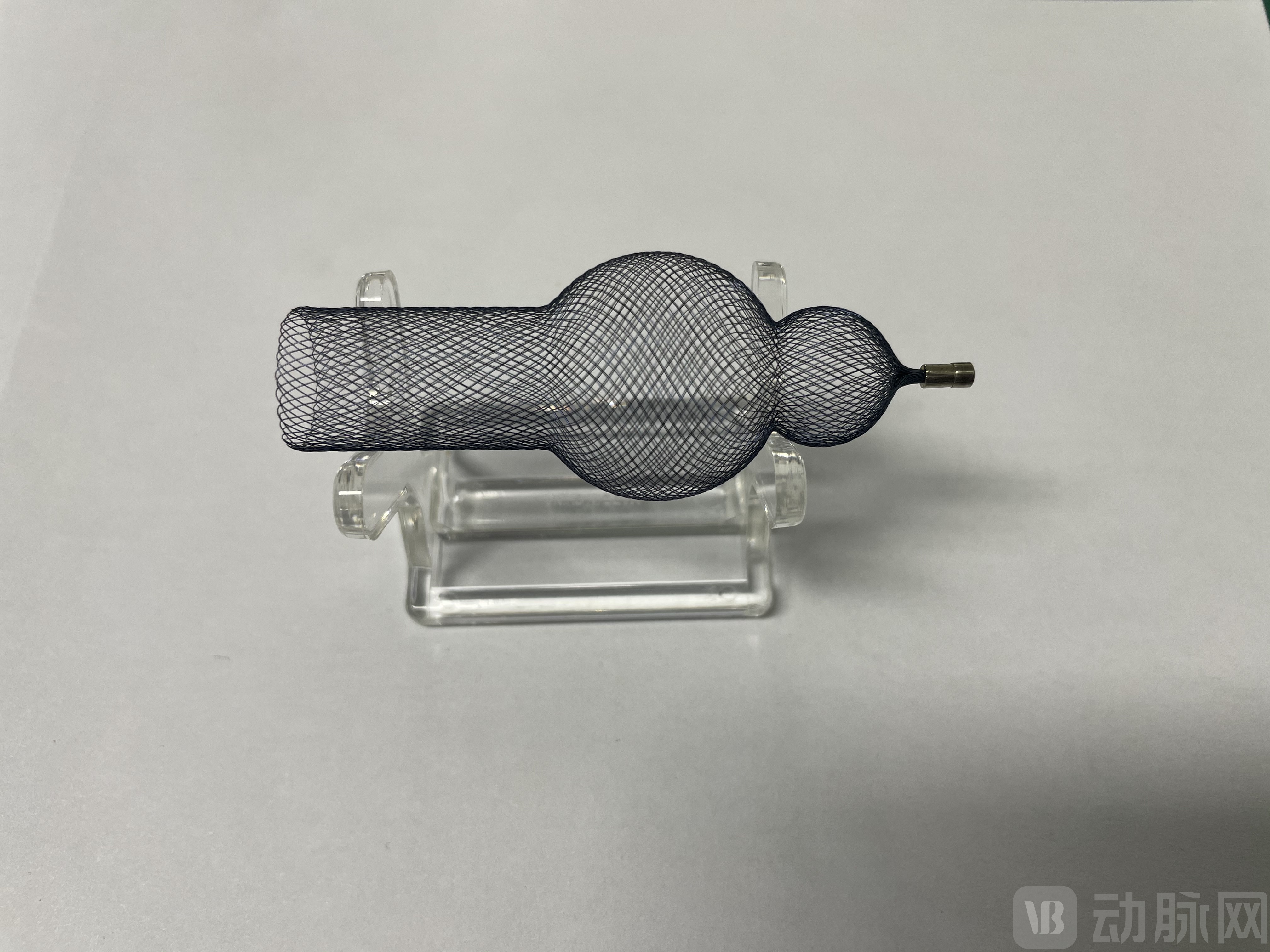 Novel Nasal Stent (Photo provided by the interviewee)
I. Original Nasal Stent: Safe, Comfortable, and Drug-Eluting
The novel nasal stent automatically rebounds and adheres to the internal nasal cavity upon insertion.Not only does it provide compression, reshaping, and hemostatic effects, to prevent postoperative complications such as nasal septal hematoma, recurrent deviation, and nasal cavity adhesions;It can also be loaded with drugs to prevent and treat nasal diseases.
More importantly, postoperative nasal packing with a hollow stent does not compromise normal breathing and reduces adhesion to the nasal cavity caused by blood coagulation upon removal, thereby significantly enhancing patient comfort.
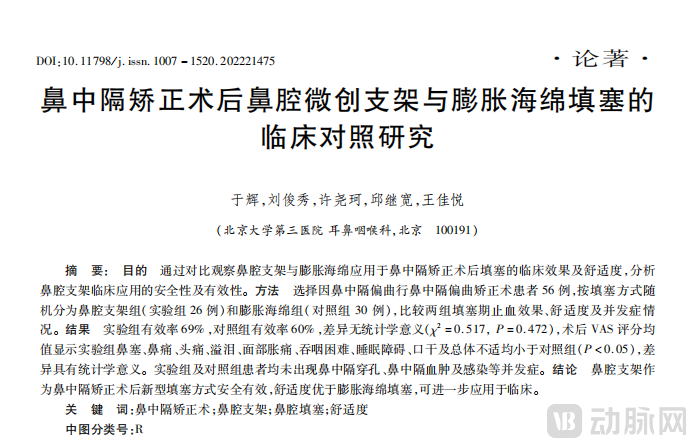 The team demonstrated the efficacy of nasal stents through a controlled trial (photo provided by the interviewee)
In addition to postoperative packing, this nasal stent has broader clinical applications. For instance, patients who are fearful of surgery or have contraindications that preclude endoscopic sinus surgery can be treated using this drug-eluting nasal stent. Furthermore, the stent can improveElderly Snorers, Patients with Sleep Apnea Syndrome, and Children with Adenoid Hypertrophysymptoms and improve patients' quality of life.
II. The Product of Medicine and Engineering
Based on the publication status of academic papers and patent information, this product is alsoChina's First Nasal Stent with Independent Intellectual Property Rights, and has beenDesignated as an “Innovative Medical Device” by the Jiangsu Provincial Medical Products Administration。
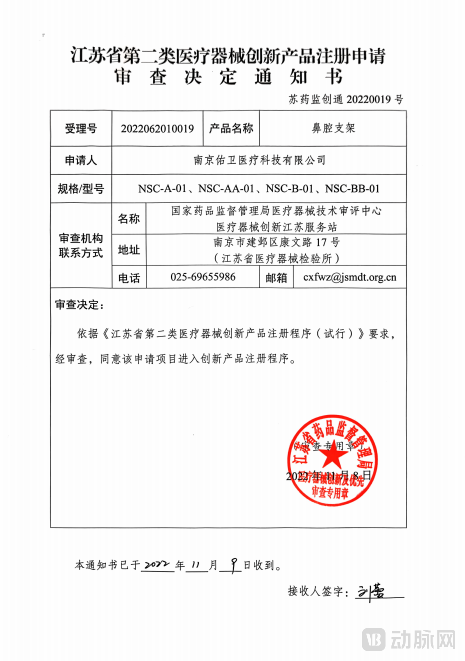
Nasal stents have been approved through the innovative device registration pathway (Photo provided by the interviewee)
Product innovation is inextricably linked to medical-engineering collaboration. First,Peking University Third Hospitalwith extensive clinical experience, providing substantial support from large-scale clinical big data for product development, thereby making product design more aligned with clinical needs.
Secondly,Beihang UniversityEngineering advantages, for the product'sFluid MechanicsandStructural MechanicsThis provides a foundation for research. The stent’s unique braiding method enables it to rapidly resume its pre-set shape upon insertion into the nasal cavity, while maintaining robust structural support. Leveraging clinical data provided by Peking University Third Hospital, the Beihang University team also optimized the design of the stent’s hollow mesh structure to ensure optimal airflow dynamics once the device is positioned in the nasal cavity. The company is currently actively engaged in the research and development of several novel materials, laying the groundwork for future products incorporating these advanced materials.
Liang Li also proudly told VCBeat, “Our company has been shortlisted for ‘"National Ministry of Industry and Information Technology's Open Competition for Innovation Tasks in Biomedical Materials (First Batch)""Corporate List, in my opinion, this is the highest honor our company has received."
This Nasal StentObtained the medical device product registration certificate in 2023., in 2024, market promotion efforts will be carried out targeting 102 authoritative domestic hospitals specializing in rhinology. Meanwhile, leveraging its R&D and registration experience with nasal stents, Nosecare Technology will also advance the expanded applications of nasal stents and develop multiple product pipelines, including adenoid stents. In the future, the company will delve deeper into a broader range of disease areas to provide patients with comfortable medical care.
III. Empowering Enterprises to Serve as the Nexus for Interdisciplinary Collaboration
Throughout the development of nasal stents, the integration of medicine and engineering has been their most distinctive hallmark. For a team combining these disciplines, bridging the linguistic gap between specialties is key to alleviating challenges. Reflecting on this, Liang Li expressed considerable confidence: “In our team, I happened to serve as a mediator.”
Liang Li graduated with a degree in Biomedical Engineering from the First Military Medical University of Guangzhou. His interdisciplinary background has enabled him to build a career serving major medical device companies. With over two decades of market experience and solid professional expertise, he is highly adept at addressing language barriers within teams.
Each professor is a highly competent expert in their own field, but when venturing into other domains, there will always be someone more knowledgeable than they are. Therefore,In medical-engineering collaborative teams, it is essential not only for both parties to understand each other’s needs but also to recognize each other’s professional expertise.
This principle has been implemented not only within Nosecare Technology’s R&D team but also across its commercialization team. In just five short years since its establishment, Nosecare Technology has completed three rounds of financing and established both its production base and quality management system.In 2024, Nosecare Technology is set to launch a new round of financing., to drive R&D of the product portfolio and promote the commercialization and internationalization of nasal stents.
Meanwhile,Nosecare Technology is also seeking more partners to expand into international markets, the medical aesthetics market, e-commerce, and pharmacy sales channels.
Currently, there are no oligarchs in the ENT sector, and the nasal stents designed and manufactured by Nosecare Technology stand out uniquely in the market. Liang Li told VCBeat: “In the future, Nosecare Technology will continue to advance toward its corporate vision of ‘Healthy Breath,’ striving to provide more patients with comfortable medical products and services.”