

From National Key Research Project to Market Leader: Jingchuang Haoda's Ultra-Fast Intelligent 3D Medical Printing System
In 2021, leveraging national-level scientific research platforms, the Chengdu High-Tech Industrial Development Zone Government and West China Hospital of Sichuan University jointly established the “West China Medical Robot Research Institute,” the first new-type comprehensive R&D institution in western China to integrate industry, academia, and research with a core focus on industrial incubation, targeting technological directions in the medical robotics industry.
Characterized by “integration of industry and education” and “industry incubation,” the institution has gathered a cohort of outstanding domestic and international talents in the medical robotics sector and incubated a series of cutting-edge projects, among which is Chengdu Jingchuang Haoda Medical Technology Co., Ltd.
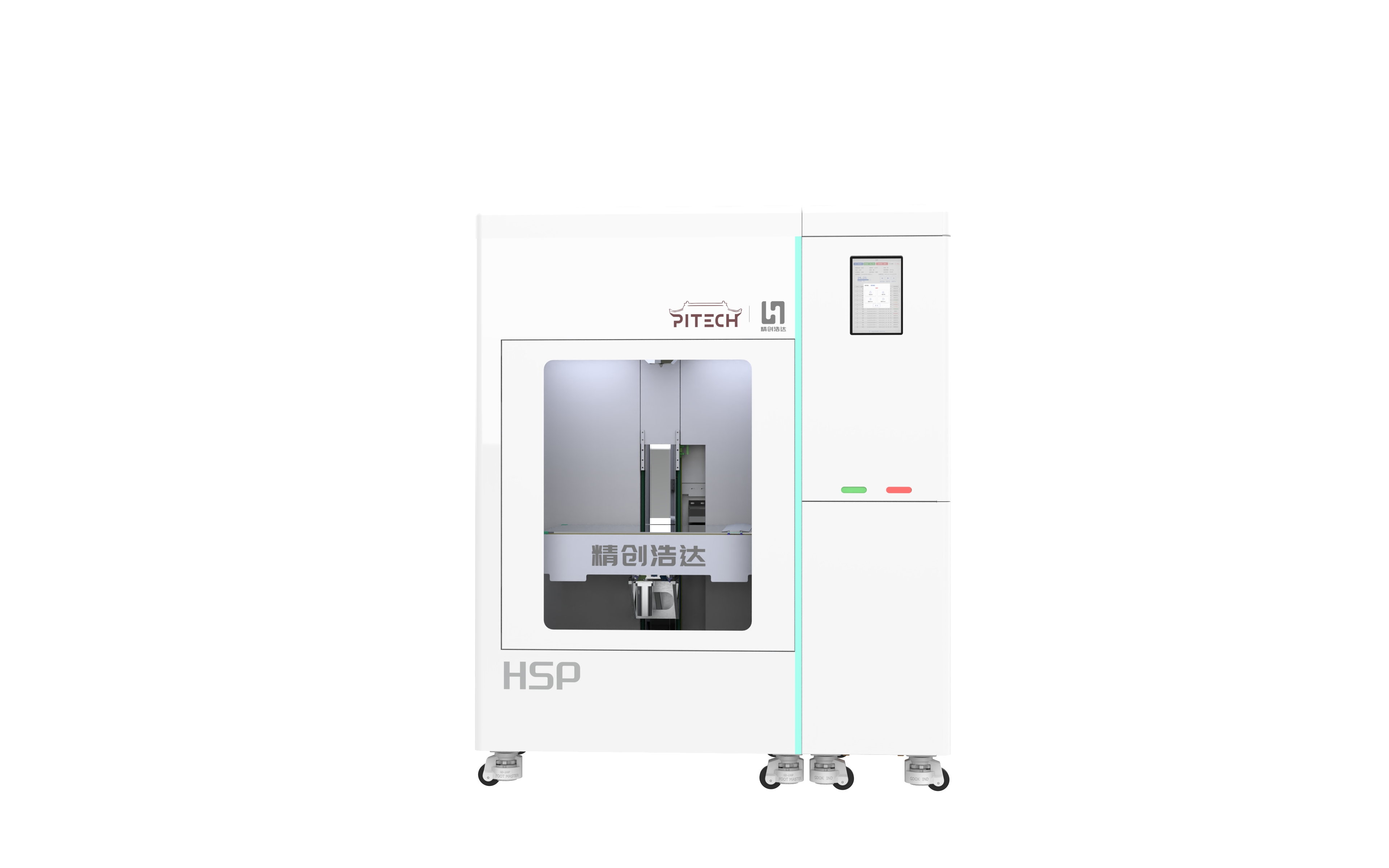
In December 2023, Jingchuang Haoda officially became a commercial enterprise, with the mission of “focusing on precise, personalized, and intelligent medical devices,” and delivering precision medical devices to the industry. At this stage, Jingchuang Haoda has primarily launched an intelligent high-speed 3D medical printing system and Class I external fixation brace products based on 3D printing technology, which have gained widespread recognition from several hospitals in China’s first-tier cities.
During the interview, Wu Wentao, founder of Jingchuang Haoda, repeatedly emphasized to VCBeat: “Jingchuang Haoda should not be simply categorized as a 3D printing technology company. Our positioning is that of a company specializing in precise, personalized, and intelligent medical devices, with 3D printing technology merely being our preferred technological application at this stage.”
So, why has 3D printing technology become the preferred application technology for Jingchuang Haoda? In addition to 3D printing, what other cutting-edge technologies has Jingchuang Haoda developed and applied in the healthcare sector, and what products have been developed based on these technologies? On a morning in May, Wu Wentao provided detailed answers to these questions in an interview with VCBeat.
As early as 2015, the State Council’s issuance of “Made in China 2025” included provisions on accelerating the development of additive manufacturing (3D printing) equipment. In 2017, twelve departments, including the National Development and Reform Commission, the Ministry of Industry and Information Technology, and the Ministry of Education, jointly released the “Action Plan for the Development of the Additive Manufacturing Industry (2017–2020),” which identified four key areas for 3D printing applications, with the medical sector prominently listed among them.
Furthermore, in terms of market size, China’s 3D printing market reached nearly RMB 3 billion in 2019, with medical 3D printing applications accounting for 12.3% of the market share. From a segmented perspective, the application of 3D printing technology in the healthcare sector can be categorized into four levels based on complexity and depth: preoperative planning and simulation, surgical guides and rehabilitation supports, orthopedic matching and human implants, and bioprinting of living organs.
Among these, the application of 3D printing technology in orthopedics and rehabilitation has become relatively widespread, with a comparatively high level of market acceptance. Therefore, the first niche sector that Chengdu Jingchuang Haoda Medical Technology Co., Ltd. chose to leverage 3D printing technology was the orthopedics sector—or, more precisely,Chengdu Jingchuang Haoda’s primary focus is the rehabilitation sector, specifically within the emergency trauma track.
The reasons are as follows. First, from a market perspective, emergency trauma care does not exhibit distinct hospital-tier characteristics; it can be managed by top-tier hospitals in major metropolitan areas, while primary-care hospitals also handle a significant number of cases. Therefore, to some extent, the market potential is broad, allowing for expansion into both the primary-care market and the hospital market in first-tier cities. (Furthermore, Chengdu Jingchuang Haoda Medical Technology Co., Ltd. has launched differentiated products and formulated distinct marketing strategies tailored to the primary-care market and the top-tier hospital market.)
On the other hand, from the perspective of market competition, as previously mentioned, 3D printing technology has been widely applied in orthopedics and rehabilitation, indicating that there are already many players in this field. This is clearly unfavorable for Jingchuang Haoda, a startup, to enter the market. Therefore, Jingchuang Haoda needs to identify a niche segment that remains a blue ocean to break into the rehabilitation sector.
andTraditional 3D printing technology, due to its time-consuming nature, fails to meet the urgent demand for products in emergency trauma care. Consequently, the emergency trauma sector remains in a blue-ocean competitive stage.
Meanwhile, Jingchuang Haoda has accumulated profound technical expertise and industry experience in achieving rapid 3D printing. VCBeat has learned that the founding team of Jingchuang Haoda has been deeply engaged in the 3D printing-related industries for many years.
Founder Wu Wentao is a former neurosurgeon and radiologist at West China Hospital, as well as the former Director of the Advanced Image Processing Center. He participated in the research, development, and testing of the AMIGO project at Brigham and Women’s Hospital (BWH), Harvard Medical School. He previously served as Executive Vice President of Baiyang Intelligent Technology, Vice President of Imaging at Shenzhou Medical, and Chief Technology Officer (CTO) of Hengrui Medicine’s Yiduoyun Technology.
Furthermore, the co-founding team of Jingchuang Haoda boasts over 10 years of clinical and research experience in 3D digital healthcare, having successfully completed more than 1,000 projects involving image reconstruction, medical guide design, implant design, and device manufacturing. Additionally, the co-founding team possesses 16 years of experience in 3D printing marketing, investment, and design and manufacturing, as well as in medical R&D, clinical application, and market promotion.
In addition to the founding team’s solid industry background,Jingchuang Haoda’s “Project” itself originated from the outcomes of a key research and development program under China’s Ministry of Science and Technology—namely, the R&D of an intelligent design/simulation collaborative cloud platform for 3D-printed customized medical devices driven by big data models. It holds dozens of patents related to 3D printing technologies, including patents for 3D printing heads, printing material control systems, confidential formulations for biosafe materials, and AI-based medical image processing systems.Its technological accumulation in 3D printing is undeniably profound.
Furthermore,Another reason Jingchuang Haoda chose the emergency trauma sector is that its market entry barriers are relatively low (its first product, an external fixation brace, is a Class I medical device), allowing for rapid market launch and quick capital recovery to fund subsequent R&D.
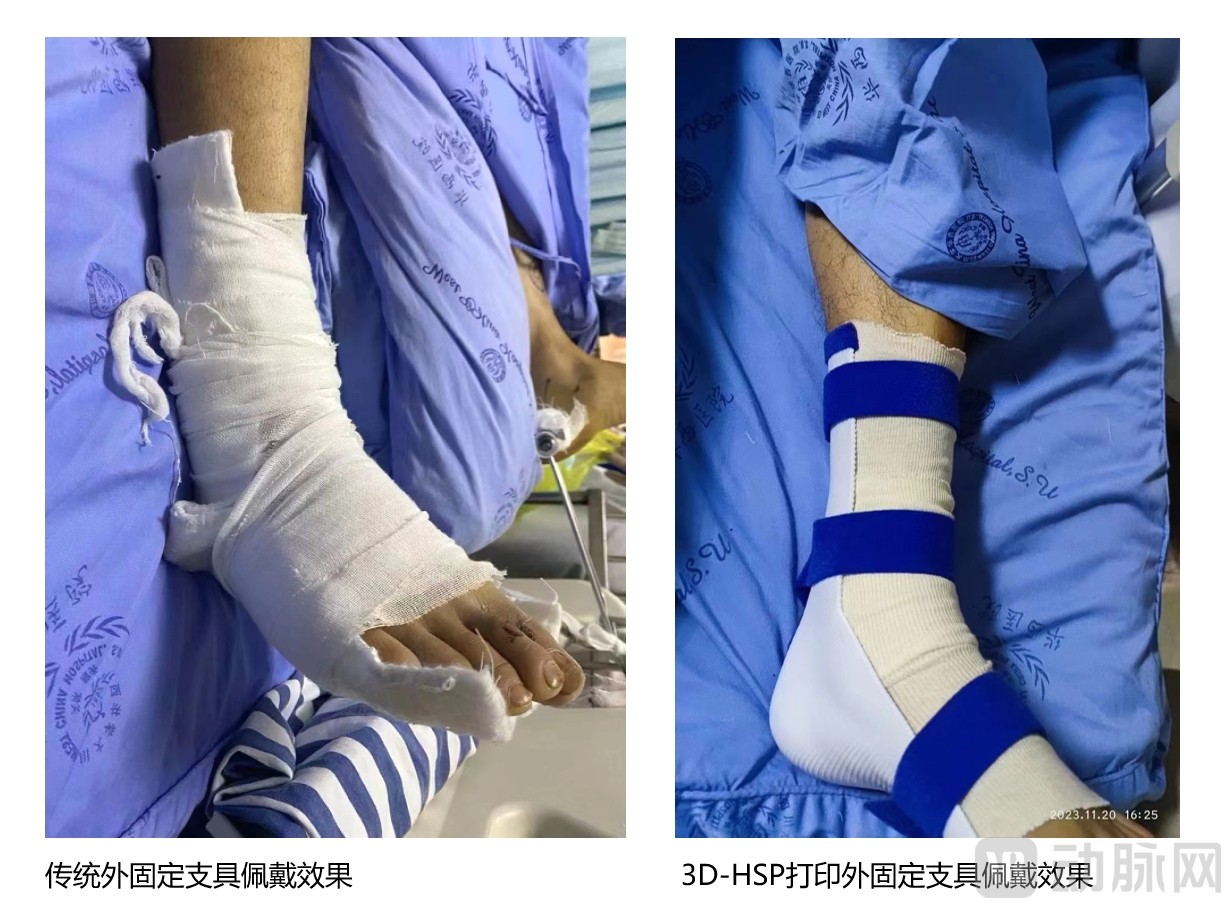
Furthermore,From the perspective of product characteristics, 3D printing for external fixation braces features a shorter cycle, lower AI algorithm training costs, and faster iteration in the preliminary image processing stage compared to traditional 3D printing image processing.Therefore, from the perspective of product development cost and cycle, external fixation braces are indeed the preferred choice for Chengdu Jingchuang Haoda Medical Technology Co., Ltd.
So, what advantages does Chengdu Jingchuang Haoda have in the field of emergency trauma?
From a product portfolio perspective, Jingchuang Haoda’s offerings in the field of emergency trauma care include Class I external fixation braces, Class II orthopedic brace medical devices, and supporting intelligent 3D ultra-high-speed medical printing systems.
Among these, Class I external fixation braces and their intelligent 3D ultra-high-speed medical printing system have been successfully launched into the market, while Class II orthotic braces are currently under development. Notably, unlike traditional general-purpose 3D printing equipment, Chengdu Jingchuang Haoda Medical Technology Co., Ltd. has deployed distinct 3D printing systems specifically for its external fixation braces and orthotic braces, respectively. This strategy stems from the company’s insights into emerging industry trends.
Wu Wentao stated that previous 3D printing equipment was predominantly general-purpose, emphasizing comprehensive coverage of application scenarios. However, such broad coverage inevitably led to certain application deficiencies in specific scenarios. In other words, while traditional general-purpose 3D printing devices can achieve wide-ranging applicability, they fail to meet the requirements of all application scenarios simultaneously, indicating a need for optimization in individual use cases.
In this regard,Chengdu Jingchuang Haoda Medical Technology Co., Ltd. believes that 3D printing has gradually shifted from a traditional general-purpose model to a specialized one, moving from an initial focus on broad coverage to vertical development tailored to specific scenarios. To this end, Chengdu Jingchuang Haoda has developed distinct 3D printing equipment for different product lines.
However,It is worth noting that to reduce the cost for partners and improve ease of use, Chengdu Jingchuang Haoda Medical Technology Co., Ltd., while adhering to the philosophy of in-depth development of 3D printing equipment, has also adopted a split modular design for its printers, enabling rapid switching between different brace printing applications.
However, compared to the intelligent and ultra-high-speed features touted by Jingchuang Haoda’s Intelligent 3D Medical Printing Ultra-High-Speed System, the split modular design may be merely an “appetizer.”
As previously mentioned, emergency trauma care was the first 3D printing application scenario selected by Chengdu Jingchuang Haoda Medical Technology Co., Ltd. The defining characteristic of emergency trauma care is speed, which imposes extremely high requirements on product delivery timelines.
However, one of the characteristics of traditional 3D printing equipment is its long processing time. How has Chengdu Jingchuang Haoda overcome this challenge? The answer lies in a technology called “Polymer Cold-Curing Support-Free High-Speed 3D Medical Printing Technology.”
In the interview, Wu Wentao introduced to VCBeat that,Traditional 3D printing requires high-temperature melting and subsequent cooling to form the final product, with the cooling phase being time-consuming and thereby extending product delivery timelines. However, Chengdu Jingchuang Haoda’s support-free, rapid-condensation curing 3D medical high-speed printing technology accelerates condensation and enables rapid solidification, thus achieving fast product prototyping.
“We conducted a test in which, leveraging cryogenic curing support-free 3D high-speed medical printing technology, our 3D printer was able to complete the entire printing process within 15 minutes,” said Wu Wentao.
In addition to the "cryogenic curing support-free 3D high-speed medical printing technology," Jingchuang Haoda's 3D printing equipment also features intelligent enhancements.
The AI-driven foundational innovations of Jingchuang Haoda’s intelligent 3D ultra-high-speed medical printing system are primarily categorized into two aspects: software models and hardware. Benefiting from the aforementioned national research project, Jingchuang Haoda has been able to achieve rapid innovation in its software models.At the hardware level, unlike traditional 3D printing with fixed algorithms, Jingchuang Haoda’s 3D printing is AI-driven, capable of calculating the optimal printing trajectory based on patient data.
Thus, this approach not only reduces printing time but also ensures the surface uniformity of the product. The higher the surface uniformity, the greater the strength and stability.
Thus, Jingchuang Haoda has achieved ultra-high-speed, intelligent 3D printing for emergency trauma scenarios. Its modular design also reduces usage costs and enhances operational convenience. Furthermore, Jingchuang Haoda’s intelligent ultra-high-speed 3D medical printing equipment enables unattended, automated continuous printing. The company has also independently developed a new type of biodegradable, non-toxic, dust-free, and pollution-free material, making its products safer and more environmentally friendly.
However, as previously stated, the corporate positioning of Chengdu Jingchuang Haoda Medical Technology Co., Ltd. is not limited to 3D printing, but rather focuses on precision personalized intelligent medical devices. Therefore,Chengdu Jingchuang Haoda Medical Technology Co., Ltd. not only applies 3D printing technology but also leverages cutting-edge technologies such as bioprinting. Its product portfolio includes not only external fixation braces and orthotic devices, but also orthopedic surgical guide medical devices and a medically active bio-fiber reinforced 3D intelligent manufacturing system, which are applied in the fields of meniscus and articular cartilage injury treatment as well as medical aesthetic and plastic surgery implants.Among these, with the exception of external fixation braces, all other product pipelines are currently under development.
Regarding the rationale for entering the medical aesthetics and plastic surgery sector, Wu Wentao revealed that, on one hand, it is driven by the vast market size and growth potential of the medical aesthetics industry; on the other hand, innovations in this field in recent years have predominantly emerged in the non-surgical (“light”) medical aesthetics segment, with relatively few advancements in surgical procedures. This aligns precisely with another core development philosophy of Chengdu Jingchuang Haoda Medical Technology Co., Ltd.—identifying medical scenarios with unmet needs and potential for cutting-edge technology application, and leveraging technologies such as 3D printing, bioprinting, and artificial intelligence to optimize products and fully meet market demand.
“Over the next two to three years, focusing on precise, personalized intelligent medical devices, we expect to launch six to eight product pipelines, integrating all cutting-edge technologies such as 3D printing, bioprinting, and surgical robots, to help improve efficiency, enhance treatment outcomes, and achieve precision therapy in relevant clinical scenarios,” summarized Wu Wentao.