

For Survival, Medical Professionals and Enterprises Are Leaving Tier-1 Cities!
As RMB-denominated funds gradually become the “sole” source of fresh capital in the capital markets, a major talent migration is quietly unfolding within the healthcare industry.
Investors were the first to act. Recently, an investor who has been based in Shanghai for ten years shared insights with VCBeat on current trends in the capital market, “In the past two years, many of my investor friends have left Shanghai to join local state-owned asset management institutions.”. Unable to resist the temptation any longer, he is about to join their ranks. “I plan to return to my hometown of Wuhan after finishing work this year, as a state-owned enterprise there happens to be recruiting.”
As a wave of investors “returns home,”In recent years, founders of companies under significant survival pressure have also been leaving Beijing, Shanghai, and Guangzhou.. The reasons for their departure are not complex: startups aim to secure more “benefits” in the early stages, which is particularly crucial amid the current market winter; while mature companies relocate either to explore new markets or to prepare in advance for business transformation. In short, all these moves are aimed at ensuring better survival.
For instance, scientist-entrepreneurs have garnered significant attention in recent years. In an interview, an investor revealed the recent market movements of a portfolio company: “They are an early-stage innovative drug company, with founders who are all professors from Beijing,”Recently, they are planning to establish operations in Chengdu. The reason is simple: the Chengdu municipal government has offered them what they want."Furthermore, Chengdu’s local resources—including its industrial foundation, talent pool, and policy support—are highly aligned with their current initiatives, leaving them with no reservations."
In fact, this is just the tip of the iceberg.
Leaving Beijing, Shanghai, and Guangzhou: A Voluntary Choice or a Forced Move?
During a visit, a pharmaceutical executive based in Beijing joked with VCBeat, “Don’t let the fact that we’re a publicly listed company fool you; in recent years, we haven’t exactly been in the good graces of the local administrative committee.”A significant reason is that, compared to other enterprises in the industrial park, the tax revenue we generate is disproportionate to the land we have acquired.。”
Although this statement contains an element of jest, it to some extent reflects the current stance of Beijing, Shanghai, and Guangzhou. In fact, after a decade of rapid development, the healthcare industries in these three cities have gradually reached saturation. Consequently, in recent years, significant efforts have been made to promote industrial upgrading or optimization, primarily through two specific approaches:One approach is driven by fiscal objectives, aiming to retain high-tax contributors while phasing out those who generate low or no tax revenue.。
Another approach is driven by industrial technical requirements, namely retaining innovative technology-based enterprises while relocating labor-intensive enterprises with lower technological sophistication.. Taking Shenzhen as an example, local officials have clearly stated that “Shenzhen now aims to retain the segments capable of ‘moving upstairs,’ particularly R&D. In the future, what remains in Shenzhen should be high-end manufacturing.” A head of a certain institution also recognized this trend, remarking, “Shenzhen’s healthcare industry is currently undergoing structural adjustment, and in the future, limited space will be increasingly allocated to enterprises with genuine technological prowess and high value-added.”
In other words, during the process of industrial restructuring in Beijing, Shanghai, and Guangzhou, some medical enterprises that are unsuitable or fail to meet standards will gradually be “encouraged to exit.” Of course, this represents only a portion of the trend; another segment of medical enterprises is leaving voluntarily. The two primary reasons for their departure are as follows:First, cost; second, resources。
Let’s start with costs. Over the past two years, amid a market downturn, “cost reduction and efficiency enhancement” has become a key theme across the healthcare industry. One obvious strategy for cutting costs is to relocate away from first-tier cities like Beijing, Shanghai, and Guangzhou, where operating expenses are high. Commenting on this trend, an investor based in Shanghai remarked, “There’s a common saying in Shanghai’s biopharmaceutical circle: ‘The flowers bloom inside the wall but their fragrance spreads outside.’ This essentially means that while many innovative biopharmaceutical companies originate in Zhangjiang Pharma Valley, they tend to relocate to other regions when it comes time to commercialize their products and reap the rewards.”The primary driver behind this relocation is the high cost of doing business in Shanghai—specifically, high labor and land costs. It is extremely difficult for a cash-burning biotech company with no immediate revenue to secure land and establish manufacturing facilities in Shanghai. Consequently, relocating to regions with lower operational costs has become a common solution.”
Next, let’s discuss resources.Here, it mainly refers to the insufficient allocation of high-quality resources in “Beijing, Shanghai, and Guangzhou.”. In a survey, the head of the research center at a top-tier (Grade 3A) hospital in Beijing told VCBeat, “We greatly envy West China Hospital and Xiangya Hospital, as they have abundant resources and can immediately act on any initiative. We cannot do the same; there are too many high-quality hospitals in Beijing, so when resources are distributed equally, each institution receives very little.”
In this situation, public hospitals clearly had no choice, but enterprises and institutions were more flexible. In 2007, Wang Jian led BGI from Beijing to Shenzhen, partly to break away from the state system, but more importantly because Beijing could not provide the strong resource support that Shenzhen offered. It is reported that BGI’s proposed “Human Genome Sequencing Project” did not receive official approval or permission, and thus failed to secure funding. Although it was incorporated into the Chinese Academy of Sciences, it remained an outlier among state-run research institutions, with very limited scope for action.
Therefore, from an overall perspective, the current trend of medical institutions leaving Beijing, Shanghai, and Guangzhou reflects both passive necessity and proactive transformation. The “passive” aspect primarily refers to the iteration and upgrading of the healthcare industry in these tier-one cities, which has gradually phased out enterprises and institutions that do not meet the “new standards.” Meanwhile, the “proactive” aspect mainly involves healthcare companies actively seeking new breakthroughs in new tier-one or second- and third-tier cities to reduce costs or secure more substantial policy support.
An Irresistible Display of “Sincerity”
Despite the surging tide, for the vast majority of healthcare professionals, leaving Beijing, Shanghai, and Guangzhou is not an easy decision. After all, looking at the industry’s overall development, these major cities clearly offer more opportunities and faster wealth accumulation. When new opportunities emerge, it is invariably these places that lead the way, capturing the first wave of industrial dividends.
Therefore, a firm decision to relocate requires even more compelling reasons. Beyond the factors mentioned earlier, a crucial element is the “sincerity” demonstrated by these emerging new first-tier cities.
This needs to be examined in two parts.The “sincerity” in the first part is relatively straightforward, namely pouring in money, resources, and personnel.. Taking “capital” as a specific example, since the beginning of 2023, government-guided funds with scales of tens or even hundreds of billions of yuan have emerged in various regions across China, and this momentum has continued into this year. According to incomplete statistics, as of May 1, the total scale of such guided funds announced by multiple localities this year has exceeded RMB 1 trillion.
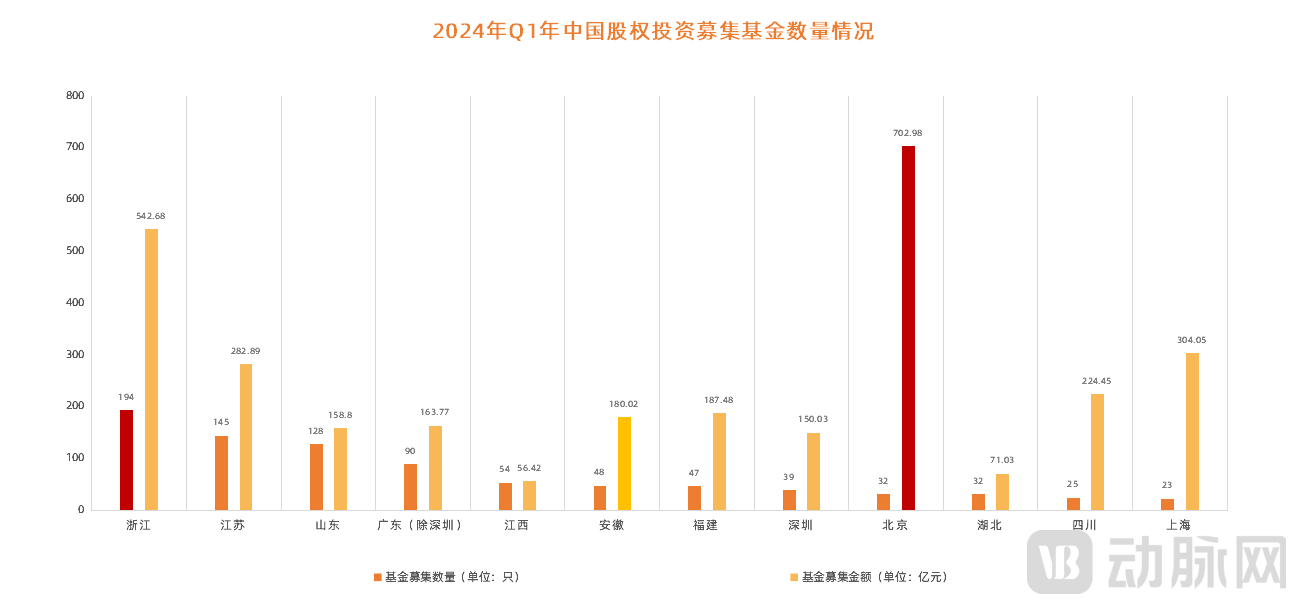 Figure 1. Distribution of the Number of Equity Financing Funds in China in Q1 2024 (Data Source: Zero2IPO Research)
Among them, the cities making the largest and most proactive investments are not Beijing, Shanghai, and Guangzhou, but rather Hangzhou, Taizhou, Qingdao, Hefei, Xiamen, Wuhan, Chengdu, and others. According to data from Zero2IPO Research,The top seven regions by registration location for newly raised funds in Q1 2024 were Zhejiang, Jiangsu, Shandong, Guangdong (excluding Shenzhen), Jiangxi, Anhui, and Fujian, with Beijing ranking ninth and Shanghai twelfth.。
Of course, “money” is not only reflected in guidance funds but also includes financial aspects such as funding and loans. Taking the case of BGI Fund’s move to Shenzhen as an example, it is reported that the Shenzhen authorities, in order to “win over” BGI Genomics, promised to provide an annual funding of RMB 20 million. Furthermore, in 2010, facilitated by the Shenzhen Municipal Government, China Development Bank extended a $1.5 billion credit line to BGI Genomics. By utilizing this loan, BGI Genomics purchased 128 HiSeq 2000 sequencers from Illumina, instantly becoming the world’s largest gene sequencing institution. In this regard, Wang Jian once remarked, “Without Shenzhen, BGI Genomics would certainly not have reached where it is today.”
However, “sincerity” is not just about money; it is reflected in every aspect. Take Hefei, where the medical industry has developed rapidly in recent years, as an example. In its efforts to retain the University of Science and Technology of China (USTC), Hefei spared no expense.Not only was a railway line built directly to the gate of the University of Science and Technology of China (USTC), but even amid power shortages, Hefei prioritized USTC over the provincial government in electricity allocation, and even constructed Hefei’s first dedicated heating supply line exclusively for USTC.. Nevertheless, these “preferential treatments” were not in vain; retaining the University of Science and Technology of China is also regarded as the most successful investment in Hefei’s history.
At present, against the backdrop of unprecedentedly strong demands for economic growth across various regions, local governments will only intensify their efforts to demonstrate “sincerity.” However, sincerity alone is insufficient. In the healthcare sector, which is characterized by high resource density and a concentration of top-tier talent, retaining high-quality targets requires robust supporting industrial infrastructure, including market access, supply chains, talent pools, and even transportation networks.In fact, this is also regarded as another form of “sincerity,” namely that new first-tier cities are currently undergoing rapid upgrades across all aspects.。
Take local economies, for example. It is reported that in 2023, there were 26 cities in China with a GDP exceeding one trillion yuan, nine of which joined this club in the past three years: Fuzhou, Jinan, Hefei, Quanzhou, Xi’an, Nantong, Dongguan, Yantai, and Changzhou. A solid economic foundation reflects, to some extent, the vitality of the local market, which is undoubtedly a favorable condition for healthcare companies seeking to expand into new markets.
There is also the transportation dimension. Unlike in the past, when transportation hubs were primarily centered around Beijing, Shanghai, and Guangzhou, new first-tier cities have been gaining momentum in recent years. Cities such as Nanjing, Wuhan, Zhengzhou, and Hefei have successfully secured their positions as key nodes in the “Eight Vertical and Eight Horizontal” high-speed rail network strategy. The direct benefit of this development is an enhancement in economic efficiency. Before establishing operations in Hefei, the head of a consumer healthcare brand conducted a cost analysis: “By locating our production base in Hefei, we can save approximately RMB 4,000 per vehicle in logistics costs, including inbound and outbound finished-vehicle logistics. For one million vehicles, this translates to savings of RMB 4 billion. The underlying reason is that Hefei offers the shortest average distance to mainstream consumer destinations, while its operational costs remain relatively low.”
Therefore, for some medical companies, relocating overseas is essentially a cost-effective way to unlock greater growth potential. In this regard, an investor remarked, “For tech companies, achieving first-tier city management and operational results at the low cost of second- and third-tier cities is, in a word, irresistible.”
What about investment institutions? At the local support level, they primarily focus on two elements,First is capital, second is high-quality targets.. “Funding” is certainly available. Following the mass exit of U.S. dollar-denominated funds, local government guidance funds have now become the primary source of capital for major institutions, proving quite generous with commitments reaching into the billions or even tens of billions of yuan.
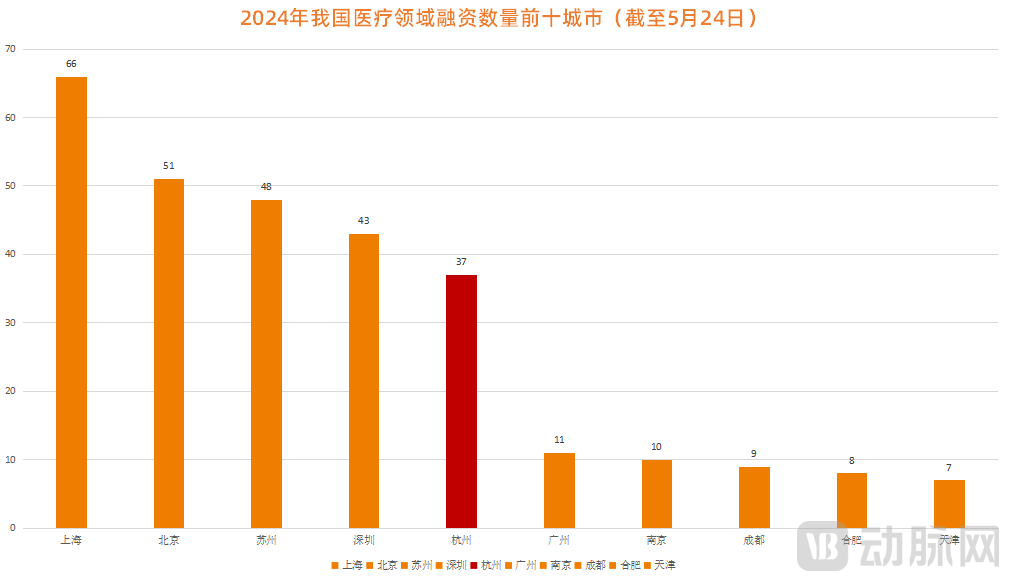 Figure 2. Top 10 Cities by Number of Healthcare Financing Deals Before May 24, 2024 (Source: VCBeat)
Another key aspect is the “target assets.” Currently, new first-tier cities have already accumulated a large number of high-quality healthcare projects. Let the data speak: as of May 24,Regions outside Beijing, Shanghai, and Guangzhou completed a total of 174 financing deals in the healthcare sector this year, accounting for more than half of all financing activities., with Hangzhou standing out by completing 37 financing deals in the healthcare sector this year, totaling over RMB 5 billion.
In addition, in the secondary market,New First-Tier Cities Are Witnessing a Wave of IPOs in the Healthcare SectorFor instance, Chengdu has seen 13 IPOs in the past two years, including Baili Tianheng and Kelun-Biotech; Hangzhou has incubated 17 IPOs in the healthcare sector over the past three years, with 10 alone in 2021, including Nuohui Health and Guichuang Tongqiao; Taizhou has achieved 11 IPOs in the healthcare field over the past five years, including Quanxin Bio, which just listed on the Hong Kong Stock Exchange this March.
In this regard, an investor remarked, “In recent years, many investors have indeed been flocking to new first-tier and even second- and third-tier cities. This is partly because local governments are willing to provide funding, often with requirements for reinvestment; and partly because these regions genuinely host numerous high-quality projects. Many of these ventures have been operating for years but have remained relatively low-profile, thus attracting little attention. Against the backdrop of the current market cooldown, the industry places greater emphasis on focus. In new first-tier and second- and third-tier cities, there exists a cohort of individuals deeply dedicated to technological innovation, who are eagerly awaiting discovery.”
Half Sea, Half Flame
Although a major migration is currently underway in the healthcare sector, this wave is not suitable for everyone.
For instance, during an interview, the head of a medical imaging company stated, “We were in the midst of a transformation when Zhengzhou extended an olive branch to us, so we took the opportunity to relocate our headquarters from Beijing to Zhengzhou.”However, six months after implementation, we have been unable to fill our technical positions., which has severely impacted the project's R&D progress. Therefore, we established another R&D center in Beijing this year, with the primary objective of recruiting talent.”
This is not an isolated case; many enterprises have fallen into difficulties due to relocation. A person in charge of a dental instrument company told VCBeat, “We shut down our production center in Qingdao this year. Initially, the idea was to use it to cover the entire Shandong market,”However, operational performance in recent years has been consistently unsatisfactory, failing to deliver tangible improvements in our business results and ultimately becoming a burden on our organization., which incurred substantial costs; therefore, after careful consideration, it was withdrawn.”
Certainly, investment institutions are no exception, exhibiting even more pronounced “discomfort” in adapting to the new environment. Earlier this year, VCBeat conducted surveys among nearly twenty top-tier firms, 90% of which identified “local reinvestment” as their core objective for the year. However, practical implementation has proven challenging; constrained by the current market climate as well as the economic strength and industrial foundation of their respective cities, most institutions have struggled to meet their local reinvestment targets. In response, a head of one such institution remarked, “Before accepting government funding, it is essential to first assess the local economy and industrial base. Regions with weak foundations are generally excluded from consideration, as they are unlikely to meet subsequent reinvestment requirements.。”
Therefore, it is not difficult to see that there were not only success stories in this migration,The criterion for success ultimately depends on the degree of fit between the enterprise or institution and the local context.If the fit is high, relocation will become a strong driving force, bringing new development opportunities; but if it is not, relocation will only be a losing proposition that generates buzz without substance, not only failing to bring about any change but also plunging it deeper into quagmire.
In fact, this follows the same logic as healthcare companies currently selecting investment institutions.It is not a case of “the bigger, the better” or “the more money, the better”; rather, it is about finding the most suitable fit.This requires healthcare companies to first clarify their strategic objectives and core needs, then conduct thorough due diligence on investment institutions to understand what they can truly offer and whether it aligns with the company’s expectations. This is critically important and has become a core competency.
1. “This Generation of VCs: Fleeing Beijing, Shanghai, and Guangzhou for Industrialization and Tangible Implementation” – National Business Daily;
2. “Why Are Shenzhen’s Medical Enterprises Relocating En Masse?” — Site Selection 960;
3. “Abandoning the Imperial Capital, Why Did They Head South to Shenzhen?” — Hongbo’s Grand Vision;
4. “These Biopharmaceutical Companies Once Left Shanghai, but Now They Are Flowing Back in Reverse” — Shanghai Lingang.