

Kexiang Hongkang Launches World's First Exosome-Based Diagnostic Kit for Parkinson’s Disease in China
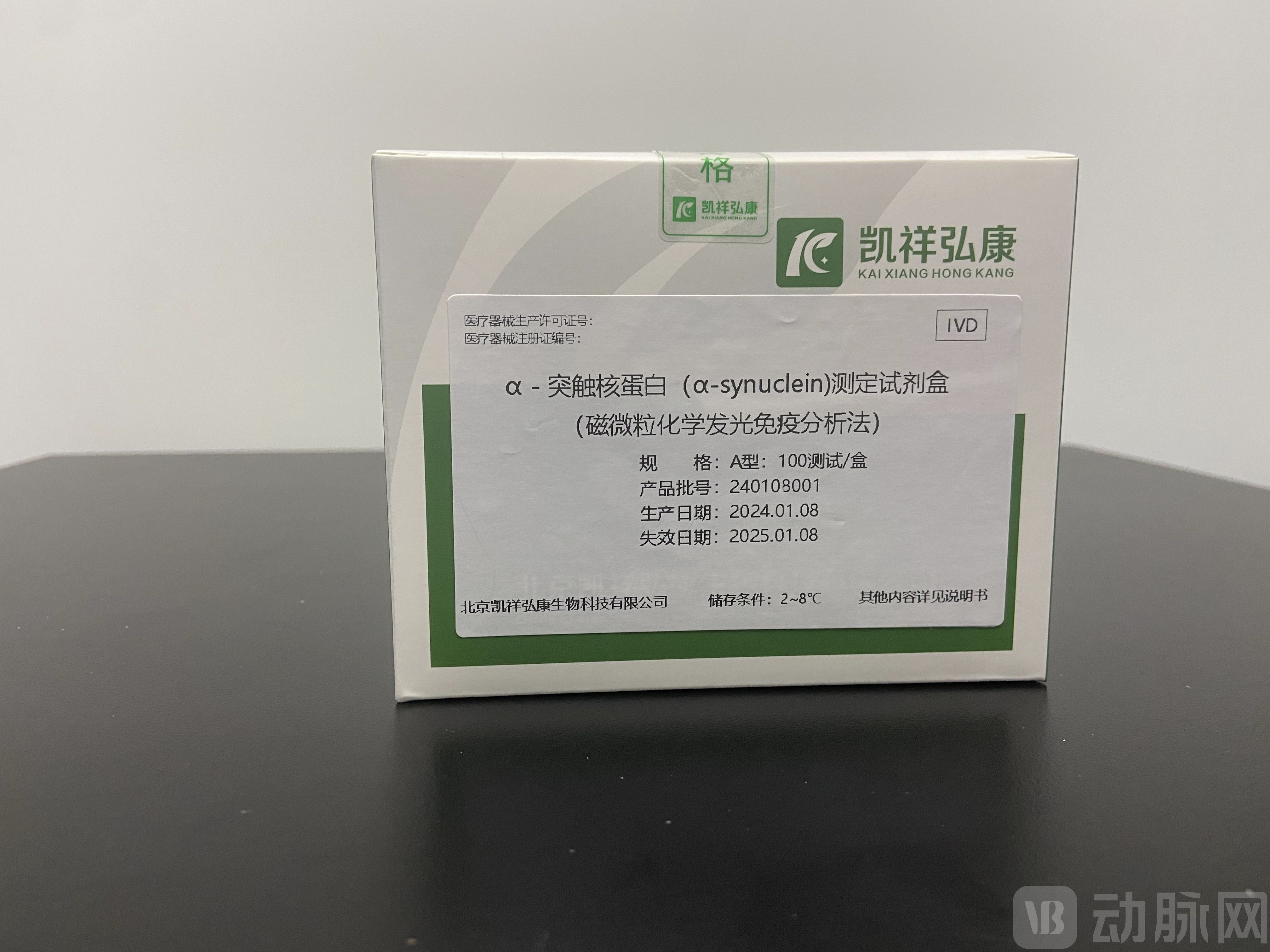
Recently, the exosome-based auxiliary diagnostic kit for Parkinson’s disease, independently developed by Beijing KAI XIANG HONG KANG Biotechnology Co., Ltd. (registered name: α-Synuclein Assay Kit (Magnetic Particle Chemiluminescence Immunoassay); trade name: Paliming™), has been approved for market launch by the Beijing Medical Products Administration (Approval No.: Jing Xie Zhu Zhun 20242400244).This is the world's first in vitro diagnostic product for Parkinson's disease based on the detection of plasma exosome biomarkers.
As a chronic neurodegenerative disorder, Parkinson’s disease (PD) faces numerous challenges in its current diagnostic landscape. With the advent of an aging society in China, the number of PD patients is steadily increasing, with a notable trend toward younger onset. According to a Chinese epidemiological survey, the prevalence among individuals aged 65 and older is 1.7%; however, only 3.75% of patients recognize their condition at onset, and the misdiagnosis rate reaches as high as 23.5%. A major reason for misdiagnosis and missed diagnosis of PD lies in the atypical nature of early symptoms, which are easily confused with other neurological disorders. Furthermore, although traditional diagnostic methods such as clinical observation and imaging studies offer certain reference value, they rely heavily on physicians’ experience and patients’ clinical manifestations, resulting in substantial rates of misdiagnosis and missed diagnosis. Therefore, precise detection of PD-related biomarkers will facilitate early detection and accurate diagnosis of Parkinson’s disease.
Current research indicates that synuclein is closely associated with the pathogenesis and related functional impairments of Parkinson’s disease. Pathologically, Parkinson’s disease is primarily characterized by the degeneration of dopaminergic neurons in the substantia nigra, reduced dopamine levels in the striatum, and the formation of Lewy bodies—abnormal protein aggregates within neurons. During this process, the abnormal accumulation of α-synuclein leads to the formation of Lewy bodies, which constitute a key pathological hallmark of Parkinson’s disease. This aberrant accumulation may trigger neuronal death, thereby giving rise to the clinical manifestations of Parkinson’s disease. However, since red blood cells also produce abundant α-synuclein, direct detection of α-synuclein in peripheral blood for the diagnosis of Parkinson’s disease is severely interfered with and thus not feasible.
Exosomes are a class of extracellular vesicles released by cells, containing specific proteins and other components characteristic of their parent cells. Exosomes secreted by neuronal cells in the brain can cross the blood-brain barrier and enter the peripheral system; therefore, changes in the levels of biomarkers within neuron-derived exosomes in peripheral blood can be used to detect pathological changes associated with central nervous system diseases. Extensive literature indicates that α-synuclein levels in neuron-derived exosomes from the peripheral blood of Parkinson’s disease patients are significantly higher than those in healthy individuals, suggesting its potential as a biomarker for Parkinson’s disease.
With the rise of exosome technology, particularly brain-derived exosome enrichment techniques, it has become possible to detect biomarkers from the central nervous system through peripheral blood testing.The α-synuclein assay kit manufactured by Beijing KAI XIANG HONG KANG Biotechnology Co., Ltd. utilizes a proprietary, innovative technology for the enrichment of brain-derived exosomes, enabling efficient isolation of neuron-derived exosomes from peripheral blood and quantification of α-synuclein levels via chemiluminescence immunoassay. The kit has successfully completed clinical registration in China, becoming the first registered product domestically and the first globally to detect α-synuclein in exosomes, thereby achieving an internationally leading position in this field.The clinical registration results of this product show that, compared with existing clinical diagnostic methods, the sensitivity reaches 91.48% and the specificity reaches 93.38%,Demonstrated excellent product performance, showing promise as a new tool for the precise diagnosis of Parkinson's disease.
Parkinson’s disease has an insidious onset, and by the time motor symptoms appear, the pathology is already at an advanced stage, making early diagnosis critically important. The exosomal α-synuclein assay kit recently approved for Kaixiang Hongkang offers a new diagnostic approach for Parkinson’s patients in China, holding promise for guiding early clinical intervention through early diagnosis to delay or halt disease progression.