

Dr. Cao Yulin, Founder of Tangyi Holdings: Cell Intelligent Manufacturing to Continuously Empower the Bioeconomy
Intelligent Manufacturing of Cells Has Become a Hot TopicThe intelligent manufacturing of cells is an important branch of the broader health industry, involving the use of cutting-edge biotechnology, information technology, automation technology, and sensing technologies to manufacture and process cells for therapeutic, research, and other medical applications. The development of this field not only drives innovation in healthcare but also offers new approaches to addressing longstanding challenges in traditional medicine.
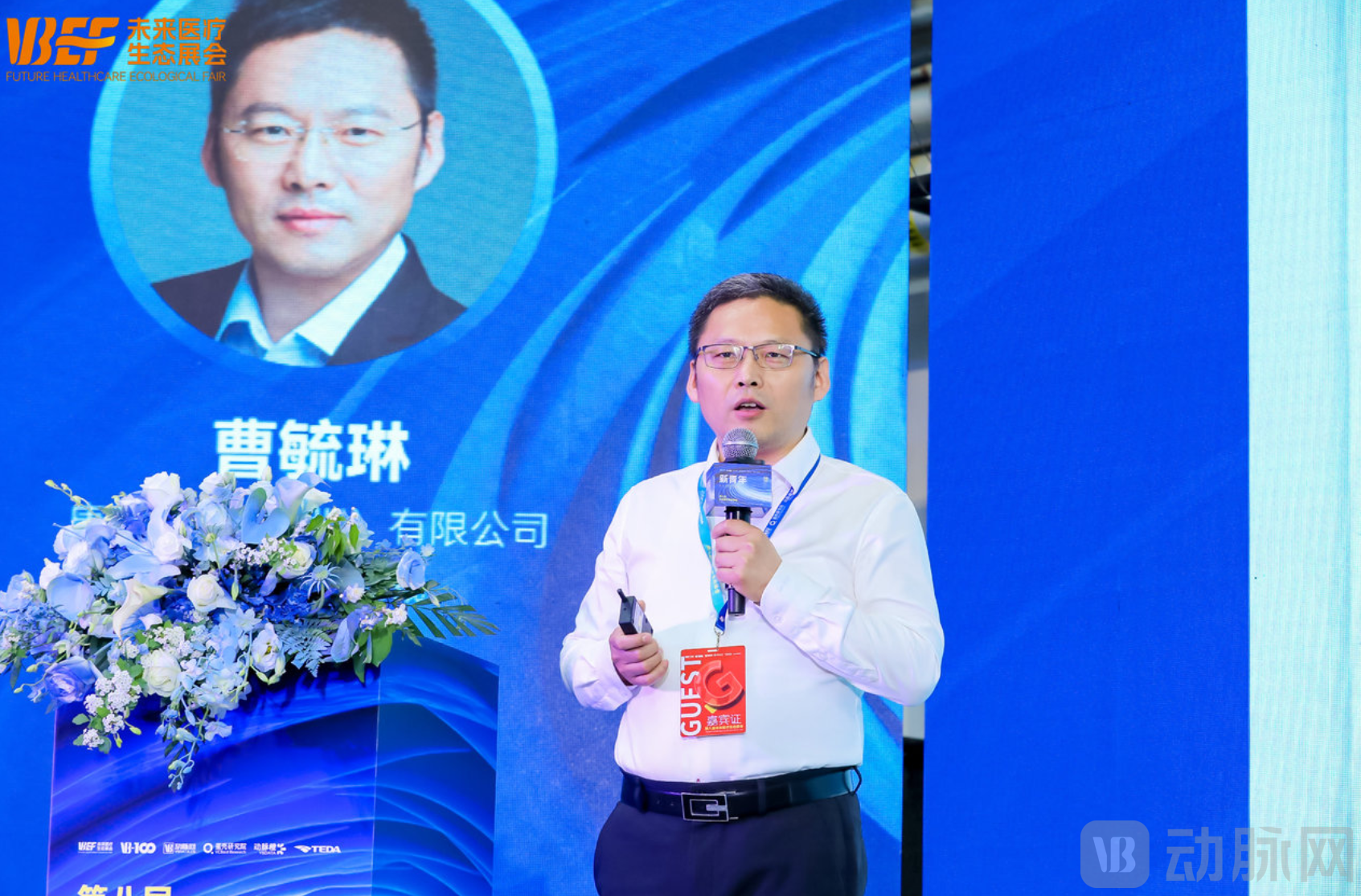
On May 8, 2024, at the Peking University Health Science Center & Guanghua School of Management Healthcare Industry Leadership Salon, held during the VBEF Future Medical Ecosystem Exhibition organized by VCBeat, Dr. Cao Yulin, Founder and President of TANGYI HOLDINGS (Shenzhen) Co., Ltd., delivered an insightful presentation themed “Intelligent Cell Manufacturing and the Big Health Industry.” Drawing on recent developments in the cell manufacturing sector, she provided a comprehensive analysis from four perspectives: the industry background of intelligent cell manufacturing, the challenges it addresses, its core commercial value, and its relationship with the future health industry.
Industry “Automation” Rate Below 5%
Currently, over 95% of laboratories and enterprises still rely on manual cell culture using equipment such as incubators, culture flasks, centrifuges, and microscopes. Less than 5% of the industry has adopted automated cell culture. Dr. Cao Yulin briefly introduced several mainstream automated cell manufacturing devices currently available internationally, including equipment for large-scale cell culture in vaccine production and robotic arms.
Furthermore, Dr. Cao Yulin noted that intelligent cell manufacturing lacks regulatory support, with laboratory-scale models remaining the mainstream approach for cell production. Notably, issues within the supply chain of the cell therapy industry warrant attention. Currently, over 90% of the cell manufacturing supply chain is controlled by European and American countries. This means that most of the culture media, incubators, centrifuges, and other equipment used by domestic laboratories and cell therapy companies are sourced from international giants such as Thermo Fisher, Cytiva, GE, and Lonza. Consequently, although China is vigorously developing its cell manufacturing industry, it lacks control over the supply chain.
As for the level of intelligence in cell manufacturing, Dr. Cao Yulin believes that it is currently less than 1% in China: “Replacing manual operations with robotic arms, if lacking biosensing and process data support to conduct process research and continuously optimize the manufacturing process, can only be described as automation, not intelligence.”
Furthermore, Dr. Cao Yulin addressed the accessibility of intelligent cell manufacturing, noting that accessibility is primarily reflected in the pricing and supply chain of cell therapies. Currently, the least expensive CAR-T therapy approved in China costs nearly RMB 1 million. Therefore, without effective improvements in the supply chain and manufacturing processes, achieving broad accessibility will remain challenging in the short term.
"STEMA": Five Key Stages to Address Pain Points in the Market Launch of Cell Therapies
When addressing the challenges that intelligent cell manufacturing can resolve, Dr. Cao Yulin introduced the concept of “STEMA”: “Intelligent cell manufacturing primarily addresses the systemic issues involved in bringing cell therapies to market, encompassing five stages: Science (S), Technology (T), Engineering (E), Manufacturing (M), and Application (A).”
He began by comparing the challenges of R&D and manufacturing between chemical drugs and biologics, noting that developing small-molecule drugs is akin to making pencils—a highly standardized process. For instance, China’s antibiotic active pharmaceutical ingredient (API) supply chain has become the largest globally. In the field of biopharmaceuticals, whether for antibodies or vaccines, the complexity is comparable to crafting a fashionable chair. However, in the era of cell therapies, “the difficulty is akin to manufacturing a Boeing 747.” As the first “living drugs” approved for human use, cell therapies pose significant manufacturing challenges; ensuring their viability upon administration while maintaining safety, efficacy, and quality control is extremely difficult.
To address this systemic issue, it is essential to conduct a comprehensive evaluation across scientific, technical, engineering, industrial manufacturing, and clinical application dimensions. Furthermore, if drug development is not application-oriented, it will lead to difficulties in practical implementation and pose multiple potential risks.
Dr. Cao Yulin cited trends in the stem cell industry to point out that the drawbacks of traditional manual culture methods or 2D culture models lie in the potential inconsistencies in temperature, humidity, and air conditions across multiple culture flasks and incubators during the cultivation process. To implement 3D culture models in large-scale bioreactors, it is essential to ensure the availability of suitable carriers that support proper stem cell attachment and growth.
After testing commercially available microcarriers on the market, Dr. Cao Yulin and her team identified a critical limitation: existing microcarriers support cell adhesion but hinder the gentle harvest of cells. In response, TANGYI HOLDINGS developed a novel microcarrier that facilitates both adherent cell growth and easy cell retrieval. This product has become the first non-animal-derived, biodegradable pharmaceutical-grade cell culture microcarrier to receive FDA approval and authorization from China’s Center for Drug Evaluation (CDE). While meeting regulatory requirements, it also resolves key process challenges essential for large-scale industrial cell manufacturing.
Regarding how to ensure batch-to-batch consistency, Dr. Cao Yulin pointed out that it is necessary to control the microcarrier culture system and conduct thorough process development studies; without process data, it would be difficult to establish protocols that meet the highest quality standards. Dr. Cao further added that the bioreactors from TANGYI HOLDINGS are custom-manufactured based on process parameters following comprehensive process development studies, thereby better achieving and meeting regulatory requirements for industrial-scale batch production under “the same time, same conditions, and same vessel.”
Furthermore, attention should be paid to achieving mass production in accordance with industrialization requirements, namely enabling machines to master manufacturing processes so that production steps can ultimately achieve process goals under Process Analytical Technology (PAT). To this end, TANGYI HOLDINGS has collaborated with industry teams specializing in industrialized and precision manufacturing to promote its independently developed processes into a comprehensive solution—allowing machines to execute based on a support system derived from data obtained through rigorous, iterative process studies.
During this process, TANGYI HOLDINGS received support from multiple parties and launched the industry’s first HarmonyOS-based intelligent manufacturing solution for cell therapy. Relevant data is stored in domestically developed databases, effectively mitigating concerns about data leakage. Currently, the localization rate of this equipment has exceeded 95%.
Under the current manual production model, centrifugation is the mainstream method for cell harvesting. Experiments conducted by TANGYI HOLDINGS have revealed that cells harvested via centrifugation fail to adhere and require prior reactivation of their adhesive capacity. Since adhesion is a fundamental biological characteristic of stem cells, the loss of this ability would preclude future cell homing. To preserve the adhesive properties of cells, it is optimal to employ non-centrifugal methods for harvesting.
Following industrialization, packaging has emerged as a new challenge. To scale up production to tens of thousands of doses per batch, it is essential to change the packaging materials; meanwhile, these materials must maintain cell viability at ultra-low temperatures of -190°C. Dr. Cao Yulin believes that packaging materials are the “soul” of cell-based product manufacturing and quality control, as improper cell preservation would render all prior efforts futile.
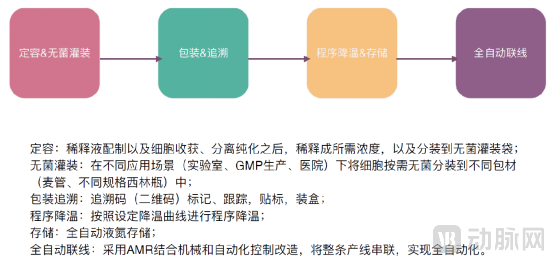
TANGYI HOLDINGS’ Industrialized Cell-Based Product Packaging Technology
This is followed by the cryopreservation step. Under existing laboratory conditions, the current industry standard involves using dimethyl sulfoxide (DMSO) in cell cryopreservation solutions. However, DMSO itself is cytotoxic and, due to its permeability, can damage human connective tissues during clinical application, thereby posing certain clinical risks for cell products preserved with such agents. Consequently, companies must address the challenge of enhancing cell viability during freezing without relying on controlled-rate freezing or DMSO-based cryopreservation.
Within the human body, cells migrate and home based on their intrinsic biological properties and the local microenvironment. For cell-based therapies, the “last mile” challenge lies in ensuring safe delivery within the body.
Addressing these issues enables a comprehensive approach, spanning from the scientific understanding to practical application, ensuring that cell-based therapies meet regulatory requirements for safety, efficacy, and controllability, while also achieving low-cost, high-throughput production. This constitutes an industrialized manufacturing model.
“In the cell manufacturing process, if we merely replace manual labor with robotic arms without capturing process data, we will be unable to optimize subsequent workflows.” Dr. Cao Yulin believes that cell manufacturing must not only meet regulatory requirements for data traceability—ensuring end-to-end traceability—but also comply with regulatory quality standards, necessitating the establishment of a comprehensive system.
Only after resolving the aforementioned series of challenges can the industry truly advance toward the industrial-scale production of cells. Currently, TANGYI HOLDINGS’ cell intelligent manufacturing solution has, for the first time in the industry, systematically addressed eight key technical pain points hindering the industrialization of cell therapy. TANGYI HOLDINGS has become the first company in China to receive the First Prize for Industry-Academia-Research Innovation Achievements for its “Industrial Cell Intelligent Manufacturing Solution,” and it is the only domestic company selected into Johnson & Johnson’s global supply chain with this same solution.
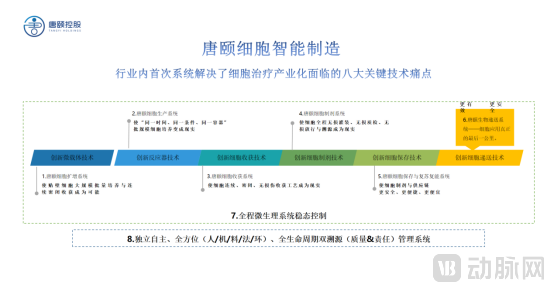
TANGYI HOLDINGS Cell Intelligent Manufacturing System
Accelerating the Rapid and High-Quality Market Launch of Cell Therapies in China
When discussing the sense of mission and responsibility in deeply cultivating intelligent cell manufacturing, Dr. Cao Yulin candidly stated, “I hope to make a modest contribution to facilitating the rapid, high-quality market launch of cellular therapies in China.”
Intelligent cell manufacturing is not merely a combination of equipment, reagents, and consumables; rather, it constitutes a rigorous logical framework that transforms existing cell therapy production methods. It represents a novel approach to cell therapy manufacturing, developed under the premise of meticulous scientific design. This new paradigm enables regulatory authorities to validate every detail, allows physicians to clearly understand various risks, and ultimately benefits consumers and patients.
Supported by this system, TANGYI HOLDINGS aims to enhance the internationalization level of cell manufacturing in China, first by addressing the technological bottlenecks. Second, it seeks to resolve supply chain issues. In drug development, changes to key raw materials and components are classified as major process changes; in particular, if the supply of critical materials is interrupted, a company’s process development efforts may be completely nullified, forcing it to start from scratch. This significantly increases time and financial costs, as well as risks. Therefore, resolving supply chain challenges is crucial to ensuring the safety and reliability of cell therapy development. Third, on the basis of building a robust supply chain, the company intends to establish its own proprietary processes. “Only by keeping the supply chain system for intelligent cell manufacturing under our control can we truly achieve original innovation in cell therapies.”
Further Expansion of Future Application Scenarios
With a perfected cell-based intelligent manufacturing system and supply chain, coupled with proprietary processes, the future health industry will present a new landscape.
Once industrial-scale cell manufacturing is truly realized, abundant and stable human-derived cells can be transformed into a series of industrial cell lines such as CHO and HEK293. This advancement is expected to give rise to new industry giants, with future engineered cells providing broader industrial applications for the bioeconomy at the level of human-derived cells. TANGYI HOLDINGS has also kept pace with this trend, making significant investments in the stabilization and mass production of cell strains and cell lines.
Resolving cell manufacturing capabilities can further broaden the application scenarios for cells, and coupled with advances in biomaterials technology, the industry scale is poised for further expansion.
Recently, TANGYI HOLDINGS has been collaborating with Beijing University of Chinese Medicine to jointly establish a National Medical Innovation Platform for Industry-Education Integration in Key Medical Research. The platform focuses on a key area of stem cell research: the induction and differentiation of stem cells into high-fidelity organs, aiming to address the lack of vascularization and innervation in organoids. The ultimate goal of the project is to replace animal testing with high-fidelity organs for the screening and evaluation of traditional Chinese medicines (TCM). Dr. Cao Yulin presented data on drug evaluation using hepatobiliary tissues synchronously induced from stem cells, showing more promising results compared to those obtained from animal experiments.
Dr. Cao Yulin cited exosomes, a recently trending topic, as an example to point out that the mass and stable production of exosomes relies on advancements in industrial-scale cell manufacturing. The healthy living industry is poised to become the next key application scenario for exosomes, with innovative products emerging in areas such as hair loss prevention, eye drops for dry eye syndrome, sleep health, oral care, and reproductive health.
Finally, Dr. Cao Yulin highlighted that the establishment of an intelligent cell manufacturing system holds the greatest value for drug research and development and production: “Addressing health and disease issues constitutes the core value of intelligent cell manufacturing. Therefore, we strive to excel in intelligent cell manufacturing and provide empowering services to the bioeconomy to the best of our ability.”