

Quark Medical's Founder Yuan Dawei Positions Radiopharmaceuticals as Strategic Priority and Completes Systematic CRO Capability Building
On May 8, 2024, at the Peking University Health Science Center & Guanghua School of Management Healthcare Industry Leadership Salon held during the VBEF Future Medical Ecology Exhibition organized by VCBeat, Yuan Dawei, founder of Quark Medicine, delivered an insightful presentation on “Overview and R&D of the Radiopharmaceutical Market,” highlighting Quark Medicine’s business operations in the radiopharmaceutical sector, a key area of its service portfolio.

Nuclear medicine drugs, also known as radiopharmaceuticals, are a class of agents developed through conjugation technologies involving radioactive isotopes with small molecules, peptides, or macromolecules. These drugs serve dual purposes in both diagnostic imaging and therapeutic interventions. Radiopharmaceuticals play a pivotal role in establishing new standards and methodologies for diagnosis, such as early detection of tumors, coronary heart disease, and degenerative conditions like Alzheimer’s disease. Furthermore, they offer novel therapeutic approaches and renewed hope for the treatment of various diseases, including malignant tumors. In recent years, several therapeutic radiopharmaceuticals targeting prostate cancer, neuroendocrine tumors, and liver cancer have been sequentially approved for clinical use.
In summary, radiopharmaceuticals offer the following advantages:
The greatest advantage is visualization—“what you see is what the patient has, and what the patient has is what gets treated.” Through molecular imaging examinations such as PET and SPECT, it is possible to clearly observe primary and metastatic tumor lesions, as well as the location of pathological plaques in the brain associated with degenerative diseases (such as Alzheimer’s disease). This approach enables earlier and more comprehensive acquisition of molecular-level information reflecting genetic, molecular, metabolic, and functional status of the lesions, thereby facilitating early diagnosis and precision treatment.
The second major advantage is quantifiability—by striking a balance between therapeutic benefits and risks, it enables the calculation of specialized data such as the absorbed dose from internal radiation following administration. This information serves as a basis for physicians to adjust treatment regimens (including dosage and frequency), thereby minimizing the risk of adverse reactions while ensuring therapeutic efficacy.
Moreover, a significant advantage is that patients are less likely to develop resistance to radiopharmaceutical therapy. Radiopharmaceuticals exert their therapeutic effects through direct internal irradiation of target organs by radionuclides and cross-irradiation of lesions from source organs, thereby reducing the likelihood of drug resistance in lesion cells. Radiopharmaceuticals can be used either as monotherapy or in combination with other drugs, and are increasingly becoming an important approach in cancer treatment.
Accelerating Growth in the Nuclear Medicine Market Size
Nuclear medicine has a long history in diagnostic and therapeutic applications. Since the launch of the first drug in 1951, it experienced several decades of lukewarm development before truly entering the public spotlight in recent years with continuous annual approvals of innovative radiopharmaceuticals. From 2018 to the present, major multinational corporations, led by Novartis, have not only advanced the concept of theranostics but also made diagnostic radiopharmaceuticals and targeted endoradiotherapy drugs a hot area for drug research and development. Currently, nuclear medicine has become one of the most sought-after sectors in pharmaceutical investment. Not only are leading pharmaceutical giants frequently announcing significant financing and M&A deals, but many traditional pharmaceutical companies are also continuously expanding their R&D layouts in nuclear medicine. Meanwhile, Chinese drug regulatory authorities and relevant ministries are providing strong support for the development of this field.
Sales of approved radiopharmaceutical products have been substantial, with 177Lu-Dotatate achieving $270 million in sales in 2017. Meanwhile, medical imaging equipment, which is positively correlated with these sales, also reached a significant sales volume in 2023. The installed base of PET/MR systems increased by 175%, and that of PET/CT systems rose by 46%. Furthermore, the domestic substitution of equipment, represented by United Imaging, has driven rapid growth in market demand for nuclear medicine devices.
In terms of market size, analysts predict that the global radiopharmaceutical market will continue to grow year by year, reaching $26 billion by 2030, while China’s radiopharmaceutical market is expected to exceed RMB 26 billion by the same year. Furthermore, mergers and acquisitions and product transactions in the global nuclear medicine industry are accelerating. Companies ranging from Novartis to Eli Lilly, Bristol Myers Squibb (BMS), and Johnson & Johnson have all entered the nuclear medicine sector by aggressively acquiring high-quality nuclear medicine projects.
Furthermore, from the perspective of clinical application, China's per capita demand is approximately 1/60 to 1/20 that of the United States or other developed countries. This also indicates that China's utilization level in the field of nuclear medicine still lags far behind that of developed nations, suggesting immense market potential.
In terms of domestic policy, the National Medical Products Administration (NMPA), in conjunction with several other ministries and commissions, released the Medium- and Long-Term Development Plan for Medical Radioisotopes (2021–2035) in June 2021. Since 2020, the Center for Drug Evaluation (CDE) has formulated technical guidelines for preclinical pharmaceutical studies, non-clinical studies, and clinical trials of radiopharmaceuticals, as well as the Opinions on Reforming and Improving the Review and Approval Management of Radiopharmaceuticals, thereby establishing a relatively comprehensive regulatory framework for nuclear medicine development.
Yuan Dawei described the financing activities in the radiopharmaceutical sector as “advancing boldly with strong momentum.” Despite the relatively cool sentiment in the primary market from 2023 to the first half of 2024, the radiopharmaceutical field has frequently announced significant funding rounds. In terms of both the amount of capital raised and the number of financing deals, it has maintained a leading position within the industry.
Current Status of Radiopharmaceutical R&D
In terms of the proportion of diagnostic versus therapeutic projects in radiopharmaceutical R&D, diagnostic agents still account for the larger share. In contrast, innovative drugs hold an overwhelming advantage over generics in drug development. However, Yuan Dawei also pointed out that the development and market prospects for generic radiopharmaceuticals remain promising. Regarding pipeline progress, most radiopharmaceutical projects are in the preclinical and Phase I clinical stages, with few products having reached Phase III clinical trials. The radiopharmaceutical sector remains in an early stage characterized by vigorous growth, substantial investment in R&D, and infrastructure development. In terms of indications, radiopharmaceutical therapies are primarily focused on oncology, including prostate cancer, neuroendocrine tumors, liver cancer, and bone metastases—areas that represent significant unmet clinical needs.
Yuan Dawei emphasized that in the global radiopharmaceutical pipeline, the proportion of projects in preclinical and Phase I/II clinical trials is significantly higher than those in Phase III, indicating that industry players are extensively exploring novel molecular probes, indications, and new radionuclides. Yuan Dawei believes that China is a major power in radiopharmaceuticals, with no risk of disruption to the supply chain for production-grade isotopes. Although China had limited application in the production of medical isotopes via nuclear reactors for a considerable period in the past, dedicated production of medical isotopes has commenced in recent years at facilities such as the Qinshan Nuclear Power Plant and Jiajiang County in Sichuan Province. With the improvement in isotope supply, China’s radiopharmaceutical industry has essentially formed a closed-loop ecosystem.
In just a few years, China’s radiopharmaceutical industry has evolved from imitation to simultaneous innovation. Yuan Dawei believes that the next step will likely see more new drug targets applied to the research and development of innovative radiopharmaceuticals, while domestic companies have already shown signs and trends of achieving rapid overtaking on the bend.
As a specialized segment of pharmaceutical R&D, the number of approved and marketed radiopharmaceutical products and their market size remain small but are growing rapidly. The radioactive decay characteristics of radiopharmaceuticals confer unique properties that distinguish them from other drug categories, including short shelf life, radioactive dose, internal radiation absorbed dose, effective dose, bioequivalent dose, and radiation protection requirements. Throughout the entire lifecycle of radiopharmaceuticals—encompassing pharmaceutical research, preclinical studies, clinical trials, and post-approval clinical use—special technical and administrative regulatory requirements imposed by multiple national ministries and commissions apply. This multi-agency oversight creates high barriers to entry in the radiopharmaceutical sector. The eight national ministries and commissions involved in radiopharmaceutical regulation include the Ministry of Science and Technology, the Ministry of Public Security, the Ministry of Ecology and Environment, the Ministry of Transport, the National Health Commission, the National Healthcare Security Administration, and the National Medical Products Administration.
Meanwhile, radiopharmaceuticals offer additional R&D advantages. For instance, in compliance with regulatory requirements, Investigator-Initiated Trials (IITs) or Phase 0 clinical trials can be conducted during the early stages of development to obtain clinical data, including human biodistribution and pharmacokinetics. This provides essential evidentiary support for later registrational clinical studies. In other words, radiopharmaceutical researchers have the opportunity to acquire data on the human biological activity profile of a candidate drug at an early stage of development. This characteristic confers advantages in risk management for project development and investment, as well as in accelerating the timeline of new drug R&D.
Radiopharmaceuticals undergo rapid physical decay, resulting in short shelf lives ranging from a few hours to several days. Consequently, any slight misalignment in scheduling between preparation, supply, and clinical use—or any unexpected event—can render the products unusable and wasted due to expiration. Therefore, factors such as ordering and usage timing, preparation and transportation logistics, and the distance between production facilities and hospitals must be meticulously planned. “In the industry, small regional radiopharmaceutical preparation centers are colloquially referred to as ‘milk stations.’ These stations store, prepare, and deliver the required radiopharmaceuticals to healthcare institutions, representing a distinctive feature of this sector,” Yuan Dawei remarked when discussing radiopharmaceutical distribution. Hospital nuclear medicine departments are equipped with hot cells, and strict regulatory requirements apply to all aspects of radiopharmaceutical supply and use, including distribution.
When asked to define theranostics, Yuan Dawei briefly explained that it can be understood as using the same approach to visualize a lesion and then to destroy the lesion cells. When a diagnostic radiopharmaceutical and a therapeutic radiopharmaceutical are developed simultaneously for a specific disease, based on the same target and targeting vector, this model is referred to as integrated theranostic development. The integrated research and development of radiopharmaceutical theranostics plays a significant role in tumor diagnosis (grading and staging, treatment response monitoring, and prognosis assessment) and therapy. It is key to achieving personalized cancer treatment and holds an important position in the management of various tumors, including differentiated thyroid cancer, pheochromocytoma, bone metastases from malignant tumors, neuroendocrine tumors, and prostate cancer. This approach also represents a major trend and direction in the development of radiopharmaceuticals. How to design effective theranostic combinations to secure a first-mover advantage in the market and ultimately create more effective treatment modalities is a topic that warrants in-depth discussion among professionals in the radiopharmaceutical field.
Finally, Yuan Dawei introduced the CRO service company Quark Medicine. Founded in 2011 by a team of seasoned industry professionals, Quark Medicine is headquartered in Beijing and maintains branches and offices in Shanghai, Guangzhou, Hangzhou, Chengdu, Wuhan, Zhengzhou, Shenyang, and other regions. The company offers comprehensive services spanning bioanalysis, clinical research for innovative drugs, clinical research for generic drugs, and biostatistics, while also providing international regulatory registration services covering Europe, Australia, North America, and other markets. Quark Medicine continues to explore the integration of artificial intelligence with clinical research and further deepen the digital transformation of clinical trial management.
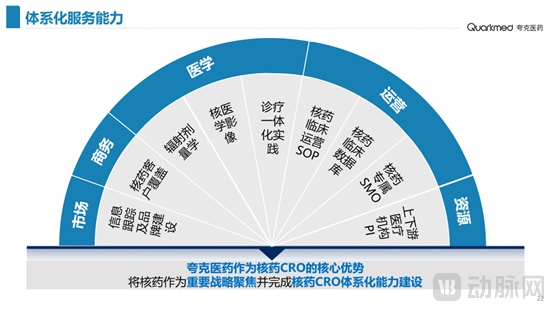
In the field of radiopharmaceuticals, Quark Medicine has prioritized radiopharmaceuticals as a key strategic focus and established a comprehensive CRO service capability. The CRO projects completed by Quark Medicine have involved various radionuclides and multiple therapeutic indications, demonstrating extensive experience in clinical CRO services. Looking ahead, Yuan Dawei stated, “We aim to continue expanding our presence in CRO services across the upstream and downstream segments of the radiopharmaceutical industry, with the goal of building a one-stop CRO service platform.”