

Enlaza Therapeutics Files IPO Prospectus: Pioneering the World's First Covalent Biologics Platform with Nobel Laureate Endorsement
Enlaza Therapeutics
Protein Therapy Developer
An 81-year-old gentleman maintained intense focus throughout the conference, actively asking questions and taking diligent notes, leaving a deep impression on attendees. This dedication to chemistry dates back to his childhood: when his father, a surgeon, went to bookstores to purchase medical texts, Sharpless would accompany him, selecting books on chemistry or maritime studies. His favorite book at the time was on the biosynthesis of steroids; he found it “marvelous” to witness how the three methyl groups of lanosterol seemingly vanished, being converted into carbon dioxide.
According to the elderly gentleman, he enrolled at Dartmouth College in the United States during his youth to pursue undergraduate studies. As a pre-medical student majoring in either chemistry or biology, he had a stronger preference for chemistry. During his freshman year, he broke his leg while skiing; consequently, throughout the entire winter semester, he relied on crutches to go to the library to study organic chemistry. The conference he attended was the WRC2023 Academic Conference on Bioorthogonal and Click Chemistry, launched and hosted by the Shanghai Center of the World Laureates Association (WLA) in mid-October 2023, and organized by the World Laureates Association International Joint Laboratories (WLA Labs).
The elderly gentleman is named K. Barry Sharpless, the fifth individual to win the Nobel Prize twice since its inception in 1901, having been awarded the Nobel Prize in Chemistry in 2001 and again in 2022. Sharpless discovered the cinchona alkaloid-derived catalyzed asymmetric dihydroxylation of olefins, which has become one of the most important reactions in modern organic synthesis. He is thereby hailed as a founder of the fields of asymmetric catalysis and click chemistry. He was elected a Fellow of the American Academy of Arts and Sciences in 1984 and a Member of the National Academy of Sciences in 1985.
As a two-time Nobel laureate, Sharpless remained focused and diligent, never pausing in his note-taking—a testament to the highest praise for the WRC conference.
One Chinese-American speaker caught his attention: Lei Wang, a professor in the Department of Pharmaceutical Chemistry at the University of California, San Francisco (UCSF), as well as affiliated with the Cardiovascular Research Institute and the Helen Diller Family Comprehensive Cancer Center, presented the compelling ongoing research conducted by him and his team. The breakthrough nature of this study lies not only in providing new avenues for protein engineering, biological research, and therapeutic applications, but also in demonstrating to the audience how genetically encoded methods can be used to incorporate non-natural amino acids with unique reactivity, thereby altering the interaction patterns of biomolecules.
Rarely mentioned is the fact that, at this time, Wang Lei was also the sole scientific advisor to Enlaza Therapeutics, a company that had made a high-profile debut in the primary market as “the first covalent biopharmaceutical platform company.”
The Double-Edged Sword of Covalent Drug Properties: Both an Advantage and a Pain Point
Covalent drugs, as their name suggests, form covalent bonds with their target proteins and irreversibly modify them. Unlike conventional reversible inhibitors, covalent drugs establish durable connections with their targets, thereby significantly enhancing potency and prolonging the duration of pharmacological effect far beyond that of traditional drugs.
The structure of covalent drugs typically consists of two parts: a reactive group or “warhead,” which forms a covalent bond with the target protein; and a “guidance system,” which determines the inhibitor’s selectivity for the target. This can be likened to a heat-seeking missile: the guidance system locates the target, while the warhead “strikes” to form the covalent bond.
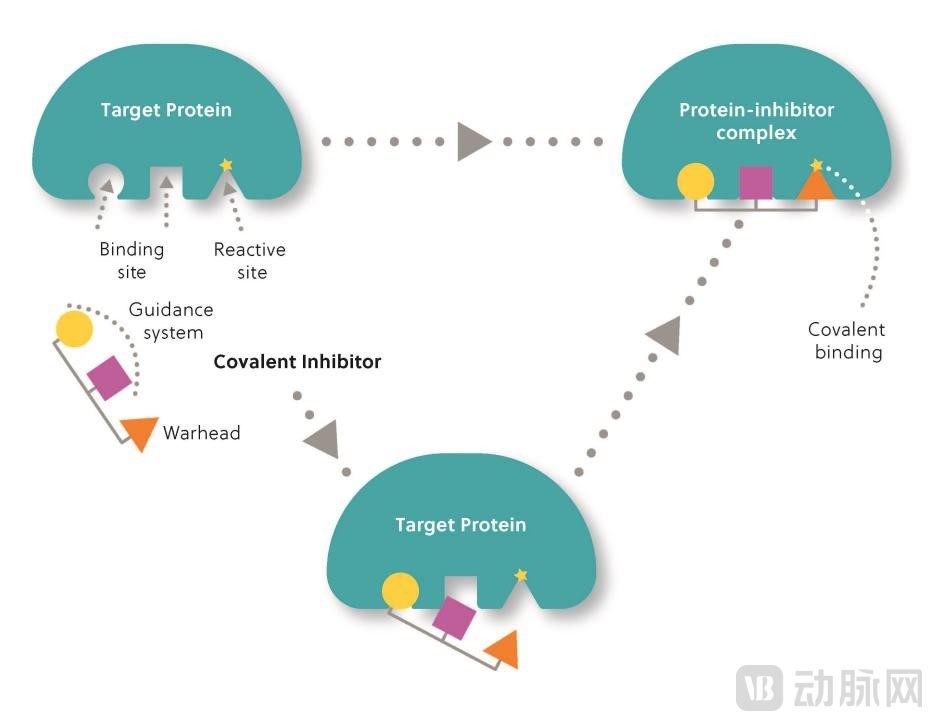
Covalent drugs are not a new concept; they have been used to treat diseases for over a century, with penicillin and aspirin being the most prominent examples. Interestingly, the covalent mechanism of action for these drugs was discovered only after their widespread use. In fact, many major covalent inhibitor drugs were discovered serendipitously rather than through rational drug design.
Covalent drugs can also exhibit significant selectivity, precisely acting on their target sites. This characteristic enables them to target challenging proteins that are difficult to address with non-covalent inhibitors, thereby facilitating the successful targeting of previously “undruggable” targets. The approval of sotorasib, the first KRAS inhibitor, represents a major milestone in the treatment of refractory cancers.
However, the characteristics of covalent drugs are a double-edged sword—the very properties that make them promising also pose challenges to their development. Because binding is irreversible, any binding or modification must be highly selective; otherwise, off-target effects may occur, leading to long-term toxicity. Furthermore, some target proteins may undergo mutations or structural changes that prevent effective binding and inhibition by covalent drugs, resulting in drug resistance and reduced long-term efficacy.
In light of these challenges, the design of covalent inhibitors requires careful consideration of various factors, including warhead reactivity, binding site specificity, and the stability of the formed covalent bond. The reactive group must adhere to the “Goldilocks principle”—it must possess sufficient reactivity to form a bond with the target during complex formation. Achieving an appropriate balance among these factors can be both complex and time-consuming.
This may explain why platforms facilitating the rational design of covalent drugs have only emerged in recent years.
Peking University Alumni Serve as Advisors, Attracting Bets from JPMorgan Chase and Regeneron
In 2018, Professor Wang Lei employed genetic code expansion technology to incorporate the non-toxic non-canonical amino acid fluorosulfate-L-tyrosine (FSY) into model proteins. Upon binding to their protein ligands, FSY-modified proteins undergo covalent cross-linking via a click chemistry reaction—specifically, sulfur-fluoride exchange—with lysine, histidine, and tyrosine residues at corresponding sites on the protein ligands.
The year 2020 that followed was highly significant for the field of covalent drugs. In terms of the market, investments were yielding returns, with the best-selling covalent drugs ibrutinib and osimertinib generating a combined $4.33 billion in sales throughout the year. On the R&D front, on June 23, 2020, Professor Xu Yang and Professor Fu Xuemei’s team from Southern Medical University and the Eighth Affiliated Hospital of Sun Yat-sen University, Professor Lei Wang’s team from the University of California, San Francisco, and Researcher Qian Wang from the Hangzhou Institute of the Technical Institute of Physics and Chemistry, Chinese Academy of Sciences, collaborated to publish a research paper titled “Developing Covalent Protein Drugs via Proximity-Enabled Reactive Therapeutics” in the journal Cell.
The findings of this paper lay the foundation for the development of covalent protein drugs and demonstrate their significant application potential in tumor immunotherapy. Furthermore, beyond the development of therapeutic protein drugs, covalent protein technology will emerge as a widely applied synthetic biology platform in fields such as disease diagnosis, single-cell analysis, and novel antibody development.
It was also in 2020, towards the end of the year approximately six months later, that a team of seasoned executives from the biotechnology sector co-founded the startup Enlaza, building upon Professor Wang Lei’s research. The company aims to become a pioneer in the field of covalent biologics. “Enlaza” is derived from the Spanish word *enlazar*, meaning “to link.” While several companies in the industry are advancing the development of covalent small-molecule drugs, Enlaza Therapeutics has chosen a different path, positioning itself as one of the few companies currently developing covalent protein therapeutics.
Co-founder Sergio Duron, who also serves as CEO of Enlaza Therapeutics, earned his Ph.D. in Organic Chemistry from the University of Illinois at Urbana-Champaign. With over 18 years of R&D and management experience in venture capital-backed biotechnology, he also serves as Managing Partner at Avalon BioVentures and Chief Strategy Officer at Nerio Therapeutics. Co-founder Sanford Madigan serves as President and Chief Business Officer of the company. He possesses a strong scientific background and has over 25 years of experience in corporate finance, operations, business development, and mergers and acquisitions. He is also the Founder and CEO of Strategic Enzyme Applications, established in partnership with Monsanto Company.
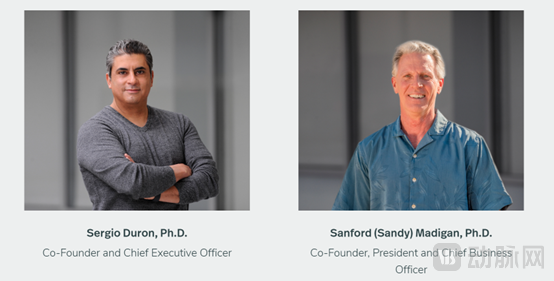
Image source: Enlaza Therapeutics official website
Professor Wang Lei serves as the sole scientific advisor to Enlaza Therapeutics. He earned his bachelor’s degree from Peking University. During his doctoral studies under the supervision of Peter G. Schultz, he achieved the first-ever expansion of the genetic code by incorporating non-natural amino acids into gene fragments, an accomplishment that earned him the “Young Scientist Award” from Science magazine. He subsequently conducted postdoctoral research under Nobel Laureate in Chemistry Roger Y. Tsien and previously established a research team at the Salk Institute.
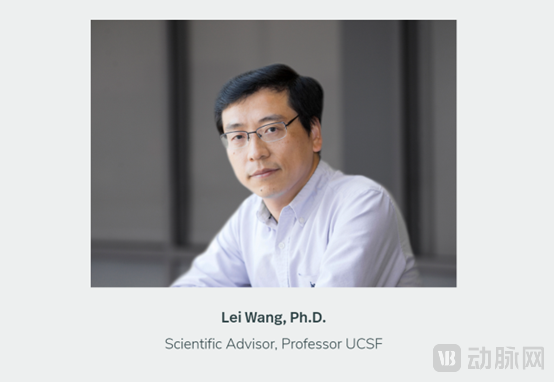
Image source: Enlaza Therapeutics official website
At its inception, Enlaza Therapeutics completed a $61 million seed financing round, led by Avalon Ventures, with participation from Lightspeed Venture Partners, Frazier Life Sciences, and Samsara BioCapital. On April 30, 2024, Enlaza Therapeutics closed a $100 million Series A financing round, led by J.P. Morgan Asset Management, with participation from the investment arms of Amgen and Regeneron, Alexandria Venture Investments, among others. Existing investors, including Frazier Life Sciences, Avalon Ventures, and Samsara BioCapital, continued to support the company.
War-Lock™: The World’s First Covalent Biology Platform, with Its “Warhead” Tackling R&D Pain Points
Enlaza Therapeutics’ covalent biology platform, named War-Lock™, has been further refined based on the research of Professor Wang Lei. Its design effectively addresses the key characteristics and pain points in covalent drug development. On one hand, the irreversible nature of covalent binding demands high precision in target selection, necessitating warheads with sufficient selectivity. Furthermore, ensuring the stability of the formed covalent bond remains a major challenge in the rational design of covalent drugs.
To address these pain points, War-Lock™ offers a solution that leverages its advanced synthetic biology technology to incorporate non-natural amino acids with expansion chemical functionalities into protein therapeutics. This technology enables the formation of covalent bonds between the drug and its target. The unconjugated drug remains latent and inactive while circulating in the body, becoming activated only upon binding to the specific target, thereby further enabling precision therapy.
Enlaza’s pipeline, developed on the War-Lock™ platform, comprises highly specific therapeutic warheads that bind to targets, enabling the design of therapeutic agents with high-fidelity, targeted delivery to specific tissues. For instance, protein-based therapies can be engineered and modified to carry various payloads, thereby creating antibody-drug conjugates (ADCs) or radioligand therapies (RLTs) capable of delivering drugs specifically to target tissues without causing prolonged systemic exposure. The company believes this novel War-Lock technology can overcome the limitations of current biologics by decoupling drug efficacy from off-target effects and effectively reducing toxicity.
Beyond this, building on its precise targeting of pain points, the War-Lock™ platform further explores the potential of covalent drug platforms.
The technology led by Professor Wang Lei enables the incorporation of non-natural amino acids with expanded chemical functionalities into protein drugs, thereby facilitating the formation of covalent bonds between the drug and its target. Its proprietary amino acid subunits can bind to nearly all forms of proteins without compromising the drug’s therapeutic specificity for its target.
This characteristic endows it with significant potential and broad application prospects in multiple therapeutic areas, including oncology. With the further development and clinical application of the War-Lock™ platform, Enlaza Therapeutics can establish a diversified drug pipeline covering various therapeutic fields such as oncology, and is poised to achieve breakthroughs in treating major diseases like cancer, thereby advancing its core projects into clinical stages and moving toward industry leadership.
Holding Hundreds of Millions, Moving Toward Clinical Trials
Currently, Enlaza’s research remains in its early stages. Over the past year and a half since emerging from stealth mode, Enlaza has begun integrating its product pipeline and conducting preclinical studies. Duron believes these studies have demonstrated “the advantages of covalent protein therapeutics,” but it should be noted that Enlaza is still several years away from human trials capable of definitively proving efficacy.
Enlaza Therapeutics currently has 45 employees and, with the support of over $160 million (more than RMB 1 billion) in funding, plans to hire at least 20 additional staff members. Furthermore, the company intends to develop antibody-drug conjugates (ADCs) targeting “validated targets,” although it has not disclosed specific ADC projects. Duron stated that several drug candidates are expected to advance into clinical trials within the next few years.
In any case, after completing its latest round of financing, Enlaza Therapeutics can no longer return to a “low-profile” existence. Notably, according to data and analysis from J.P. Morgan and DealForma, Enlaza closed its Series A financing at a time when biotechnology venture capital was experiencing a recent rebound after a prolonged downturn, surging from $4.9 billion in the fourth quarter of 2023 to $6.5 billion in the first three months of 2024. With funding becoming increasingly ample, Enlaza may accelerate its clinical development efforts, striving to be the first to bring new surprises to the field of covalent drugs.