

Fuwai Hospital & Hygeia Medtech Unveil New Cryoablation Clamp Patent Enabling Single-Handed Operation

Hygea
Developer of Tumor Treatment Equipment
On May 14, 2024, Fuwai Hospital of the Chinese Academy of Medical Sciences & Hygea Medical Technology Co., Ltd. announced a new patent disclosure.This patent describes an ablation forceps capable of freely switching between clamped and released states, facilitating rapid one-handed operation by physicians during cryoablation procedures.
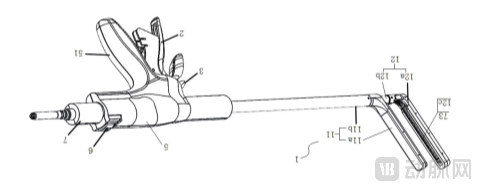
Figure of the ablation forceps product, sourced from the patent specification
“Popular” Procedures Drive Clinical Penetration of Electrophysiology Products
Since 1987, cardiac electrophysiology interventional procedures have been widely used in clinical practice due to their advantages of minimal invasiveness, high efficacy, high safety, and short operative time. In the course of development,Cardiac electrophysiology interventional procedures are further subdivided into three major techniques: radiofrequency ablation, cryoablation, and pulsed field ablation. Meanwhile, medical device companies are rapidly expanding their portfolios of electrophysiology-related products in response to this trend.
Radiofrequency ablation, as the most common cardiac electrophysiology procedure, is also the area where medical companies have made the most strategic investments. In 1996, Johnson & Johnson officially entered the field of cardiac electrophysiology by acquiring Cordis and Biosense, integrating Cordis Webster’s catheter ablation technology with Biosense’s three-dimensional electroanatomic mapping system. In China, MicroPort EP had already received market approval for its FireMagic® cardiac radiofrequency ablation catheter in October 2009.
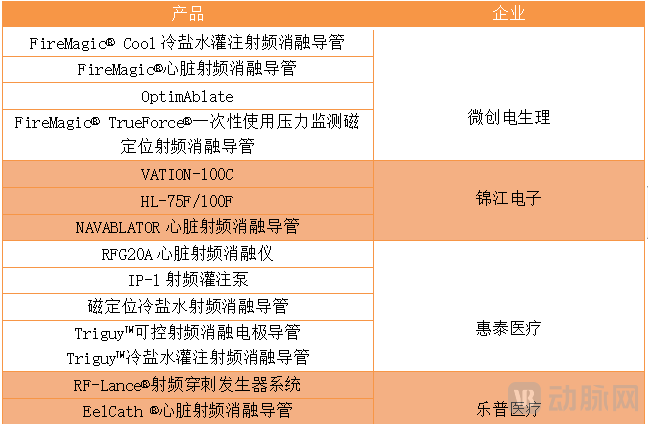
Some Domestic Radiofrequency Cardiac Ablation-Related Products
Cryoablation is a novel procedure that has emerged in recent years. Medtronic rapidly captured the global market with its Arctic Front and Arctic Front Advance cryoballoon systems; it is reported that nearly 1 million patients worldwide have undergone Medtronic’s cryoablation therapy. Meanwhile, MicroPort EP’s IceMagic® cryoballoon ablation catheter and IceMagic® cryoablation system have received approval from the National Medical Products Administration (NMPA), becoming the first domestically produced cryoablation products approved for the treatment of atrial fibrillation.
Compared with the first two ablation modalities, pulsed field ablation (PFA) offers numerous advantages, including enhanced safety, faster procedure times, lower requirements for catheter-tissue contact, and superior continuity and uniformity of lesion formation. Consequently, it is regarded as the next-generation technology for atrial fibrillation ablation in the field of electrophysiology. Industry giants such as Johnson & Johnson, Medtronic, and Boston Scientific have also taken the lead in strategically positioning themselves in this area.
Among them, Boston Scientific’s Farapulse PFA pulsed field ablation product and Medtronic’s Sphere pulsed field ablation product received EU CE certification in 2021 and 2023, respectively. Domestic companies are also making significant strides: in January 2024, Jinjiang Electronics’ innovative products, the “Disposable Cardiac Pulsed Field Ablation Catheter” and the “Cardiac Pulsed Field Ablation System,” were successfully launched, becoming the first cardiac pulsed field ablation products in China.
Technological Innovation & Policy Support: Accelerating Domestic Substitution
According to Frost & Sullivan statistics, the top three players in China's electrophysiology market in 2020 were all foreign brands: Johnson & Johnson, Abbott, and Medtronic, with market shares of 58.8%, 21.4%, and 6.7%, respectively, accounting for more than 85% in total.in a landscape dominated by foreign monopolies, and by 2022, although the import share had decreased, it still maintained a monopolistic position.
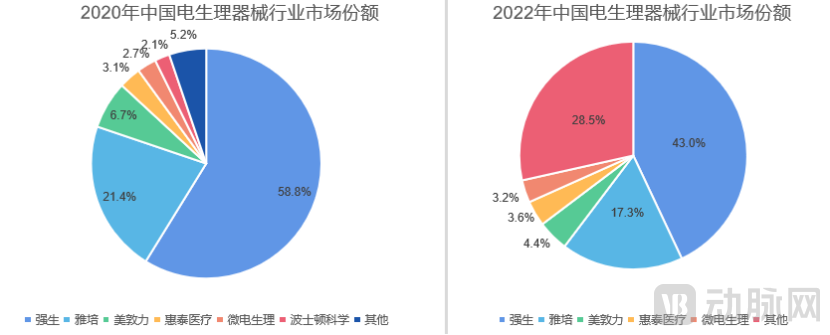 Data source: Frost & Sullivan
This is primarily due to the exceptionally high technical barriers in the electrophysiology market. International giants entered the field early, boasting strong capital and technological capabilities, establishing complete product portfolios, cultivating strong stickiness among downstream physicians and hospitals, and accumulating extensive clinical experience. In contrast, domestic brands generally entered the market later, lagging behind international counterparts in terms of experience and technology, resulting in lower market share.
However, with breakthroughs in domestic electrophysiology technology and supportive policies, the rate of substitution by Chinese-made products is increasing.。
In recent years, Chinese companies have primarily focused on addressing domestic market gaps. In 2022, MicroPort EP’s EasyStar high-density mapping catheter received registration approval from the National Medical Products Administration (NMPA), filling a gap in domestically produced products in this category. In December of the same year, MicroPort EP’s self-developed FireMagic® TrueForce® disposable pressure-sensing magnetically localized radiofrequency ablation catheter was approved by the NMPA for market launch, breaking the monopoly held by Johnson & Johnson and Abbott in this field. In March 2023, Huitai Medical announced the successful completion of clinical trials for its magnetically localized high-density mapping catheter.
Domestic researchers are also focusing on clinical breakthroughs in electrophysiology-related technologies. For example, in 2023, the team led by Professor Chen Minglong from Jiangsu Province Hospital achieved personalized ablation for atrial fibrillation patients through the results of the STABLE-SR III study, part of the original STABLE-SR series.
Meanwhile, the implementation of centralized procurement for electrophysiology is also reshaping the domestic market landscape.In 2022, Fujian Province took the lead in establishing a procurement alliance for electrophysiology products and endoscopic staplers, covering 27 provinces, autonomous regions, and municipalities across China. A total of 16 companies were awarded bids, with products spanning 11 categories, including transseptal sheaths, electrophysiology catheter sheaths, transseptal needles, and body surface positioning reference electrodes.
The product portfolios and R&D efforts of domestic companies have provided hospitals with more options, while also fostering competition and development in China’s cardiac electrophysiology market, thereby enhancing the level of interventional electrophysiological diagnosis and treatment and reducing healthcare costs.