

Liying Bio Successfully Scales Production of Thermostable Triple-Helix Recombinant Collagen Protein
2022 was hailed as the “Year One” of recombinant collagen. Strong national policy support, enthusiastic adoption by the medical aesthetics industry, widespread application in the cosmetics sector, and deep attention from capital markets collectively wrote a glorious chapter for recombinant collagen. This momentum continued into 2024, with certain differentiated medical aesthetic products maintaining high prosperity despite a large base. Taking medical aesthetics as an example, product development has been driven by the demand for “natural beauty,” prompting upstream manufacturers to continuously explore differentiated new materials and helping recombinant collagen capture greater market share.
Against this backdrop, Shenzhen Renying Biotechnology Co., Ltd. (Renying Bio) has emerged as a promising new player. Established in April 2022, Renying Bio was selected by the Shenzhen Engineering Biology Innovation Center, underwent a five-month incubation program there, and became the center’s fastest-incubated enterprise to generate operating revenue. Within just 12 months of its founding, the company attracted attention from numerous industry partners and investment institutions, successfully completing two rounds of financing in the tens of millions of yuan.
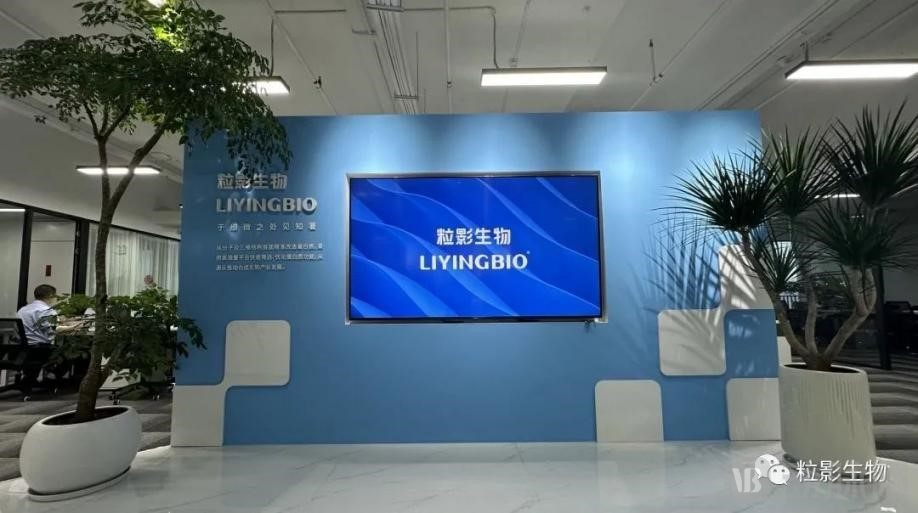
Image source: Renying Biotechnology
Not Only on the “Academic Bookshelf,” but Also on the “Market Shelf”
The founding of Renying Biotechnology is closely intertwined with the academic journey of its founder. Dr. Zhang Ying began his academic career at the University of Nottingham, where he earned a Distinction, the highest classification for a master’s degree in the UK, by virtue of his outstanding research capabilities and academic performance. He then pursued his doctoral studies at The Institute of Cancer Research, University of London, under the supervision of several Fellows of the Royal Society. During this period, he elucidated the structures of more than ten proteins and contributed to the development of precision protein-based therapeutics for multinational pharmaceutical companies such as GlaxoSmithKline and AstraZeneca.
After completing his doctoral studies, Dr. Zhang Ying joined the UK National Institute for Medical Research to pursue postdoctoral research focused on pediatric brain tumors. Using structural biology approaches, Dr. Zhang and his team provided a clear elucidation of the pathology of brain tumors, with these significant findings published in the prestigious journals Science and Nature Communications. During this period of exploration, Dr. Zhang not only gained a profound appreciation for the intricacies of protein structure design but also recognized the valuable insights it could offer into the origins and mechanisms of disease. At the time, however, he primarily viewed these discoveries as a scientific “narrative,” without fully realizing how they would shape the future of medical development.
The true turning point in my life came from a single remark by my mentor: “The knowledge we acquire ultimately serves two purposes, corresponding to two ‘shelves’: either the bookshelf or the retail shelf.”
“Getting on the bookshelf” refers to research teams completing pioneering studies that exert a significant influence on subsequent researchers, provide guidance for future research, and propel scientific advancement to new historical heights. “Getting on the store shelf” means that scientific achievements are ultimately industrialized and applied in practice, truly serving patient populations in need or integrating into daily life to enhance the quality of life for the general public. Dr. Zhang Ying’s study and research work in the United Kingdom accomplished the step of “getting on the bookshelf.”
After returning to China, Dr. Zhang Ying joined Sun Yat-sen University as a doctoral supervisor. He was well aware that industrialization is an inevitable path for translating research findings into practical applications. Coincidentally, the location of Sun Yat-sen University’s Shenzhen Campus boasts a vibrant entrepreneurial ecosystem. In September 2021, Dr. Zhang participated in Shenzhen Science and Technology Innovation Week as an academic guest speaker, where he presented his team’s research achievements, which at the time included protein antibodies related to COVID-19. Following the event, several seasoned investors immediately advised him to establish a company to commercialize these scientific outcomes.
This recommendation ultimately led to the founding of Shenzhen Renying Biotechnology Co., Ltd., symbolizing that Dr. Zhang Ying’s research has not only “earned a place on academic shelves” but also successfully “secured a spot on market shelves,” widely applying his scientific achievements across various real-world sectors and ushering in a new chapter in the integration of scientific research and industry.
# The Collagen Market Is Vast, but Triple-Helix Recombinant Proteins Face Numerous Challenges
In the early stages of its founding, Renying Biotechnology actively responded to epidemic prevention needs by rapidly launching a nanobody spray product that integrated both prevention and treatment. However, as the market environment evolved and the company’s external service focus gradually shifted away from anti-epidemic products in the second half of 2022, Renying Biotechnology keenly identified new market opportunities and pivoted toward the design and development of protein raw materials.
Meanwhile, the recombinant collagen market is expanding rapidly. According to Frost & Sullivan data, the market size of recombinant collagen products in China surged from RMB 1.5 billion in 2017 to RMB 10.8 billion in 2021, representing a compound annual growth rate (CAGR) of 63.8%. It is projected to grow at a CAGR of 42.4%, increasing from RMB 18.5 billion in 2022 to RMB 108.3 billion in 2027. Correspondingly, the penetration rate of recombinant collagen products within the overall collagen product market is expected to rise from 15.9% in 2017 to 62.3% in 2027.
In response to this market trend, Renying Biotechnology has become a focal point for numerous partners eager to collaborate, with many seeking to jointly develop recombinant collagen products with Dr. Zhang Ying and his team. To gain a deeper understanding of the current market landscape, Dr. Zhang led his team in conducting extensive market research. They found that although the molecular structure of collagen is relatively simple, achieving efficient production of high-quality collagen through synthetic biology presents significant challenges.
Throughout the industrial development of collagen, first-generation collagen materials were predominantly natural extracts derived from animal sources, such as porcine skin and bovine Achilles tendon. While these naturally extracted collagens retain the fundamental triple-helix structure, they pose risks of xenogeneic immunogenicity, and their uniformity and specific types (among more than 20 known collagen types) cannot be precisely controlled through natural extraction methods. Second-generation collagen materials are recombinant collagens with human-derived sequences produced via synthetic biology technologies; however, due to current technical limitations, most collagen products available on the market remain single-chain collagen peptides.
In the medical aesthetics market, existing recombinant collagen products have consistently faced challenges such as rapid degradation and short duration of effect. In contrast, the triple-helix trimeric structure of collagen not only offers significant advantages in bioactivity but also demonstrates markedly enhanced resistance to degradation. Furthermore, based on this trimeric fundamental structure, higher-order assemblies can be formed to further improve the product’s structural support, thereby more effectively resisting the degradation process.
It can be said that the triple-helix structure is the basis of biological activity; only proteins possessing this triple-helix configuration can be considered true collagen. Consequently, enabling recombinant collagen to form a triple-helix structure has become a focal point of attention within the industry.
Currently, there are two main approaches for preparing full-length recombinant collagen with an intact triple-helix structure. The first involves using animal or plant cells to express full-length recombinant collagen with an intact triple-helix structure; however, this method is costly and lacks advantages for large-scale production. The second involves direct expression of full-length recombinant collagen with a triple-helix structure in Escherichia coli or yeast, but this technical route presents numerous significant challenges.
Renying Biotech’s Six Technology Platforms Overcome Challenges in Triple-Helix Recombinant Proteins
To address this industry challenge, Renying Biotechnology has established an AI-assisted protein design platform, a high-throughput structural biology platform, a foundational strain engineering platform, a high-performance single B-cell antibody discovery platform, a protein raw material pairing, screening, and validation platform, and a GMP-grade injectable protein production platform to overcome technical barriers.
Among these, the AI-assisted protein structure design platform leverages next-generation artificial intelligence algorithms, represented by AlphaFold, to analyze, simulate, and optimize key properties and structures of proteins. Coupled with the structural biology team at Shenzhen Renying Biotechnology’s expertise in protein structures, as well as their analysis and validation of the physicochemical environments of amino acids and pathways for achieving biological functions, this approach accelerates the protein sequence evaluation process. It enables the rapid identification of engineering strategies and high-efficiency expression routes for various proteins within a short timeframe, while accommodating requirements for different scales and processes, thereby achieving rapid acquisition of target proteins.
The foundational strain engineering platform integrates the BDLT cycle with traditional biology, guided by principles of systems design and engineering, to construct and screen engineered strains that exhibit high quality, high yield, and stability. Currently, Renying Biotechnology has acquired a diverse portfolio of foundational strains, including Escherichia coli, Lactococcus lactis, Pichia pastoris, and Saccharomyces cerevisiae.
Leveraging its six major technology platforms and a profound understanding of the mechanism underlying collagen triple-helix formation, Renying Biotechnology has successfully addressed key technical challenges in the industry. Within less than six months, the company has achieved expression, purification, and large-scale manufacturing of various types of triple-helix collagen across multiple cell expression systems.
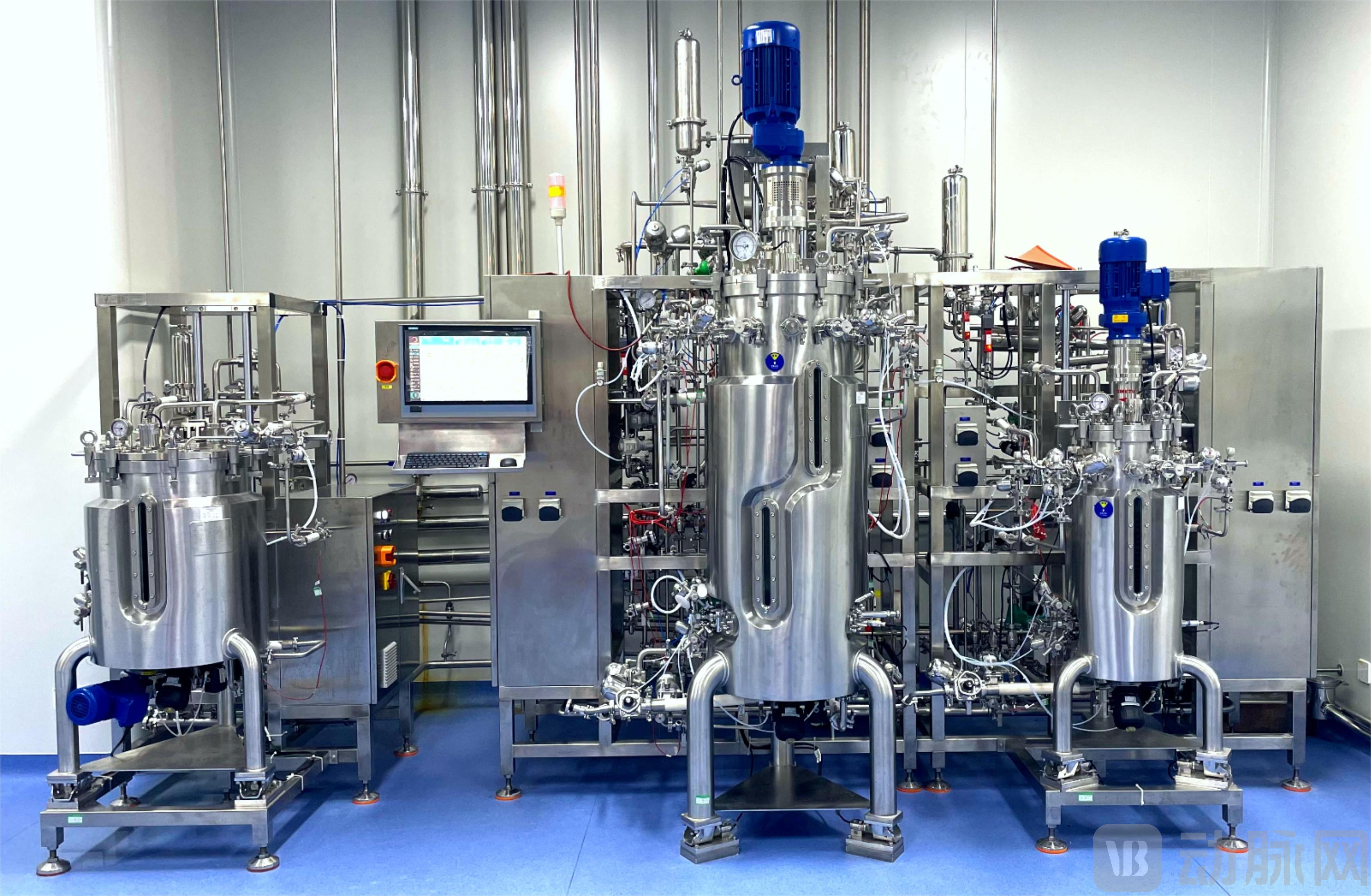
Image source: Renying Biotechnology
Industry First: Stable Triple-Helix Structure Under High-Temperature Conditions
In December 2023, Shenzhen Renying Biotechnology Co., Ltd.’s innovative project, “Recombinant Humanized Collagen,” passed the authoritative testing and appraisal conducted by the National Institutes for Food and Drug Control (NIFDC). Renying Biotechnology’s collagen was shown to maintain the stable presence of its triple-helix structure even after treatment at room temperature and 90°C, marking an industry first. This certification from the NIFDC represents a milestone for Renying Biotechnology.
It is worth noting that the high-temperature testing conducted by Shenzhen Renying Biotechnology Co., Ltd. is not intended to “show off technical prowess,” but rather to address practical challenges in industrial applications. In real-world scenarios, human body temperature is 37°C, while the emulsification temperature for daily chemical products exceeds 80°C. Biological macromolecules are generally unable to withstand high temperatures, and currently, no other company can produce collagen that maintains its triple-helix structure at temperatures of 37°C or higher.
As the future collagen market expands and new players continue to enter, only collagen products that truly balance mass production capability, production cost, and product stability, while possessing a triple-helix structure, will stand out and meet broad market demand. Currently, the heat-resistant triple-helix Type III collagen developed by Shenzhen Renying Biotechnology Co., Ltd. can form advanced collagen fiber structures, offering superior repair properties and enhanced skin elasticity maintenance. In addition to providing better options for collagen categories in the beauty and medical aesthetics sectors, it can also be applied in clinical fields such as vascular endothelium, endometrium, wound healing, oral mucosa repair, and orthopedics. The company has established collaborations with several leading listed companies in the industry.
Overseas-Educated Team’s Global Collaboration Earns Recognition from the Highest International Standards
The team members of Renying Biotechnology hail from renowned research institutions and industry leaders such as Imperial College London, the Shenzhen Institutes of Advanced Technology (Chinese Academy of Sciences), BGI, and WuXi AppTec. With most team members having overseas backgrounds, this composition provides Renying Biotechnology with distinct advantages and strengths in expanding into international markets.
To date, Renying Biotechnology has facilitated the development of over 50 types of high-difficulty protein raw materials, accumulating tens of millions in order value and driving technological breakthroughs and industrialization in recombinant protein products. Meanwhile, Renying’s platform technology is applicable to multiple fields, including daily chemicals and medical aesthetics, synthetic biology, enzyme engineering, in vitro diagnostic reagents, vaccine sequence design, and protein macromolecule drugs. The company has established strategic collaborations with nearly twenty downstream industry partners and channel distributors.
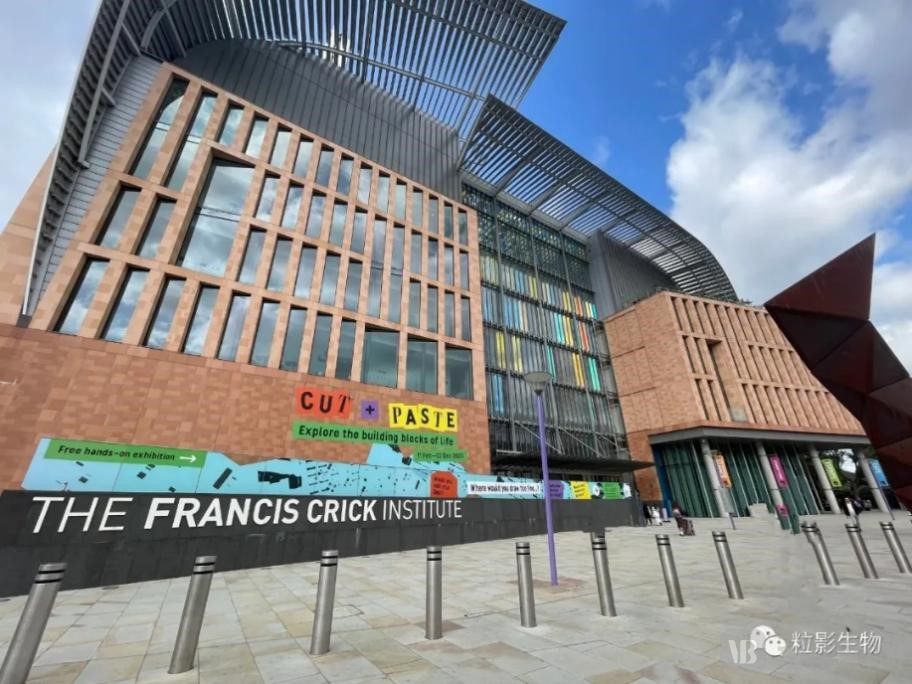
In addition to its strong performance in the domestic market, Renying Biotechnology has actively expanded into overseas markets. In late 2023, Renying Biotechnology successfully gained approval from the Francis Crick Institute in the United Kingdom and was officially included in its supplier registry. Named after Nobel laureate Francis Crick, co-discoverer of the DNA double helix structure, the institute is the largest biomedical laboratory in Europe. This collaboration signifies that Renying Biotechnology’s professional services in protein engineering and purification have been recognized as meeting the highest international standards.
The Francis Crick Institute, UK. Image source: Renying Biotechnology
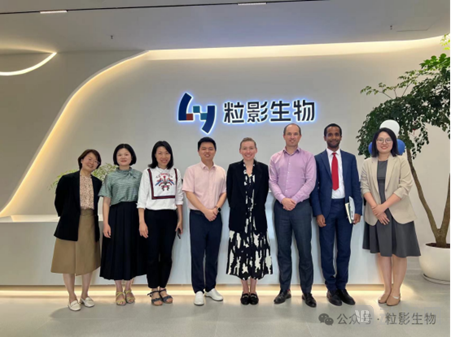
In December 2023, Renying Biotechnology signed a strategic cooperation framework agreement with Academician Axel Behrens of the UK Institute of Cancer Research (ICR). On April 23, 2024, representatives from the British Embassy in China and the UK Department for Business and Trade led a delegation to visit Renying Biotechnology, marking the first time the British Consulate had proactively visited a Chinese enterprise. The development of the synthetic biology industry in the UK also faces its own challenges, with a high bankruptcy rate among startups, primarily due to difficulties in scaling up production. “This indirectly highlights a significant advantage of China’s synthetic biology sector: not only does it possess strong industrialization capabilities, but it also has a vast market to absorb these products,” explained Dr. Zhang Ying.
Renying Biotechnology held fruitful exchange activities in collaboration with representatives from the British Embassy in China, the UK Department for Business and Trade, and the London & Partners. Image source: Renying Biotechnology
Reflecting on the meaning behind the name of Renying Biotechnology, Dr. Zhang Ying referred to cryo-electron microscopy (cryo-EM), a technique used in protein structure research. As electrons pass through a protein sample, they are scattered to form projections of the protein. By collecting millions of such particle projections and performing computational reconstruction, the molecular structure of the protein can be determined, thereby helping humans understand and analyze protein functions. This truly embodies the concept: “Observe one particle, reveal myriad images; in the minutest details, the truth emerges.”
Looking ahead, Dr. Zhang Ying believes that synthetic biology technology, as a key enabling engine for new quality productive forces, can serve as a significant driver for industrial transformation and upgrading in the medical, agricultural, and even industrial sectors compared to traditional manufacturing methods. It is expected to deliver broad economic, environmental, and social benefits. In the future, Shenzhen Renying Biotechnology Co., Ltd. will continue to deepen its expertise in the design and mass production of novel recombinant proteins. While balancing mass production capacity, manufacturing costs, and product performance, the company aims to provide the market with high-quality, high-performance recombinant protein products characterized by robust hard-tech capabilities.