

Opportunities and Challenges for Chinese Medical Device Companies Going Global
As global economic integration accelerates and medical health technologies advance rapidly, the medical device industry stands at a historic intersection of globalization and innovation. China’s innovative capabilities and international competitiveness in medical devices are becoming increasingly prominent. Currently, China has become the world’s second-largest medical device market, accounting for one-quarter of global output value, while overseas markets are emerging as new frontiers for Chinese medical device companies to expand their presence.
However, the path to global expansion is not only about vast opportunities but also fraught with challenges. Unfamiliarity with overseas regulations, lack of understanding of international business processes, difficulty in finding suitable business models, inadequate local execution, and low brand recognition are currently the main obstacles to going global, as well as the challenges that Chinese medical device companies must face in their international development.
Currently, going global is no longer a novel topic. What stages must Chinese medical device manufacturers navigate in their international expansion? In the context of intense global competition, how can they achieve worldwide innovation?
On May 10, 2024, at the Medical Device Overseas Expansion Forum and Global Healthcare Innovative Product Selection Conference held during the VBEF Future Healthcare Ecosystem Expo organized by VCBeat,Wang Haijiao, Deputy General Manager of GTJA Investment Group, delivered profound insights on the topic “Opportunities and Challenges for Chinese Medical Device Companies Going Global.”
First, fromDomestic Medical Device Industry LandscapeOverall, it can be divided into payment, supply, decision-making, and demand.On the demand side, as China’s population ages, the frequency of demand is undoubtedly rising significantly. On the supply side,Following the reform of the review and approval system initiated in 2015, the market launch of innovative medical devices in China has accelerated.Significant increases in both the quantity and quality of supply-side entities. However, overall, while the concentration on the supply side of the medical device industry has increased, it remains relatively low.
Decision-making is further constrained by health insurance payment limits, with the returns on innovation failing to be widely realized.“Under the overarching logic of overall cost containment in medical insurance, the payer side has exerted significant influence on the entire industry in recent years. We believe that over the next 5–10 years, due to persistent pressures on the payer side, the growth rate of China’s medical device market may decline compared with the past decade,” said Wang Haijiao.
A Look at the Global Position of China’s Medical Device IndustryIn 2023, the operating revenue of medical device manufacturers in China is estimated to reach RMB 1.31 trillion,China's medical device market now accounts for 27.5% of the global market, firmly ranking second worldwide.In 2023, the concentration of the medical device industry increased compared to 2022. The profit growth rate of enterprises above the designated size exceeded the industry’s overall growth rate, further enhancing industrial consolidation. Meanwhile, in 2022, the total profits of medical device enterprises above the designated size reached RMB 120.43 billion, remaining above the RMB 100 billion mark for three consecutive years and significantly higher than the pre-pandemic level of RMB 50 billion.
Although the payment side has exerted significant pressure on the overall development of the industry, certain adjustment trends have emerged. First, the supportive orientation of medical insurance toward innovative medical devices and innovative drugs has been clearly established. Second, the National Medical Products Administration (NMPA) continues to encourage innovation, providing a dedicated “green channel” for the approval of innovative medical devices. Driven by these policy incentives, the number of innovative medical devices approved in China has shown an upward trend in recent years. Third, under the promotion of the national innovation-driven development strategy, R&D investment by Chinese medical device enterprises has maintained steady overall growth, remaining at nearly 4% in recent years, which is higher than the 2.5% average level for the high-tech industry as a whole.
In China’s capital market, the medical device industry exhibits two key characteristics from an industrial perspective: first, there remains room for future growth; second, intense domestic competition may lead to significant cost-containment pressures.
The market capitalization of medical device companies continues to decline, and the noticeably slower pace of initial public offerings has become a clear trend in the capital market.According to Wind data, by the end of 2023, there were 152 listed medical device companies on the A-share market, with a total year-end market capitalization of RMB 2.01 trillion, representing a 12.2% decline from the beginning of the year and a maximum intra-year drop of 21.4%. In the Hong Kong stock market, there were 45 listed medical device companies, only five of which achieved market capitalization growth since the beginning of the year. The total market capitalization of the Hong Kong Medical Device Index fell from HKD 320 billion at the beginning of the year to HKD 210 billion at year-end, a decline of 34%. “Especially after the introduction of the new IPO regulations, I believe it will become even more challenging for medical device companies, as the profit requirements for listing have been further raised. A characteristic of the medical device sector is that while the scale of each sub-segment is not large, profit margins remain relatively stable. With these heightened requirements, going public has become more difficult for medical device companies compared to five or ten years ago.”
Meanwhile, financing activities in the healthcare and medical sector have declined significantly, with large-scale funding rounds further contracting.In 2023, there were 447 financing deals for medical device companies in China, a 24.4% decline from 2022. Approximately 20 medical device firms secured over RMB 100 million in funding each in 2023, representing a nearly 50% drop in number compared to 2022. “Investment and financing activity dropped by 50% in 2023 compared to 2022, following another 50% decline in 2022 relative to 2021. Therefore, I believe that the overall investment and financing activity in the healthcare sector in 2024 may amount to only about 10% of the peak level seen in 2021,” said Wang Haijiao.
Amid this downward trend, the medical device sector remains a bright spot, experiencing a relatively smaller decline. This is because the medical device sector is characterized by lower capital requirements and shorter development cycles, making it easier to generate revenue and profits compared to pharmaceuticals. However, driven by risk-averse sentiment, investors have significantly reduced the size of individual transactions, becoming more cautious.
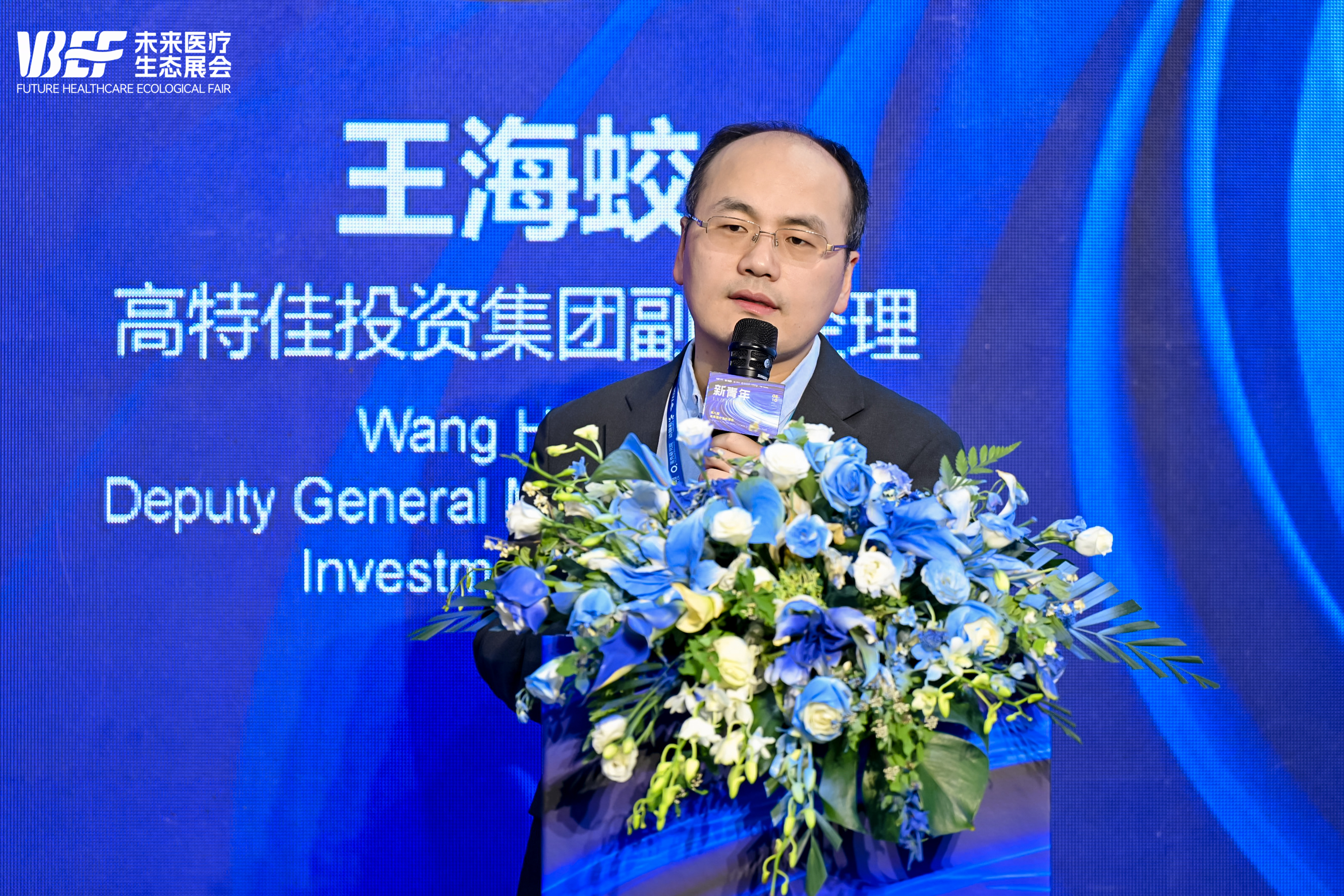
Wang Haijiao, Deputy General Manager of GTJA Investment Group
Given such industrial and capital market conditions, domestic medical device companies have limited options for achieving faster growth, making overseas expansion an imperative choice.
From an industry-wide perspective, the value of medical device exports from China is growing, the export structure is being continuously optimized, the proportion of high-value-added products is rising, enterprises’ enthusiasm for global expansion is increasing, and China’s international influence in the medical device sector is steadily strengthening.
Regarding the overseas expansion choices for small and medium-sized medical device enterprises in China, Wang Haijiao pointed out that they should focus on niche markets, flexibly adjust strategies, and clarify three major issues.
First, the target positioning must be clear: clearly define the specific market to be served and determine whether customized R&D products can be provided to that market.Products that perform well in the domestic market should not be promoted to other overseas markets without modification; instead, personalized development should be carried out for customers in respective countries based on actual conditions.
Second, the selection of regional markets and overseas expansion models.“Leading domestic enterprises have historically targeted mature markets in Europe and the United States, focusing on cost-effectiveness, where customer education has been largely completed. Can small and medium-sized enterprises still enter these markets now? Or should they align more closely with Chinese government policies, such as those related to Belt and Road Initiative countries? ‘A wealthy market discovered by others may not necessarily be a feast for you, while places considered relatively barren by others might present your opportunity,’ said Wang Haijiao.”
At the same time, careful consideration must be given to international expansion strategies. In today’s competitive landscape, is it sufficient to simply sell products to overseas markets, or is it necessary to establish manufacturing bases abroad? Against the backdrop of major countries worldwide emphasizing supply chain security, whether to seek overseas partners or build proprietary channels warrants in-depth reflection.
Third, is there a supporting system?“I have spoken with many owners of small and medium-sized enterprises (SMEs), and their most pressing concern is deciding whom to assign to lead overseas expansion—local hires or Chinese nationals? Furthermore, regarding cultural conflicts, we must admit that we are not yet fully prepared, but we have been compelled to enter the global arena. In terms of building organizational capabilities, Chinese companies need to devote greater effort to learning.”
Regarding Opportunities in China’s Medical Device Industry, Wang Haijiao Summarized Three Key Points.
First, independent innovation.Over the past decade, the primary rationale for global expansion was the pursuit of cost-effectiveness; in the next phase, greater emphasis should be placed on independent innovation.“In the past, when competing with overseas giants, Chinese medical device companies, in a sense, focused more on identifying gaps in the intellectual property (IP) portfolios of these multinational corporations. As developers of ‘me-too’ or ‘me-better’ products, our primary concern was to avoid litigation and successfully enter overseas markets. However, looking ahead to the next decade, we should place greater emphasis on how innovators can strategically secure overseas IP rights for their novel products, thereby enjoying a period of technological monopoly,” said Wang Haijiao, noting that these represent two distinct strategic mindsets. The former approach positions us as the attacker seeking vulnerabilities while others play defense; in the coming decade, we must shift to a defensive posture, focusing on how to robustly protect our competitively advantaged products. “Therefore, the next phase of global expansion for China’s medical device industry lies in independent innovation and the surrounding IP protection framework. This is a direction we must carefully consider and may well represent our key opportunity.”
Second, AI+. We may not have a distinct advantage in high-power-consumption large models. However, in terms of industrial applications, the “small-model, low-power-consumption” approach could prove viable.“Small models focused on specific scenarios, leveraging advantages in data and algorithms combined with low power consumption, should be able to achieve results superior to those of overseas companies,” said Wang Haijiao. Innovative AI+healthcare provides leading Chinese medical device enterprises with an opportunity to overtake international giants. For instance, generative AI can accelerate disease diagnosis, personalized treatment, and drug development with greater precision and efficiency.
Third, internationalization.China accounts for one-quarter of the global medical device market; to grow into a towering tree in this sector, it is impossible to forsake the remaining three-quarters of the global market.Currently, Chinese companies are accelerating their overseas expansion, and acquiring foreign enterprises has become a key strategy for rapidly entering global markets in the medical device sector.
From the perspective of opportunities for Chinese medical device companies expanding overseas,First, wealthy nations worldwide have a need for cost containment. High-quality, affordable medical device products have become the preferred choice for many overseas procurement agencies.As population aging intensifies globally, healthcare demand continues to rise, making cost containment a universal priority—with China leading the way. Logically, Chinese companies that have been tempered in China’s fiercely competitive cost-control environment possess a competitive advantage in expanding overseas, as they are well-equipped to meet the needs of international clients.
Second, China possesses unique supply chain advantages.such as cost, scale, human resources, technological reserves, infrastructure, and quality.
Third, Political Immunity. The healthcare industry possesses a degree of political immunity. Although subject to short-term disruptions, its long-term attribute of serving patients worldwide remains unaffected by external political factors.
Fourth, Special Opportunities, such as the joint construction of the Belt and Road Initiative boosting high-level opening-up, with policy and industrial opportunities facilitating Chinese enterprises’ global expansion.
Of course, expanding overseas also presents numerous challenges.1. Registration Regulation, such as the enhanced regulatory standards under the new IVDR regulations;2. Policy Environment, such as the recent restrictions or investigations launched by the United States and Europe against Chinese medical device companies;3. Selection of Target Countries for Overseas Expansion, developed countries are not necessarily a feast for every enterprise; whether traditionally defined good markets truly represent good opportunities for our development remains to be verified;4. Upfront Costs. The cost of errors in global expansion is extremely high; successful domestic localization experiences of Chinese companies are not necessarily applicable.