

Harbin Haihong Base Industry: A 12-Year Journey to Leadership in Optical Imaging Technology
Surgical procedures are increasingly evolving toward minimally invasive and precise approaches, with reducing patient trauma, lowering surgical risks, and enhancing operative accuracy becoming shared goals for both physicians and patients. The realization of precise intraoperative planning and navigation inevitably relies on the innovation and advancement of optical imaging technologies, among which the surgical microscope stands out as an indispensable and pivotal medical device.
SiHan Industry Research Institute pointed out that the global sales of surgical microscopes reached $2.037 billion in 2022, and it is expected to reach $3.904 billion by 2029, with a compound annual growth rate (CAGR) of 9.37%. However, for a long time, overseas leading enterprises have occupied the majority of the market share for surgical microscopes. Domestic companies are still in the catch-up phase in terms of technology, standards, R&D capabilities, and production capacity.
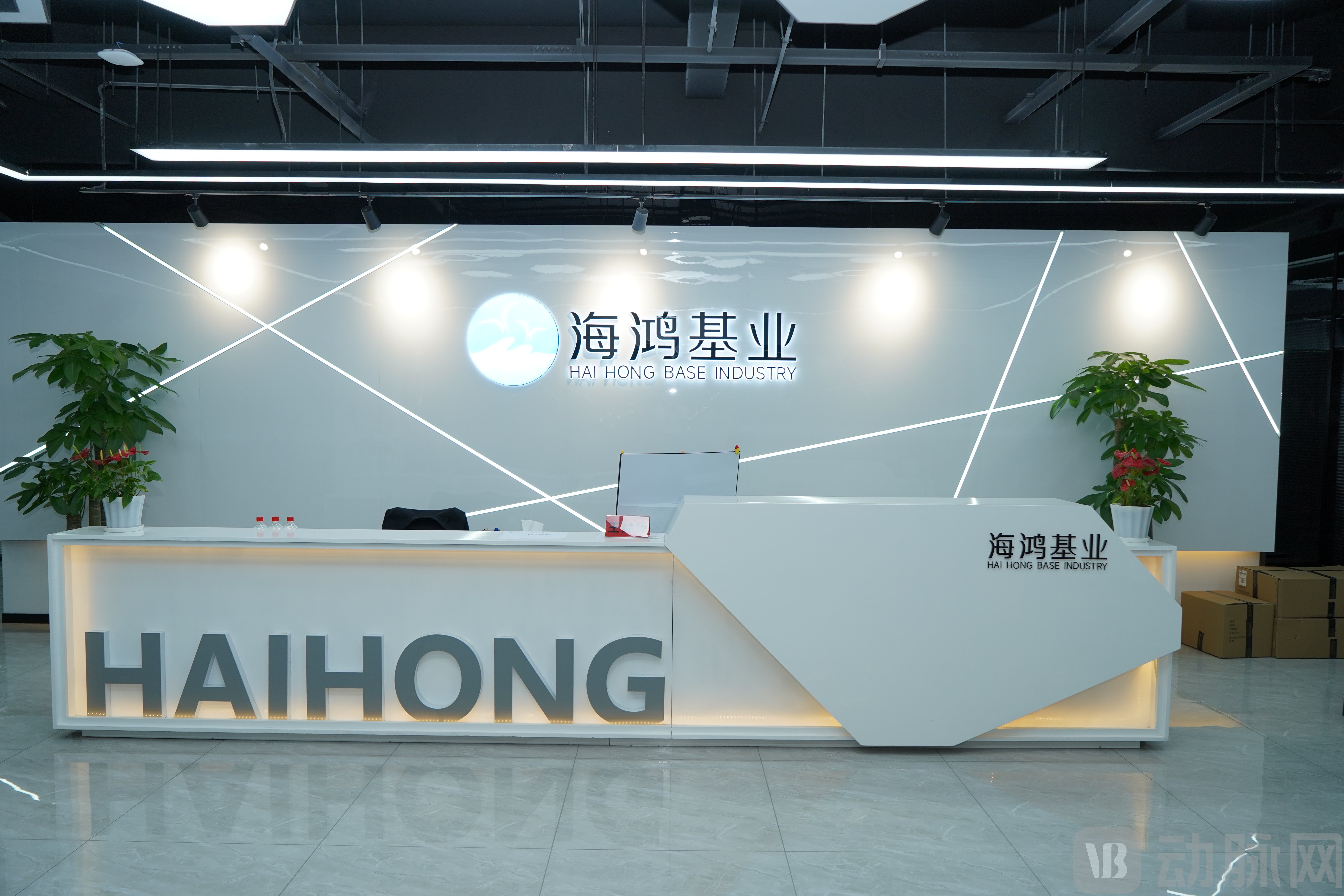
Targeting the critical pain points in the development of domestic optical imaging, particularly high-end microscopy, Harbin Haihong Jiye Technology Development Co., Ltd. (hereinafter referred to as “Haihong Jiye”) has been deeply engaged in the optical imaging sector since its inception. With optical imaging technology as its core focus, the company has independently developed multiple products, including integrated microscopic fluorescence surgical systems and medical surgical microscopes. It continues to expand its product portfolio and advance the research, development, and production of innovative solutions, committing to domestic substitution and indigenous innovation in this field. Now in its twelfth year, Haihong Jiye remains dedicated to these goals.
Currently, the high-end surgical microscope market is predominantly monopolized by foreign brands, while domestic development remains relatively slow.
Surgical microscopes encompass multidisciplinary fields including optics, mechanics, electronics, software, and digitalization, characterized by their interdisciplinary nature, high technical barriers, and superior precision. Their design and manufacturing involve cross-disciplinary theoretical knowledge and complex assembly and adjustment processes. It is necessary to balance the various parameters of the optical, illumination, and mechanical systems, often requiring extensive debugging and testing. Once product performance requirements are met, further process optimization is needed to improve assembly efficiency and reduce production costs.
Furthermore, surgical microscope products impose stringent requirements on raw materials and manufacturing processes. Compared with developed countries, China started later in this field, and the supply chain for optical, mechanical, and electrical components offers limited support to the industry. Consequently, high-end surgical microscopes used in fields such as neurosurgery rely primarily on imports. Meanwhile, due to the short history of independent research and development of surgical microscopes in China, which remains in its early stages, there is a scarcity of talent in specialized subfields and a relative lack of technical development capabilities.
Haihong Jiye was established in 2012. It is a specialized technology company integrating R&D, manufacturing, sales, and foreign trade export of high-tech medical diagnostic and surgical precision navigation equipment. Its headquarters is located at the Sci-Tech Innovation Headquarters of the Shenzhen (Harbin) Industrial Park. In September 2022, its wholly-owned subsidiary, Haihong Jiye (Chengdu) Medical Technology Co., Ltd., was established to take full responsibility for academic development, market expansion, and sales operations of the company’s products.The company has long maintained close collaborations with numerous universities and research institutions both in China and abroad, and has received multiple national, provincial, and municipal science and technology awards. To date, it has filed 39 patents and registered 16 software copyrights.

Under the leadership of founder Zhang Wumin, a former university professor, Haihong Jiye (Chengdu) Medical Technology Co., Ltd. built an interdisciplinary R&D team from the ground up. Leveraging talent and scientific research resources from prestigious institutions such as Harbin Institute of Technology, integrating advanced international expertise, and capitalizing on the golden age of rapid growth in the medical device industry, the company enjoys unique advantages in its technological R&D capabilities.
Haihong Jiye has been deeply engaged in the optical imaging sector for over a decade, accumulating substantial technical expertise. By integrating technologies such as acoustics, neuro-electrophysiology, and AI, the company has expanded its product portfolio into the field of diagnostic and therapeutic devices, launching a series of innovative medical devices with independent intellectual property rights.
In 2024, based on accurate insights into clinical needs and pain points in China’s optical imaging industry, Haihong Jiye launched two innovative products: the Integrated Microscopic Fluorescence Surgical System and the Medical Surgical Microscope.
The integrated microscopic fluorescence surgical system shares a profound heritage with Haihong Jiye’s marketed product, the Laser Lymphatic Imaging System. The Laser Lymphatic Imaging System is a fluorescence imaging device that utilizes near-infrared fluorescence imaging technology to visualize the vascular circulatory system, lymphatic system, and related tissue perfusion status. It is primarily employed for intraoperative fluorescence navigation in open surgical procedures. In driving product iteration and advancing the surgical diagnosis and treatment technologies for lymphatic diseases across China,The team found that in microsurgical and supermicrosurgical procedures such as DIEP and LVA, high-magnification microscopes and high-precision fluorescence imaging systems are indispensable. However, purchasing both devices simultaneously imposes prohibitive costs and requires substantial space, while switching between the two devices is inconvenient.
The R&D team at Haihong Jiye successfully overcame technical challenges in software integration, optical path design, and robotic arm design. By integrating the “Laser Lymphatic Imaging System,” which has been on the market for eight years, with a high-magnification fluorescence microscope, the team spent one year successfully developing the “Integrated Microscopic Fluorescence Surgical System,” thereby establishing a unique technological barrier.
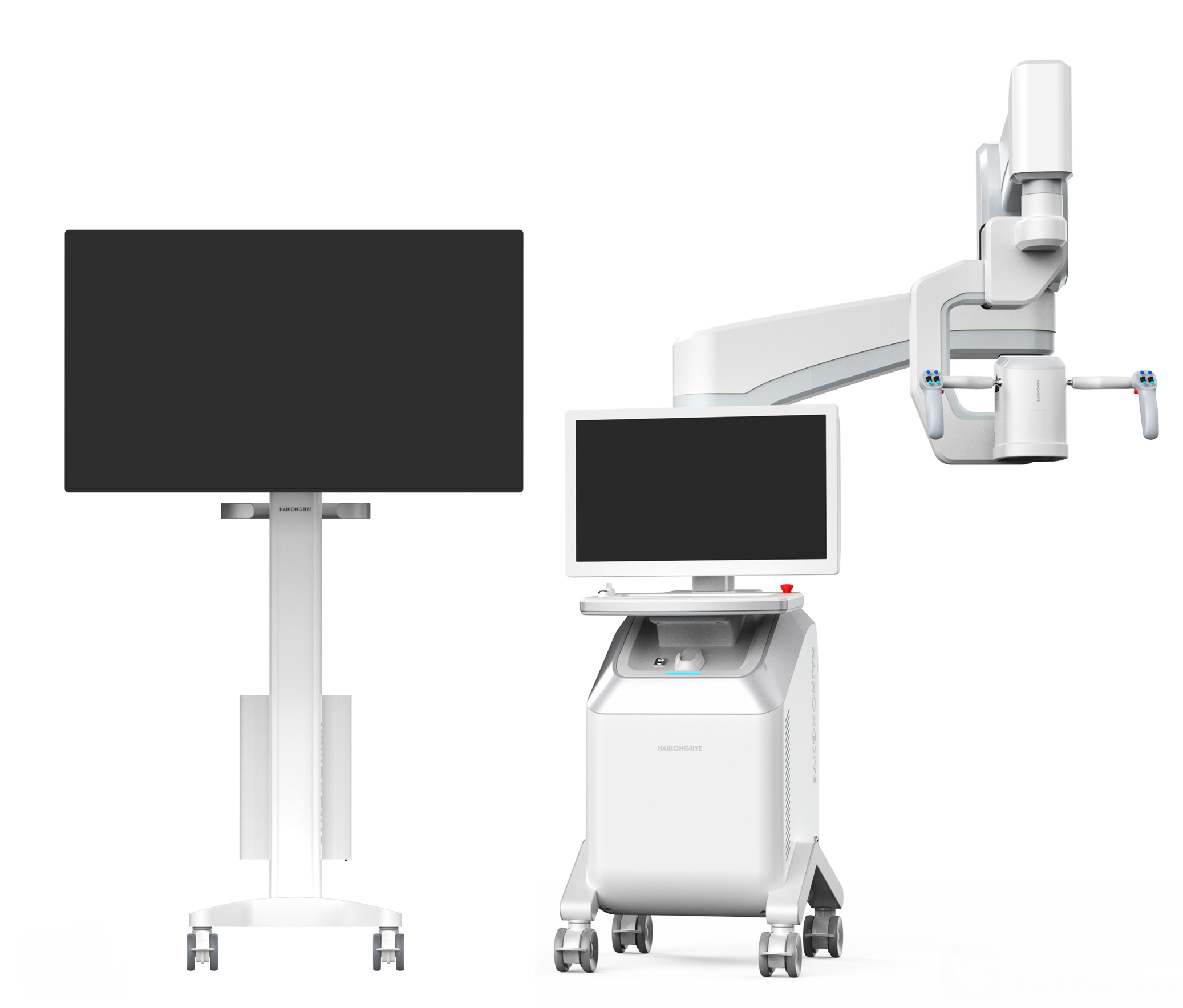
Haihong Integrated Microscopic Fluorescence Surgical System
Haihong Jiye Integrated Microscopic Fluorescence Surgical System combines fluorescence imaging surgical navigation equipment with a 3D fluorescence external-view microscope, meeting both requirements of microscopic surgery with a single device., which reduces the hospital's equipment procurement costs and minimizes space occupancy in the operating room. Meanwhile, the system provides a 3D visualization solution for surgical microsurgery, freeing the surgeon’s eyes from being confined to the eyepieces of the surgical microscope and enabling the surgical team to view the operative field synchronously on a display screen.
Integrated Microscopic Fluorescence Surgical SystemThe integrated microscopic fluorescence surgical system captures weak fluorescence signals through enhanced fluorescence imaging technology to achieve real-time surgical navigation. It can resolve submillimeter-level blood vessels and lymphatic vessels, allowing for clearer observation of blood and lymph flow dynamics. Its 3D external visualization magnification function offers a magnification range of 10–60x, enabling seamless switching among various real-time image modes under magnification. Furthermore, the system supports real-time fluorescence imaging and quantitative analysis. It features a fully built-in 4K ultra-high-definition digital imaging chain with full-range automatic focusing, while also accommodating manual focus adjustment. This design meets the requirements for both wide-field and magnified viewing modes. Both wide-field and magnified images can be rendered as stereoscopic views of the surgical field via the medical 3D imaging unit and displayed on the screen in multi-window, multi-combination layouts.
According to Chairman Zhang Wumin,““The Integrated Microscopic Fluorescence Surgical System” is a comprehensively innovative new technological device, with no competing products currently on the market capable of delivering equivalent functionality. Its technical specifications for wide-field fluorescence imaging comprehensively surpass those of competing fluorescence imaging devices available on the market, while the performance of its microscopic exoscope meets the technical standards of imported brand competitors.。
Currently, domestic microscopes are basically at the stage of optical observation and digital recording and display, lagging behind leading foreign products in terms of functionality and technology.
“Fluorescence imaging has become a standard feature in foreign products, but it is still in its infancy in China. Meanwhile, external visualization displays are predominantly 2D, failing to meet the needs for multi-directional usage,” introduced Chairman Zhang Wumin. Furthermore, the optical magnification of domestically produced surgical microscopes is mostly around 20x, which cannot satisfy the requirements of current high-end surgical scenarios. The boom arm systems mostly adopt a simple force-balancing structure with electromagnetic clutches and manual locking mechanisms, which is highly unfriendly to surgeons’ operational habits.
In response to the aforementioned pain points, Haihong Jiye has achieved breakthroughs in each area, developing a medical surgical microscope that integrates optical imaging technology, fluorescence imaging technology, and high-magnification zoom technology. This product leads domestic counterparts in terms of high magnification, high resolution, 3D imaging, and fluorescence imaging, and even surpasses leading overseas enterprises in metrics such as depth of field.
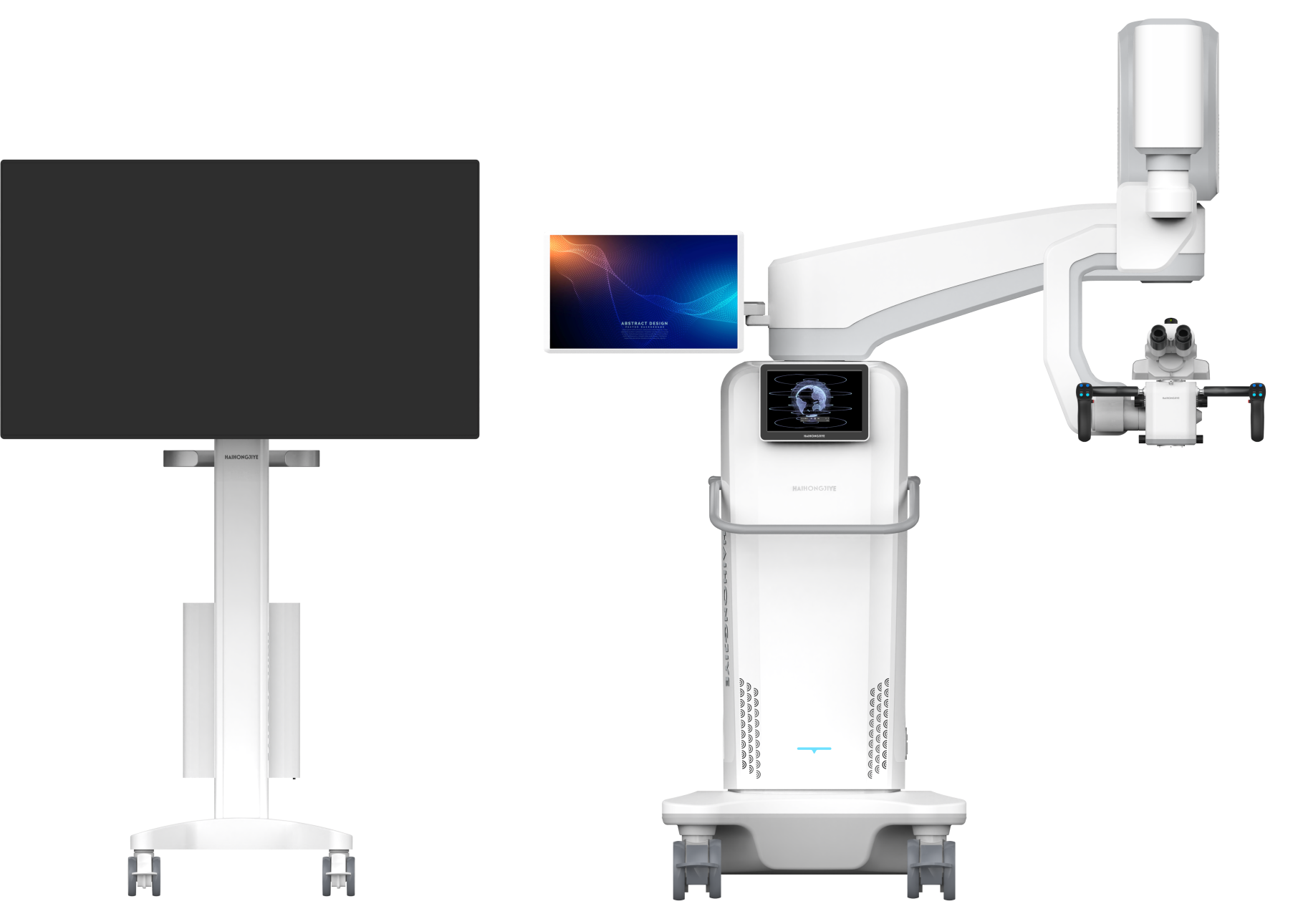
Haihong Medical Surgical Microscope
First, in terms of microscope magnification,Haihong Jiye's medical surgical microscope has a magnification greater than 45x.. The product features image linkage display functionality and is compatible with external images from any brand. This product alsoFeatures Large Depth-of-Field Optical Design, eliminating the need for depth-of-field adjustment during operation, and offering prominent technical advantages in scenarios such as high-definition, high-resolution ultra-microsurgical imaging and navigation.
Meanwhile, Haihong Jiye’s medical surgical microscopes feature fluorescence recognition capabilities, incorporating multiple display modes such as visible light, near-infrared fluorescence, augmented reality fluorescence, black-and-white fluorescence, and yellow fluorescence. The company independently developsDual-Optical Path True 3D Stereoscopic Imaging Technology, while ensuring sufficient light throughput in the optical channels, a dual digital imaging unit is designed with parallel binocular channels to achieve true 3D stereoscopic image display and output, facilitating surgeon operation and teaching demonstrations.
The company has independently developed a multi-joint electromagnetic-lock electric balancing arm system. This electromagnetic armAdopts a 6-joint electromagnetic locking control system, an intelligent anti-tremor bracket equipped with a smart sensor-based shock-absorbing motor enables rapid damping and stabilization of the bracket. Ensures the center of gravity of the main scope.Integrated with advanced one-click balancing function, significantly enhancing the safety, stability, and flexibility of the microscope.
In addition to the integrated microsurgical fluorescence system and medical surgical microscopes, Haihong Jiye has also received market approval for products such as laser lymphatic imaging systems (articulated-arm & portable), microcirculation imaging and neurophysiological diagnostic systems (desktop & portable), and interferential current therapy devices. The company is committed to creating innovative, integrated solutions for the diagnosis and treatment of lymphedema.
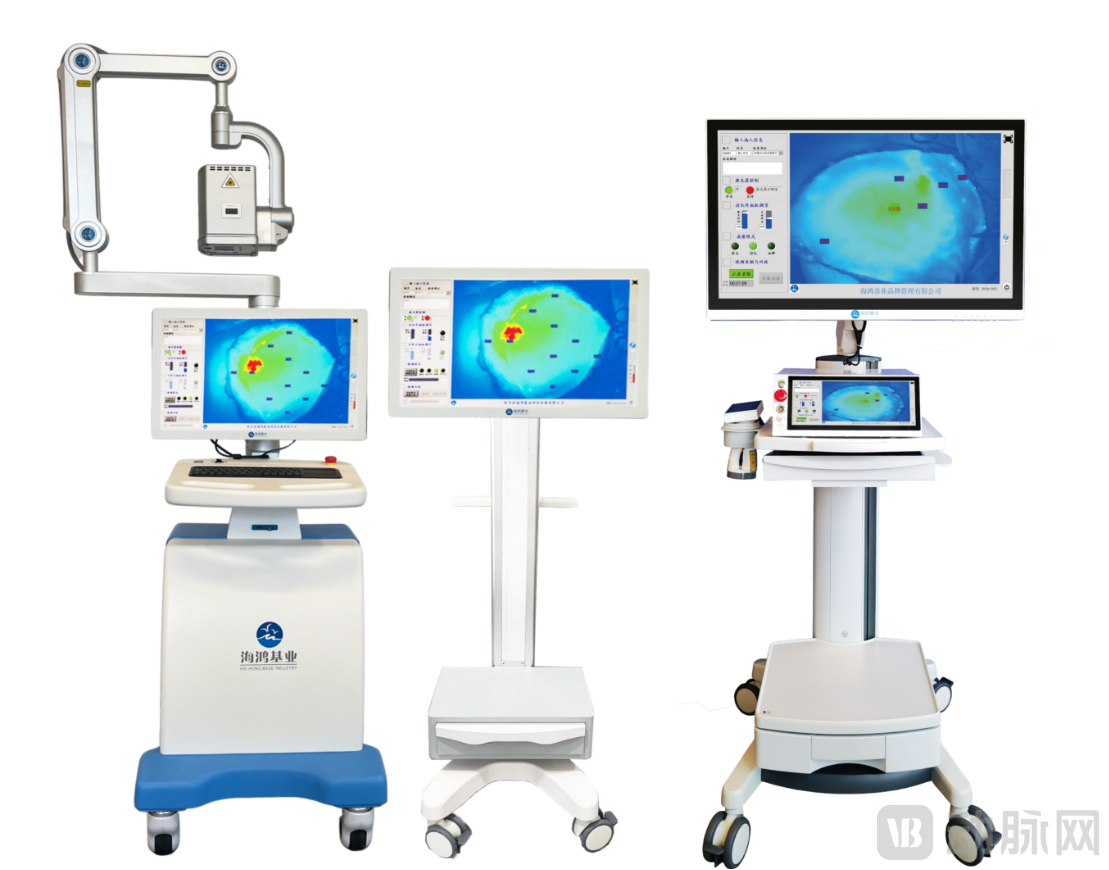
Haihong Laser Lymphatic Imaging System
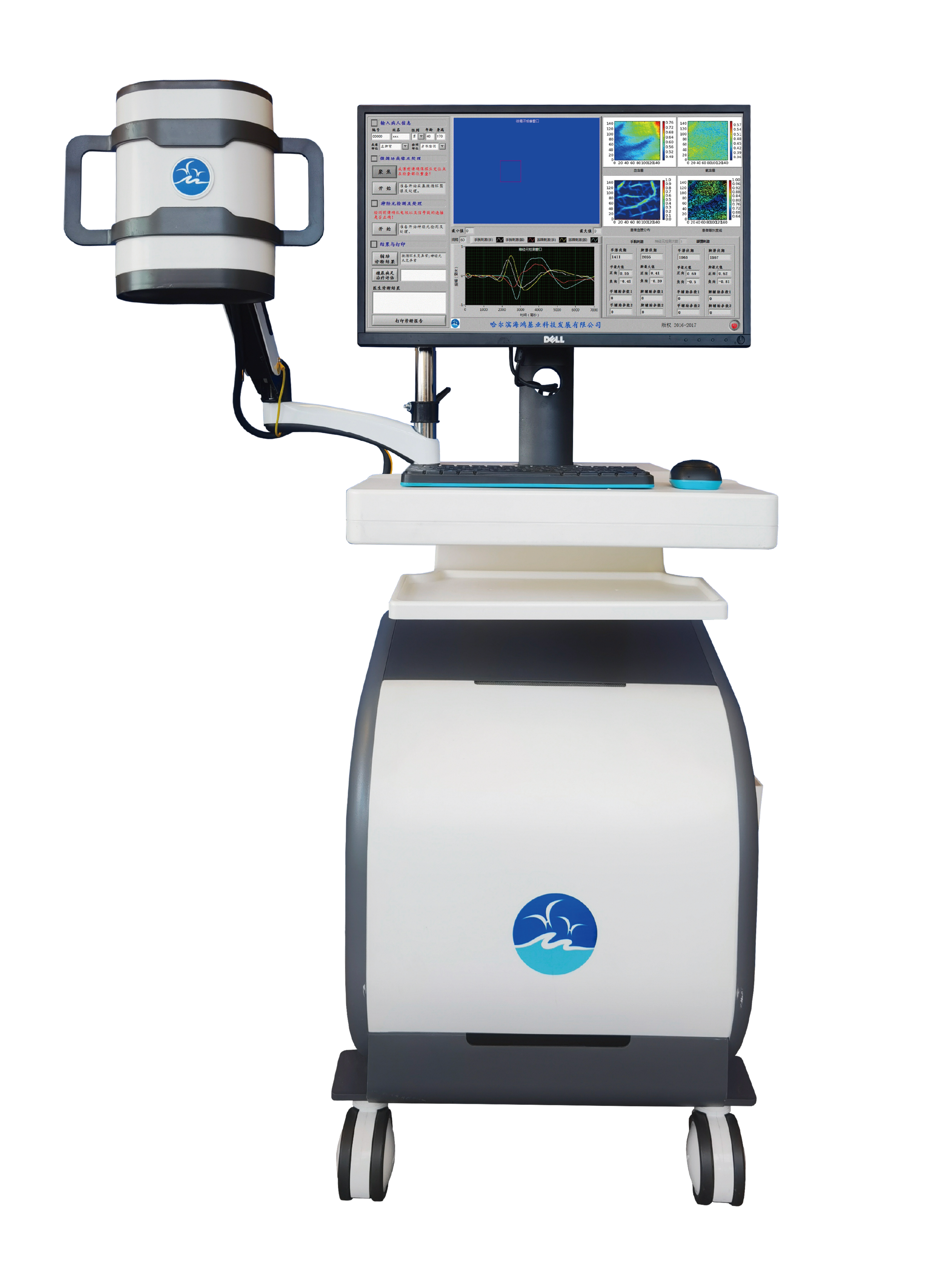
Haihong Microcirculation Imaging and Neuroelectrophysiological Diagnostic System
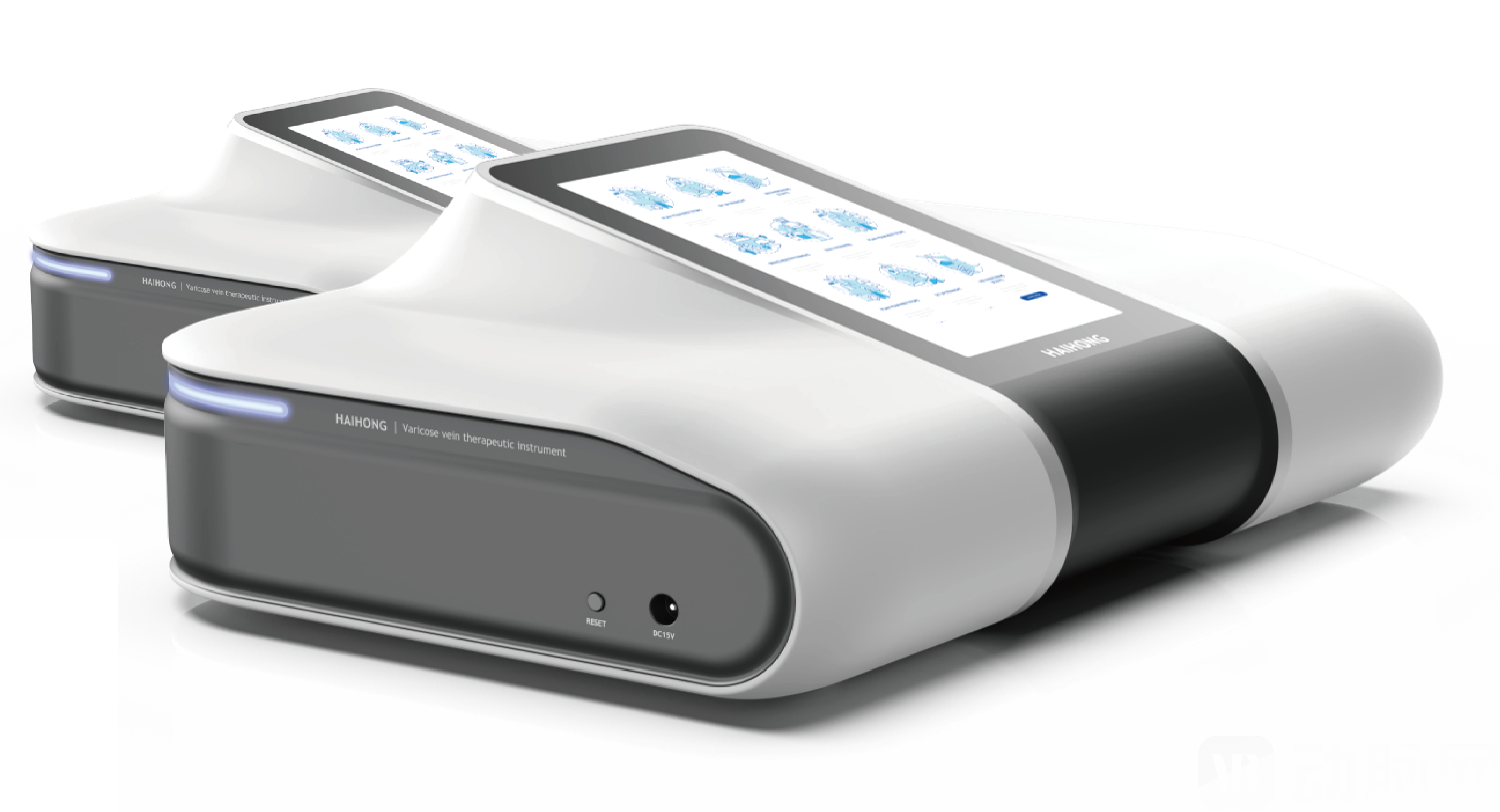
Haihong Interferential Current Therapy Device
As the manufacturer of the device,Haihong Jiye continuously upgrades its technology and has successively launched advanced technologies and features, including 4K imaging, enhanced fluorescence, augmented reality imaging, real-time measurement of lymphatic flow velocity, and 3D display, to better meet the growing equipment demands in lymphatic surgery.
In promoting the academic development of diseases related to impaired lymphatic return, Haihong Jiye spearheaded the establishment of the Lymphedema Treatment and Rehabilitation Professional Committee under the Shanghai Rehabilitation Alliance, and is committed to advancing the standardization of the lymphatic surgery system. It has repeatedly organized and hosted the "Practical Training Course on Diagnosis and Treatment of Lymphedema."As of the end of May 2024, nine training programs have been conducted, assisting more than 50 hospitals in performing their inaugural lymphatic surgery procedures. Among these, over 30 hospitals are now capable of independently providing comprehensive diagnostic and therapeutic services in lymphatic surgery.
In addition, Haihong Jiye has partnered with Sinopharm Medical Devices, combining its robust R&D capabilities and portfolio of innovative products with Sinopharm’s extensive nationwide distribution network and rich experience in medical device marketing. This collaboration integrates upstream and downstream resources for mutual benefit, playing a significant role in the nationwide marketing and promotion strategy for Haihong Jiye’s full product lineup.
In the future, Haihong Jiye will continue to adhere to a technology innovation strategy guided by clinical needs and centered on optical imaging technology. On one hand, it will upgrade the functional technologies of conventional equipment in response to emerging clinical demands; on the other hand, it will persist in developing proprietary products, striving to lead international academic trends.
At the end of the interview, Zhang Wumin shared with VCBeat his vision and expectations for the future of Haihong Jiye. “In the future, we will continue to deepen our expertise in the field of optical imaging, aiming to make greater contributions. This contribution is not limited to the leadership of individual devices, but rather involves driving the development of the entire industry through our own advancements and innovative breakthroughs, narrowing the gap with foreign leaders, and promoting domestic innovation.”