

Plug and Play China GTN: Accelerating the Innovation Journey from Lab to Market – The Future of Synthetic Biology is Here
Synthetic biology is rapidly developing and demonstrating broad application prospects. By designing and constructing new biological systems or re-engineering existing ones to meet specific needs, synthetic biology has shown immense potential across multiple sectors, including pharmaceuticals, chemicals, materials, food, consumer goods, environmental remediation, and energy. Particularly in the pharmaceutical sector, synthetic biology technologies are being employed to produce drugs, vaccines, and diagnostic reagents, thereby achieving cost reduction and efficiency gains. Furthermore, this field contributes to the development of bio-based chemicals and materials, driving the traditional manufacturing industry toward greater sustainability and environmental friendliness.
Currently, synthetic biology is entering a critical phase of industrialization, with a rapid expansion in product varieties. The validation of new products and their substitution for traditional chemical methods are proceeding in parallel. Synthetic biology has become a significant force driving social progress and sustainable development.
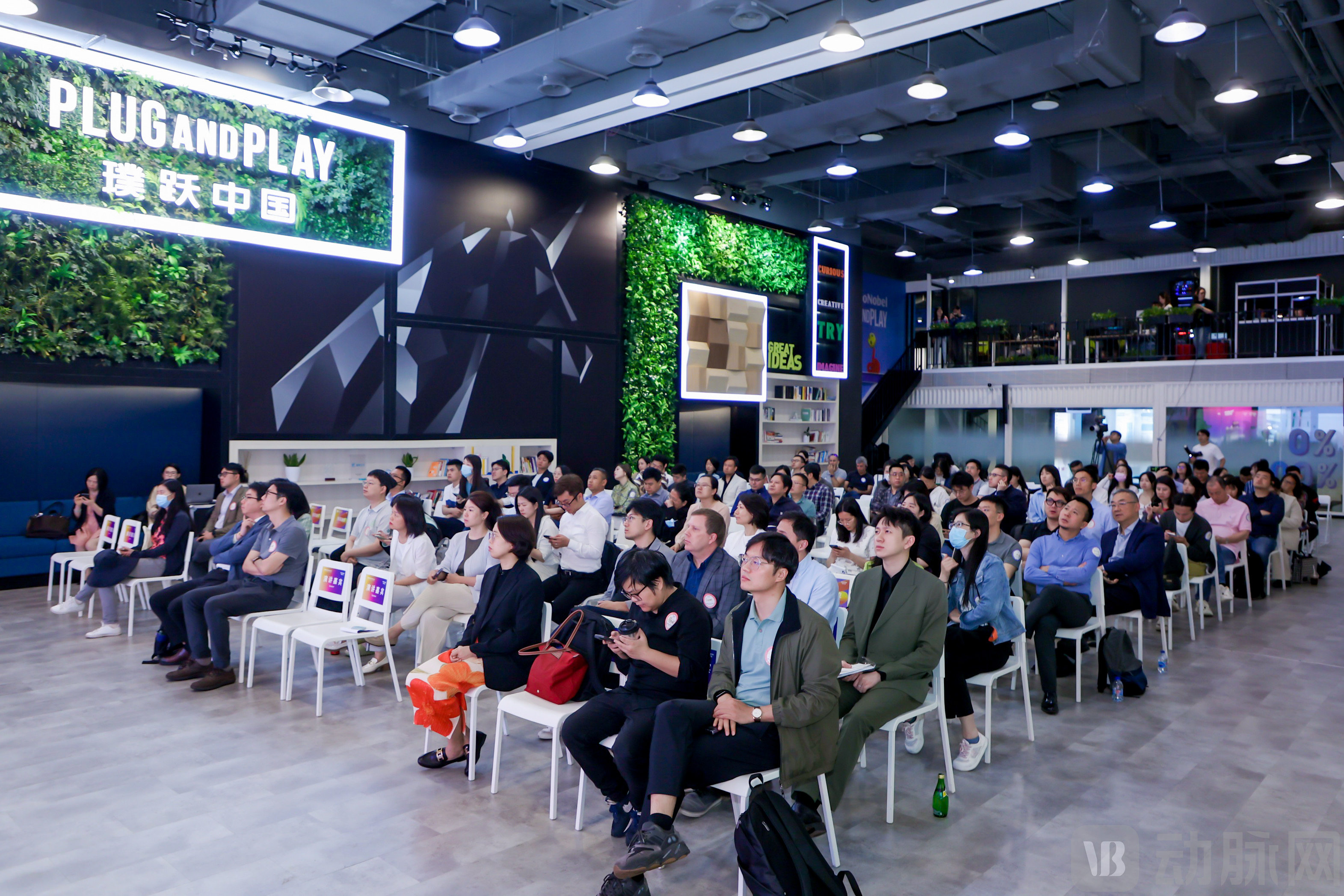
May 31,Plug and Play China Successfully Hosted the Global Tech Network Forum, Themed “Biotech x Future Life: Leading a New Paradigm for Green Development in Beauty and Health”Bringing together numerous experts and scholars, tech luminaries, large enterprises, rising stars in sci-tech innovation, as well as international organizations and investors at the Shanghai Zhangjiang National Innovation Center, the event interprets cutting-edge biotechnology from diverse perspectives and showcases the boundless imagination behind synthetic biology technologies empowering industrial innovation.
Focusing on the Delivery of Key Products, Synthetic Biology Enters2.0Period
During the nearly decade-long golden age of biotechnology development, synthetic biology has emerged as a systemic solution, tasked with the mission of engineering and systematically upgrading traditional industries to reduce costs and enhance efficiency. Particularly since the introduction of the concept of “new quality productive forces,” synthetic biology solutions have become a critical approach for various industries to break through current growth bottlenecks and escape involution.
As a disruptive technology, synthetic biology has become a key driver of the new wave of industrial upgrading. With the maturation of gene engineering technologies, numerous synthetic biology companies both in China and abroad have built robust capabilities for targeted strain modification based on foundational technologies, achieving laboratory-level synthetic biological “creation.” As an increasing number of synthetic biology projects complete early-stage validation, it is fair to say that synthetic biology has passed the technological threshold and entered a critical phase of industrialization.
To date,Synthetic biology has been applied in numerous scenarios, with its technical solutions enabling alignment with consumer preferences and habits, thereby extending value from the upstream end of the industrial chain to downstream markets.
In the field of human health, synthetic biology technologies are increasingly applied to innovative therapies such as gene editing and cell therapy. Traditional, broadly applicable pharmacological treatments have the potential to evolve into personalized medical solutions tailored to individual genomes, as well as new models extending into consumer health.
In the consumer goods and services sector, synthetic biology technologies offer new solutions for addressing issues such as anti-aging for sensitive skin, driven by advancements in life sciences, omics, and engineering. For challenges that cannot be resolved through biological evolution, such as those related to microbial strains, the enhancement of reparative functions can be achieved by screening small-molecule compounds.
Moreover, synthetic biology is also believed to enable the upgrading of end-consumer business models in bulk commodity sectors such as energy, chemicals, and materials.Qing Xiwen, Director of the Biotechnology and Food Industry at Plug and Play China, stated in her keynote speech titled “Synthetic Biology: Exploring the Possibilities of ‘Collaborative Shaping’ Against the Backdrop of the ‘Open Innovation’ Discourse”: “Traditionally, synthetic biology has been categorized into segments such as the upstream technology value chain, the tools layer, the application layer, and the product delivery layer. However, the current industry landscape has entered the Synthetic Biology 2.0 era, characterized by the delivery phase of key products.”
This means that, at the current juncture, establishing stable large-scale manufacturing capabilities and a mature market for end-product applications, and even integrating the upstream and downstream segments of the industry chain, have become critical questions that synthetic biology companies must address.
Challenges and bottlenecks under the potential opportunities of synthetic biology cannot be ignored. Plug and Play China aims to collaborate with large enterprises through open innovation, focusing on four dimensions: R&D and technology development, accelerating product commercialization, resource and facility sharing, and multidisciplinary cooperation. The goal is to address issues of stability and reproducibility in synthetic biological production, particularly the impact of environmental variations on high-value materials.
Unlocking Potential and Embracing Challenges: Synthetic Biology in Diverse Application Scenarios
As a cutting-edge interdisciplinary technology, synthetic biology has demonstrated extensive application potential and profound impact across multiple fields. From healthcare to agriculture and food, and from eco-friendly materials to beauty and skincare, synthetic biology is gradually transforming the ways people produce goods, live their lives, and treat diseases.
As a key vehicle for traditional biotechnology, the transformation of pharmaceutical companies is crucial to their own development and the upgrading of the entire health industry.
At the roundtable forum titled “Pharmaceutical and Healthcare Companies’ Transition to Big Health: Biotechnology as a New Engine,” moderated by Zhu Xiaowen, Partner at Plug and Play China Fund, Shi Yi, Associate Professor at the Bio-X Institute of Shanghai Jiao Tong University; Yang Yang, Marketing Director of the Central Nervous System Division at Hansoh Pharmaceutical; and Guo Shangxu, Marketing Director of the Domestic Marketing Division at Tofflon Science and Technology, shared their perspectives on synthetic biology, the drivers behind pharmaceutical companies’ transformation, the integration of biotechnology with the big health industry, and the challenges and bottlenecks faced in the practical application of synthetic biology. Currently, policy changes and market pressures are compelling pharmaceutical companies to innovate and transform, seeking new technological opportunities.Synthetic biology technology, with its high efficiency, environmental friendliness, and customizability, provides pharmaceutical companies with new growth drivers and innovation pathways, ushering in revolutionary changes toward personalized and precision medicine.Meanwhile, the strategic integration of synthetic biology with the broader health and wellness industry will drive the development of new products.
In the food sector, Lou Tianyuan, Deputy Director of External Innovation at PepsiCo Asia R&D Center, and Wang Meijie, CEO of Yuanxing Zhiyao, engaged in a discussion on the topic “Biological Magic: Unlocking New Frontiers in Food Technology.” They shared insights on the importance of external innovation in synthetic biology and highlighted the potential of biological knowledge graphs to facilitate the research and development of functional ingredients and products. Currently, the food industry faces challenges related to raw material costs, product stability, and consumer acceptance in the application of synthetic biology technologies. Collaboration between startups and large enterprises is poised to address these issues. Through open innovation and technological empowerment, there is promising potential to accelerate the translation of products from the laboratory to the market.
The health-focused dialogue centered on the cutting-edge topic of “Multi-omics Decoding the Human Health Code, and the Path to Making Longevity Technologies Universally Accessible.” In the process of decoding health more broadly and deeply, an increasing number of disciplines, engineering fields, and technologies have been incorporated, encompassing genomics, proteomics, and metabolomics. Through deep integration across multi-omics domains, this approach aims to decode the complex mechanisms underlying human health and longevity using interdisciplinary research methods. Scott Beaudry, Senior Director of Innovation R&D for Nutrition and Oral Health at Haleon in Mainland China and Hong Kong, engaged in an in-depth conversation with Chen Xi, Director of International Affairs at Regenerative Bio. They discussed innovative applications of biotechnology in the consumer health industry, sharing common industry challenges, pain points, needs, and technological directions, and held thorough discussions on how to translate cutting-edge biotechnologies into universally accessible health solutions.
The dialogue in the Beautiful Scene session, themed “A Comprehensive Review of Efficacy-Based Skincare and ‘Lego-Style’ Technological Integration,” focused on how synthetic biology and modular innovation can drive the development of the cosmetics industry. Ye Rui, co-founder of Uniskin, and Zhang Yanfeng, Head of R&D at Synbio Tech, shared their insights on industry trends, technological applications, and product development. Anti-aging occupies the high end of the value chain in the cosmetics industry, while building consumer trust and brand recognition requires long-term efforts. The current cosmetics industry is shifting toward technology-driven growth. Synthetic biology not only helps reduce costs and improve efficiency, addressing supply chain issues, but also promotes the research and development of new ingredients to meet market demand for innovation. In this process, key challenges include timing issues related to technological upgrades and production scale-up, as well as efficacy verification and stability of raw materials.
The dialogue in the material sector, themed “Moving Toward Green and Smart Solutions in the Materials Manufacturing Industry,” focuses on the green and intelligent transformation of materials manufacturing. Xie Zhiming, Director of Strategic Projects for Asia at Aptar Group, and Luo Zhao, Chief Marketing Officer at Leaf Bio, jointly explored how the materials industry can achieve a green and intelligent transformation through biotechnology to address global environmental challenges. In the current context of growing environmental advocacy, attention should be paid to material innovation, particularly in green packaging, smart packaging, and functional packaging. Startups face challenges in new material development, such as optimizing cost-performance ratios, overcoming cold-start issues, and addressing value chain transmission problems. By embracing open innovation and establishing partnerships with large enterprises, they can promote the application of innovative technologies across the industry, contributing to a greener and more sustainable future.