

Digital Empowerment of Integrated Medical Consortia: Tianjin's Digital Health Community Model Sparks Expert Discussions
Recently, the Third China Health and Healthcare Service System Innovation Forum was held in Beijing. More than 30 leaders from national and local health commissions, hospital administrators, policy experts, and industry leaders engaged in in-depth discussions and exchanges on topics such as building a high-quality, efficient, and integrated healthcare service system, enhancing primary healthcare service capabilities, constructing medical centers and healthcare hubs, and developing closely knit medical consortia. Guo Yipeng, Party Secretary and Director of the Xiqing District Health Commission of Tianjin Municipality, was invited to deliver a keynote address, sharing the “Tianjin Model,” which is based on a digital, closely knit medical community health accountability system. Zhang Jun, President of WeDoctor Holdings, was invited to participate in a roundtable forum, where he shared WeDoctor’s practical experience in supporting Tianjin’s construction of an integrated healthcare service system with the support of governments at all levels.
During the forum, industry experts and scholars—including Ou Xiaoli, President of the China Association for Human Resource Development and former Director of the Department of Social Development at the National Development and Reform Commission; Xu Shuqiang, Dean of the China Hospital Development Institute at Shanghai Jiao Tong University; Wang Jianliu, Party Secretary and Vice President of Peking University People’s Hospital; Liu Yuanli, Counselor of the State Council and Professor at the School of Health Policy and Management, Peking Union Medical College; and Zhang Zongjiu, Executive Vice Dean of the Institute of Hospital Management, Tsinghua University—shared insights and engaged in in-depth discussions centered on the conference theme: “Building an Integrated Healthcare Service System to Support the Healthy China Initiative, Optimize Resource Allocation, and Advance the Modernization of Healthcare Service Capacity and the Integration of Service Systems.”
In his address, Ou Xiaoli pointed out that in recent years, China has made significant progress in various health indicators, continuously improved its medical and healthcare service system, and placed the protection of people’s health at a more prominent strategic position. Meanwhile, the rapidly growing public demand for better health outcomes and higher-quality care has imposed further development requirements on building a high-quality and efficient medical and healthcare service system. Xu Shuqiang, Dean of the Shanghai Jiao Tong University China Hospital Development Institute, delivered a presentation titled “Promoting the Construction of a High-Quality, Efficient, and Integrated Medical and Healthcare Service System.” From a top-level perspective, he outlined the policy framework and implementation strategies for further improving such an integrated system.
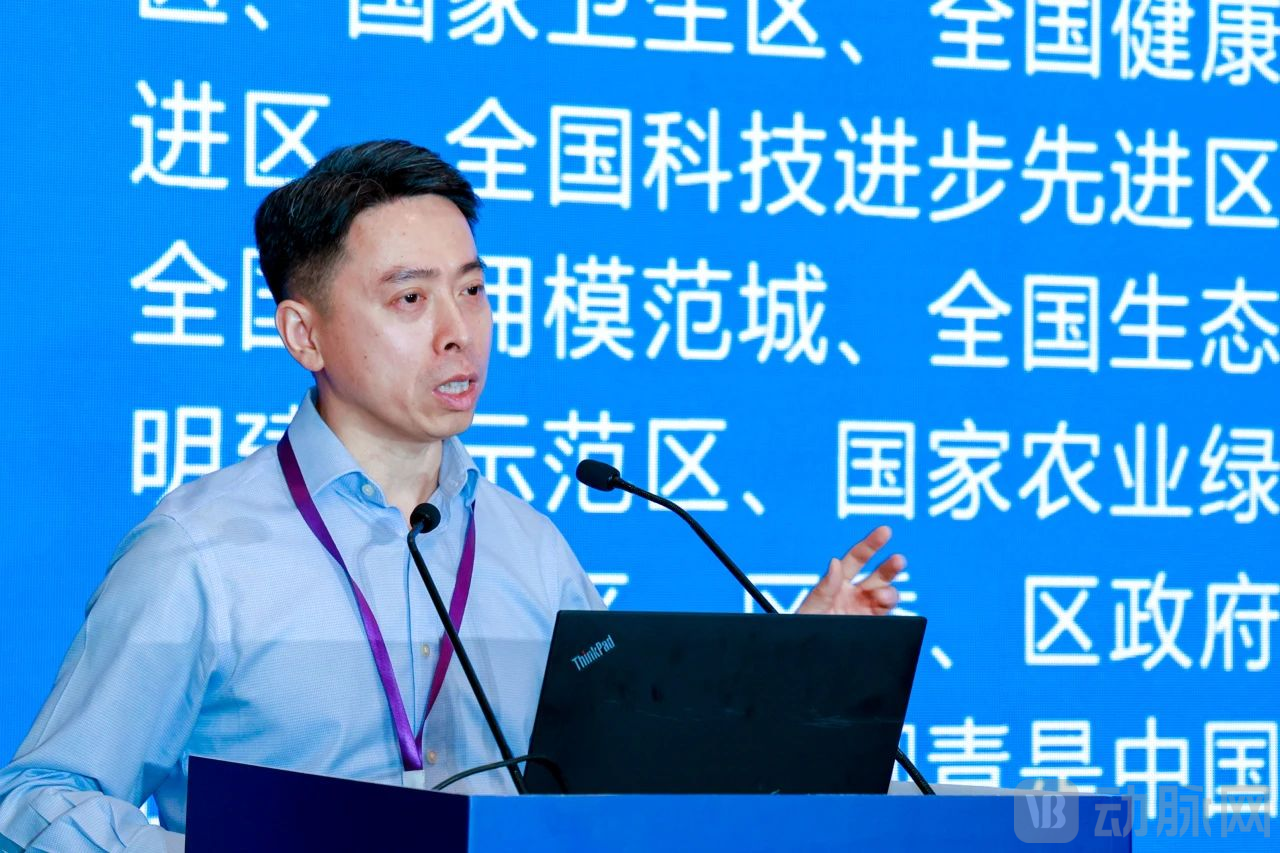
Guo Yipeng, Party Secretary and Director of the Tianjin Xiqing District Health Commission, shared practical explorations under the theme “Innovative Exploration of High-Quality and Efficient Local Healthcare Service Systems.” Secretary Guo introduced the “Tianjin Experience” in Xiqing District, highlighting advancements in the construction of close-knit medical consortia, the enhancement of primary healthcare service capabilities, and the innovation of tiered diagnosis and treatment alongside collaborative mechanisms for medical care and disease prevention. He stated that Xiqing District has actively and deeply participated in reforms of health insurance payment methods, exploring a transition from single-disease management to full-population coverage through family doctor contracted services. Notably, at the end of last year, the Xiqing District Close-Knit Medical Consortium and Digital Health Community were established, jointly formed by Xiqing Hospital, Xiqing District Traditional Chinese Medicine Hospital, various primary healthcare institutions, and WeDoctor. This initiative built an organizational mechanism for a county-level medical community characterized by multi-party participation, clear rights and responsibilities, efficient operations, and continuous services. Through the council of the close-knit medical consortium, a four-in-one operational model featuring “unified management, homogeneous services, shared responsibilities, and shared benefits” was constructed to standardize internal operations, thereby creating the “Xiqing Model” based on a digital close-knit medical community health accountability system. Through concerted efforts, these initiatives have achieved satisfactory outcomes, including improved resident health satisfaction, enhanced professional fulfillment among medical staff, better population health indicators, and strengthened diagnostic and treatment capabilities in primary hospitals. Subsequently, he outlined future work directions for Xiqing District, focusing on solidifying family doctor contracted services, strengthening tiered diagnosis and treatment, enhancing service capabilities, and advancing informatization construction.
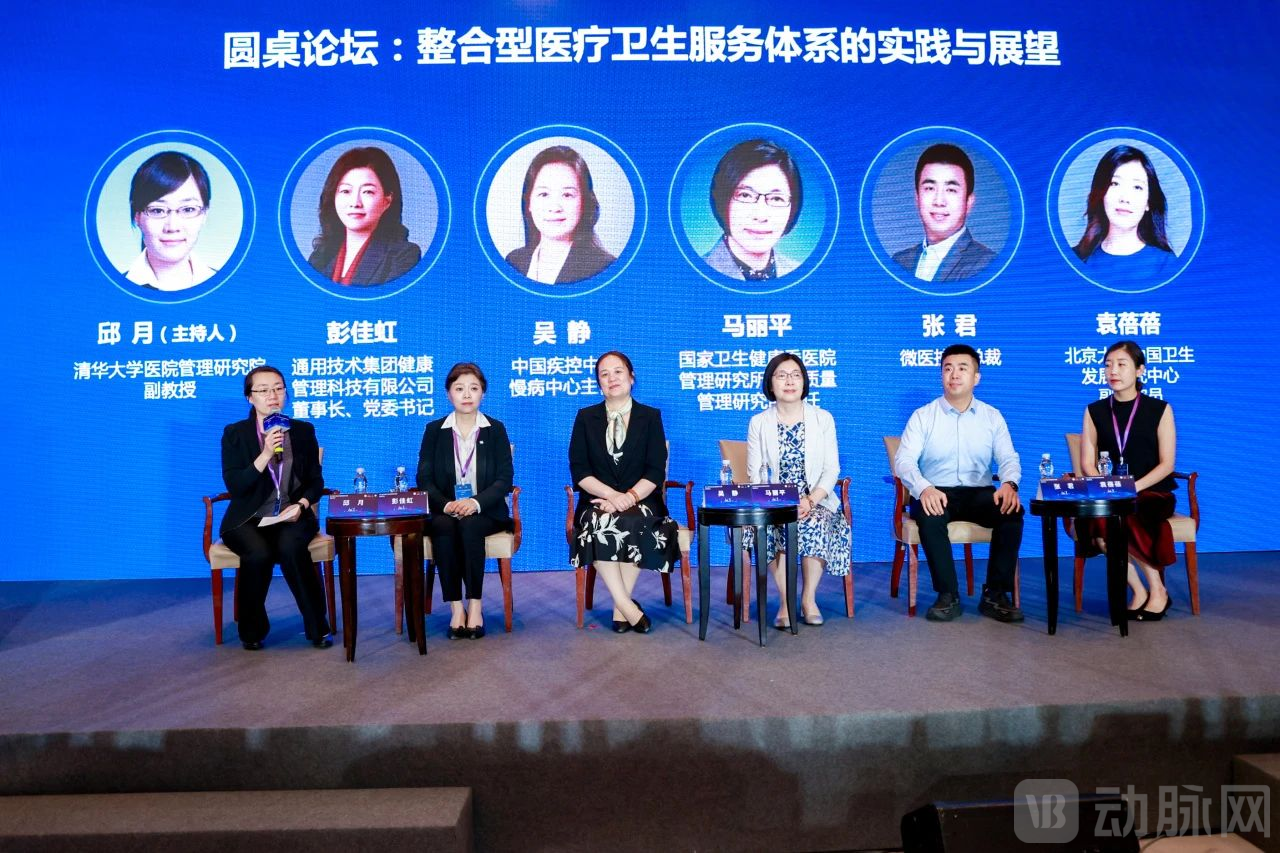
Roundtable Forum: Practices and Prospects of Integrated Healthcare Delivery Systems
During the morning’s roundtable discussion, six panelists—including Qiu Yue, Associate Professor at the Institute of Hospital Management, Tsinghua University; Peng Jiahong, Chairman and Party Secretary of General Technology Group Health Management Technology Co., Ltd.; Wu Jing, Director of the National Center for Chronic and Noncommunicable Disease Control and Prevention, Chinese Center for Disease Control and Prevention; Ma Liping, Director of the Department of Medical Quality Management Research at the National Health Commission’s Institute of Hospital Management; Zhang Jun, President of WeDoctor Holdings; and Yuan Beibei, Associate Researcher at the China Center for Health Development Studies, Peking University—engaged in discussions on “Practice and Prospects of Integrated Healthcare Service Systems.” Attendees, scholars, and leading industry enterprises jointly explored theoretical and practical aspects, focusing on the value of integrated healthcare service systems and key priorities at the current stage, thereby offering new insights and reflections on the necessity and developmental direction of building such systems. Zhang Jun, President of WeDoctor Holdings, shared WeDoctor’s successful experience in supporting Tianjin Municipality, with backing from the Tianjin municipal government and various levels of governmental agencies, to establish a people-centered integrated healthcare service system by leveraging market-based approaches and WeDoctor’s digital technologies and medical artificial intelligence capabilities.
During the afternoon forum sharing session, Liu Yuanli, a Counselor of the State Council and Professor at the School of Health Policy and Management, Peking Union Medical College, and Zhang Zongjiu, Executive Vice President of the Institute of Hospital Management, Tsinghua University, delivered keynote speeches respectively. Both experts cited Tianjin’s case in leveraging digital services to strengthen primary care and enhance the service capacity of primary healthcare institutions in their remarks. In his keynote address titled “Innovative Development of the Primary Healthcare Service System,” Liu Yuanli stated that during a recent field survey at the Zhangjiawo Community Hospital in Xiqing District, Tianjin, he learned that Tianjin’s experience in “strengthening primary care and reforming health insurance payment” is worthy of reference by other regions. This has been achieved through capitation-based payment management for outpatients with special chronic diseases such as diabetes, institutional and mechanistic innovations, and AI-enabled enhancement of family doctors’ efficiency in patient management and auxiliary diagnostic and treatment capabilities.
Furthermore, the forum released the "2023 Collection of Innovative Cases in China's Health and Healthcare Service System," in which the innovative model and construction achievements of Tianjin Digital Health Community were selected as an outstanding case. This inclusion provides a reference for promoting the development and transformation of a high-quality, efficient, integrated healthcare service system, and offers valuable insights for other cities exploring coordinated reforms across medical care, health insurance, and pharmaceuticals, as well as building regional integrated health and healthcare service systems.