

Tencent Health Leverages AI to Build a Novel Eye Disease Screening and Prevention System

Tencent Healthcare
Developer of Digital Healthcare Products
From myopia intervention to the prevention and treatment of diabetic retinopathy, ophthalmologists in China have continuously promoted screening and prevention initiatives for fundus diseases among residents; however, few projects have been able to sustain long-term implementation.
Limited medical resources have constrained the effective implementation of these screening and prevention programs. The White Paper on Eye Health in China, released by the National Health Commission in 2020, revealed that there were only 44,800 ophthalmologists nationwide to serve hundreds of millions of patients with eye diseases. While these professionals are committed to enhancing public awareness of screening and prevention, they are unable to cope with the overwhelming volume of primary care diagnosis and treatment.
Furthermore, as most ocular diseases present with subtle initial symptoms and public awareness of these conditions remains limited, many patients delay seeking medical attention until symptoms become perceptible, thereby missing the optimal window for corrective intervention.
AI may be the key to resolving the aforementioned contradictions. During this year’s “National Eye Care Day,” Tencent Healthcare collaborated with Shenzhen Nanshan Medical Group to deploy its self-developed Tencent Miying AI Fundus Screening System in public welfare eye health screening services, bringing innovative approaches to community health service centers in the area.
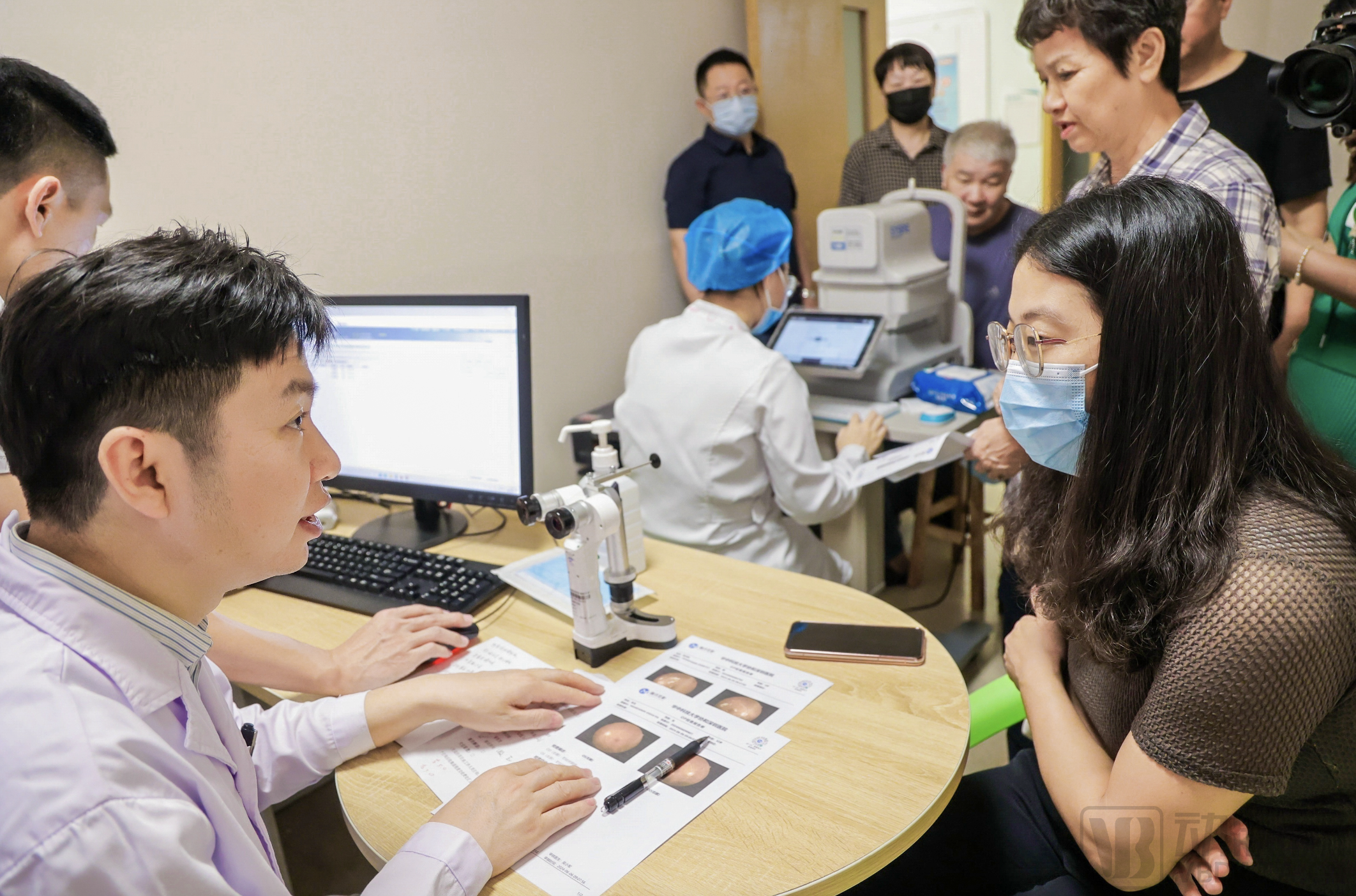
As early as 2016, when medical AI began to emerge, startups leveraged intelligent technologies to enhance ophthalmic applications, facilitating the auxiliary screening of fundus photographs. However, due to the wide variety of ophthalmic diseases encountered in clinical practice, early fundus AI systems could only identify high-volume conditions such as diabetic retinopathy and glaucoma. Consequently, their real-world adoption was limited to specific populations, falling short of providing comprehensive screening and prevention for residents’ ophthalmic diseases.
To overcome the limitations of AI capabilities, Tencent Miying has partnered with numerous top-tier hospitals to continuously expand the coverage and improve the accuracy of its AI-assisted diagnostics. Today, this AI system not only alerts licensed physicians to suspected chronic glaucomatous optic neuropathy, aiding in the determination of whether patients require further medical evaluation, but also assesses health risks such as diabetic retinopathy, hypertensive fundus lesions, and fundus changes associated with high myopia. Like a real ophthalmologist, it evaluates the risk of multiple fundus diseases based on a single fundus photograph.
In addition to optimizing AI application scenarios, Tencent has also made significant efforts regarding the target users of Tencent Miying.
In the initial commercialization logic for AI-based fundus imaging, many companies planned to deploy their products in ophthalmology and endocrinology departments, aiming to achieve market adoption by enhancing physicians’ efficiency through assisted diagnosis. However, for ophthalmologists at tertiary hospitals, the efficiency gains from AI-assisted diagnostic tools were not significant, and the time saved was difficult to redirect toward clinical practice, research, or teaching. Consequently, AI integration failed to alleviate their workload or address the root cause of the problem—namely, improving the public’s rate of participation in fundus screening.
So, how can AI be applied to maximize its value and empower the ophthalmic diagnosis and treatment system? The answer lies in the scenario of primary healthcare.
Many community health service centers lack independent ophthalmology departments, forcing patients with eye conditions to seek diagnosis and treatment at tertiary hospitals or specialized institutions. If primary care facilities could assume the role of “initial screening” for fundus diseases, referring only those suspected of having ocular disorders to specialists at higher-level hospitals for definitive diagnosis and management, it would undoubtedly alleviate the burden on physicians in tertiary hospitals. This would allow them to dedicate more time to clinical care, ultimately helping more patients regain their health.
This is precisely the strategic approach of Tencent Healthcare. After expanding the capabilities of its AI platform, Tencent Miying, Tencent Healthcare has deployed it to primary healthcare institutions, enabling general practitioners to participate in the “initial screening” of fundus diseases. Leveraging AI technology, general practitioners can easily identify various abnormalities in fundus images and then refer potentially problematic cases to senior specialists for further evaluation.
For this year’s “National Eye Care Day,” Tencent used the Tianxia Community Health Service Center, headquartered under the Nanshan District Medical Group in Shenzhen, as a model to assist primary care physicians in conducting fundus screening.
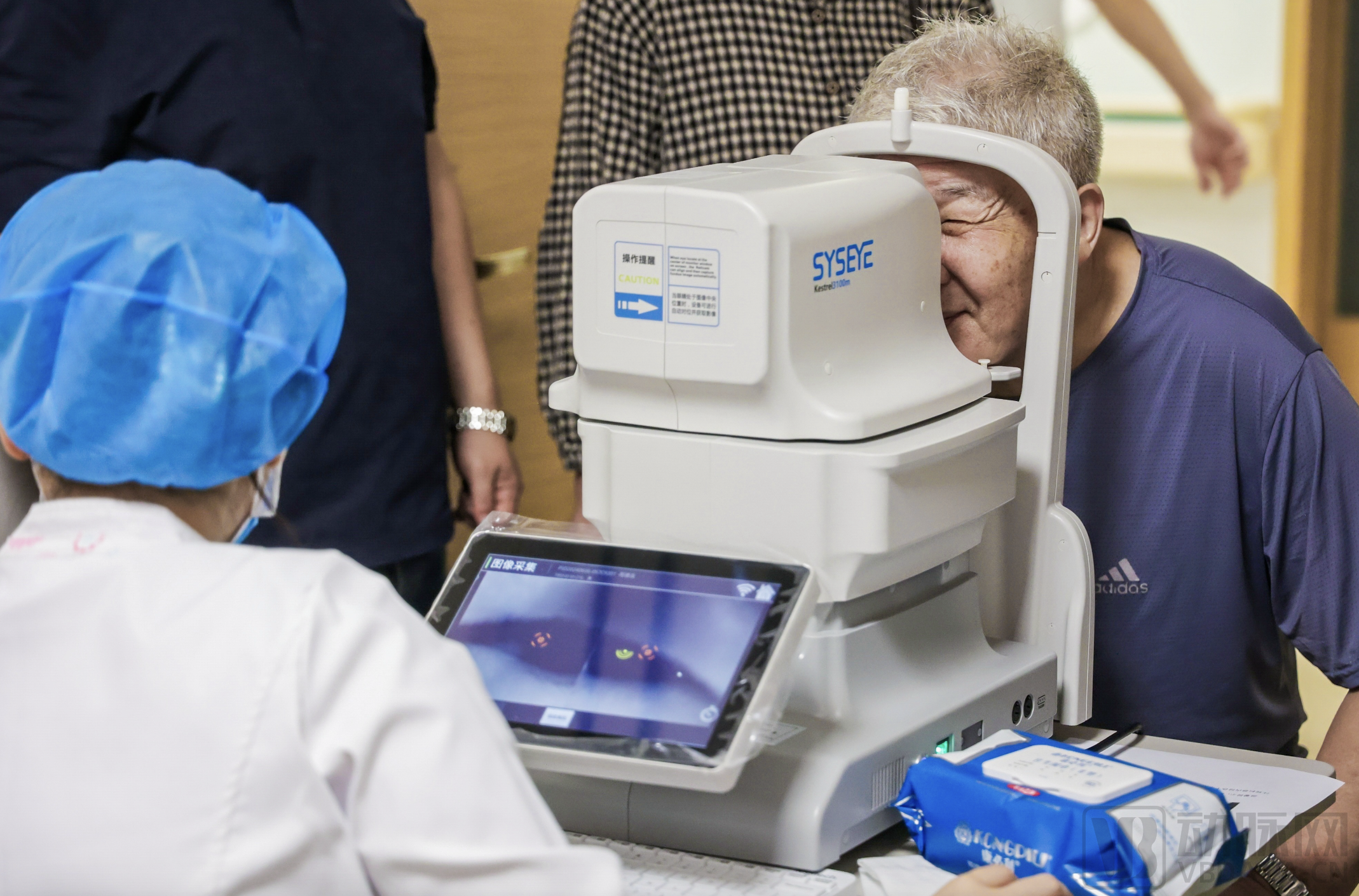
At the event, Wu Xiaojun, Director of the Department of Ophthalmology at Union Shenzhen Hospital of Huazhong University of Science and Technology, affirmed the capabilities of Tencent Miying AI. He stated, “Tencent Miying’s AI technology can accurately analyze fundus photographs, calculate key indicators such as the number of hemorrhage points and the arteriovenous ratio, and integrate these data for quantitative analysis and comprehensive assessment. It is akin to providing primary healthcare facilities with a senior ophthalmologist.”
After completing the development of its intelligent tools, Tencent Healthcare took two additional critical steps to truly operationalize its fundus screening and prevention system.
First, Tencent Healthcare has adapted its AI technology to mainstream fundus camera brands on the market. These devices, deployed in community health service centers, are empowered by AI capabilities that ensure the standardization of fundus images.
This is a critical step toward establishing a screening and prevention system for fundus diseases. Wu Xiaojun told VCBeat, “Fundus screening places relatively low demands on physician operation but high requirements on hardware. A qualified fundus photograph must clearly visualize structures such as blood vessels and the optic disc; if the image quality is poor, even the most advanced AI will be ineffective.”
Secondly, Tencent Healthcare leverages cloud computing and big data to establish a new "AI + Telemedicine" model for the screening and prevention of fundus diseases. This model integrates essential functionalities such as appointment scheduling and referral services alongside image transmission, thereby further strengthening collaboration between tertiary and primary hospitals and enhancing the convenience of appointment and referral services.
To date, Tencent Miying has assisted more than 50 community health service centers across 10 provinces and municipalities in implementing primary-level screening and referral services, with over 60,000 screenings conducted.
Overall, under the new screening and prevention model, tertiary hospitals, community healthcare providers, and patients all benefit from the integration of new technologies.
For tertiary hospitals, a focus on clinical practice enables them to generate greater clinical value or devote more time to scientific research. For primary healthcare institutions, the integration of AI has endowed them with new functions and enhanced patients’ trust in community health. For patients, this new model not only optimizes the medical consultation process—reducing the need for frequent and burdensome hospital visits—but also reallocates high-quality ophthalmic medical resources, ensuring that patients who truly require treatment can access appropriate physicians at an earlier stage.
Although the promotion of new screening and prevention models has opened up new pathways for residents to undergo fundus screening, truly addressing the high prevalence of fundus diseases in China at its source requires enhancing public awareness of these conditions and encouraging active participation in screening programs.
This has been the focal point of Tencent Healthcare’s development in recent years. Leveraging its advantageous resources—including digital tools, social media platforms, health management systems, and internet hospitals—Tencent has established a comprehensive, end-to-end digital optometry and ophthalmology service framework targeting adolescent myopia, glaucoma, and other eye conditions. This initiative not only facilitates bidirectional alignment between user needs and healthcare supply but also enhances public awareness and emphasis on fundus diseases.
However, building public awareness cannot be achieved overnight, and establishing a screening and prevention system for fundus diseases covering all disease categories also requires time to accumulate.
In this process, we are witnessing the formation of a closed-loop service ecosystem for eye health by Tencent Healthcare, enabling more residents to participate in early fundus screening and preventing vision loss due to disease.