

How Close Are Breakthrough Medical Technologies to Reality Amid the Surge in Clinical Trials?
On May 24, 2024, good news came from the First Affiliated Hospital of Anhui Medical University.
According to official reports, on the 17th, Professor Sun Beicheng’s team at the First Affiliated Hospital of Anhui Medical University successfully transplanted a 514-gram genetically modified pig liver into a patient with severe liver cancer. On the seventh day post-surgery, the patient was already up and moving around freely, and liver function had returned to normal.
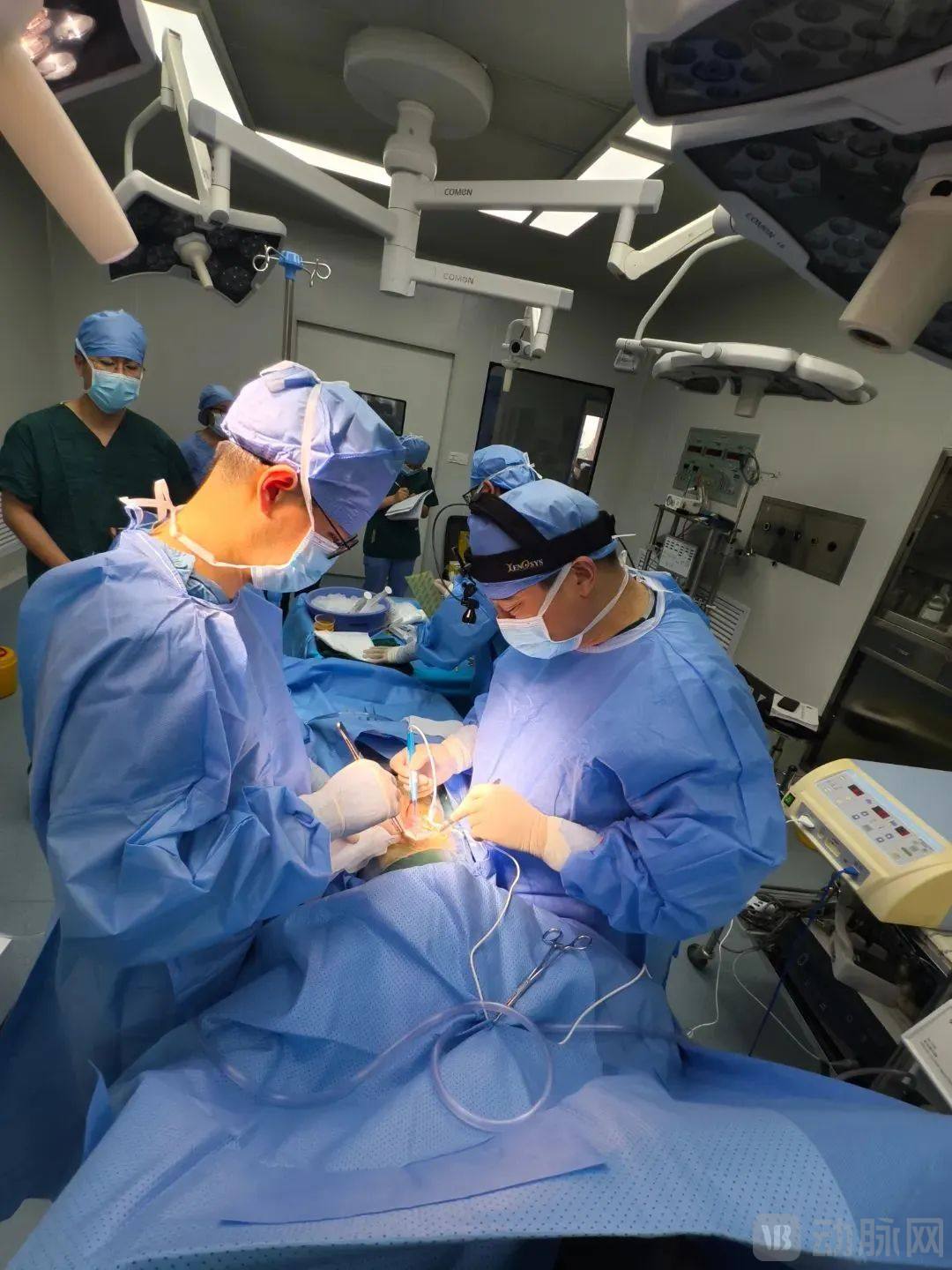
Medical staff performing a clinical auxiliary xenotransplantation of the liver (Image source: The First Affiliated Hospital of Anhui Medical University)
It is reported that this isWorld’s First Living Human Xenotransplantation of the Liver, and alsoThe Fifth Case of Living Human Xenotransplantation Surgery。
Amid the excitement, one cannot help but wonder: does the success of clinical trials for cutting-edge innovative technologies signal an impending disruption in medical innovation?
I. Multiple “Future Technologies” Achieve Clinical Success
Clinical trials are an indispensable step in the industrialization of technology. The application of a new technology typically begins with laboratory assessments, followed by a series of preclinical studies, including small-animal and large-animal experiments. Only after obtaining approval from an ethics committee can it proceed to human trials for repeated verification, ultimately passing the final test of clinical trials to enter the market.
Over the past decade, the vigorous development of new technologies has revealed greater possibilities for medical innovation to the market,Xenotransplantation, Brain-Computer Interfaces, Gene Editing, Biosynthesis.......Those seemingly “fantastical” technologies are becoming a reality.
Over the past five years, as emerging technologies have undergone early iterative validation and collectively entered clinical trial phases, we have witnessed the potential for frontier technologies to become a reality.
In 2023, the Dushu Lake Hospital of Soochow University announced that a joint initiative launched by multiple teams“Exploratory Clinical Study of ART001 Injection for the Treatment of Transthyretin Amyloidosis (ATTR)”Successfully completed. Seven patients received the drug treatment, and transthyretin levels decreased after two weeks, marking the trial as a success.
It is reported that ART001 injection is the first in vivo gene-editing therapy based on a non-viral vector to enter human clinical trials in China. Its success has brought the possibility of recovery to patients with ATTR, while also paving a new path for the treatment of more rare diseases.
This is not an isolated case. In 2023, a novel therapy for Parkinson’s disease using human embryonic stem cells was also announced to have entered clinical trials.In February 2024, the team announced that the first patient had successfully undergone transplantation of stem cell-derived neural precursor cells.The current response is favorable. This success will undoubtedly drive the further clinical translation of cell therapy for Parkinson’s disease.
In 2024, multiple clinical trials of brain-computer interfaces also sparked heated discussion. For instance, Ruijin Hospital, Shanghai Jiao Tong University School of Medicine, completed“Clinical Study on Brain-Computer Interface Treatment for Refractory Depression”, with an average 60% improvement in depressive symptoms among the 23 patients. The team led by Professor Hong Bo from the School of Medicine at Tsinghua University designed and developedNEO: Wireless Minimally Invasive Implantable Brain-Computer Interface, the first clinical implantation procedure was successfully performed at Xuanwu Hospital, and the patient is currently recovering well. This technology holds promise as a breakthrough for patients with paralysis, amyotrophic lateral sclerosis (ALS), and other conditions.
The success of multiple clinical trials has filled us with hope for the future of innovative healthcare. This not only provides new solutions for previously difficult-to-treat diseases but also enhances the efficiency and safety of existing treatments. For patients, this means more options and hope, offering them the opportunity to regain health and improve their quality of life.
Overall,A successful clinical trial not only validates the innovative concepts of researchers but also lays the foundation for subsequent medical advancements and industry progress.
II. Experimental Success Is Not Absolute Success
The success of clinical trials signifies that a new technology is one step closer to clinical application, offering potential solutions to meet clinical needs.
However, this merely indicates that a new technology performs well under specific conditions.。Subsequently, extensive data accumulation is required to enable researchers to more accurately assess the safety and efficacy of this new technology, thereby laying a solid foundation for its subsequent clinical adoption.
Taking the indirect annuloplasty device for the mitral valve as an example. Cardiac Dimensions once designed an indirect mitral annuloplasty device named Carillon, which received CE certification in 2011. Undoubtedly, Carillon successfully completed a series of clinical trials. According to publicly available information from Cardiac Dimensions, the trials enrolled 83 patients with severe mitral regurgitation, and all clinical data at the one-year postoperative follow-up were superior to those of the control group.
In the later stages, clinicians reported that indirect mitral annuloplasty devices demand high technical proficiency, with only a subset of physicians able to master the technique. Meanwhile, direct annuloplasty devices have demonstrated the ability to replace indirect devices more rapidly and safely for treatment.
Moreover, and more importantly, clinicians have observed that indirect annuloplasty devices carry a risk of compressing the circumflex artery, thereby causing coronary artery obstruction and leading to severe sequelae and complications in patients.Consequently, indirect annuloplasty devices have not been adopted for widespread clinical use, even after successfully completing various clinical trials and obtaining regulatory approval.
In the medical community, there are many similar cases. The successful completion of clinical trials for a new technology does not guarantee its entry into clinical practice. Therefore,While celebrating the success of clinical trials, it is even more important to maintain a cautious and objective attitude.Only by comprehensively assessing the potential value and limitations of new technologies can valuable innovations be translated into clinical practice.
III. Clinical Failure Is Not a Total Failure
Nevertheless, clinical trial failures are destined to remain the majority. In fact, prior to the announcement of a successful trial at the First Affiliated Hospital of Anhui Medical University, May was dominated by news of failures.
May 9, 2024,Neuralink, Elon Musk’s brain-computer interface company, announces issues with the first human implant, partial data loss significantly affected the device's operating speed and accuracy.
After 3 days,The team at Massachusetts General Hospital in Boston, USA, also regretfully announced that the patient who received the world’s first living-donor pig kidney transplant has passed away.
From the team’s perspective, this experiment may not be simply summarized as a “failure.”
In late February 2024, Neuralink publicly disclosed a reduction in data capture from its implants. The company stated that engineers were investigating the cause of this decline. The team hypothesized that the issue might be attributed to intracranial air accumulation or lead dislodgement in the recipient, and attempted adjustments through methods such as model development and algorithm modification.
At the conference held by Neuralink on March 1, the team stated, “We are still addressing some issues, but once we resolve them, there is no reason the implant should not function properly.” Overall, the team has adopted a relatively optimistic and proactive stance toward this incident.
Although May brought no good news regarding the issue of missing data capture in brain-computer interfaces, and Neuralink has yet to respond, the experiment has still provided the company with valuable experience. Compared with other teams that have not yet conducted clinical trials on brain-computer interfaces, Neuralink will undoubtedly be better equipped to address technical challenges such as data loss and electrode detachment in the future.
The same applies to living-donor porcine kidney transplantation. From the surgery performed in mid-March to the patient’s smooth discharge in early April, this case has already assumed “milestone” significance. The procedure not only demonstrated the feasibility of xenotransplantation technology but also exposed the difficulties and risks that may be encountered in its clinical application.
For cutting-edge technologies, experimental results are not the sole criterion for evaluating success., the experience accumulated, technological innovations, and in-depth understanding of potential challenges during this process may all become significant forces driving the project and even the entire industry’s development in the future. This is perhaps where the true, more valuable worth of experimentation lies.
In the history of medical development, there is no shortage of devices that emerged from "failed" clinical trials.
In 1910, French surgeon Alexis Carrel first proposed coronary artery bypass grafting and conducted experiments on dogs, which naturally resulted in the animals’ death. Over the subsequent decades, numerous physicians attempted this procedure, even performing it on human patients, with outcomes that were predominantly unfavorable.Yet these pioneers drew lessons from each failure: the need for clearer visualization, techniques to minimize blood loss, and comprehensive postoperative management protocols.
As clinical needs emerged, so too did the solutions. During the development of coronary artery bypass grafting (CABG) in the medical community, instruments such as coronary angiography systems, vascular anastomosis devices, and coronary clamps, along with various antiplatelet agents and lipid-lowering medications, were successively introduced. Building on these advancements, Dr. Robert Goetz successfully performed the first coronary artery bypass surgery in 1960, marking the dawn of the era of cardiac bypass surgery.
A review of the evolution of coronary artery bypass grafting (CABG) reveals that it has spurred not only advancements in medical technology but also the emergence of new market sectors. As the technique has matured, its application volume has surged, thereby driving the rise of multiple related sectors. Tracing back to its origins, without the cumulative experience gained from cutting-edge practices, the diverse and robust sector of cardiac stents would not exist today.
IV. Safety is the Primary Consideration in Clinical Trials
However, regardless of the experimental outcomes, safety should be prioritized before commencement. In previous interviews,Professor Gao Changyou, Dean of the Shaoxing Institute of Zhejiang University, once stated, “Product development does not require 100% innovation, but it must ensure 100% safety.”
First, for an innovative product to transition from the laboratory to clinical practice, it must undergo rigorous, multi-layered regulatory reviews, during which safety must be repeatedly verified. If safety standards are not met, even the most compelling “concepts” and “innovative features” will ultimately come to naught.
Secondly, overly cutting-edge technologies may not align with current clinical needs. Medical innovation must consider not only therapeutic efficacy but also patient needs, healthcare professionals’ preferences, and even regional cultural factors, all of which influence the clinical adoption of a product.
Furthermore, cutting-edge innovative technologies often entail substantial economic costs, which directly impact the final pricing of products. Consequently, innovative products with excessively high costs struggle to gain a competitive advantage in the market.
In fact, many technology transfer offices at research institutions have reached a consensus that “safety outweighs innovation.”Zhang Chen, who previously worked in the technology transfer department of a university, told Chengguo Bureau: “If a project’s safety cannot be guaranteed, we will not support its initiation and commercialization, regardless of how high its innovative value may be.”
The absence of 100% safety implies the presence of potential risks, and in the medical field, such risks are often directly linked to patient safety. Therefore, both researchers and translational professionals should prioritize project safety at the initiation stage. This approach not only demonstrates respect for scientific research but also helps minimize unnecessary sunk costs.
Innovation is the driving force behind the continuous advancement of scientific research, yet it has its boundaries; safety constitutes the bottom line that researchers must uphold.In the pursuit of scientific research, we must not only strive for breakthroughs in science and advancements in technology but also ensure the safety of these achievements, thereby enabling innovation to progress more steadily and reach further.