

Youzhiyou Bio Announces Positive Phase II Data for M701 in Malignant Ascites, Targeting a Billion-Dollar Oncology Complication Market
On June 3 (local time), at the 2024 ASCO Annual Meeting, Wuhan Youzhiyou Biopharmaceutical Co., Ltd. (hereinafter referred to as “Youzhiyou Bio”) presented interim data from the Phase II study of its independently developed investigational bispecific antibody (BsAb) drug targeting EpCAM and CD3 (code-named M701). Professor Lin Rongbo from Fujian Provincial Cancer Hospital, the clinical investigator, delivered a presentation on the interim data from the Phase II study of M701 in malignant ascites and granted interviews to professional media outlets. During the interview, Professor Lin detailed the trial design and interim results, emphasizing that M701, as a novel therapeutic agent for malignant ascites, demonstrates significant clinical potential.
Previously, the interim analysis data from the Phase II clinical study of M701 for the treatment of malignant ascites caused by advanced epithelial solid tumors in China were presented as a poster discussion at the 2024 American Society of Clinical Oncology (ASCO) Annual Meeting (Abstract No.: 12060, Poster No.: 189).
Overall, patients with epithelial solid tumors and malignant ascites tolerated intraperitoneal infusion of M701 well while undergoing systemic therapy, without exhibiting a higher risk compared to those receiving only paracentesis drainage. Patients treated with M701 demonstrated prolonged puncture-free survival (PuFS) and overall survival (OS), strongly supporting the advancement of M701 as a novel therapeutic agent for malignant ascites into pivotal Phase III clinical trials.In March 2024, M701 completed the enrollment of the first patient in its Phase III clinical trial.
Clinically, many cancer patients do not die from cancer itself but from its complications, such as malignant pleural effusion (MPE) and malignant ascites (MA). Malignant pleural effusion and malignant ascites refer to fluid accumulation in the pleural or peritoneal cavities caused by primary or metastatic malignancies invading these spaces. These conditions typically occur in end-stage patients with various types of cancer, including lung cancer, breast cancer, ovarian cancer, gastric cancer, colorectal cancer, and pancreatic cancer. The elevated intrathoracic or intra-abdominal pressure and homeostatic disturbances resulting from malignant pleural and peritoneal effusions often lead to symptoms such as dyspnea, gastrointestinal obstruction, anorexia, and fatigue. In advanced stages, patients may experience oliguria and hypotension, necessitating the discontinuation of anticancer therapy, which severely impairs quality of life and can even be life-threatening.
Behind the more than 600,000 new cases annually and a market valued at tens of billions of yuan, the malignant ascites (MA) therapeutic landscape lacks any dedicated drugs approved by drug regulatory authorities. Consequently, patients are forced to rely on local treatment options with insufficient clinical evidence, including puncture drainage, diuretics, and intraperitoneal infusion of chemotherapeutic agents and anti-angiogenic drugs. These treatments are associated with high recurrence rates, frequent adverse reactions, and potential induction of other risks.M701, a self-developed recombinant anti-EpCAM×CD3 bispecific antibody by Wuhan Youzhiyou Biopharmaceutical Co., Ltd., breaks the long-standing stagnation in the field of tumor complications through dual antitumor mechanisms involving targeted therapy and immunotherapy.
According to the prospectus of Wuhan Youzhiyou Biopharmaceutical Co., Ltd., the number of new cases of metastatic cancer (MA) in China increased from 547,600 in 2018 to 606,900 in 2022, accounting for 12.6% of the total number of new cancer cases in the same year. The figure is projected to rise to 667,200 in 2026 and 726,600 in 2030.In terms of the market, from 2018 to 2022, the domestic market size for MA based on existing treatment modalities grew from RMB 9.9 billion to RMB 10.8 billion, and is projected to reach RMB 14.4 billion by 2030.Another indication, MPE, saw over 620,000 new cases in 2022, accounting for 13.0% of the total number of new cancer cases that year. The market size is projected to increase from RMB 11.7 billion in 2022 to RMB 15.1 billion by 2030.
Youzhiyou M701 is poised to become the first dedicated therapeutic agent for malignant ascites to gain approval from drug regulatory authorities through pivotal registration clinical trials, thereby advancing the expansion and standardization of treatment guidelines in this field. It holds significant clinical value and strong market competitiveness.
EpCAM (epithelial cell adhesion molecule) is a tumor cell target that is overexpressed in various malignant tumor tissues; CD3 is a component of the TCR complex on immune T cells. This antibody combination can activate T cells by binding to CD3 and bind to tumor cells via EpCAM, while simultaneously activating different types of immune cells (T cells, NK cells, macrophages, etc.), exerting a dual effect on immune cell proliferation and cytokine secretion, thereby combating and killing EpCAM-overexpressing tumor cells that are the root cause of MA and MPE.
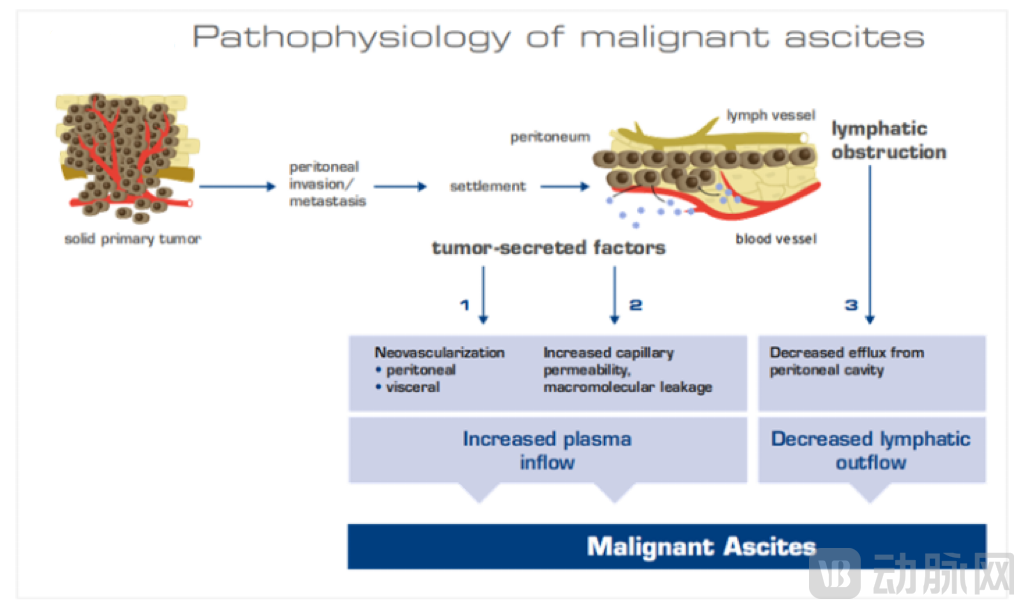
Diagram of the Pathogenesis of Malignant Ascites
The primary reason why tumor invasion of the peritoneum leads to significant ascites accumulation is that such invasion damages the endothelium, thereby increasing vascular permeability and resulting in increased exudation. Tumor cells secrete factors such as VEGF and MMPs, which promote tumor angiogenesis and increase the permeability of peritoneal capillaries, further contributing to exudate accumulation. Additionally, obstruction or destruction of peritoneal lymphatic vessels by tumor cells impairs lymphatic drainage of the exudate. Therefore, directly targeting intraperitoneal tumor cells and eliminating those on the peritoneal surface can reduce exudate formation, enhance lymphatic return, and fundamentally alleviate the symptoms of malignant ascites (MA).
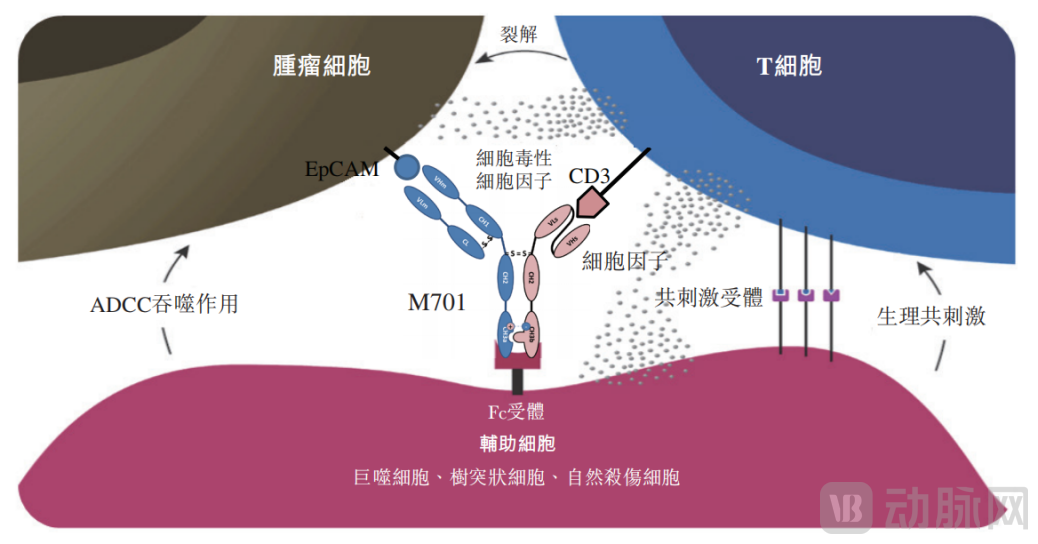 M701 (EpCAM/CD3 Recombinant Bispecific Antibody) Mechanism of Action
As early as 2009, the efficacy mechanism of EpCAM x CD3 bispecific targeting was validated—catumaxomab (Removab), a bispecific monoclonal antibody, became the first bispecific antibody drug approved globally, gaining marketing authorization from the European Medicines Agency (EMA) and establishing itself as the world’s first targeted therapy for malignant ascites.
At that time, immunotherapy aimed at activating the human immune system to treat tumors had just begun to transition from research to clinical application, and had not yet gained in-depth understanding or mainstream acceptance within the industry and among clinicians. Meanwhile, catumaxomab is a rat-mouse chimeric bispecific antibody with strong immunogenicity, which easily induces cytokine release syndrome (CRS). Given the limited understanding of CRS at the time, its clinical application was approached with caution. Furthermore, influenced by various factors including market dynamics and industrialization challenges, catumaxomab ceased sales in 2014 and was officially withdrawn from the market in 2017.
Nevertheless, the remarkable efficacy of catumaxomab in anti-tumor indications, such as malignant ascites, has not faded into obscurity. In 2022, its developer submitted an application to the European Medicines Agency (EMA) for the renewal of its marketing authorization, which is currently under review. Additionally, Dr. Horst Lindhofer, the inventor of catumaxomab, co-founded Lingteng Pharma in China to evaluate the efficacy of catumaxomab for the treatment of advanced gastric cancer with peritoneal metastases and for intravesical instillation therapy in non-muscle-invasive bladder cancer.
Also targeting EpCAM x CD3, Youzhiyou Biopharmaceutical initiated the development of M701 in 2013 based on its proprietary YBODY® bispecific antibody platform. M701 is the first immuno-targeted therapy for malignant ascites in China and the second domestically developed novel bispecific antibody to receive Investigational New Drug (IND) approval. M701 is an asymmetric human IgG-like bispecific antibody with an scFv-Fab-Fc structure.
In the mutation design of the Fc region, knobs-into-holes (KIH) and salt bridge technologies were employed to effectively suppress the formation of homodimers, while scFv was designed to prevent mispairing between heavy and light chains. Meanwhile, M701 underwent humanization engineering, with a fully human Fc region significantly reducing immunogenicity, optimizing CD3-binding affinity, and effectively controlling safety risks. Furthermore, M701 is produced using CHO cell lines, achieving efficient heterodimer assembly, ensuring high consistency and reproducibility across batches, and featuring high purity and high yield, thereby lowering production costs and improving economic benefits.
Interim data from the Phase I clinical trial of M701 for the treatment of malignant ascites were published as an abstract at ESMO 2021, demonstrating favorable safety and encouraging efficacy. The objective response rate (ORR) for ascites with monotherapy local treatment reached 61.1%, and the disease control rate (DCR) for ascites reached 94.4%.
Leveraging robust molecular design and rational target selection, M701 has demonstrated more mature Phase II clinical data in this public release, while continuing to exhibit a favorable safety profile and efficacy:
In terms of safety, the incidence of treatment-emergent adverse events (TEAEs) of Grade 3 or higher in the experimental group and the control group (puncture drainage) was 52% and 57.5%, respectively, while the incidence of serious adverse events (SAEs) was 38% and 50%, respectively. Among subjects treated with M701, only two patients reported cytokine release syndrome (CRS), with all cases being Grade 1–2 in severity. Intraperitoneal infusion of M701 did not significantly increase the risk for subjects.
In terms of efficacy, the puncture-free survival (PuFS) in the experimental group was significantly longer than that in the control group (median values: 54 days vs. 24 days; p=0.001). Subgroup analysis revealed a trend toward benefit across patients with different cancer types, including gastric, ovarian, and colorectal cancers. Survival analysis indicated a trend toward prolonged overall survival (OS) in subjects treated with M701 (median values: 113 days vs. 76 days), with 6-month survival rates of 35.2% and 15.8%, respectively. Notably, patients with gastric cancer demonstrated significantly longer OS compared to the control group (median values: 128 days vs. 64 days; p<0.05).
It is worth noting that in this Phase II trial targeting malignant ascites caused by advanced epithelial malignancies, the primary endpoint was set as puncture-free survival (PuFS), defined as the time from the completion of paracentesis drainage on Day 18 to the next paracentesis or death. Meanwhile, overall survival (OS), which is typically of greater concern in conventional oncology treatment, was designated as one of the secondary endpoints.The endpoint design of PuFS+OS is derived from the real-world clinical, physiological, and psychological needs of patients with malignant ascites, providing more practically meaningful oncology supportive care for these patients.
For patients with malignant ascites, the current primary treatment is paracentesis drainage, which provides only short-term symptomatic relief and does not address the underlying cause. Consequently, repeated drainage procedures are often required, leading to frequent hospitalizations. Aggressive large-volume drainage may exacerbate nutritional deterioration and electrolyte imbalances, placing patients at risk of acute circulatory failure or renal failure. Other risks include procedure-related pain, hypovolemia due to protein loss, infection, peritonitis, and intestinal perforation.
In patients with advanced-stage cancer characterized by extensive pleural or peritoneal metastases, the final phase of life is often consumed by repeated hospital visits for puncture and drainage procedures, while enduring the suffering caused by complications induced by such interventions, chemotherapy, and local therapies. Therefore,Wuhan Youzhiyou Biopharmaceutical Co., Ltd. aims to investigate the efficacy and safety of M701 in combination with puncture drainage in clinical trials, aiming to address the issue of frequent paracentesis in patients with malignant ascites, effectively reduce the frequency of punctures, improve quality of life, and prolong patient survival.
Returning to a patient-centered approach, the primary goal of treating malignant ascites may extend beyond merely prolonging survival; it addresses the tangible needs of oncology supportive care, late-stage and end-of-life palliation, and quality-of-life requirements.According to the 2008 definition by the Multinational Association of Supportive Care in Cancer (MASCC), supportive care is the prevention and management of adverse effects of cancer and its treatment. It involves the management of physiological and psychological symptoms, as well as treatment-related adverse effects, throughout the entire continuum from diagnosis through treatment and into the post-treatment phase. This includes improving quality of life, enhancing the value of survival extension, reducing readmission rates, and shortening average hospital stays.
Currently, there is a lack of globally unified, evidence-based guidelines for the treatment of malignant pleural and ascitic effusions. Inefficient historical treatment regimens are awaiting disruptive global innovation, along with the emergence of a blockbuster “global innovative drug.” For Chinese pharmaceutical companies, this represents not only a blue-ocean market but also a track inherently endowed with the prestige of international expansion.
In October 2019, the U.S. FDA approved the Investigational New Drug (IND) application for M701 to initiate clinical trials for the treatment of EpCAM-positive tumors associated with malignant ascites (MA). According to the prospectus, Wuhan Youzhiyou Biopharmaceutical Co., Ltd. plans to leverage clinical results from its China-based Phase II and pivotal Phase III trials, conducted in compliance with Good Clinical Practice (GCP), to further advance the global clinical development of M701, which may include collaborations with overseas partners.
In the oncology complications market, where the penetration rate of innovative drugs remains low, what disruption will domestically produced bispecific antibodies bring? We wait and see.
Interview videos in the text are sourced from [Oncology News]