

Soft and Stretchable Electrodes for Large-Area Human Electrophysiological Monitoring and Modulation
Electrophysiological processes accompany every aspect of bodily function.
From the firing of tens of billions of neurons during cerebral cognitive processes, to the electrical activity associated with myocardial contraction during cardiac cycles; from the electrical activity of skeletal muscles in the limbs during movement, to the electrical activity of smooth muscles in the gastrointestinal tract during food digestion; from the electrical activity of sphincter muscles during excretion, to the electrical activity of specialized muscles during reproduction and fertility.It can be said that the human body is constantly generating electrical activity.
Meanwhile, delivering appropriate electrical currents to the body can intervene in and regulate corresponding tissue functions. Therefore, electrophysiology has long garnered significant attention in the medical device industry.
In clinical practice, the use of electrodes is more common. For inpatients, 24-hour electrocardiographic (ECG) monitoring is a critical component, as it not only enables physicians to assess patients’ physiological status more accurately but also serves as an early warning system for acute events.
Over the past century of rapid advancement in medical innovation, ECG monitors have undergone significant progress, with improvements in performance metrics such as accuracy, sensitivity, and portability.However, as an indispensable component of ECG monitors, electrode pads have rarely undergone changes.
Although ECG monitors have been iterated to a size as small as a palm, the electrode patches remain tangled with wires and are relatively rigid. This not only compromises patient comfort but may also hinder physicians’ operations during surgery or medical emergencies, causing unnecessary inconvenience.
Based on this,Researcher Liu Zhiyuan, Shenzhen Institute of Advanced Technology, Chinese Academy of SciencesDecided to develop aFlexible Stretchable ElectrodesProfessor Liu has been deeply engaged in the research of soft, stretchable conductive materials for biological interfaces for over a decade, dedicating his efforts to the study of flexible, stretchable conductive films, electrodes, and their related medical applications.
I. Electrodes: The Overlooked “Billion-Yuan Market”
Electrodes are common general-purpose medical devices that are not only easy to operate but also meet the needs of multiple clinical departments.When paired with different host instruments, it can perform electromyography (EMG), electrocardiography (ECG), and electroencephalography (EEG) monitoring, meeting daily monitoring needs.
In addition to monitoring,The ability of electrodes to conduct electricity and deliver electrical stimulation has become an indispensable component of many therapeutic regimens for various diseases.For instance, previous team studies have explored the use of alternating electric fields delivered via electrode pads for tumor treatment, pain management, pelvic floor rehabilitation, and even cosmetic applications.
Electrodes are virtually ubiquitous in medical applications. According to data from Mordor Intelligence, the global market size for medical electrodes reached USD 940 million in 2023 and is projected to grow to USD 1.18 billion by 2028.
However,Innovations in Electrodes Receive Little Attention, and as research on neural pathways continues to advance and clinical medical applications are updated, certain needs have emerged that current electrodes cannot meet.
The first limitation is the restricted usage scenarios. According to Professor Liu:“Currently, there are no electrodes available on the market that can be applied over large areas.”This is because most existing electrodes are relatively rigid and cannot conform freely to the skin; therefore, large-area attachment would inevitably compromise the accuracy of signal acquisition.
Secondly,For patients with long-term hospitalization, wired electrodes can affect daily activities.. During patient movement, the electrode wires may easily get caught if due care is not exercised; more seriously, they may trip the patient, causing unnecessary injury.
Additionally, during the surgical procedure,Wired electrodes can also affect the flexibility of physician operation., and it will also increase the additional disinfection workload, affecting sterilization procedures.
Finally, existing rigid electrodes face serious issues such as mechanical mismatch with soft tissues in implantable monitoring and modulation. Since signal propagation follows an inside-out pattern, body surface monitoring, including transcutaneous monitoring,It is difficult to acquire certain signals., particularly in scenarios requiring high-precision signal acquisition, implantable monitoring offers greater advantages.
Therefore, there is an urgent need in both clinical practice and the scientific research community for a wireless, stretchable, flexible electrode.
II. New Electrode Morphology: Soft, Wireless, and Stretchable
To address the existing pain points of electrodes, Professor Liu Zhiyuan’s team has developed a flexible, stretchable electrode.
First, regarding the characteristics of flexibility, Professor Liu described it as follows:“Like a plaster, it can adhere completely to the skin.”
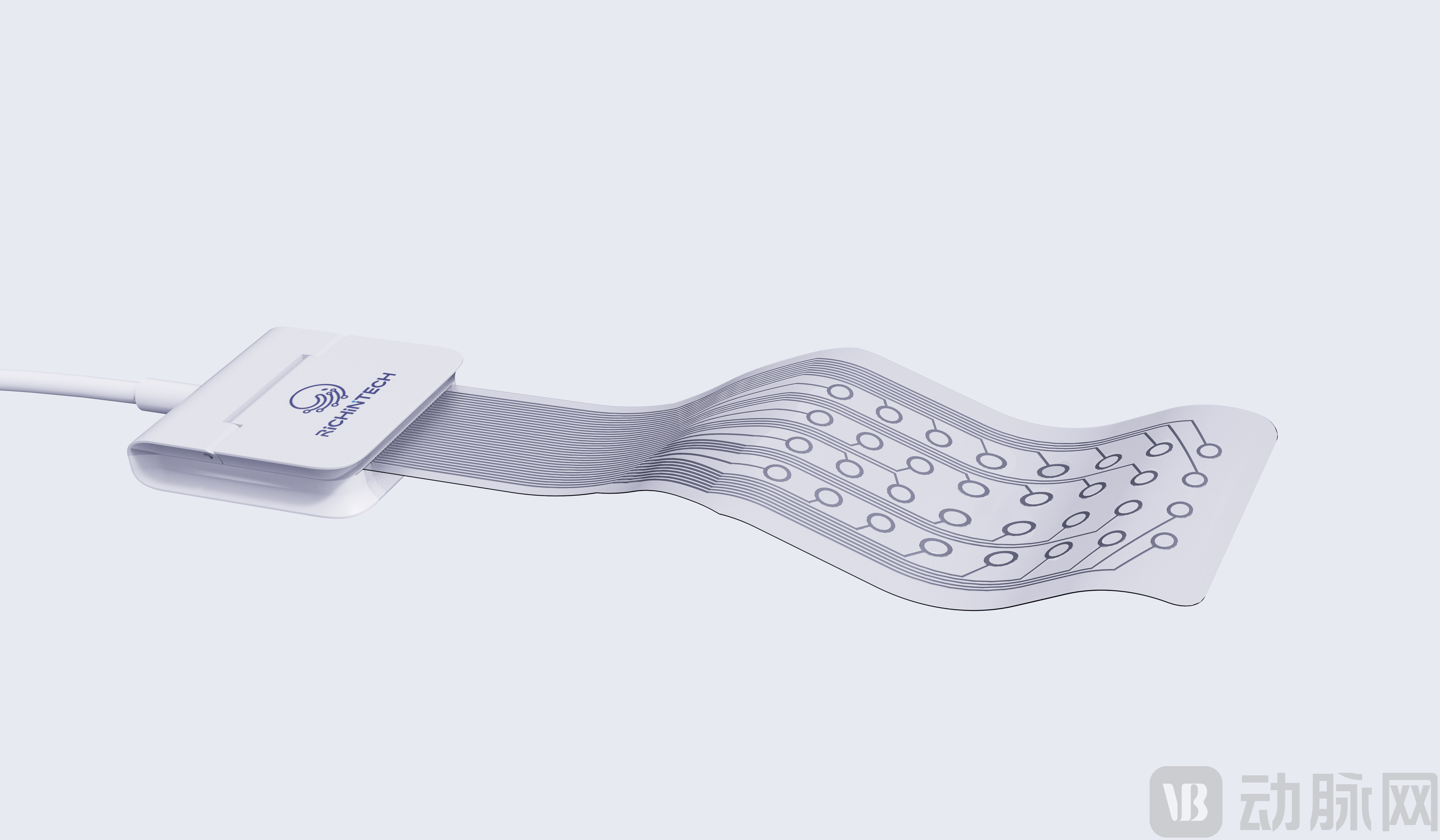
Flexible Stretchable Electrodes (Image provided by the interviewee)
To meet the demand for large-area signal acquisition, the team integrated the electrodes with their previously developed flexible, stretchable conductive film, rendering the electrodes exceptionally soft. This innovation not only enhances patient comfort but also fulfills the requirements for signal acquisition in scientific research.
Achieving complete conformity with the skin is merely the first step toward improving the signal collection rate over a large area; accuracy is the key. If a large number of electrodes cannot deform, it will be difficult to achieve stable contact-based monitoring. In this regard,The team adopted a multi-channel approach, integrating signals collected from multiple local electrodes to obtain more accurate and comprehensive large-area signals.During the implementation of multi-channelization, the team also leveraged self-developed technologies, eliminating the redundant wires of traditional electrodes, which not only facilitates clinical use but also enables long-term, customized application.
Additionally,Stretchable film materials also reduce the breakage rate during use., which not only reduces the workload of healthcare professionals associated with repeated patch applications but also allows users greater freedom of movement during the application process, thereby yielding more accurate results in certain trials.
Wireless electrodes capable of large-area skin adhesion with high precision represent only the first generation of flexible, stretchable electrodes. Professor Liu’s team is also focusing on research into implantable monitoring. It is reported that the team is developing flexible, stretchable electrodes for in vivo use; their stretchable properties allow the electrodes to be inserted into the implantation site in a minimized form and then expanded to conform closely to the tissue.
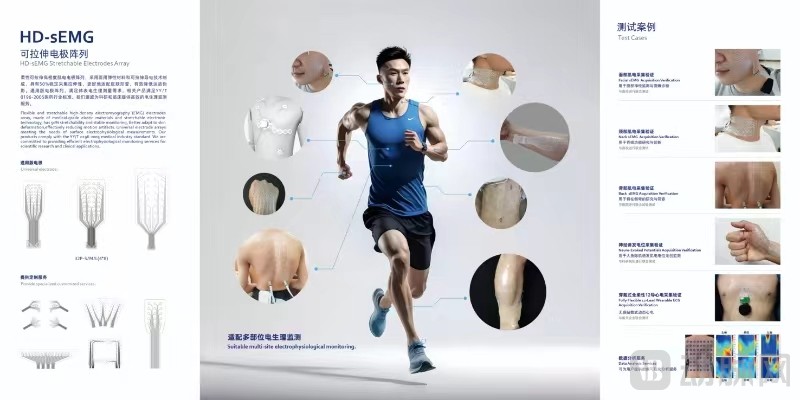
Various Application Scenarios of Flexible Stretchable Electrodes (Image provided by the interviewee)
Under the influence of the entrepreneurial atmosphere at the Shenzhen Institute of Advanced Technology, Professor Liu and his business partners established in 2022Shandong Renkang Medical Technology Co., Ltd., driving flexible stretchable electrodes into the market.
Currently, the team has achieved mass production of the first-generation flexible stretchable electrodes and is advancing the development of subsequent products. Regarding commercialization, given the well-defined application scenarios for the existing electrodes, the team plans to initially target the research sector before expanding into clinical use.
Meanwhile, the team is seeking partners to further expand the application scenarios of flexible, stretchable electrodes. As Professor Liu stated, “In the future, the team will continue to address emerging clinical challenges by providing solutions, thereby forging a new path.”