

Harbin University of Science and Technology's Prof. Wang Yiwen Team Unveils Patent for Magnetically Levitated Artificial Heart Pump
Submitted in July 2023 by Professor Yiwen Wang’s team at Harbin University of Science and TechnologyI.Patent for Magnetic Levitation Artificial Heart Pump. This patent pertains to the field of artificial heart pump technology and entered the patent publication stage in October of the same year.
During the operation of traditional heart pumps, mechanical friction is generated, causing an abnormal rise in blood temperature. This can lead to complications such as hemolysis and thrombosis. Furthermore, the compact design of these heart pumps necessitates high impeller rotational speeds to achieve effective blood pumping. However, excessively high rotational speeds can easily induce structural instability in the pump, resulting in poor operational stability.
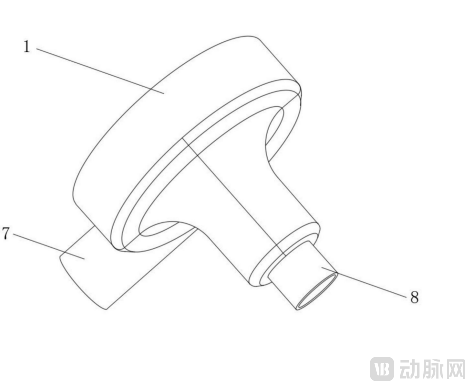
Magnetic Levitation Artificial Heart Pump, from the Patent Specification
Professor Wang Yiwen’s team is primarily engaged in research on the machining of superhard materials, inspection technologies for manufacturing processes, and the development of electromechanical products. To address the aforementioned issues,The team offers a magnetically levitated artificial heart pump that maintains pumping pressure even at low rotational speeds, thereby enhancing the stability of the device.
High-Barrier Fully Magnetically Levitated Technology: Domestic Products Break the Monopoly
On November 25, 2021, the implantable left ventricular assist system CH-VAD, developed by Tongxin Medical, was approved for market launch. This is the first domestically produced artificial heart with complete independent intellectual property rights to receive approval from China’s National Medical Products Administration (NMPA), and it is also the world’s first fully magnetically levitated artificial heart to be approved by the NMPA.
From a technical perspective, mainstream technologies for rotary artificial hearts can be categorized into three types based on rotor support mechanisms: sliding bearings, hydrodynamic suspension, and fully magnetic suspension. Fully magnetically suspended artificial hearts currently hold a monopolistic position in the market.Its core competitiveness is primarily concentrated in blood compatibility, invasiveness of implantation, infection prevention, reliability, and portability, which also constitute the technical barriers for artificial hearts.
In 2017, Abbott’s fully magnetically levitated ventricular assist device, HeartMate 3, received U.S. FDA approval for market entry. Relevant data indicate that the incidence of pump thrombosis and stroke following HeartMate 3 implantation is significantly reduced, extending the survival of patients with advanced heart failure by approximately five years. To date, more than 30,000 patients worldwide have undergone implantation. Within just a few years after its launch, it has become the dominant player in the global artificial heart market.
The approval of Tongxin Medical’s CH-VAD also signifies that domestically developed fully magnetically levitated artificial heart technology has broken the monopoly held by HeartMate 3. Once commercialization begins, it will secure a significant first-mover advantage in the Chinese market.
Advancing Toward Miniaturized Minimally Invasive Approaches
Compared with Europeans and Americans, Chinese people are generally shorter and have relatively smaller heart volumes. Artificial hearts are anchored at the “apex” of the heart; clinical data show that only smaller and lighter devices can be secured more firmly and occupy less space. This not only reduces compression on the heart but also minimizes damage to the chest wall.
Currently, magnetically levitated artificial hearts still require further refinement.On one hand, further reducing the size to develop products suitable for children and even infants.. In 2023, the Corheart®6 Implantable Left Ventricular Assist System, the world’s smallest and lightest fully magnetically levitated artificial heart, was officially launched. Independently developed by Shenzhen Core Medical, this artificial heart measures 3.4 cm in diameter, 2.6 cm in thickness, and weighs approximately 90 grams.
Compared with other similar products, the Corheart®6 features a simpler structure, lighter weight, smaller size, and lower power consumption. In clinical applications, it requires smaller surgical incisions, facilitates faster patient recovery, is suitable for a broader patient population, and reduces the risk of thrombosis caused by heat generation from the blood pump.
On the other hand, further optimize the implantation method of the magnetically levitated artificial heart to make the surgery simpler and minimally invasive.. In 2021, Fuwai Central China Cardiovascular Hospital successfully performed the world’s first implantation of an ultra-small magnetically levitated centrifugal artificial heart with independent Chinese intellectual property rights. Relevant data indicate that the device used in this surgery demonstrated excellent performance in infection risk prevention and control, device reliability, and hemocompatibility, achieving international leading standards across all aspects.